Exclusive: Israel to keep Al-Aqsa Mosque closed through Eid al-Fitr and beyond
Israel is set to maintain the closure of Al-Aqsa Mosque throughout the upcoming Muslim holiday of Eid al-Fitr and for an indefinite period thereafter, according to information obtained by Middle East Eye. Sources intimately familiar with the affairs of the revered site in occupied East Jerusalem have confirmed that Israeli authorities recently conveyed this decision to the Islamic Waqf, the administrative body responsible for the mosque compound. The closure, initiated earlier this month, was ostensibly enacted due to the "security situation" amidst escalating regional tensions, specifically cited in the original reporting as the US-Israeli involvement in a broader conflict with Iran. This unprecedented move, particularly during the holy month of Ramadan, has drawn widespread condemnation from Palestinians, who view it as a calculated exploitation of security concerns to further impose restrictions and solidify Israeli control over one of Islam’s holiest sites.
The Unprecedented Closure and Its Immediate Impact
The decision to keep Al-Aqsa Mosque inaccessible to worshippers through Eid al-Fitr marks a significant departure from established norms and previous periods of tension. Eid al-Fitr, which follows the fasting month of Ramadan, is one of the most important celebrations in the Islamic calendar, traditionally observed with communal prayers and festive gatherings at mosques worldwide, especially at sites of paramount religious significance like Al-Aqsa. The denial of access for this pivotal occasion is perceived by many as a direct infringement on fundamental religious freedoms and a deliberate provocation.
The initial closure earlier in the month effectively prevented tens of thousands of Muslim worshippers from performing their daily prayers and especially the spiritually significant night prayers (Tarawih) during Ramadan. For many Palestinians, particularly those in East Jerusalem and the West Bank, Al-Aqsa is not merely a place of worship but a central pillar of their national and cultural identity. Its closure during such a sacred period exacerbates feelings of disenfranchisement and oppression, fueling an already volatile environment. The ongoing restrictions have led to widespread frustration and calls for international intervention to uphold the right to worship.
Historical and Religious Significance of Al-Aqsa
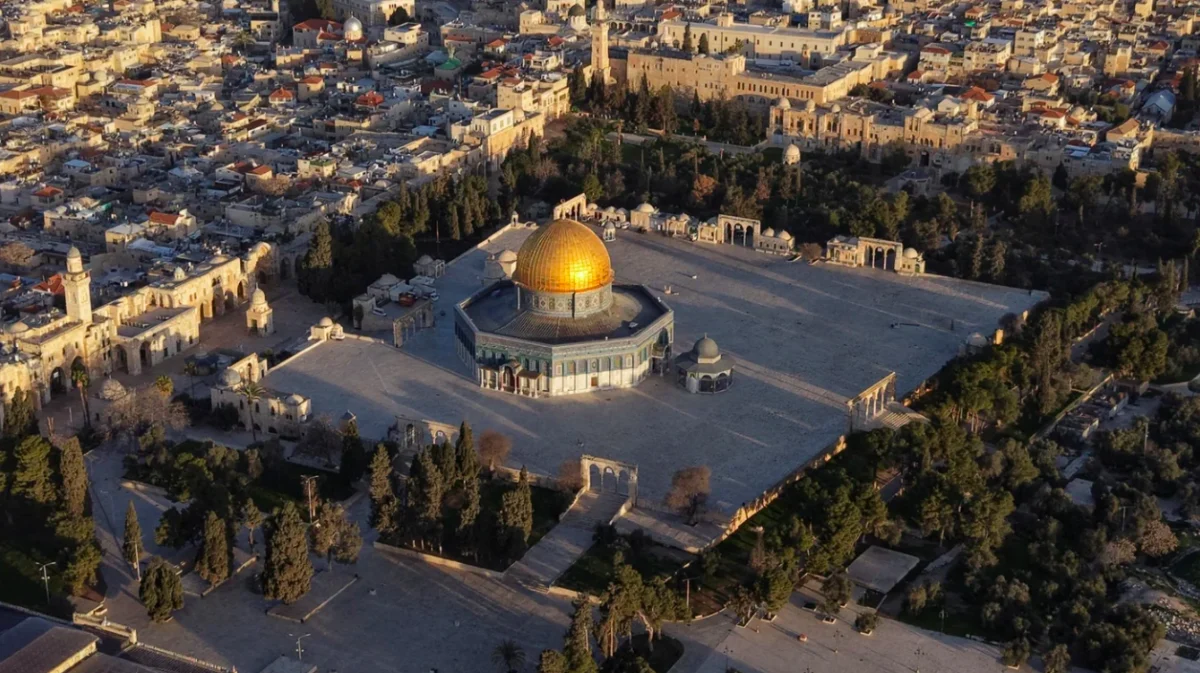
Al-Aqsa Mosque, an integral part of the Haram al-Sharif (Noble Sanctuary) complex, holds immense religious significance for Muslims worldwide. It is the third holiest site in Islam, after the Kaaba in Mecca and the Prophet’s Mosque in Medina. Islamic tradition holds that Prophet Muhammad journeyed from Mecca to Al-Aqsa during the Isra and Mi’raj (Night Journey and Ascension) and led prayers with earlier prophets before ascending to heaven. The site also represents the first Qibla (direction of prayer) in Islam. Its dome, the Dome of the Rock, with its distinctive golden facade, is an iconic landmark recognized globally.
For Jews, the same site is revered as the Temple Mount (Har Habayit), the holiest site in Judaism, believed to be the location of the First and Second Temples. This dual religious significance is at the core of the enduring conflict and sensitivities surrounding the compound. While Jews are permitted to visit the site under Israeli control, they are generally prohibited from praying there, a restriction upheld by the Waqf and the "status quo" arrangement to prevent religious friction.
For Christians, Jerusalem itself is a holy city, and the proximity of the Al-Aqsa complex to the Church of the Holy Sepulchre underscores the interfaith complexities and the city’s unique spiritual tapestry. The preservation of access and respect for all holy sites is a principle universally advocated by religious leaders and international bodies.
The Role of the Islamic Waqf and Custodianship
The Islamic Waqf, an endowment fund under Jordanian custodianship, has been the primary body responsible for the administration, maintenance, and management of the Al-Aqsa Mosque compound since 1967. This arrangement, a cornerstone of the post-1967 "status quo," grants Israel security control over the outer perimeter of the site but delegates internal religious and administrative authority to the Waqf. Jordan’s special role as custodian of Muslim and Christian holy sites in Jerusalem is enshrined in the 1994 peace treaty between Israel and Jordan.
The decision by Israeli authorities to close the mosque and communicate this directly to the Waqf underscores the inherent power imbalance and Israel’s ultimate security control over the site. Waqf officials have consistently expressed frustration over what they describe as Israeli encroachment on their administrative authority and repeated violations of the status quo. The current closure is seen as another instance where Israeli security imperatives are unilaterally overriding the Waqf’s mandate and the established understanding regarding access to the holy site. This ongoing tension between Israeli security control and Jordanian/Waqf administrative authority is a constant source of friction.

Chronology of Recent Tensions and Closures
The closure of Al-Aqsa Mosque is not an isolated event but rather the latest development in a long history of intermittent restrictions and heightened tensions surrounding the holy site.
- Early March 2024: Israeli authorities first imposed significant restrictions on worshippers accessing Al-Aqsa, particularly during the initial weeks of Ramadan. These restrictions included age limits and denial of entry to many West Bank Palestinians.
- April 2024: Following an escalation of regional tensions, described by some reports as related to a "US-Israeli war on Iran," Israeli security forces implemented a full closure of the Al-Aqsa Mosque compound. This move was framed as a necessary measure to ensure public safety amid perceived threats.
- Previous Years: Al-Aqsa has been a flashpoint for conflict for decades. Notable instances include:
- September 2000: A visit by then-opposition leader Ariel Sharon to the Temple Mount/Haram al-Sharif complex ignited the Second Intifada, a period of intense Israeli-Palestinian violence.
- July 2017: Following a deadly attack near the compound, Israel installed metal detectors and cameras at entrances, leading to weeks of protests and a standoff that eventually saw the equipment removed.
- May 2021: Tensions at Al-Aqsa during Ramadan, fueled by Israeli attempts to evict Palestinian families from the Sheikh Jarrah neighborhood, contributed significantly to the outbreak of an 11-day conflict between Israel and Hamas in Gaza.
- Ramadan Significance: Restrictions during Ramadan are particularly sensitive. The month is a period of heightened religious observance, and any impediment to worship at Al-Aqsa is invariably met with strong condemnation and often leads to increased unrest. The current closure, extending beyond Ramadan into Eid al-Fitr, signifies a more severe and prolonged restriction than many previous incidents.
Statements and Reactions from Key Stakeholders
The decision to keep Al-Aqsa Mosque closed has elicited, and is expected to continue to elicit, strong reactions from various regional and international actors.
- Palestinian Authority (PA): The PA is expected to issue strong condemnations, decrying the move as a flagrant violation of religious freedom, international law, and the status quo. PA officials will likely emphasize that such actions undermine peace efforts and further inflame an already volatile situation in Jerusalem and the broader Palestinian territories. They will likely call for immediate international intervention to ensure unimpeded access to the holy site.
- Jordan: As the official custodian of Muslim and Christian holy sites in Jerusalem, Jordan is anticipated to formally protest the Israeli decision. The Jordanian Ministry of Foreign Affairs will likely issue a statement reiterating its commitment to its custodianship and calling for respect for the status quo. Any perceived violation of this custodianship is a significant diplomatic issue for Amman.
- Organization of Islamic Cooperation (OIC): The OIC, representing 57 Muslim-majority states, is likely to condemn the closure as an affront to the Muslim world. Statements from the OIC would typically call for the protection of Al-Aqsa Mosque and the rights of Palestinian worshippers, urging the international community to pressure Israel to reverse its decision.
- United Nations (UN): UN bodies, including the Special Coordinator for the Middle East Peace Process, are expected to express concern over the heightened tensions and call on all parties to de-escalate. While the UN generally refrains from direct condemnation of specific security measures, it consistently advocates for the preservation of the status quo at holy sites and unimpeded access for worshippers.
- Human Rights Organizations: International human rights groups are likely to voice concerns regarding the freedom of religion and movement. They would emphasize that security concerns must be balanced with the fundamental rights of individuals to practice their faith, particularly at sites of such profound importance.
International Law and the Status Quo
The status of Jerusalem, including its holy sites, is one of the most contentious issues in the Israeli-Palestinian conflict. Under international law, East Jerusalem, including the Al-Aqsa Mosque compound, is considered occupied territory. Numerous UN Security Council resolutions, such as Resolution 478 (1980), have affirmed that Israel’s annexation of East Jerusalem is null and void and have called for the protection of holy sites.
The "status quo" governing the Haram al-Sharif/Temple Mount dates back to Ottoman times and was reaffirmed after the 1967 Arab-Israeli War. It dictates that the Waqf maintains administrative and religious authority, while Israel is responsible for external security. Crucially, it generally prohibits non-Muslim prayer on the compound, though this has been increasingly challenged by Jewish nationalist groups. The current closure, enforced solely by Israeli authorities, is seen by many as a unilateral alteration of this delicate balance, further eroding the status quo and exacerbating existing grievances. Violations of the status quo are frequently cited by international observers as triggers for escalation.
Broader Implications for Regional Stability and Religious Freedom
The extended closure of Al-Aqsa Mosque carries significant implications for regional stability and the broader issue of religious freedom.
- Heightened Tensions and Potential for Violence: Al-Aqsa has historically served as a barometer for Israeli-Palestinian relations. Restrictions or perceived threats to the mosque often ignite widespread protests and can escalate into violent confrontations, not only in Jerusalem but across the West Bank and Gaza. The current situation, coming after a period of already intense conflict, significantly raises the risk of further destabilization.
- Erosion of Religious Freedom: Forcing the closure of a major holy site during a significant religious holiday is a direct infringement on the right to freedom of religion and worship. This impacts not only the immediate worshippers but also sends a chilling message to religious communities globally about the sanctity of their holy places.
- Diplomatic Fallout: The decision will undoubtedly strain diplomatic relations between Israel and Muslim-majority nations, particularly Jordan, whose role as custodian is directly impacted. It could also complicate efforts by international mediators to de-escalate broader regional conflicts.
- Consolidation of Control: From the Palestinian perspective, the prolonged closure is not merely a security measure but a strategic move by Israel to assert greater control over the compound, potentially paving the way for further restrictions or changes to the status quo in the future. This perception fuels deep mistrust and resistance.
- Impact on East Jerusalem Residents: Beyond religious implications, the closure affects the daily lives of East Jerusalem residents, for whom Al-Aqsa is a community hub. Restrictions on access disrupt social life, economic activity around the Old City, and the overall fabric of Palestinian society in Jerusalem.
Looking Ahead: The Path to Reopening and De-escalation
The indefinite closure of Al-Aqsa Mosque through Eid al-Fitr presents a critical challenge for regional stability and interfaith relations. The immediate priority, from an international perspective, is to ensure the safe and unimpeded access of worshippers to the holy site, in accordance with the established status quo and international law.
Any sustained closure of Al-Aqsa risks deepening the cycle of mistrust and violence. A path towards de-escalation would necessitate:
- Reversal of the Closure Decision: Reopening the mosque to worshippers for Eid al-Fitr and beyond would be a crucial first step in demonstrating respect for religious freedoms and easing tensions.
- Respect for the Status Quo: Reaffirmation and strict adherence to the historical status quo at the Haram al-Sharif/Temple Mount by all parties.
- Dialogue and Coordination: Enhanced coordination between Israeli authorities and the Islamic Waqf, alongside Jordanian diplomatic engagement, to manage security concerns without infringing on religious rights.
- International Pressure: Continued calls from the international community for the protection of holy sites and the upholding of religious freedom.
The Al-Aqsa Mosque remains a potent symbol, and its accessibility is inextricably linked to the broader peace and stability of Jerusalem and the entire region. The current closure highlights the urgent need for a diplomatic solution that respects the rights and sensitivities of all communities involved.

Related Posts

Over 150 Israeli Settlers Storm Al-Aqsa Compound and Perform Prayers, Violating Status Quo Under Police Protection.
UN Report Highlights Over 900 Obstacles Hampering West Bank Aid Amid Escalating Humanitarian Crisis