Florida Sheriffs’ Call for Immigration Reform Sparks Conservative Backlash and Policy Debate
A significant divergence in conservative immigration policy has emerged from an unexpected quarter: a group of Florida county sheriffs, predominantly elected Republicans and appointed by Republican Governor Ron DeSantis to the State Immigration Enforcement Council, are advocating for a more lenient approach to undocumented immigrants. These law enforcement leaders are urging former President Donald Trump to soften his hardline stance, proposing a "path to citizenship" for individuals who are gainfully employed, have no criminal record, and are integrated into their communities. This proposal, detailed in an upcoming letter to the former president, has immediately ignited a fierce debate within Florida’s conservative political landscape and beyond, highlighting the complex and often contradictory pressures on immigration policy.
The Genesis of the Proposal: A Call for Pragmatism
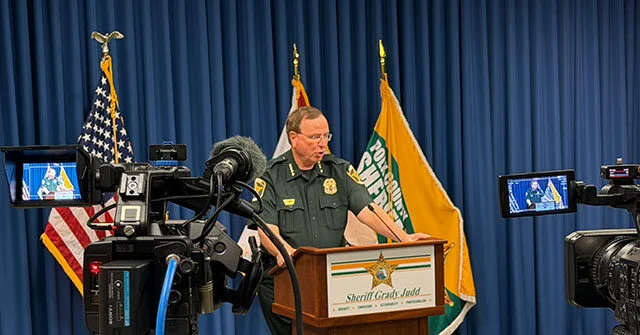
The State Immigration Enforcement Council, typically seen as a body focused on enhancing state and local cooperation with federal immigration enforcement, has taken a surprising turn. Chaired by Polk County Sheriff Grady Judd, a prominent figure known for his conservative views and tough-on-crime rhetoric, the council is championing a pragmatic shift. Their core argument centers on distinguishing between undocumented immigrants who pose a public safety threat and those who are productive members of society.
Sheriff Judd articulated this nuanced position, emphasizing the need for federal policy to prioritize the removal of "criminal troublemakers" who exploit the system and victimize communities. However, he drew a clear line, stating, "there are those here that are working hard. They have their kids in college or in school. They’re going to church on Sunday. They’re not violating the law, and … they are living the American dream and are being very productive and … doing good in this country." This perspective directly challenges the blanket approach often associated with calls for mass deportations, suggesting that such policies inadvertently harm economically beneficial and socially integrated individuals.
The proposed "path" is not envisioned as a "free pass." Sheriff Judd outlined specific conditions: a five-year probationary period during which migrants must learn English, pay a civil fine for their illegal entry, refrain from being dependent on taxpayer dollars, and remain employed with their children enrolled in school. This framework suggests an attempt to balance enforcement with an acknowledgment of the realities of long-term residency and economic contributions, seeking to formalize the status of those already contributing to the American fabric. Charlotte County Sheriff Bill Prummel echoed Judd’s sentiments, expressing frustration with Congressional inaction, stating, "They need to get off their butts and they need to fix it." This highlights a broader frustration among some local officials who grapple daily with the consequences of an unresolved federal immigration system.
Immediate Backlash and Internal Divisions
The sheriffs’ proposal was met with immediate and strong opposition from within Florida’s Republican establishment, underscoring the deep ideological fissures on immigration. Florida Attorney General James Uthmeier swiftly rejected the council’s position. "I do not support the letter," Uthmeier stated unequivocally, adding, "If somebody is here illegally in this country, they have broken the law." This statement reflects a common conservative legalistic interpretation of immigration, emphasizing the rule of law above other considerations like economic contribution or social integration.
Further complicating the narrative, not all members of the State Immigration Enforcement Council were aligned with Judd’s initiative. Jacksonville Sheriff TK Waters, another council member, publicly distanced himself from the proposal. "As Sheriff, I want to reaffirm that our agency has and always will work hand-in-hand with our state and federal partners to uphold the laws and priorities established by our elected leaders," Waters declared. He clarified, "I was not on the call referenced and do not share or endorse the comments made by others." This internal dissent within the council itself demonstrates the sensitivity and controversy surrounding any deviation from strict enforcement policies, even among those directly involved in local law enforcement.
The swiftness of the backlash also prompted Sheriff Judd to issue a clarification, seeking to mitigate the political fallout. Days after the news broke, Judd reiterated his support for former President Trump, stating, "Any illusion that we’re not supporting the president or the government is absolutely false. We’re providing input. We’re providing feedback." This suggests an attempt to frame the proposal not as a challenge to Trump’s authority or ideology, but as constructive advice from law enforcement professionals on the ground.
The Broader Context: Immigration in Florida and the National Debate
Florida, a state with a diverse population and significant economic reliance on various industries, including agriculture, tourism, and construction, has a complex relationship with immigration. Many of these sectors depend heavily on immigrant labor, including undocumented workers. According to various economic studies, undocumented immigrants contribute billions of dollars annually to the U.S. economy through labor, consumption, and taxes (sales, property, and often payroll taxes via ITINs), even if they do not pay federal income tax. They often fill jobs that native-born workers are less willing to take, particularly in physically demanding sectors. The sheriffs’ argument about productive workers reflects this economic reality, which often contrasts with purely enforcement-driven policy discussions.
The national immigration debate has been stalemated for decades, with Congress failing to pass comprehensive reform. This gridlock has created a de facto system where millions of undocumented individuals live and work in the U.S. with uncertain legal status, leading to humanitarian concerns, economic inefficiencies, and persistent political tension. The last major legislative overhaul, the Immigration Reform and Control Act of 1986 (IRCA), granted amnesty to nearly three million undocumented immigrants in exchange for enhanced border security and employer sanctions. Since then, numerous attempts at comprehensive reform, including bipartisan efforts in the early 2000s and 2013, have failed, primarily due to disagreements over border security, pathways to citizenship, and enforcement mechanisms.
Former President Trump built a significant part of his political platform on a hardline stance against illegal immigration, advocating for increased border security, mass deportations, and ending birthright citizenship. His rhetoric often conflated all undocumented immigrants as "criminals" or threats to national security, a narrative that the Florida sheriffs’ proposal directly challenges by attempting to differentiate between individuals. This makes the sheriffs’ letter particularly noteworthy, as it comes from a constituency typically aligned with a tough-on-crime, secure-borders approach.
Political Implications and Future Trajectories
The Florida sheriffs’ unexpected intervention carries significant political implications for several key figures and the Republican Party as a whole.
For Donald Trump, who is campaigning on a promise of even stricter immigration enforcement, a call for a "path to citizenship" from a group of conservative law enforcement officials presents a dilemma. While he relies heavily on an anti-immigration base, acknowledging the economic contributions of some undocumented immigrants could appeal to certain business interests or moderate Republicans. However, adopting such a stance would risk alienating his core supporters. The sheriffs’ letter could force him to address the nuances of immigration policy beyond blanket condemnations, potentially exposing internal divisions within his own support base.
Governor Ron DeSantis, who appointed these sheriffs and has championed some of the nation’s strictest anti-immigration laws in Florida (e.g., legislation requiring businesses to use E-Verify and penalizing those who transport undocumented immigrants), also finds himself in a delicate position. His political brand is closely tied to aggressive immigration enforcement. The sheriffs’ proposal, coming from his own appointees, could be seen as an implicit critique of his approach or, at the very least, an uncomfortable deviation from the state’s hardline posture. DeSantis will likely face pressure to either explicitly condemn or subtly distance himself from the proposal to maintain his conservative credentials.
The incident also highlights the internal ideological struggle within the Republican Party on immigration. While a strong enforcement-first wing dominates the discourse, there have always been voices, particularly from business and agricultural sectors, advocating for more pragmatic solutions that recognize the economic necessity of immigrant labor. The sheriffs, as local law enforcement leaders, are on the front lines of managing the practical consequences of federal immigration policy, witnessing both the challenges of illegal immigration and the contributions of many undocumented residents. Their proposal suggests that the purely enforcement-driven model may be becoming unsustainable or unworkable for some local authorities, compelling them to seek alternative solutions.
Potential Broader Impact and Analysis
While the immediate impact of the sheriffs’ letter on federal policy remains uncertain, its significance lies in its potential to shift the discourse. It introduces a voice of "boots-on-the-ground" pragmatism into a debate often dominated by abstract legal principles and political rhetoric.
- For Immigration Advocates: Groups advocating for immigrant rights and comprehensive reform will likely welcome the sheriffs’ proposal as an acknowledgment of the humanity and contributions of undocumented immigrants. They may use this as leverage to argue for broader reforms and to counter the narrative that all undocumented immigrants are criminals.
- For Business and Agriculture: Industries reliant on immigrant labor are likely to view this proposal positively, as it offers a potential solution to workforce shortages and provides stability for their labor force. The uncertainty surrounding undocumented workers creates significant challenges for these sectors.
- For Law Enforcement: The split within the sheriffs’ council reflects a broader debate within law enforcement itself. Some officers prioritize strict adherence to immigration laws, while others grapple with the practicalities of community policing, where trust with immigrant communities is crucial for public safety, regardless of legal status. A pathway to legal status could potentially enhance cooperation between immigrant communities and law enforcement.
Ultimately, the Florida sheriffs’ call for a "path to citizenship" for productive, non-criminal undocumented immigrants represents a notable crack in the traditionally monolithic conservative stance on immigration. It injects a layer of nuance and pragmatism into a highly polarized debate, forcing political leaders to confront the complexities of a system that has long resisted easy solutions. Whether this "input" will significantly alter former President Trump’s policy approach or merely serve as a footnote in the ongoing immigration saga remains to be seen. However, it unequivocally demonstrates that even within the most conservative echelons, there is a growing recognition that a purely enforcement-focused immigration strategy may be insufficient to address the multifaceted realities of immigration in modern America. The controversy underscores the profound challenges and divisions that continue to define one of the nation’s most enduring political issues.

Related Posts
Democratic Candidates Must Moderate to Win General Elections, Says Rep. Greg Stanton
Lisa Demuth Secures Republican Gubernatorial Nomination in Minnesota, Defeating Trump-Endorsed Mike Lindell