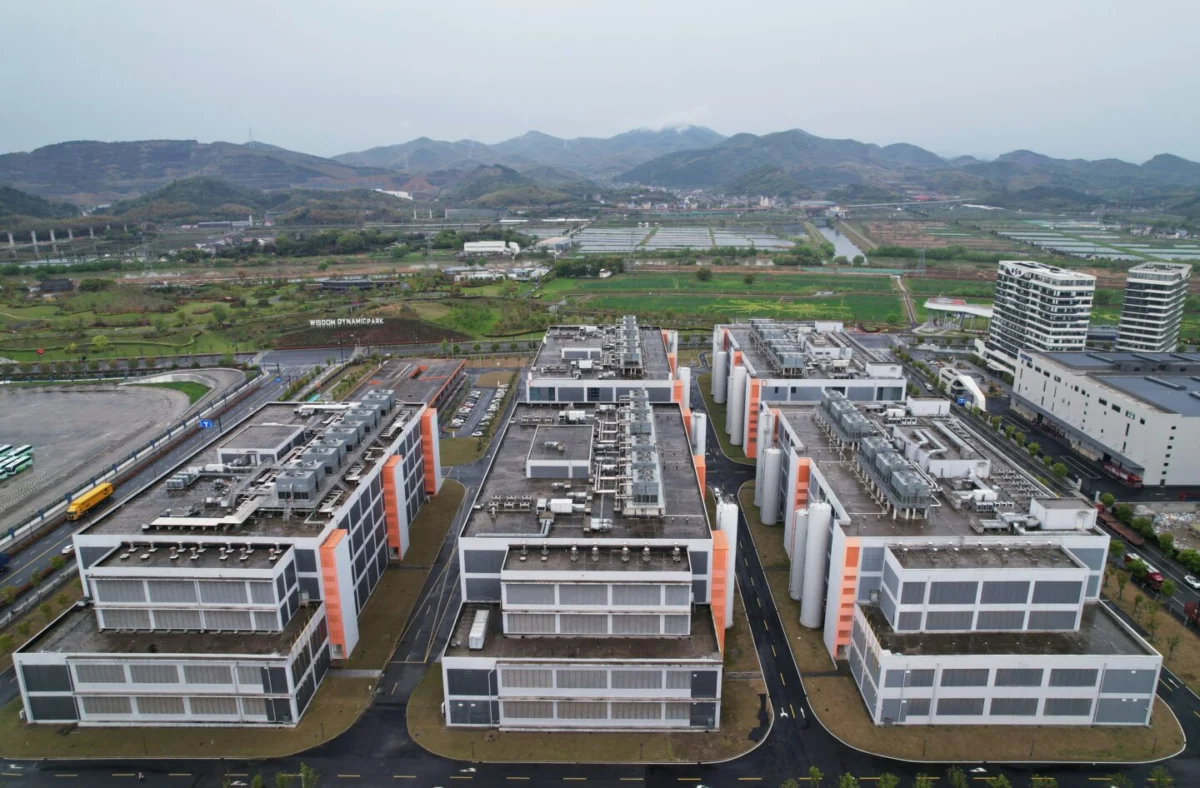
Explainer: Will AI data centres make or break the energy transition?
The Rising Cost of Digital Intelligence
The global transition to an AI-driven economy has fundamentally altered the trajectory of electricity demand. For nearly two decades, many developed nations experienced relatively flat demand growth due to energy efficiency gains in appliances and industrial processes. However, the emergence of massive data center clusters—the physical backbone of the "cloud"—has abruptly ended this era of stability. A single high-end AI server can consume several times more power than a standard server, and when thousands of these units are housed in a single facility, the resulting load can exceed 1,000 megawatts (MW), equivalent to the consumption of a medium-sized city.
In industrial hubs such as Northern Virginia, the Dublin metropolitan area, and the American Midwest, utilities are reporting that data center requests are now the primary driver of new infrastructure needs. This has sparked an intense debate over "cost-causation"—the principle that the entity responsible for the increased demand should bear the financial burden of the necessary upgrades. Traditionally, grid expansion costs are socialized across all ratepayers, including residential households. However, as the scale of tech demand threatens to trigger double-digit increases in consumer electricity bills, regulators and public advocates are demanding that tech giants like Amazon, Google, and Microsoft pay a "fair share" through specialized tariffs and infrastructure surcharges.
A Historical Shift in Power Demand: 2022–2026
To understand the current strain on the grid, one must look at the rapid acceleration of AI deployment over the last four years. The chronology of this energy surge reveals a sector that moved faster than the regulatory and physical infrastructure could accommodate:
- Late 2022 – Early 2023: The public release of large language models (LLMs) triggers a "compute arms race." Tech companies begin massive capital expenditures to secure H100 GPUs and other specialized AI hardware.
- 2024: Major utilities in the United States and Europe begin revising their 10-year demand forecasts upward for the first time in twenty years. In some regions, the projected load growth for the next decade doubles within a six-month window.
- 2025: Grid bottlenecks become a critical constraint. Data center developers face wait times of up to seven years for grid connections in prime locations. Tech companies begin exploring "behind-the-meter" solutions, including purchasing existing nuclear plants or building their own gas-fired turbines.
- Early 2026: The tension reaches a boiling point. As shown in recent developments at the Amazon Web Services (AWS) data center in New Carlisle, Indiana, tech companies are increasingly forced to negotiate directly with state governments and utility commissions to secure power, often agreeing to fund multi-billion dollar transmission projects in exchange for priority access.
Supporting Data: The Magnitude of the Energy Gap
The scale of the challenge is underscored by recent data from the International Energy Agency (IEA) and independent grid operators. In 2022, data centers globally consumed an estimated 460 terawatt-hours (TWh) of electricity. By early 2026, revised estimates suggest this figure is on track to exceed 1,000 TWh by 2027—a consumption level roughly equal to that of Japan.
In the United States, the PJM Interconnection—which manages the grid for 13 states including Virginia and Ohio—has seen its forecast for peak load growth jump from 0.4% annually to nearly 2% due to data center expansion. The financial implications are staggering: the cost to upgrade the U.S. transmission system to meet this demand is estimated to exceed $1 trillion by 2035. If tech companies do not contribute directly to these capital expenditures, the average American household could see an annual increase of $300 to $500 in electricity costs purely to support the digital infrastructure of AI.
Furthermore, the "carbon intensity" of this demand is a growing concern. While companies like Google and Microsoft have committed to 24/7 carbon-free energy (CFE) by 2030, the immediate need for "firm" baseload power—electricity that is available regardless of weather conditions—is keeping fossil fuel plants online. In states like Indiana and Nebraska, coal and gas plants that were scheduled for decommissioning are being granted life extensions specifically to prevent grid collapses caused by data center loads.

The ‘Fair Share’ Debate: Who Pays for the Grid?
The core of the current conflict lies in the regulatory halls of utility commissions. In several U.S. states, consumer advocacy groups have filed petitions to block "bundled" rate increases. Their argument is straightforward: if a tech company builds a 500 MW facility that requires a new $2 billion transmission line, the tech company should pay for the line, not the local residential customer who gains no direct benefit from the AI processing.
Tech companies, conversely, argue that they are already major investors in the energy transition. They point to the fact that they are the world’s largest corporate buyers of renewable energy through Power Purchase Agreements (PPAs). However, critics note that PPAs for wind and solar do not solve the "intermittency" problem. When the sun isn’t shining, the data center still pulls power from the grid, which is often supplied by gas or coal. This creates a "free-rider" problem where tech companies use the grid as a giant, taxpayer-funded battery.
In response, some jurisdictions are implementing "Data Center Impact Fees." In Ireland, for instance, EirGrid has placed a de facto moratorium on new data centers in the Dublin area unless the developers can provide their own onsite power generation or battery storage that can support the grid during peak times.
Environmental Trade-offs and the Net-Zero Paradox
The AI boom has created what many analysts call the "Net-Zero Paradox." On one hand, AI is touted as a tool to solve climate change by optimizing energy grids, designing more efficient batteries, and monitoring deforestation. On the other hand, the physical energy required to run these models is actively delaying the retirement of carbon-intensive power plants.
The environmental community is increasingly divided. Some groups argue that the tech industry’s demand is the "last, best hope" for the nuclear industry, providing the steady revenue needed to build next-generation Small Modular Reactors (SMRs). Others worry that the sheer volume of demand will lead to a "dash for gas," locking in carbon emissions for another thirty years.
A notable example occurred in late 2025, when a major tech provider entered into a deal to keep a retiring coal-fired plant in the American South operational for an additional five years. The company justified the move by promising to fund a carbon capture pilot project at the site, but environmentalists labeled it a betrayal of the company’s "green" branding. This highlights the "dirty or clean" dilemma: in the race for AI supremacy, speed is often prioritized over sustainability.
Global Regulatory Responses and Policy Shifts
Governments are beginning to intervene with more stringent policies. The European Union’s Energy Efficiency Directive now requires data center operators to publish detailed reports on their energy performance and water usage. There is also a push for "heat recovery" mandates, where data centers must funnel the waste heat generated by servers into municipal district heating systems.

In the United States, the Federal Energy Regulatory Commission (FERC) has held series of technical conferences to address the "unprecedented" load growth. One proposed solution is the creation of "Energy Intensive Zones," where data centers are incentivized to build in areas with an oversupply of renewable energy, such as the wind-rich plains of the Dakotas or the solar-heavy deserts of Arizona, rather than crowding into already strained urban grids.
The Pivot to Nuclear and Geothermal
Recognizing that wind and solar alone cannot satisfy their 24/7 requirements, Big Tech has pivoted toward "frontier" energy technologies. In the last 24 months, we have seen a surge in investment in:
- Nuclear Small Modular Reactors (SMRs): Companies are signing "memorandums of understanding" to deploy SMRs directly at data center sites. These reactors offer a constant, carbon-free power source that takes up minimal space.
- Enhanced Geothermal Systems (EGS): By drilling deeper into the earth’s crust, companies like Fervo Energy—backed by tech capital—are attempting to provide carbon-free baseload power that can be scaled globally.
- Long-Duration Energy Storage (LDES): Investing in iron-air or flow batteries that can discharge power for 100 hours or more, helping to bridge the gap when renewable generation is low.
While these technologies are promising, most will not be commercially viable at scale until the 2030s. This leaves a "gap decade" where the grid remains vulnerable.
Conclusion: A New Social Contract for the Digital Age
The struggle over power supplies for AI is more than a technical hurdle; it is a test of the social contract between the world’s most powerful corporations and the communities they inhabit. As grids reach their breaking point, the era of "cheap and invisible" digital infrastructure is ending.
The outcome of the current pressure on Big Tech to cover grid costs will determine the pace of the AI revolution and the success of the global energy transition. If tech companies successfully lead the way in funding a modernized, carbon-free grid, they may fulfill their promises of being "climate-positive." However, if they continue to rely on aging, fossil-fueled infrastructure while passing the costs to consumers, they risk a massive regulatory and public backlash. As the 2026 landscape shows, the "cloud" is not an ethereal entity—it is a massive, physical consumer of the earth’s resources, and the bill is finally coming due.

Related Posts

Constitutional Court of South Africa Bars Shell Oil Exploration in Landmark Victory for Environmental and Community Rights

The Battle for Saldanha Bay: South Africa’s Ambitious Ocean Economy Strategy Faces Legal and Environmental Reckoning