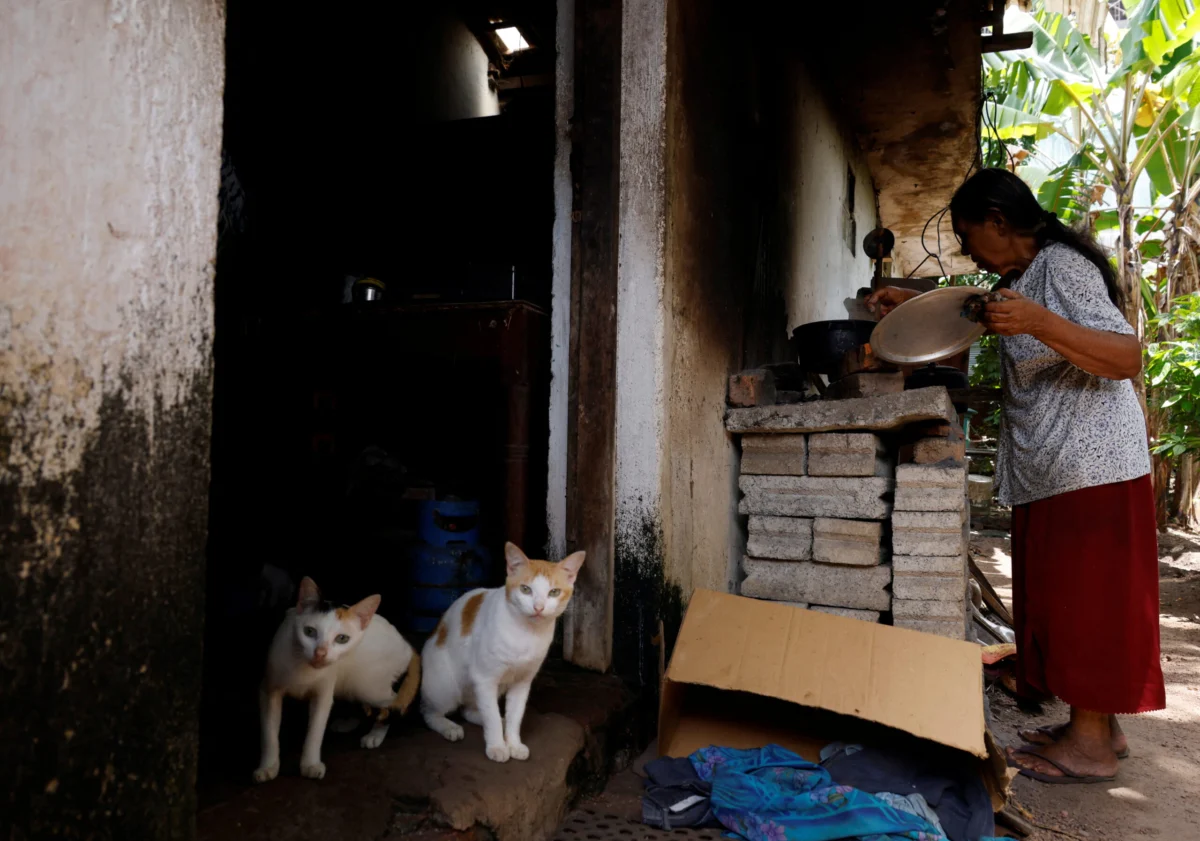
EU carbon credits could supercharge world’s clean cooking push, France says
The meeting, held on the sidelines of a regional climate summit in Nairobi, underscores a growing convergence between national climate strategies and the corporate interests of global energy majors. As African nations seek to meet their Nationally Determined Contributions (NDCs) under the Paris Agreement, the transition from traditional biomass—such as wood and charcoal—to Liquefied Petroleum Gas (LPG) has emerged as a pivotal, albeit debated, pillar of the continent’s energy evolution. The discussions focused on how carbon finance can bridge the affordability gap for millions of households while providing TotalEnergies with high-quality offsets to balance its global emissions portfolio.
The Clean Cooking Crisis: A Public Health and Environmental Emergency
To understand the significance of the envoy’s discussions with TotalEnergies, one must look at the scale of the "clean cooking" deficit. According to data from the International Energy Agency (IEA) and the World Health Organization (WHO), approximately 2.3 billion people worldwide lack access to clean cooking facilities. In Sub-Saharan Africa, more than 900 million people rely on polluting fuels.
The consequences are multifaceted. From a public health perspective, indoor air pollution from traditional cookstoves is a "silent killer," contributing to an estimated 3.2 million premature deaths annually. Women and children are disproportionately affected, suffering from respiratory illnesses, cardiovascular disease, and eye damage. Environmentally, the reliance on wood fuel is a primary driver of localized deforestation and forest degradation. The IEA estimates that the harvesting of fuelwood for cooking accounts for nearly 2% of global greenhouse gas emissions—roughly equivalent to the emissions from the global aviation industry.
For the climate envoy, the shift to LPG represents a "pragmatic bridge." While LPG is a fossil fuel, its combustion is significantly cleaner than wood or dung, producing negligible particulate matter and lower carbon dioxide emissions per unit of energy delivered to the pot.
TotalEnergies’ Strategic Pivot Toward African LPG Markets
TotalEnergies has increasingly positioned itself as a leader in the African energy transition, focusing heavily on downstream LPG distribution. The French multinational has signaled its intent to invest billions into African infrastructure over the next decade, with a significant portion allocated to LPG bottling plants, distribution networks, and "last-mile" retail solutions.
The company’s interest in carbon credits is both financial and reputational. By subsidizing the cost of LPG stoves and initial gas canisters through carbon credit revenue, TotalEnergies can penetrate lower-income markets that were previously inaccessible. Under this model, the "avoided emissions"—calculated by comparing the emissions of an LPG stove against a traditional open fire—are verified and sold as credits on the voluntary carbon market (VCM) or under Article 6 of the Paris Agreement.
During the discussions, the envoy reportedly emphasized that any partnership must ensure that carbon revenues are shared equitably with local communities. This addresses a long-standing criticism of the carbon market: that large corporations often capture the lion’s share of the value, leaving the end-users with little more than a discounted stove.
The Mechanics of Cookstove Carbon Credits
The technical core of the envoy’s proposal lies in the methodology used to calculate carbon savings. Historically, cookstove projects have relied on a metric known as the "fraction of non-renewable biomass" (fNRB). This measures the proportion of wood used that exceeds the natural regrowth of the forest.
However, the sector has faced intense scrutiny over the last two years. A series of high-profile academic studies and investigative reports suggested that many cookstove projects were over-crediting their impact by as much as 1,000%. Critics argued that the baseline assumptions regarding wood usage and stove efficiency were often exaggerated.
In response, 2025 and early 2026 have seen a shift toward "Digital Monitoring, Reporting, and Verification" (dMRV). The envoy and TotalEnergies discussed the implementation of "smart" LPG meters that transmit real-time usage data via cellular networks. This ensures that carbon credits are only issued for actual gas consumed, providing a level of transparency and integrity that the previous generation of biomass stove projects lacked. This move toward high-integrity credits is essential for attracting the premium prices necessary to make large-scale LPG deployment economically viable.

Chronology of the Clean Cooking Initiative
The dialogue between the envoy and TotalEnergies is the latest step in a timeline of accelerating international action:
- May 2024: The Summit on Clean Cooking in Africa, held in Paris, raised $2.2 billion in pledges from governments and the private sector. TotalEnergies was a prominent participant, committing to help 100 million people in Africa access clean cooking by 2030.
- COP29 (November 2024): Negotiators made breakthroughs on Article 6.4 of the Paris Agreement, creating a centralized UN mechanism for trading carbon credits, which provided a clearer regulatory framework for cookstove projects.
- September 2025: A coalition of African nations launched the "African Carbon Market Initiative 2.0," specifically prioritizing clean cooking as a "high-impact" sector for sovereign carbon trades.
- March 2026: The current discussions indicate a move from high-level pledging to the granular details of project financing and corporate-government cooperation.
Divergent Perspectives: Transition Fuel vs. Leapfrogging
The push for LPG is not without its detractors. Some climate advocates and NGOs argue that investing in LPG infrastructure locks African nations into long-term fossil fuel dependency. They advocate for "leapfrogging" directly to electric cooking (e-cooking) powered by renewable energy, such as solar or wind.
"LPG is a distraction from the ultimate goal of decarbonization," argued one regional environmental analyst in response to the envoy’s meeting. "While it improves indoor air, it continues the cycle of carbon extraction and leaves households vulnerable to global gas price volatility."
Conversely, the envoy’s office has maintained that e-cooking remains a middle-class luxury in many parts of the continent due to the instability of national grids and the high cost of high-wattage electric appliances. For the 600 million Africans who currently have no access to electricity at all, LPG remains the most scalable and immediate solution to the biomass crisis. The envoy’s strategy appears to be a multi-tiered approach: using LPG to address the immediate health crisis while building the regulatory and financial scaffolding for a long-term transition to renewables.
Economic and Social Implications
The implications of a successful TotalEnergies-led LPG expansion, fueled by carbon credits, are profound. Beyond health and climate, the economic benefits include:
- Time Poverty Reduction: Women in rural Africa spend an average of 15 to 20 hours per week collecting firewood. Transitioning to LPG frees this time for education, vocational training, or small-business activities, contributing to broader gender equality.
- Job Creation: The expansion of LPG distribution networks requires a massive workforce for logistics, maintenance, and retail. This aligns with the "Just Transition" goals of many African governments seeking to replace the informal charcoal economy with formal, safer employment.
- Fiscal Relief: Many African nations currently subsidize kerosene or charcoal indirectly. A robust carbon-financed LPG market could reduce the fiscal burden on state treasuries by shifting the subsidy cost to the international carbon market.
The Role of Article 6 and Sovereign Wealth
A critical part of the envoy’s discussion involved "Corresponding Adjustments" under Article 6 of the Paris Agreement. If TotalEnergies uses the carbon credits to claim "net zero" status for its own operations, the host country cannot count those same emission reductions toward its national targets. This "double counting" issue remains a sensitive diplomatic point.
The envoy is reportedly pushing for a "contribution claim" model, where TotalEnergies funds the projects in exchange for the right to claim a contribution to the host country’s climate goals, rather than taking the credit off the country’s books entirely. This would allow the African nation to maintain the integrity of its NDC while still benefiting from the foreign direct investment provided by the energy major.
Looking Ahead to COP31
As the world looks toward COP31, the success or failure of these pilot programs will serve as a bellwether for the viability of the voluntary carbon market. If the envoy and TotalEnergies can demonstrate a transparent, high-integrity model for LPG credits, it could unlock billions of dollars in dormant climate finance.
The envoy’s proactive engagement with one of the world’s largest oil and gas companies reflects a new era of climate diplomacy—one characterized by "radical pragmatism." In this landscape, the priority is no longer just the purity of the fuel source, but the speed and scale at which lives can be saved and forests protected. As the envoy noted in a brief statement following the meeting, "We do not have the luxury of waiting for the perfect solution when our people are dying from the smoke in their kitchens today. We must use every tool at our disposal, including the carbon markets, to bring clean energy to every home."
The coming months will see the drafting of formal Memorandums of Understanding (MoUs) and the selection of pilot regions. The international community will be watching closely to see if this partnership can indeed turn the "silent killer" of indoor smoke into a catalyst for sustainable development across the African continent.

Related Posts
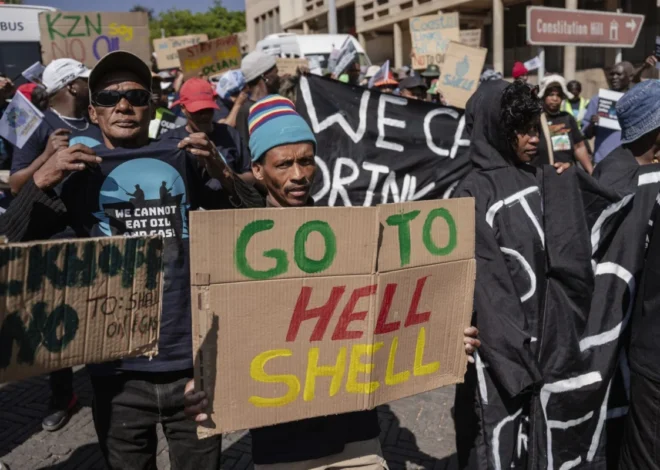
Constitutional Court of South Africa Bars Shell Oil Exploration in Landmark Victory for Environmental and Community Rights
The Battle for Saldanha Bay: South Africa’s Ambitious Ocean Economy Strategy Faces Legal and Environmental Reckoning