Escalating Tensions in the Strait of Hormuz: Trump Critiques NATO Allies Amid Growing Maritime Security Risks and Geopolitical Stalemate
U.S. President Donald Trump has intensified his rhetoric against NATO allies, labeling them "cowards" for their perceived reluctance to join a military coalition aimed at securing the Strait of Hormuz. In a series of statements issued on Friday from Paris and via his social media platforms, the President characterized the reopening and policing of the vital waterway as a "simple military maneuver" with minimal risk to personnel. This assessment, however, stands in stark contrast to the warnings issued by defense analysts, maritime security experts, and military historians who suggest that the narrow passage has become one of the most lethal "kill zones" in modern naval warfare.
The friction between Washington and its traditional partners comes at a moment of heightened volatility in the Middle East. Following a series of kinetic exchanges between U.S.-Israeli forces and Iranian assets that began in late February 2026, the Strait of Hormuz—often called the "aorta of the global economy"—has become a theater of asymmetric conflict. While the White House maintains that the Iranian threat has been militarily neutralized to a point where allied intervention should be "easy," European capitals remain hesitant, citing the high probability of sophisticated drone swarms, anti-ship missiles, and extensive naval mining.
The Rhetorical Divide: "Paper Tigers" and "Simple Maneuvers"
President Trump’s critique of the North Atlantic Treaty Organization (NATO) was unfiltered during his Friday press conference. He argued that the United States had already performed the "heavy lifting" by striking Iranian military infrastructure and that the responsibility for maintaining the flow of commerce should now fall on the nations that rely most heavily on Middle Eastern oil. On his Truth Social account, the President went further, describing a NATO without U.S. leadership as a "paper tiger" that enjoys the benefits of low-cost energy while refusing to share the burden of its protection.
"Now that the fight is militarily won, with very little danger to them, they complain about the high oil prices they are forced to pay, but don’t want to help open the Strait of Hormuz," Trump posted on March 20. "So easy for them to do, with so little risk. Cowards, and we will remember."
The President’s assertion that the operation is "relatively safe" is predicated on the belief that Iran’s conventional naval capabilities have been degraded. However, European officials and independent analysts argue that this view ignores the reality of "gray zone" warfare. François Heisbourg, a special adviser at the Paris-based Foundation for Strategic Research, offered a blunt rebuttal on the Bluesky platform: "No, it isn’t easy. If it were, you presumably wouldn’t be asking us to help you clean up the mess you made."
A Chronology of the 2026 Hormuz Crisis
The current crisis traces its roots to February 28, 2026, when the U.S. and Israel initiated a series of coordinated strikes against Iranian military facilities. The stated objective was to deter regional aggression and dismantle drone production sites, but the immediate consequence was a sharp escalation in the Persian Gulf.
Between March 1 and March 16, the International Maritime Organization (IMO) confirmed 17 separate incidents involving commercial vessels in the Strait of Hormuz and the Gulf of Oman. These incidents ranged from drone strikes to limpet mine attachments and direct missile hits. The human cost has been significant, with at least 11 seafarers confirmed dead or missing.
By March 5, the situation had deteriorated to the point where insurance premiums for transit through the Strait surged to prohibitive levels, effectively halting much of the world’s VLCC (Very Large Crude Carrier) traffic. On March 16, international pressure began to mount not just in the West, but in Asia, as activists in Seoul, South Korea, protested against U.S. demands for troop deployments to the region, highlighting the domestic political risks faced by allied governments.
The Strategic Geography of a Maritime Choke Point
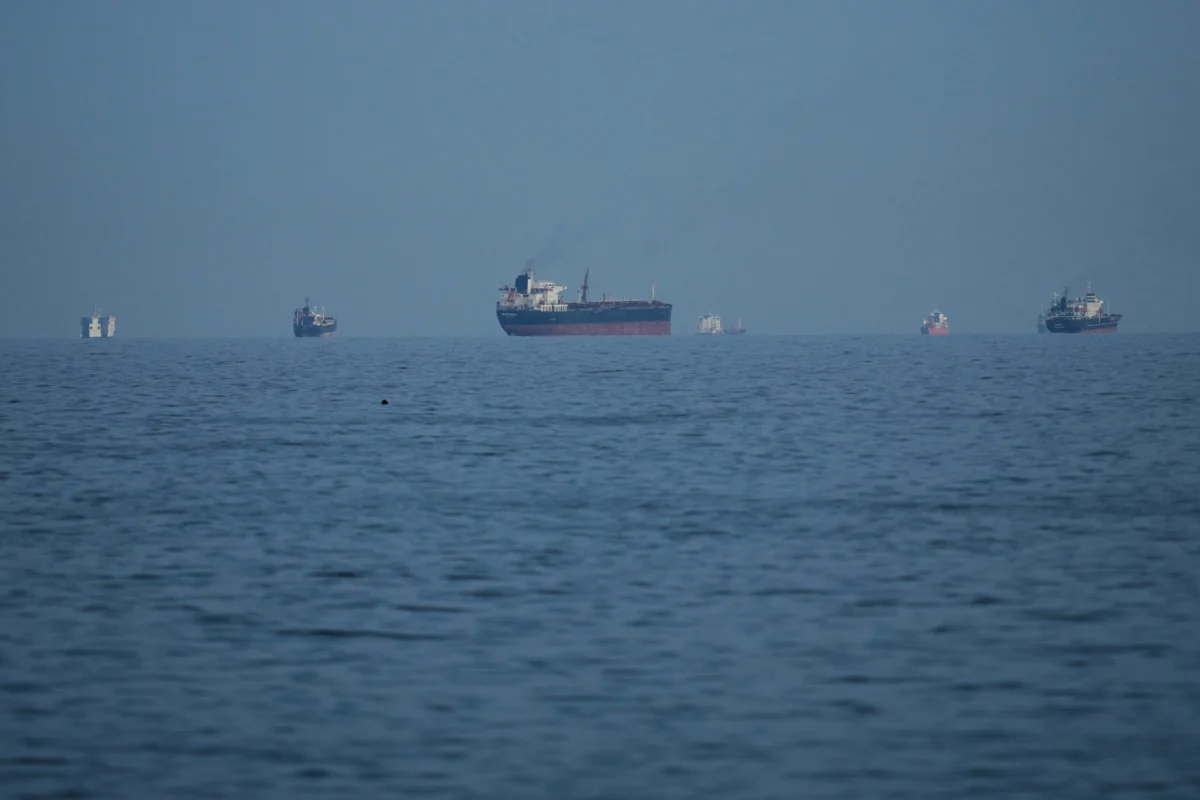
The Strait of Hormuz is a unique geographical challenge. At its narrowest point, the shipping lanes are only about two miles wide in each direction, separated by a two-mile buffer zone. This 50-kilometer-wide stretch of water is flanked by the Iranian coast to the north, providing Tehran with what military experts call "interior lines" of communication and attack.
"The Strait of Hormuz reminds us that geography matters," noted Frank Hoffman, a senior fellow at the Foreign Policy Research Institute (FPRI). He emphasized that Iran’s advantage lies in its ability to saturate these narrow international shipping channels with low-cost, high-impact weaponry.
Data from UN Trade and Development (UNCTAD) illustrates the stakes involved. In the week prior to the February 28 strikes, the Strait accounted for:
- 38% of the world’s traded crude oil.
- 29% of global liquefied petroleum gas (LPG).
- 13% of traded chemicals.
Nations such as India, Taiwan, and South Korea are almost entirely dependent on this passage for their energy security. A prolonged closure or high-risk environment in the Strait threatens to trigger a global recession, yet the military requirements to "police" the area are immense.
The Asymmetric Arsenal: Drones, Mines, and Swarms
Defense analysts argue that Trump’s "simple maneuver" ignores the evolution of Iranian military doctrine. Unlike the 1980s, when the U.S. Navy faced a more conventional threat during Operation Earnest Will, today’s Iranian forces utilize "swarming" tactics designed to overwhelm the sophisticated Aegis defense systems of Western destroyers.
Roxana Niknami, a professor of European studies at the University of Tehran, detailed the scale of this threat in a March 5 analysis. Iran is estimated to possess:
- Over 1,000 fast attack craft designed for swarming naval vessels.
- A stockpile of 2,000 to 6,000 naval mines, ranging from sophisticated acoustic models to simple contact mines.
- Shore-based anti-ship ballistic missiles with ranges exceeding 700 kilometers.
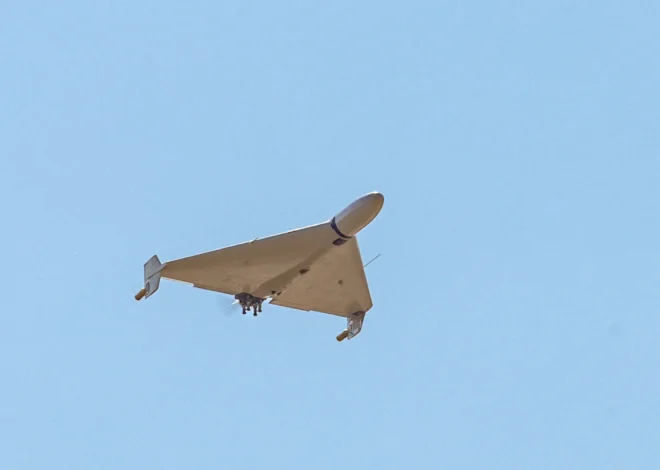
- One-way "suicide" drones capable of being launched from mobile trucks along the coastline.
Retired U.K. Air Marshal Martin Sampson, executive director for the Middle East at the International Institute for Strategic Studies (IISS), warned that the Strait could become a "drone-swarm kill zone" similar to the battlefields of Ukraine. "The nature of the operating environment fundamentally changes," Sampson said, noting that the proximity of the Iranian coast reduces warning times to seconds, making even the most advanced point-defense systems vulnerable to saturation.
Historical Context: 1988 vs. 2026
The President’s confidence may be rooted in the memory of the "Tanker War" of the late 1980s. During Operation Earnest Will (1987-1988), the U.S. successfully escorted Kuwaiti tankers and dealt a significant blow to the Iranian Navy in Operation Praying Mantis. However, Nick Childs, a senior fellow for naval forces at IISS, argues that the world has changed.
In 1988, the U.S. Navy boasted a fleet of nearly 600 ships. Today, that number has dwindled to fewer than 300, and the fleet is already overstretched by commitments in the Red Sea and the South China Sea. Furthermore, the Littoral Combat Ships (LCS) that the U.S. might use for mine-clearing were not designed for high-intensity combat environments and would require their own protective escorts, further thinning available resources.
The psychological impact of naval mines remains a primary deterrent. "Mines have two warheads," Childs explained. "One is a high-explosive warhead, and the other one is a psychological one." Even the mere suspicion that Iran has "rolled mines off the back of a dhow" (a traditional wooden boat) is enough to freeze commercial shipping and drive insurance rates to unsustainable levels.
Global Implications and the China Factor
Beyond the immediate tactical dangers, the standoff in the Strait of Hormuz has profound implications for the global balance of power. Analysts suggest that China is closely monitoring the U.S. response. If the U.S. Navy is forced to commit a significant portion of its dwindling assets to the Persian Gulf, it necessarily compromises its "Pivot to Asia" and its ability to deter actions in the Indo-Pacific.
"Whatever the U.S. deploys there is likely to compromise some of its advantage that it feels that it’s developing and able to deploy in the Indo-Pacific," Air Marshal Sampson noted. This creates a strategic dilemma for Washington: protect the world’s oil supply at the cost of weakening its posture against a peer competitor like China, or allow the Strait to remain a volatile "no-go zone."
The reluctance of the U.K. and France to move beyond the "preparatory stage" of contribution reflects a broader European anxiety about being dragged into a protracted conflict without a clear exit strategy. Emma Salisbury of the FPRI noted that without a unified allied front, controlling the Strait will be "extremely difficult," yet those contributions are "certainly not forthcoming at the moment."
Conclusion: A Standoff with No Easy Exit
As President Trump continues to pressure NATO allies with "coward" labels and threats of future retribution, the reality on the water remains grim. The Strait of Hormuz is not merely a shipping lane; it is a complex, high-stakes battleground where geography and asymmetric technology favor the defender.
The current impasse leaves the global economy in a state of suspended animation. With oil prices fluctuating and maritime insurance markets in turmoil, the "simple military maneuver" envisioned by the White House appears increasingly like a high-stakes gamble. For the allies, the choice is between a costly, dangerous naval campaign and the risk of permanent damage to the trans-Atlantic security architecture. For now, the "Aorta of the World" remains constricted, and the path to reopening it is anything but simple.

Related Posts
Pentagon Forges Landmark Seven-Year Agreements with Boeing and RTX to Accelerate Standard Missile-3 Production and Stabilize Defense Supply Chains
Boeing Unveils Ultra Low-Cost Seeker to Enhance Missile Inventory and Combat Cost Challenges in Modern Warfare