United Nations Human Rights Council Faces Critical Vote on Renewing Belarus Monitoring Mandates Amid Escalating Repression
The United Nations Human Rights Council is scheduled to convene next week to conduct a high-stakes vote on a resolution that could determine the future of international oversight in Eastern Europe. The resolution seeks to renew the mandates of two critical investigative bodies: the Group of Independent Experts on the Situation in Belarus and the Special Rapporteur on the situation of human rights in Belarus. As the administration of Alexander Lukashenko continues to intensify its domestic crackdown and extend its reach beyond national borders to target dissidents in exile, international observers argue that these mandates represent the final vestige of institutional accountability for a nation increasingly isolated from global human rights norms.
The upcoming vote arrives at a juncture where the rights crisis in Belarus is no longer characterized merely by sporadic crackdowns, but by a systematic, state-led effort to dismantle every facet of independent civil society. Human rights organizations, including Human Rights Watch and the Viasna Human Rights Center, have warned that the absence of these UN mechanisms would effectively grant the Belarusian authorities a "blank check" to continue what many international legal experts now categorize as crimes against humanity.
A Chronology of Escalation: From Disputed Elections to Systematic Repression
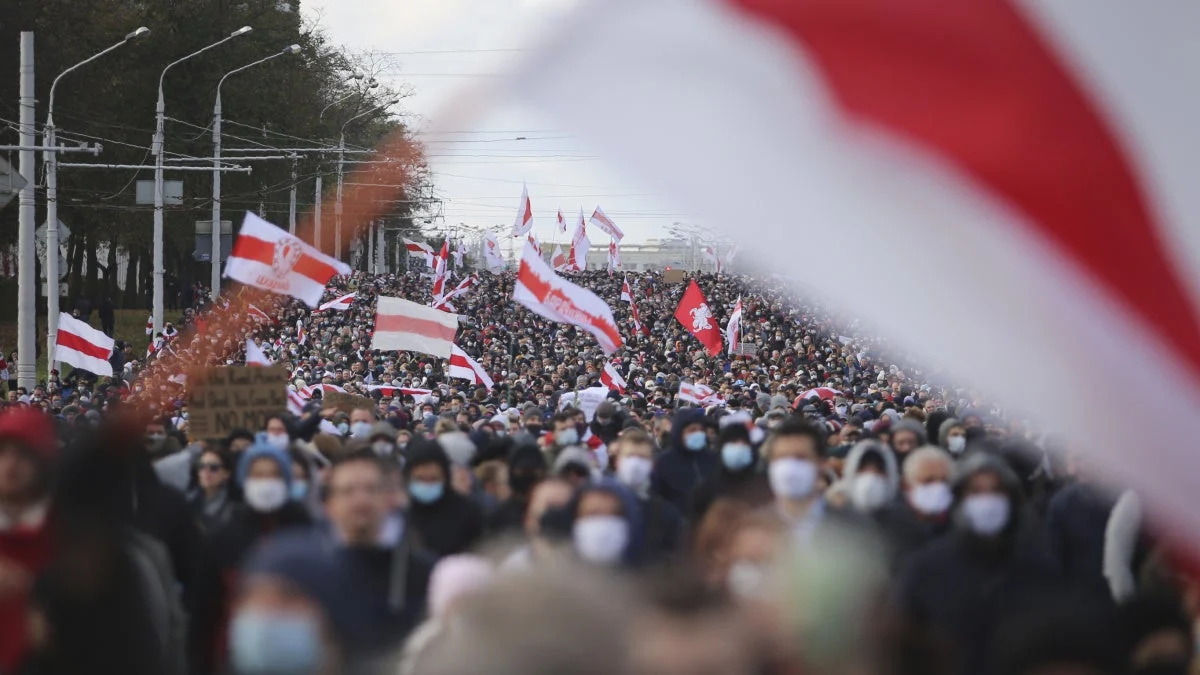
The current human rights trajectory in Belarus can be traced back to the pivotal events of August 2020. The presidential election, which saw Alexander Lukashenko claim a sixth term with over 80% of the vote, was widely condemned by international observers and the Belarusian opposition as fraudulent. This sparked the largest protest movement in the country’s post-Soviet history, with hundreds of thousands of citizens taking to the streets of Minsk and other major cities.
By late 2020, the state’s response had transitioned from riot control to a comprehensive campaign of "cleansing" the political landscape. In 2021, the world’s attention was briefly captured by the forced diversion of Ryanair Flight 4978 to Minsk to arrest activist Roman Protasevich, an act that highlighted the government’s willingness to violate international aviation norms to silence dissent.
Throughout 2022 and 2023, following Belarus’s role as a staging ground for the Russian invasion of Ukraine, domestic laws were further tightened. Legislation was introduced to allow for the death penalty for "attempted acts of terrorism"—a charge frequently leveled against political activists—and the stripping of citizenship from Belarusians living abroad if they are convicted of "extremism." By 2024 and 2025, the focus shifted toward "transnational repression," with the state targeting the families of exiles and refusing to renew passports at consulates, effectively rendering thousands of citizens undocumented.
Documenting the Crisis: Data on Political Prisoners and Legal Erasure
The scale of the repression is reflected in the stark data provided by human rights monitors. As of early 2026, at least 860 individuals are confirmed to remain behind bars for peacefully exercising their fundamental rights. However, many independent groups suggest the actual number could be significantly higher, as families often fear reporting arrests due to the risk of further retaliation.
The conditions of detention have become a focal point of international concern. Reports from the Group of Independent Experts indicate that political prisoners are frequently subjected to "incommunicado" detention, where they are denied access to lawyers and communication with their families for months at a time. High-profile figures, such as Nobel Peace Prize laureate Ales Bialiatski and opposition leader Maria Kalesnikava, have reportedly faced severe health declines while in custody, with allegations of torture and the denial of necessary medical care being commonplace.
Beyond individual arrests, the legal infrastructure of the country has been purged. Since 2020, more than 1,500 non-governmental organizations (NGOs) have been liquidated or forced to cease operations. This includes every major human rights group, independent labor union, and environmental organization. The media landscape has suffered a similar fate, with the few remaining independent outlets forced to operate from abroad, their websites blocked and their social media followers at risk of criminal prosecution for "promoting extremist materials."
The 2026 Expert Report and Allegations of Crimes Against Humanity
A comprehensive report presented during the current Human Rights Council session by the Group of Independent Experts provides the most damning assessment to date. The report meticulously documents newly verified patterns of forced exiles, where detainees are allegedly coerced into signing "pardon requests" that require them to admit guilt and praise the president before being forcibly moved across the border into neighboring EU states.
The most significant legal finding in the report is the assertion that certain violations "amount to crimes against humanity." Under international law, this designation applies to acts committed as part of a widespread or systematic attack directed against any civilian population. The report identifies arbitrary detention, torture, and the systematic persecution of a specific group—the political opposition—as meeting these criteria.
This finding provides the necessary legal groundwork for future prosecutions. By identifying specific chains of command and preserving evidence according to international judicial standards, the Group of Experts acts as a repository for justice that cannot currently be found within the Belarusian court system, which is widely viewed as an instrument of the executive branch.
International Legal Interventions and the ICC Investigation
The push for renewal of the UN mandates is bolstered by recent developments in international criminal law. The International Criminal Court (ICC) prosecutor’s office has recently opened an investigation into alleged crimes committed by Belarusian authorities. While Belarus is not a party to the Rome Statute (the treaty that established the ICC), the investigation is possible because part of the alleged crimes—specifically the forced deportation and persecution of civilians—has occurred on the territory of Lithuania, which is a member of the ICC.
This jurisdictional bridge allows the ICC to examine the actions of Belarusian officials. However, the ICC relies heavily on the evidentiary work of UN-mandated bodies. The Group of Independent Experts is instrumental in this regard, as they possess the mandate to analyze evidence and identify responsible individuals. Without the renewal of these mandates, the ICC and other international judicial bodies would lose a vital source of verified information and expert analysis.
Furthermore, several European nations, including Germany and Poland, have initiated investigations under the principle of "universal jurisdiction." This legal doctrine allows national courts to prosecute individuals for grave international crimes regardless of where the crimes were committed or the nationality of the victims and perpetrators. The UN Special Rapporteur plays a key role here, acting as a "lifeline" for civil society by ensuring that the testimony of victims is documented and that the systematic nature of the violations remains under public and legal scrutiny.
Official Responses and Diplomatic Friction
The Belarusian government has consistently rejected the legitimacy of both the Special Rapporteur and the Group of Independent Experts. In statements issued through its mission in Geneva, Minsk has characterized the resolutions as "politically motivated" and an "interference in the internal affairs of a sovereign state." The Belarusian Ministry of Foreign Affairs argues that the country’s legal system is functioning normally and that those in detention are "criminals" who sought to destabilize the state under foreign influence.
Conversely, a coalition of over 40 international and Belarusian civil society organizations has issued a joint appeal to the Human Rights Council. They argue that the international community cannot afford to look away. "The renewal of these mandates is not just a procedural matter; it is a signal to the victims that they have not been forgotten," the statement read.
Western diplomatic missions, particularly those from the European Union, the United States, and the United Kingdom, are expected to vote in favor of the renewal. However, the vote remains a point of contention within the Council, as some member states traditionally oppose "country-specific" mandates, arguing that they undermine the principle of sovereign equality. The outcome will serve as a barometer for the Council’s commitment to addressing long-term, entrenched rights crises.
Broader Impact and the Prospect for Future Accountability
The implications of next week’s vote extend beyond the borders of Belarus. In an era where "transnational repression"—the act of a state reaching across borders to silence dissent—is on the rise globally, the work of the UN experts on Belarus serves as a critical case study. By documenting how the Belarusian state uses passport denials, the harassment of relatives, and the abuse of Interpol notices, the UN mechanisms provide a framework for other nations to understand and counter these tactics.
Moreover, the maintenance of these mandates is a prerequisite for any future "transitional justice" process. History suggests that regimes of this nature eventually face a period of reckoning. When that time comes, the archives created by the Special Rapporteur and the Group of Independent Experts will be the primary resources for truth commissions and legal proceedings.
The Human Rights Council now faces a choice: to maintain the pressure of international scrutiny or to allow the situation in Belarus to fade into the background of global geopolitics. For the 860 political prisoners currently in Belarusian cells and the thousands of activists living in precarious exile, the renewal of these mandates represents the only existing international guarantee that their plight remains on the global agenda. The vote next week will determine whether the United Nations remains a vigilant guardian of human rights in the region or if the "unrelenting rights crisis" in Belarus will be allowed to continue in the shadows.

Related Posts
Human Rights Watch Calls for Investigation into Death of Detainee Following Removal from Najaf Hospital by Iraqi Drug Police
Human Rights Watch Urges UN Security Council to Extend Lebanon Peacekeeping Mission Amid Escalating Conflict and Humanitarian Crisis