Dutch startup’s rust-powered batteries could help crack Europe’s energy storage gap
The European energy sector reached a significant milestone this week as Ore Energy, a Dutch-based clean technology startup, unveiled its latest pilot installation of iron-air battery technology at the EDF Lab Renardières in Écuelles, France. This deployment marks a pivotal shift in the continent’s strategy to achieve a carbon-neutral power grid while simultaneously addressing the growing geopolitical risks associated with the supply chains of critical minerals like lithium, cobalt, and nickel. As Europe accelerates its transition toward variable renewable energy sources such as wind and solar, the demand for long-duration energy storage (LDES) has become a matter of national and regional security. Ore Energy’s solution, which utilizes the abundant and inexpensive chemistry of iron and oxygen, is being positioned as a cornerstone of the European Union’s quest for energy sovereignty.

The pilot project in France is designed to demonstrate the feasibility of multi-day storage, a capability that traditional lithium-ion batteries—which typically discharge over four to six hours—struggle to provide economically. By leveraging the process of reversible oxidation, or "controlled rusting," Ore Energy’s system can store electricity for 100 hours or more. This duration is critical for balancing the grid during "Dunkelflaute" events—extended periods of low wind and solar output that occur frequently during European winters. The successful integration of this technology into the EDF testing facility signals a transition from theoretical laboratory success to industrial-scale application, providing a roadmap for how Europe might decouple its green transition from the volatile global markets for rare battery metals.
The Mechanics of the "Breathing" Battery
At the heart of Ore Energy’s innovation is the iron-air electrochemical cell. The technology operates on a principle known as "iron-air redox." During the discharge cycle, the battery "breathes" in oxygen from the ambient air, which reacts with an iron anode to create iron oxide (rust). This chemical reaction releases electrons, which are then channeled into the electrical grid. When the battery is charged using excess renewable energy from the grid, the process is reversed: electricity is used to remove the oxygen from the rust, converting the iron oxide back into metallic iron and releasing oxygen back into the atmosphere.

This cycle can be repeated thousands of times with minimal degradation, a significant advantage over lithium-ion chemistries which often suffer from capacity loss over time due to chemical instability. Furthermore, because the active materials are simply iron, water, and air, the batteries are inherently non-flammable and pose no risk of thermal runaway—a safety concern that has occasionally plagued large-scale lithium-ion installations. The simplicity of the materials also translates to a drastically lower cost profile. Ore Energy estimates that its systems could eventually cost less than one-tenth of the price of lithium-ion batteries on a per-kilowatt-hour basis for long-duration applications.
A Chronology of Development and Deployment
The journey toward the current pilot at EDF Lab Renardières began in the early 2020s, as researchers identified the limitations of short-duration storage in a grid dominated by renewables. While lithium-ion technology saw rapid cost declines driven by the electric vehicle (EV) industry, it became clear that the stationary storage market required a different set of attributes: lower costs, longer durations, and more ethical supply chains.

In 2023, Ore Energy secured its initial seed funding, drawing interest from venture capital firms focused on "deep tech" and climate resilience. Throughout 2024, the company focused on scaling its cell architecture from small-scale prototypes to modular containers. By 2025, the company had entered into a strategic partnership with EDF (Électricité de France), one of the world’s largest utility companies, to test the technology in a real-world grid environment. The current 2026 deployment in Écuelles represents the culmination of this three-year development cycle, serving as the final validation phase before commercial manufacturing begins.
The timeline for the next five years is ambitious. Ore Energy plans to break ground on its first "Giga-factory" for iron-air batteries by late 2027, with a target of reaching 10 gigawatt-hours of annual production capacity by 2030. This expansion is timed to coincide with the European Union’s updated renewable energy targets, which necessitate a massive influx of storage capacity to prevent grid instability and the curtailment of wind and solar power.

Data and Economic Implications
The economic argument for iron-air technology is underpinned by the sheer abundance of its primary component. Iron is the most recycled material on Earth, with established global production capacity exceeding 2.5 billion tons annually. In contrast, the lithium-ion industry is currently competing for a limited supply of minerals that are concentrated in a few geographic regions, most notably China, South Africa, and the Democratic Republic of Congo.
According to data from the Long Duration Energy Storage Council, the global power grid will require between 85 and 140 terawatt-hours of long-duration storage by 2040 to achieve net-zero goals. Meeting even a fraction of this demand with lithium-ion batteries would require a 20-fold increase in global lithium mining, a feat that analysts warn is both environmentally and logistically improbable. Ore Energy’s iron-air system addresses this by utilizing a supply chain that is already mature and localized within Europe.

Current cost projections suggest that while lithium-ion batteries hover around $150 to $200 per kilowatt-hour, iron-air systems aim for a capital cost of less than $20 per kilowatt-hour. For a utility-scale project requiring 100 hours of storage, the cost savings are transformative. A 100-megawatt project with 10 hours of storage using lithium-ion might cost $150 million; the same project with 100 hours of storage using iron-air technology could potentially be delivered for a similar or lower total investment, despite providing ten times the energy capacity.
Strategic Sovereignty and Policy Alignment
The deployment of Ore Energy’s technology arrives at a time of heightened political focus on the "European Green Deal" and the "Net-Zero Industry Act." European policymakers have grown increasingly wary of "swapping one dependency for another"—moving away from Russian natural gas only to become entirely dependent on Chinese processed minerals and battery components.

"Our technology is not just about storing energy; it is about reclaiming the European industrial base," a spokesperson for Ore Energy stated during the unveiling. "By using iron, we are using a material that Europe knows how to produce and recycle. We are building a battery that doesn’t require us to look toward unstable or monopolized global markets."
Representatives from the European Commission have echoed these sentiments, noting that the development of homegrown LDES technologies is essential for the "Strategic Autonomy" of the Union. The EU has recently introduced stricter "Battery Passports" and environmental regulations that favor chemistries with lower carbon footprints and higher recyclability. Iron-air batteries, with their low-impact manufacturing process and 100% recyclable components, are expected to score highly under these new frameworks.

Broader Impact on Grid Stability and Renewables
The implications of successful iron-air deployment extend far beyond the balance sheets of utility companies. For the average consumer, long-duration storage is the key to decoupling electricity prices from the volatility of natural gas markets. Currently, when the wind stops blowing, grids often turn to gas-fired "peaker" plants to fill the gap, driving up prices. Iron-air batteries provide a carbon-free alternative to these peaker plants, effectively "firming" renewable energy so it can be delivered reliably 24/7.
Furthermore, the technology enables the massive overbuilding of solar and wind capacity. Currently, many renewable projects are "curtailed" or turned off when they produce more power than the grid can handle. With ultra-low-cost storage, this excess energy can be captured and stored for days or even weeks, significantly improving the return on investment for renewable developers and accelerating the retirement of coal and gas infrastructure.

In terms of regional impact, the ability to manufacture these batteries using existing steel-industry infrastructure offers a lifeline to Europe’s traditional industrial heartlands. Steel mills that are currently transitioning to "green steel" production could eventually become the primary suppliers for the battery industry, creating a circular industrial ecosystem that preserves high-skilled jobs.
Challenges and the Path Forward
Despite the optimism surrounding the EDF pilot, Ore Energy faces significant hurdles. The primary technical challenge for iron-air batteries is their "round-trip efficiency." While lithium-ion batteries return about 85% to 90% of the energy put into them, iron-air systems typically operate at an efficiency of 40% to 60%. This means that for every 100 units of electricity stored, only 40 to 60 units are recovered.

However, Ore Energy argues that in a future grid with an abundance of low-cost, surplus renewable energy, the "cost of the fuel" (the electricity used to charge the battery) is negligible. In this scenario, the capital cost of the storage system becomes the more important metric than its efficiency. "When solar power is essentially free at noon on a Sunday, it doesn’t matter if you lose half of it in storage, provided the storage system itself was cheap enough to build," explain grid analysts.
As the pilot at EDF Lab Renardières continues through 2026, the global energy community will be watching closely. If Ore Energy can prove that its "rust batteries" can operate reliably at scale, it may well provide the missing piece of the energy transition puzzle. By turning one of the world’s most common materials into a high-tech energy solution, the company is not just building a battery—it is building a more resilient and independent future for the European grid.

Related Posts
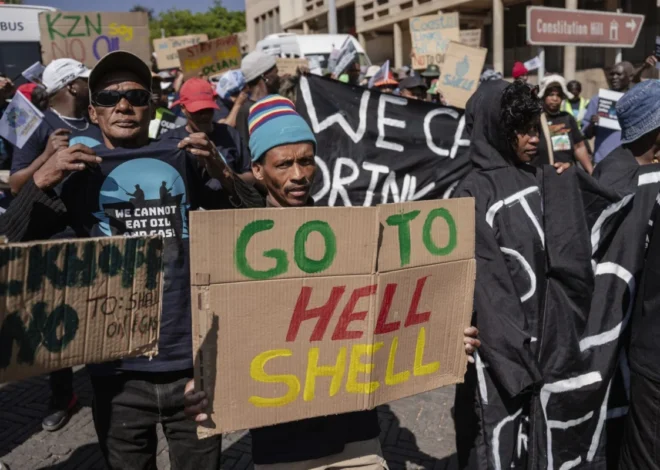
Constitutional Court of South Africa Bars Shell Oil Exploration in Landmark Victory for Environmental and Community Rights
The Battle for Saldanha Bay: South Africa’s Ambitious Ocean Economy Strategy Faces Legal and Environmental Reckoning