Dutch Navy Security Breach How a Five-Euro Tracker Exposed a Multimillion-Euro Frigate in the Mediterranean
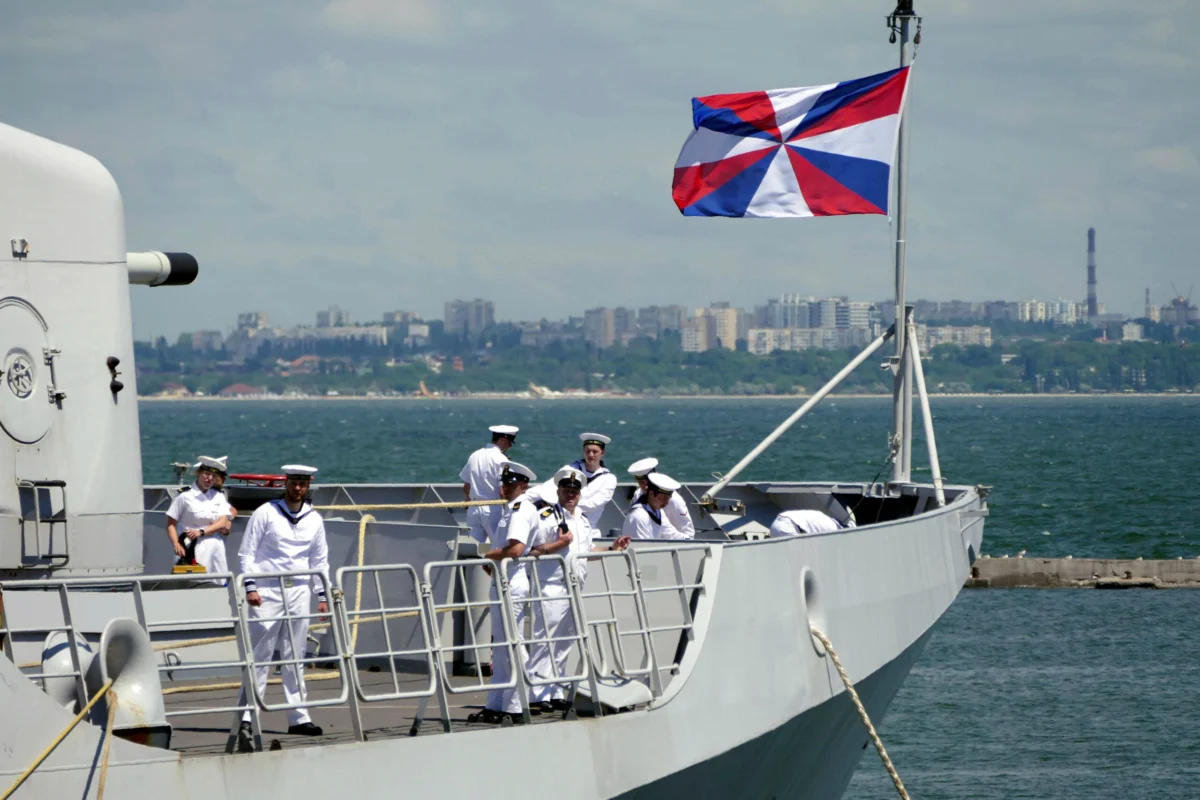
The Royal Netherlands Navy has launched an internal review of its security protocols following a startling demonstration of modern vulnerability in which a regional broadcaster successfully tracked a high-tech air-defense frigate using a consumer-grade electronic device. Omroep Gelderland, a Dutch media outlet, revealed this week that it managed to monitor the real-time movements of the HNLMS Evertsen, a De Zeven Provinciën-class frigate valued at approximately €500 million, by simply mailing a small Bluetooth tracker to the vessel via the official military postal service. The incident has raised significant concerns regarding operational security (OPSEC) and the ease with which sophisticated military assets can be compromised by readily available, low-cost technology.
At the time of the experiment, the HNLMS Evertsen was deployed as a critical component of the French-led carrier strike group centered around the nuclear-powered aircraft carrier Charles de Gaulle. The fleet was operating in the Mediterranean Sea as part of a mission intended to project power and ensure maritime stability in a region increasingly characterized by geopolitical tension. Despite the vessel’s advanced radar systems and stealth capabilities designed to evade enemy detection, it remained visible to a €5 gadget for nearly 24 hours while at sea.
Methodology of the Security Breach
The experiment conducted by Omroep Gelderland was deceptively simple, highlighting a loophole in the logistics chain that services Dutch military personnel abroad. Journalists followed the Ministry of Defence’s (MoD) own online instructions for sending mail to sailors stationed on active duty. While the MoD utilizes X-ray scanning for packages to detect prohibited items or explosives, the broadcaster noted that standard envelopes and greeting cards appeared to receive less rigorous scrutiny in public-facing documentation and videos.
To test this vulnerability, the team embedded a Bluetooth tracker—a device typically used for locating lost keys or luggage—inside a standard postcard. This tracker utilizes "crowdsourced" location data, pinging nearby smartphones to relay its coordinates to the owner’s application. By placing the device inside a flat envelope, the journalists successfully bypassed the initial screening processes at the military postal hub. The tracker was then transported through the standard military logistics chain, moving from the Dutch naval base in Den Helder to Eindhoven Airport, and eventually to a logistics hub in Greece.
Chronology of the Tracking Event
The timeline of the tracking event illustrates the precision with which the ship’s movements were monitored. The tracker’s journey began in the Netherlands, where it was logged moving through domestic sorting facilities. On March 26, the device’s signal appeared at the port of Heraklion on the island of Crete. Publicly available webcam footage from the harbor corroborated the tracker’s data, showing the HNLMS Evertsen moored at the quay.
On March 27, the frigate departed Heraklion to rejoin the Charles de Gaulle carrier strike group. As the ship moved into the Mediterranean, the journalists were able to observe the vessel sailing west along the Cretan coastline before it executed a turn toward the east. The real-time data continued to flow for approximately 24 hours while the ship was in open water, likely facilitated by the density of personal smartphones among the crew or other nearby vessels that picked up the tracker’s Bluetooth signal.
The tracking finally ceased on March 28 when the vessel was positioned near Cyprus. It was at this point that crew members discovered the device while sorting the day’s mail on board. Upon discovery, the tracker was disabled, ending the real-time surveillance, but not before the broadcaster had successfully demonstrated that a multimillion-euro warship could be followed by anyone with a basic internet connection and a few euros.
The Strava Precedent and Digital Footprints
This incident does not exist in a vacuum; rather, it follows a series of digital security lapses involving Western military forces. In March, the French newspaper Le Monde reported a similar vulnerability involving the Charles de Gaulle aircraft carrier. By analyzing data from the fitness-tracking app Strava, journalists were able to identify and locate a French officer who had recorded a seven-kilometer run while on the deck of the carrier. The GPS data from the officer’s connected smartwatch provided the exact coordinates of the carrier in real-time, effectively broadcasting the position of the French flagship to the public.
These "Stravaleaks" and the Evertsen tracker incident underscore a growing challenge for modern militaries: the ubiquity of personal electronic devices. Even when a ship’s official transponders, such as the Automatic Identification System (AIS), are turned off for tactical reasons, the "digital noise" generated by the crew’s personal gadgets can create a beacon for adversaries.
Expert Analysis and National Security Implications
Security experts have reacted to the Omroep Gelderland report with a mixture of alarm and a call for a fundamental shift in military culture. Rowin Jansen, an assistant professor of national security law at Radboud University, emphasized that the real-world consequences of such a breach could be catastrophic in a combat scenario.
"You do want to be able to intercept such a tracker," Jansen told the broadcaster. He noted that while commercial satellite imagery is often released with a delay to protect sensitive movements, real-time Bluetooth tracking provides an instantaneous data stream. "You certainly don’t want to make it easy for terrorists or hostile states to send a similar package and track a ship’s location. In a high-tension environment, you run the risk of having missiles fired at your coordinates."
Retired Lieutenant General Mart de Kruif, formerly the commander of the Royal Netherlands Army, suggested that the incident reflects a lingering "peacetime mentality" that is no longer compatible with the current global security environment. "In a large-scale conflict, everyone needs to ask themselves: What can I contribute to the safety of our men and women?" de Kruif stated. He argued that the military must move beyond simply following existing rules and start anticipating how technology can be weaponized in unconventional ways. "We are still a bit naive, and that mindset needs to change," he added.
Technical Vulnerabilities of the De Zeven Provinciën-class
The HNLMS Evertsen is one of four air-defense and command frigates (LCF) in the Dutch fleet. These ships are equipped with the Advanced Phased Array Radar (APAR) and the SMART-L long-range surveillance radar, designed to detect and track hundreds of targets simultaneously, including stealth aircraft and incoming missiles. The vessels are also armed with the Evolved SeaSparrow Missile (ESSM) and the SM-2 Block IIIA missile system.
Despite these formidable defensive suites, the ship has no inherent defense against a passive Bluetooth emitter contained within its own mailroom. The "Find My" networks used by trackers like Apple AirTags or Tile rely on the very smartphones that sailors carry in their pockets. Because the tracker does not need to connect to a satellite itself, but rather piggybacks on the cellular or Wi-Fi connections of nearby devices, it can operate in environments where traditional GPS might be jammed or restricted.
Official Response and Policy Changes
The Dutch Ministry of Defence has acknowledged the gravity of the incident and has already begun implementing corrective measures. A spokesperson for the MoD confirmed to Omroep Gelderland that the ministry is reviewing its entire protocol for military mail. One immediate change is a ban on sending greeting cards or packages containing batteries to the HNLMS Evertsen.
While the MoD downplayed the immediate operational risk of this specific experiment—arguing that the tracker was found shortly after the ship set sail—officials admitted that the loophole presented a significant theoretical danger. Defence Minister Dilan Yeşilgöz reportedly briefed the Dutch parliament on the matter on Thursday evening, signaling that the issue is being treated as a high-level security failure rather than a mere prank.
The ministry’s review is expected to look into more advanced screening technologies for mail hubs, including the possibility of signal-detection equipment that can identify active Bluetooth or cellular emitters inside sealed envelopes. However, the sheer volume of mail processed for international deployments makes 100% detection a logistical challenge.
Broader Impact on NATO Operations
The breach has implications beyond the Royal Netherlands Navy. As part of the Charles de Gaulle carrier strike group, the Evertsen’s security is inextricably linked to the safety of the entire fleet, which includes assets from several NATO allies. If a single frigate’s position is compromised, the "stealth" of the entire strike group is undermined, potentially exposing the aircraft carrier to long-range anti-ship cruise missiles or coordinated drone swarms.
This incident serves as a wake-up call for NATO member states to harmonize their OPSEC standards regarding personal electronics and logistics. As the war in Ukraine has demonstrated, electronic warfare and geolocation are now central to modern combat. The ability to locate a target via a "digital breadcrumb" can be just as effective as traditional reconnaissance, often at a fraction of the cost.
The Evertsen incident highlights a paradox of modern warfare: as military hardware becomes more expensive and technologically advanced, the "low-tech" vulnerabilities created by consumer electronics become increasingly prominent. For the Royal Netherlands Navy, the lesson is clear: in an era of total connectivity, even a postcard can be a weapon.

Related Posts
Pentagon Forges Landmark Seven-Year Agreements with Boeing and RTX to Accelerate Standard Missile-3 Production and Stabilize Defense Supply Chains
Boeing Unveils Ultra Low-Cost Seeker to Enhance Missile Inventory and Combat Cost Challenges in Modern Warfare