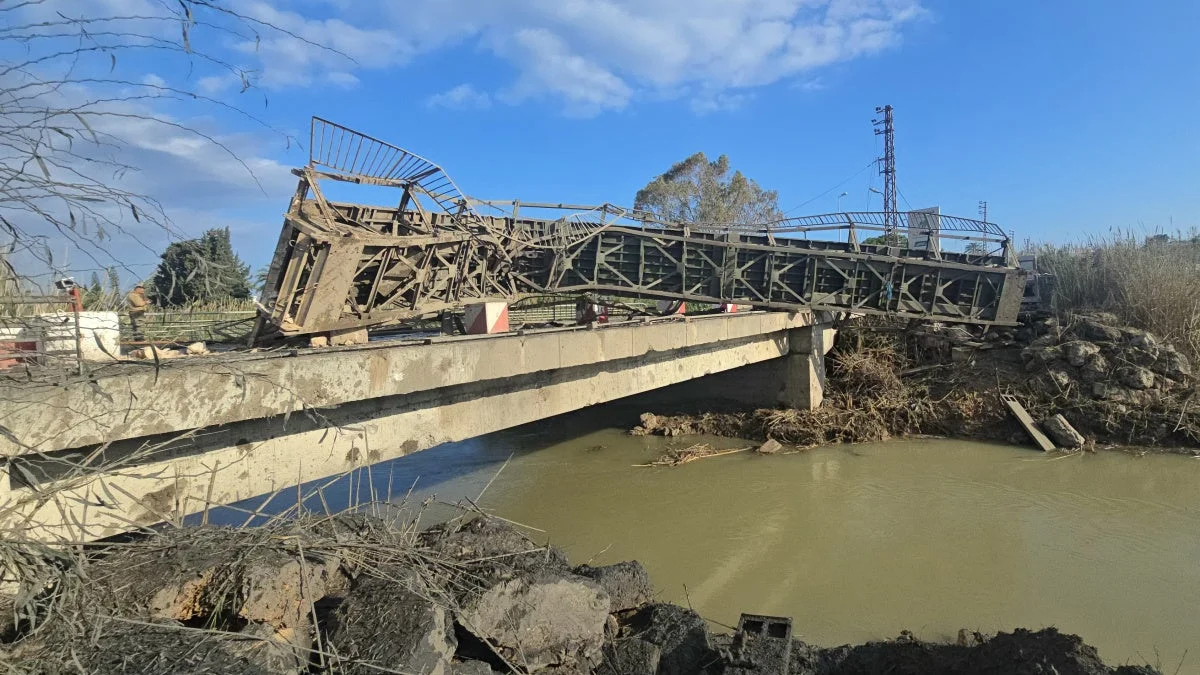
Destruction of Qasmieh Bridge in Southern Lebanon Isolated Thousands of Civilians and May Constitute a War Crime Human Rights Watch Reports
The Israeli military’s destruction of the Qasmieh bridge on April 16, 2026, has effectively severed the final primary land artery connecting Lebanese territory south of the Litani River to the rest of the country. This targeted strike, occurring just hours before a long-negotiated ceasefire was set to take effect, has left tens of thousands of civilians isolated in a combat zone with dwindling access to essential life-sustaining supplies. Human Rights Watch (HRW) stated on April 17 that the deliberate nature of the attack, coupled with the predictable and immense civilian harm it caused, necessitates an immediate international investigation into potential war crimes.
The Qasmieh bridge was the last major operational crossing for civilians and humanitarian aid following a systematic campaign by the Israeli Defense Forces (IDF) to disable infrastructure along the Litani River. Local officials and international observers have warned that the collapse of this logistical link creates a humanitarian "island" in the south, where residents are now cut off from hospitals, food distribution centers, and clean water supplies located to the north. As the ceasefire begins to hold, the focus has shifted to the legality of the strike and the urgent need for temporary infrastructure to prevent a secondary catastrophe of starvation and medical neglect.
A Chronology of Infrastructure Destruction
The destruction of the Qasmieh bridge was not an isolated incident but the culmination of a weeks-long military strategy aimed at paralyzing movement across the Litani River. To understand the impact of the April 16 strike, it is necessary to examine the timeline of events leading up to the bridge’s total collapse.
The escalation began in earnest on March 2, 2026, when hostilities intensified between the Israeli military and Hezbollah forces. Over the subsequent six weeks, the Israeli Air Force targeted a series of bridges and transit points. By early April, the majority of the permanent concrete structures spanning the Litani had been rendered impassable. On April 8, the Qasmieh bridge itself was targeted and damaged, yet it remained partially functional, allowing for the passage of light vehicles and humanitarian convoys.
On the morning of April 16, despite the looming ceasefire, the Israeli military launched a final, decisive strike. Human Rights Watch verified multiple videos and photographs shared by journalists on the ground, which captured the moment of the attack. The footage shows at least two high-precision munitions striking the bridge’s southern support structure. At the time of the explosion, civilian vehicles were observed on the approach roads from both the north and south. The resulting crater completely severed the roadway, making the crossing impossible for any form of vehicular traffic.
The Strategic and Humanitarian Significance of the Litani River
The Litani River has long served as a strategic boundary in Lebanese-Israeli conflicts. Running roughly parallel to the border, it defines the northern limit of what the international community often considers the "security zone" of southern Lebanon. Under UN Security Council Resolution 1701, the area between the Blue Line and the Litani River is intended to be free of any armed personnel and assets other than those of the Lebanese government and UNIFIL.
However, the destruction of bridges over the river has historically been used as a tactic to trap opposing forces or prevent the arrival of reinforcements. In this 2026 escalation, the Israeli military justified the strikes by alleging that Hezbollah used these crossings to transport "combat equipment and fighters." While the IDF did not issue a specific statement regarding the April 16 Qasmieh strike immediately, previous communiqués emphasized the necessity of preventing "reinforcements and means of combat" from entering the southern theater.
Despite these military justifications, the humanitarian cost of such a strategy is profound. The area south of the Litani is home to the ancient city of Tyre and dozens of surrounding villages. Even with the mass displacement seen since March, tens of thousands of residents—many of them elderly, disabled, or impoverished—remained in their homes. For these populations, the Qasmieh bridge was not a military asset but a lifeline.
Analysis of Humanitarian Impact and Casualty Data
The human toll of the conflict has been staggering. According to data provided by Lebanon’s Health Ministry, Israeli attacks killed more than 2,196 people between March 2 and April 7, 2026. This figure includes at least 172 children, 260 women, and 93 medical workers. On the opposite side, Hezbollah attacks have resulted in the deaths of at least two civilians in Israel, according to reports by the BBC.
The destruction of the Qasmieh bridge exacerbates these figures by creating a "medical desert" in the south. Healthcare workers in Tyre informed Human Rights Watch that the city’s hospitals rely on supplies—including oxygen, blood bags, and specialized medications—that are trucked in from Beirut and Sidon. With the bridges down, these supplies must now be navigated through rugged, mountainous terrain on small, unpaved roads that are often impassable for heavy transport vehicles.
The United Nations Office for the Coordination of Humanitarian Affairs (OCHA) warned in late March that the systematic targeting of infrastructure was "severing connectivity" and "impeding the delivery of essential supplies." The April 16 strike turned these warnings into a reality. Without the bridge, the delivery of flour to bakeries and fuel to water pumping stations has been halted, raising the specter of a localized famine and a surge in waterborne diseases.
Legal Implications: Proportionality and War Crimes
Under International Humanitarian Law (IHL), the legality of an attack on a "dual-use" facility—an object that serves both civilian and military purposes—is governed by the principle of proportionality. Even if a bridge is being used by an armed group for military transport, an attack on it is prohibited if the expected harm to civilians and civilian objects is excessive in relation to the concrete and direct military advantage anticipated.
Human Rights Watch argues that the April 16 strike likely failed the proportionality test. Because the Qasmieh bridge was the last operational crossing, the Israeli military should have known that its destruction would result in the total isolation of tens of thousands of civilians. "The Israeli military’s systematic and repeated attacks on bridges… demonstrate a callous disregard for the welfare of the tens of thousands of people still living there," said Ramzi Kaiss, Lebanon researcher at Human Rights Watch.
Furthermore, the timing of the strike—occurring just hours before a ceasefire—raises questions about the "concrete and direct military advantage" gained. If the cessation of hostilities was imminent, the strategic necessity of preventing reinforcements is significantly diminished, while the long-term humanitarian harm remains permanent. If an investigation determines that the bridge was not being used for military purposes at the time of the strike, the act would be classified as a deliberate attack on a civilian object, which is a war crime under the Rome Statute.
International Reactions and Official Responses
The international community has reacted with a mix of concern and calls for accountability. The United Nations High Commissioner for Human Rights previously noted that the destruction of vital infrastructure in Lebanon could lead to "catastrophic consequences" for the civilian population. Following the April 16 strike, several donor nations have expressed the need for "humanitarian corridors," though few have taken concrete steps to pressure the Israeli government.
Human Rights Watch has called on the United States, the United Kingdom, Germany, and other European Union states to take decisive action. This includes the suspension of arms sales and military assistance to Israel, as well as the imposition of targeted sanctions on officials implicated in the destruction of civilian infrastructure. HRW also urged the EU to suspend the trade pillar of its Association Agreement with Israel, citing persistent "atrocity crimes."
On the domestic front, Lebanon’s judicial authorities are being urged to initiate investigations into international crimes committed on its soil. Human Rights Watch has recommended that the Lebanese government formally accede to the International Criminal Court’s (ICC) Rome Statute to ensure a path for accountability for all parties to the conflict, dating back to at least October 2023.
Broader Impact and the Path Forward
The immediate priority for the Lebanese government and international aid agencies is the establishment of temporary crossings. "Donor countries should immediately take measures, including supporting the establishment of temporary crossings during the ceasefire, to try to secure access for civilians to items essential for their survival," HRW stated.
However, the establishment of pontoon bridges or temporary ferries is fraught with risk. Without explicit guarantees from the Israeli military that these new crossings will be respected and protected under IHL, aid agencies may be hesitant to deploy personnel and equipment. There is also the challenge of the terrain; the Litani River gorge is steep in many areas, and the existing road networks were designed specifically to feed into the now-destroyed major bridges.
The long-term implications of this infrastructure warfare are equally concerning. The reconstruction of Lebanon’s bridge network will cost hundreds of millions of dollars and take years to complete. In the interim, the economy of southern Lebanon—largely dependent on agriculture and trade with the north—is likely to collapse. The isolation of the south may also lead to a shift in the demographic and political landscape of the region, as those who can afford to leave do so, while the most vulnerable are left behind in a fractured and disconnected territory.
As the ceasefire takes hold, the destruction of the Qasmieh bridge stands as a stark reminder of the enduring impact of modern conflict on civilian life. Whether through the halls of the ICC or through the diplomatic pressure of arms-supplying nations, the international community faces a critical test: whether it will allow the systematic destruction of a nation’s lifelines to pass without consequence, or whether it will uphold the principles of international law that protect the most vulnerable in times of war. For the tens of thousands of people south of the Litani, the answer to that question is a matter of survival.

Related Posts
Human Rights Watch Calls for Investigation into Death of Detainee Following Removal from Najaf Hospital by Iraqi Drug Police
Human Rights Watch Urges UN Security Council to Extend Lebanon Peacekeeping Mission Amid Escalating Conflict and Humanitarian Crisis