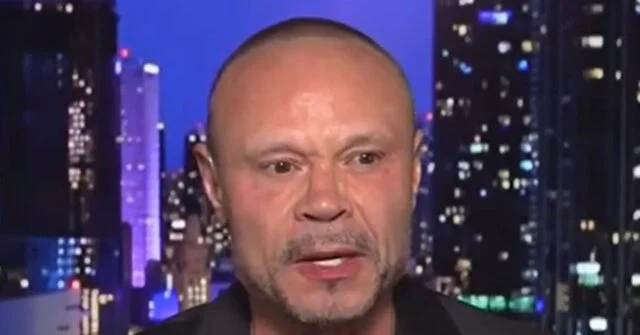
Dan Bongino Rejects Criticisms of Iran’s Imminent Threat Status Amidst Renewed Scrutiny of Trump-Era Policies
On Wednesday, during an appearance on FNC’s "Hannity," former FBI Deputy Director Dan Bongino vehemently rejected criticisms from former Trump counterterrorism official Joe Kent, who had suggested that Iran did not pose an "imminent threat." This assessment of an imminent threat had served as the foundational predicate for the Trump administration’s strategic military actions and policy shifts targeting the Islamic Republic of Iran. Bongino’s remarks underscored a continuing debate among former U.S. officials and analysts regarding the precise nature and urgency of the Iranian threat, particularly concerning its nuclear ambitions and regional destabilizing activities.
The Heart of the Debate: Defining "Imminent Threat"
Bongino, drawing on his extensive background in intelligence and law enforcement, challenged Kent’s assertion by emphasizing the breadth of intelligence he had personally reviewed. He posited that the prevailing narrative from within the administration, which justified robust responses to Iran, was based on compelling evidence. Bongino framed the dissenting view as an isolated one, questioning why no other former high-ranking administration officials had publicly supported Kent’s interpretation if it truly held merit. He stated, "Why has no one else from the administration if his case is legitimate that this was not an imminent threat? Don’t worry about the death to America, mullahs with 440 kilograms of enriched uranium that could create 10 or more nuclear bombs while you got a theocracy chanting again ‘Death to America.’ Even if that was correct, how come no one’s backed him up?"
The crux of Bongino’s argument revolved around the interpretation of "imminent." He cautioned against getting "lost on the word imminent," suggesting that a semantic game was being played. To illustrate his point, Bongino used a vivid analogy familiar to residents of Florida: a hurricane brewing offshore. He explained that while a hurricane might be four or five days away, if 99% of meteorologists predict it will be a Category 5, prudent action dictates preparation, not dismissal based on the precise definition of "immediacy." This analogy sought to broaden the understanding of "imminent" from an instantaneous, unavoidable peril to a high-probability, near-future danger that necessitates pre-emptive measures to mitigate catastrophic outcomes. He argued that Iran’s stated intentions, combined with its material capabilities, constituted such a threat, even if a direct attack wasn’t hours away.
Background: Trump Administration’s Iran Policy and Escalating Tensions
To fully grasp the context of this debate, it is essential to revisit the Trump administration’s approach to Iran. President Donald Trump, upon taking office, made a fundamental departure from the Obama-era policy, which had culminated in the Joint Comprehensive Plan of Action (JCPOA) in 2015. The JCPOA, negotiated by the P5+1 nations (China, France, Germany, Russia, the United Kingdom, and the United States) with Iran, aimed to curb Iran’s nuclear program in exchange for sanctions relief.
However, the Trump administration viewed the JCPOA as fundamentally flawed, arguing that it did not adequately address Iran’s ballistic missile program, its support for regional proxy groups, or the sunset clauses that would allow Iran to resume certain nuclear activities after a specified period. In May 2018, President Trump announced the United States’ unilateral withdrawal from the JCPOA, calling it the "worst deal ever." This move marked the beginning of a "maximum pressure" campaign, designed to compel Iran to negotiate a new, more comprehensive agreement.
The "maximum pressure" campaign involved the re-imposition and expansion of stringent economic sanctions targeting Iran’s oil exports, financial sector, and key industries. The aim was to cripple Iran’s economy and force a change in its behavior. This policy, while intended to be coercive, led to a significant escalation of tensions in the Persian Gulf region.
A chronological overview of key events illustrates this volatile period:
- May 2018: U.S. withdraws from JCPOA and re-imposes sanctions.
- May-June 2019: Attacks on oil tankers in the Gulf of Oman, widely attributed to Iran, and drone attacks on Saudi oil facilities.
- June 2019: Iran shoots down a U.S. RQ-4 Global Hawk surveillance drone, claiming it violated Iranian airspace. The U.S. maintains it was in international airspace. President Trump reportedly approved, then abruptly called off, retaliatory strikes.
- December 2019: A U.S. contractor is killed in a rocket attack on an Iraqi military base, attributed to an Iran-backed militia. The U.S. responds with airstrikes against Kataib Hezbollah facilities in Iraq and Syria.
- December 31, 2019: Pro-Iran militia supporters storm the U.S. Embassy compound in Baghdad.
- January 3, 2020: U.S. forces conduct a drone strike near Baghdad International Airport, killing Qassem Soleimani, commander of the Quds Force of Iran’s Islamic Revolutionary Guard Corps (IRGC), and Abu Mahdi al-Muhandis, a leader of the Popular Mobilization Forces in Iraq.
The strike against Soleimani was explicitly justified by the Trump administration on the grounds of an "imminent threat" to American personnel and interests. Officials, including then-Secretary of State Mike Pompeo, cited intelligence indicating Soleimani was actively planning "imminent attacks" against U.S. diplomats and service members in Iraq and across the region. This particular action remains one of the most significant examples of the "imminent threat" doctrine in practice during the Trump presidency and directly relates to the debate Bongino was engaging in.
Iran’s Nuclear Trajectory and Provocative Rhetoric
Bongino’s comments regarding Iran’s nuclear material and its theocratic government’s rhetoric are central to understanding the perceived threat. He specifically referenced "mullahs with 440 kilograms of enriched uranium that could create 10 or more nuclear bombs." This figure, if accurate at the time of his intelligence access, is highly significant. While 440 kg of enriched uranium (likely referring to low-enriched uranium, or LEU, enriched to 3.67% or 5%) is not directly weapons-grade material (which typically requires enrichment to 90% or higher), it represents a substantial feedstock. The process of further enriching LEU to weapons-grade levels, known as "breakout time," becomes significantly shorter and less resource-intensive with a larger stockpile of LEU. Experts estimate that roughly 1,000 kg of 3.67% LEU is needed to produce enough weapons-grade uranium for one bomb, meaning 440 kg is a significant portion. Iran’s actions post-JCPOA withdrawal, including increasing its enrichment levels to 20% and later 60%, have substantially reduced its breakout time, raising serious proliferation concerns.
Coupled with this material capability is Iran’s consistent "Death to America" (Marg bar Amrika) and "Death to Israel" (Marg bar Esra’il) chants, which are a staple of state-sponsored rallies and official discourse. Bongino highlighted these chants as undeniable evidence of hostile intent. While some analysts might dismiss such rhetoric as mere political posturing for domestic consumption, Bongino and others view it as a clear articulation of ideological goals and a declaration of long-term strategic objectives against the United States and its allies. In the context of a criminal case, as Bongino argued, such explicit threats, combined with material capabilities, would strongly indicate intent.
Furthermore, Iran’s history of supporting terrorist organizations and proxy militias across the Middle East—including Hezbollah in Lebanon, various Shiite militias in Iraq, the Houthis in Yemen, and Palestinian groups—has been a continuous source of regional instability and a direct threat to U.S. interests and personnel. These actions, combined with the nuclear program and hostile rhetoric, paint a picture of a regime actively working against U.S. strategic objectives and security.
The "Imminent Threat" Doctrine and Intelligence Interpretations
The concept of "imminent threat" is a cornerstone of international law regarding self-defense and a frequently debated aspect of U.S. foreign policy. Traditionally, the Caroline doctrine, established in the 19th century, stipulated that a nation could act in self-defense only when the necessity of that self-defense was "instant, overwhelming, leaving no choice of means, and no moment for deliberation." This narrow definition has evolved in the modern era, particularly after 9/11, to encompass threats that may not be immediate in terms of hours or days but are deemed highly probable and potentially catastrophic if left unchecked.
The Bush administration’s "pre-emptive self-defense" doctrine, articulated in the 2002 National Security Strategy, broadened this interpretation, allowing for action against emerging threats before they fully materialize. The challenge lies in the subjective nature of "imminence" and the reliance on often-classified intelligence. Different intelligence analysts, policymakers, and legal experts can interpret the same intelligence differently, leading to disagreements about the urgency and appropriate response to a given threat.
Bongino’s reference to having "no dog in the fight anymore outside of the fact that I just love the country and was proud of my service there" and his assurance that "I saw the entire body of intelligence up until I left. Nobody kept anything from me" speaks to the integrity of the intelligence process as he experienced it. He implicitly suggests that those criticizing the "imminent threat" assessment might not have had access to the full scope of intelligence or might be misinterpreting it. The intelligence community often grapples with "known knowns," "known unknowns," and "unknown unknowns," and assessments are rarely unanimous or without dissenting viewpoints.
The Diplomatic Off-Ramps That Were Not Taken
Bongino also underscored the Trump administration’s attempts to offer Iran diplomatic "off-ramps," which he claims were consistently rejected. He specifically mentioned that Iran "were offered a civilian nuclear program by Donald Trump. They were offered a thousand exits off the Long Island expressway and they took none of them." This refers to the Trump administration’s repeated assertions that it was open to negotiations for a new deal, provided Iran ceased its malign activities and fully abandoned its nuclear weapons ambitions.
For instance, in September 2019, President Trump indicated he was willing to meet with Iranian President Hassan Rouhani without preconditions. However, Iran maintained that any talks would first require the U.S. to lift sanctions and return to the JCPOA. This impasse highlighted the deep distrust between the two nations and Iran’s unwillingness to yield to the "maximum pressure" campaign without significant concessions from the U.S. perspective. Iran viewed the U.S. withdrawal from the JCPOA as a breach of international commitments and an act of aggression, making further negotiations under duress unacceptable. From Bongino’s perspective, this refusal to engage constructively, even when offered alternatives to a confrontational path, further solidified the perception of Iran’s hostile intent and unwavering trajectory.
Broader Impact and Enduring Implications
The debate over Iran’s "imminent threat" status, particularly during the Trump administration, carries significant broader implications for U.S. foreign policy, international law, and regional stability.
Firstly, it highlights the inherent difficulties in justifying military action based on intelligence assessments, especially when those assessments are classified and not fully verifiable by the public or even all policymakers. The transparency surrounding such decisions is crucial for maintaining public trust and international legitimacy.
Secondly, the "maximum pressure" campaign and the Soleimani strike undeniably reshaped the geopolitical landscape of the Middle East. While proponents argue that these actions deterred further Iranian aggression and weakened the regime, critics contend that they merely exacerbated tensions, pushed Iran closer to developing nuclear weapons, and further destabilized an already volatile region. The long-term consequences of these actions, including Iran’s continued defiance and its acceleration of nuclear activities, remain a critical concern for U.S. national security and its allies.
Finally, the discussion underscores the continuous challenge of dealing with state actors that blend conventional military capabilities with asymmetric warfare tactics, nuclear ambitions, and a deeply ingrained anti-Western ideology. The question of how to effectively counter such a multifaceted threat—whether through diplomacy, sanctions, deterrence, or pre-emptive military action—remains one of the most complex and pressing issues in U.S. foreign policy. Bongino’s resolute rejection of criticisms against the "imminent threat" assessment serves as a powerful reminder of the deep divisions in how the Iranian challenge is perceived and, consequently, how it should be addressed. The ramifications of these differing interpretations continue to shape U.S. engagement in the Middle East and its relationship with a persistent adversary.

Related Posts
Democratic Candidates Must Moderate to Win General Elections, Says Rep. Greg Stanton
Lisa Demuth Secures Republican Gubernatorial Nomination in Minnesota, Defeating Trump-Endorsed Mike Lindell