
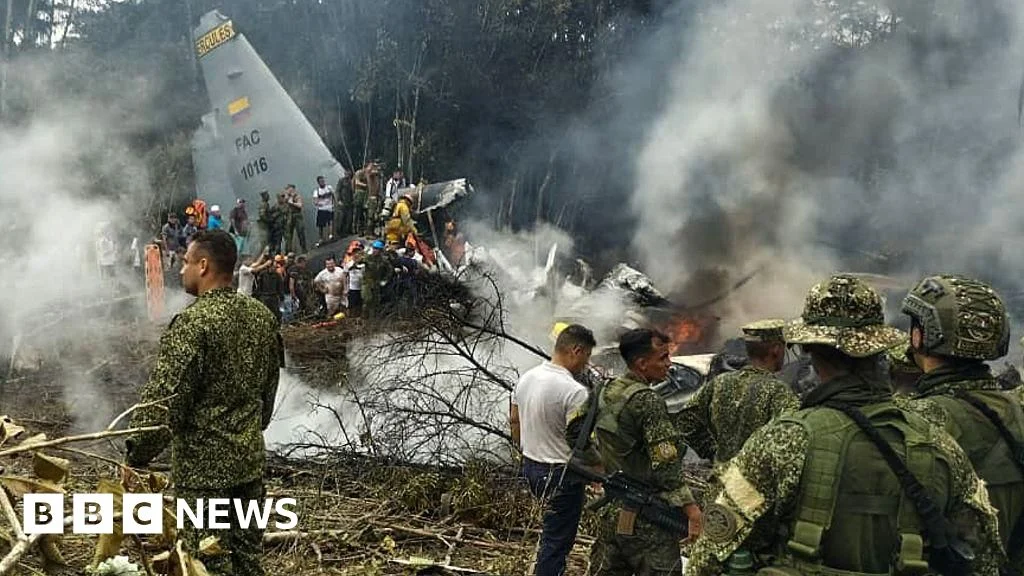
Colombian Air Force Hercules C-130 Crash Claims 66 Lives in Putumayo, Sparking Calls for Military Modernization and Urgent Investigation.
A catastrophic incident unfolded in Colombia’s southern Putumayo province this week when a Colombian Air Force (FAC) Lockheed Martin C-130 Hercules transport aircraft crashed shortly after takeoff, resulting in the deaths of at least 66 individuals and leaving dozens more injured. The tragic event, which occurred near the remote town of Puerto Leguízamo, has plunged the nation into mourning and prompted urgent calls for a comprehensive investigation and accelerated military modernization efforts.
Details of the Catastrophe and Initial Response
The ill-fated aircraft, a robust C-130 Hercules, a mainstay in military transport operations globally, was carrying a significant contingent of military personnel when it went down on March 23, 2026. According to Air Force Commander Carlos Fernando Silva Rueda, 114 army personnel were aboard, alongside 11 crew members, underscoring the substantial loss of life within the country’s armed forces. The crash site, characterized by scattered debris and thick plumes of smoke, quickly became a scene of intense search and rescue efforts, as emergency workers scrambled to locate survivors amidst the wreckage.
The incident occurred in a rural area adjacent to Puerto Leguízamo, a municipality strategically located in the Amazon basin, close to Colombia’s borders with Peru. This remote and often challenging terrain complicated initial response efforts, though local communities demonstrated remarkable solidarity, with footage emerging of residents transporting injured soldiers from the accident site to nearby hospitals on the back of small motorbikes, highlighting the immediate and profound impact on the region.
Defence Minister Pedro Sánchez confirmed the nature of the "tragic accident" and conveyed the nation’s profound sadness. He later revealed a critical and harrowing detail: ammunition being carried on board the aircraft detonated as a result of a fire after the crash, likely exacerbating the destruction and contributing to the high casualty count. Military sources, including those who spoke to AFP and Reuters, further clarified the breakdown of the deceased, reporting that 58 soldiers, six air force personnel, and two police officers perished in the disaster. This makes it one of the deadliest accidents in the recent history of the Colombian Air Force, sending shockwaves through the military and the wider public.
A Chronology of a Tragic Day
The events of March 23, 2026, unfolded rapidly, transforming a routine military transport flight into a national tragedy.
- Pre-dawn/Early Morning: The Lockheed Martin C-130 Hercules, a workhorse of the Colombian Air Force, was prepared for a mission involving troop transport. The specific destination and mission objectives, while not fully disclosed, are understood to be routine logistical support within Colombia’s southern territories, often involving anti-narcotics operations or border security patrols.
- Morning – Takeoff from Puerto Leguízamo: The aircraft commenced its takeoff sequence from the air base near Puerto Leguízamo. Eyewitness accounts, which are crucial for the ongoing investigation, will likely detail any unusual sounds or visual cues observed during this critical phase.
- Minutes Post-Takeoff – The Crash: Shortly after lifting off, the aircraft encountered severe difficulties. The exact nature of these difficulties remains the central focus of the investigation. The plane veered, lost altitude rapidly, and crashed into a rural area not far from the departure point. Initial reports indicated a rapid descent followed by impact.
- Immediate Aftermath – Smoke and Debris: A massive plume of smoke quickly ascended from the crash site, visible for miles around. Debris was scattered widely, indicating the force of the impact. The presence of significant fire was noted almost immediately.
- Emergency Response Mobilization: Local emergency services, military units stationed nearby, and civilian volunteers were the first responders. The remote location and challenging terrain, characterized by dense vegetation and limited infrastructure, presented significant obstacles to rapid access. Images shared by local media depicted military trucks carrying soldiers rushing towards the scene, underscoring the urgency.
- Discovery of Casualties and Ammunition Detonation: Rescuers arriving at the scene were confronted with a devastating tableau. The wreckage was extensive, and the scale of human loss was immediately apparent. Defence Minister Sánchez later confirmed that ammunition onboard had detonated due to the post-crash fire, complicating rescue efforts and tragically increasing the severity of the incident.
- Search and Rescue/Recovery Efforts: Throughout the day and into the night, search and rescue teams meticulously combed through the wreckage. The priority shifted from finding survivors to recovering the deceased, a grim task made more difficult by the scattered nature of the site and the remote environment. Local citizens, on motorbikes and foot, played an invaluable role in ferrying the injured to medical facilities, a testament to community resilience.
- Official Confirmation and Statements: By late morning and early afternoon, Colombian Air Force Commander Carlos Fernando Silva Rueda and Defence Minister Pedro Sánchez began releasing official statements, confirming the crash and providing initial casualty figures. President Gustavo Petro later issued a poignant statement via social media, expressing his condolences and laying blame on systemic issues.
- Launch of Investigation: Almost immediately, an official investigation was launched by military and aviation authorities to determine the precise cause of the accident, a process expected to be thorough and potentially lengthy.
The Workhorse: Lockheed Martin C-130 Hercules
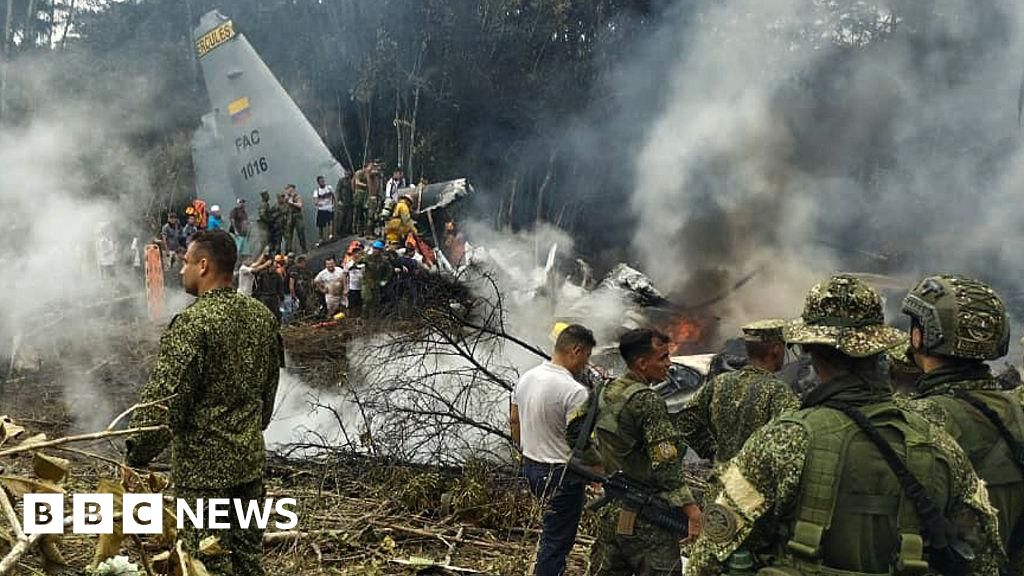
The aircraft involved in the crash was a Lockheed Martin C-130 Hercules, a revered tactical airlifter that has been a cornerstone of military and humanitarian operations worldwide for over six decades. Known for its rugged design, versatility, and ability to operate from austere airfields, the C-130 has earned its reputation as a reliable workhorse. Different variants serve diverse roles, including troop and cargo transport, aerial refueling, search and rescue, and special operations.
The Colombian Air Force (FAC) operates a fleet of C-130s, which are vital for projecting military presence, transporting personnel and supplies to remote areas, and supporting anti-narcotics campaigns and disaster relief efforts across the country’s vast and geographically diverse terrain. These aircraft are particularly crucial in regions like Putumayo, where ground infrastructure is often limited, making air transport the most efficient, and sometimes only, means of access. The FAC’s C-130s are regularly deployed to move troops and equipment to areas grappling with illegal mining, coca cultivation, and the presence of armed groups.
While the C-130 boasts an impressive safety record globally given its long operational history and extensive use, the age of many units in service worldwide, including potentially some in the Colombian fleet, can pose maintenance challenges. President Petro’s comments regarding "bureaucratic problems" holding up modernization plans implicitly suggest that the age and maintenance status of military equipment, including aircraft, are areas of concern for the Colombian government. A thorough examination of the crashed aircraft’s maintenance records, flight hours, and specific operational history will be critical to the ongoing investigation.
Geographic and Strategic Context: Putumayo Province
The crash site near Puerto Leguízamo places the tragedy within a region of immense strategic importance and considerable challenges. Putumayo is a department in southwestern Colombia, nestled in the Amazon basin, bordering both Peru and Ecuador. It is characterized by dense rainforest, major rivers like the Putumayo and Caquetá, and a sparse population concentrated along waterways.
This region is historically significant for its biodiversity, but also for its complex socio-political landscape. Putumayo has long been a flashpoint for internal conflict, marked by the presence of various armed groups, including remnants of FARC dissidents, other insurgent forces, and powerful drug trafficking organizations. The cultivation of coca, the raw material for cocaine, is rampant, leading to ongoing eradication efforts and clashes between security forces and illegal groups.
Military operations in Putumayo are therefore frequent and essential for national security. The remoteness of many communities and the lack of developed road networks mean that air transport, such as that provided by the C-130, is indispensable for troop deployment, logistical support, and medical evacuations. The crash underscores the inherent risks faced by military personnel operating in such demanding environments, where air superiority and reliable transport are not just conveniences but necessities for effective operations. The challenges of conducting search and rescue in dense jungle terrain further highlight the difficulties inherent in this region.
Official Reactions and Pledges for Change
The tragedy elicited immediate and strong reactions from the highest levels of Colombian government. President Gustavo Petro took to X (formerly Twitter) to express his profound sorrow, stating that "this horrendous accident… should not have happened." His message went further, critically linking the incident to "bureaucratic problems" that he claimed had delayed his administration’s plans to modernize the armed forces’ equipment and aircraft fleet. "I will allow no further delays, the lives of our young people are at stake," Petro vowed, signaling a renewed urgency for military upgrades without explicitly detailing how these delays might have contributed to this specific accident.
Defence Minister Pedro Sánchez reiterated the deep sadness felt across the country, describing the incident as a "tragic accident" that profoundly affected the security forces. His confirmation regarding the ammunition detonation provided a grim insight into the post-impact dynamics, suggesting that the initial fire escalated rapidly due to the volatile cargo. Air Force Commander Carlos Fernando Silva Rueda provided the initial, crucial details on the number of personnel on board, demonstrating the military’s immediate efforts to provide transparent information amidst the unfolding crisis.
Beyond these direct statements, it can be inferred that other government officials, military leaders, and international partners have extended their condolences and offered support. Such a high-casualty event inevitably leads to a period of national mourning, with pledges of support for the victims’ families and commitments to ensure such an incident is thoroughly investigated to prevent future occurrences.
The Road Ahead: Investigation and Implications
The primary focus now shifts to a meticulous and comprehensive investigation to determine the exact cause of the crash. Air crash investigations are complex and involve multiple layers of analysis. Investigators will typically recover and analyze the aircraft’s flight recorders ("black boxes"), examine the wreckage for structural failures or mechanical malfunctions, review maintenance records, scrutinize flight plans and operational procedures, and interview any witnesses. Given President Petro’s remarks, the age and maintenance history of the specific C-130 involved will likely be under intense scrutiny, as will the broader procurement and modernization processes within the FAC.
The implications of this disaster are far-reaching. For the Colombian military, it represents a significant loss of life and a blow to morale, particularly given the large number of army personnel involved. It may necessitate a review of standard operating procedures for troop transport, especially concerning the carriage of ammunition.
More broadly, the incident reignites the critical national debate on military modernization. Colombia’s armed forces play a crucial role in maintaining internal security, combating illegal armed groups, and countering drug trafficking. To fulfill these responsibilities effectively and safely, they require modern, well-maintained equipment. President Petro’s strong statement underscores the political will to address these "bureaucratic problems," potentially leading to expedited procurement processes and increased investment in military hardware and maintenance infrastructure. This commitment is vital not only for the safety of service members but also for the overall effectiveness of Colombia’s security apparatus in a nation still contending with complex internal challenges.
The tragedy serves as a stark reminder of the sacrifices made by military personnel in the line of duty and the inherent risks associated with their vital work. As Colombia mourns the fallen, the nation will look to the findings of the investigation to provide answers and to the government’s actions to ensure the safety and modernization of its armed forces.

Related Posts
Zambia on Edge: Opposition Leader Arrested Amid Allegations of Insurrection Plot and Election Tensions
Rescuers search for survivors of powerful Indonesia earthquake

