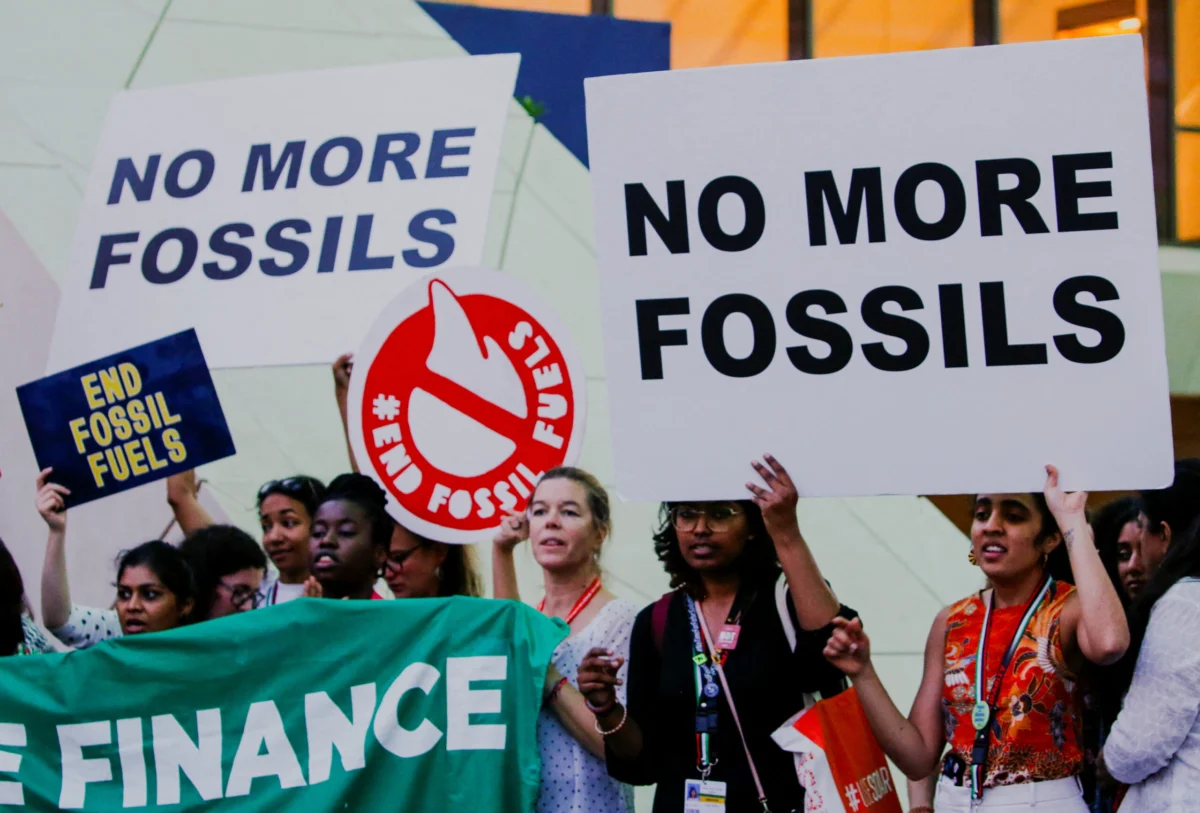
Canada Australia Brazil and Norway are set to attend the Santa Marta summit but the world’s biggest fossil fuel producers are missing from the list.
The upcoming diplomatic gathering in the coastal city of Santa Marta, Colombia, is being framed as a decisive moment for middle-power fossil fuel producers attempting to navigate the precarious path between resource extraction and global decarbonization commitments. However, the absence of the world’s largest oil and gas giants—most notably the United States, Saudi Arabia, Russia, and China—raises significant questions regarding the summit’s ability to shift the global needle on fossil fuel phase-out.
As of late March 2026, the confirmation of attendance by Canada, Australia, Brazil, and Norway signals a burgeoning "middle-way" coalition. These four nations share a unique, often contradictory, position: they are wealthy or emerging economies with significant democratic institutions and ambitious climate targets, yet they remain deeply tethered to the export of coal, oil, or gas. Their presence in Santa Marta suggests a willingness to discuss the "managed decline" of fossil fuel production, a topic that remains a red line for the world’s top producers.
The Santa Marta Mandate: A New Diplomatic Front
The Santa Marta summit, scheduled for late April 2026, follows years of escalating tension within the United Nations Framework Convention on Climate Change (UNFCCC) process. Since the landmark agreement at COP28 in Dubai to "transition away" from fossil fuels, progress has been uneven. While the 2024 and 2025 climate conferences saw incremental gains in renewable energy financing, the core issue of supply-side regulation—actually limiting what comes out of the ground—has been largely sidelined by the world’s biggest producers.
Colombia, under the leadership of a government that has championed the "Beyond Oil and Gas" movement, has positioned the Santa Marta summit as a technical and political workshop for countries that want to lead the transition rather than be forced into it by market collapse. The summit’s agenda is reportedly focused on three pillars: the elimination of fossil fuel subsidies, the standardizing of methane emission measurements, and the creation of a "Just Transition" fund for workers in extractive industries.
Profiles of the Attendees: The Producers in Transition
The four primary attendees—Canada, Australia, Brazil, and Norway—represent a significant cross-section of the global energy market. Their participation is seen as a high-stakes gamble to define the "responsible producer" archetype for the late 2020s.
Canada
Canada’s participation comes at a time of intense domestic friction. The federal government has committed to a net-zero grid by 2035 and a cap on oil and gas emissions, yet Canada remains the world’s fourth-largest oil producer. The Canadian delegation is expected to focus on Carbon Capture and Storage (CCS) technologies as a primary bridge, a position that environmental advocates in Santa Marta are prepared to challenge.
Australia
Australia’s presence marks a continued shift from its previous status as a climate laggard. As one of the world’s top coal and Liquefied Natural Gas (LNG) exporters, Australia’s Labor government is seeking to rebrand the nation as a "renewable energy superpower." In Santa Marta, Australia is expected to seek partnerships on green hydrogen and critical minerals, attempting to find a diplomatic formula that allows for the phased closure of coal mines without triggering economic shockwaves.
Norway
Norway remains the most sophisticated actor in this group. With a sovereign wealth fund built on North Sea oil, Norway has decoupled its domestic energy use (which is almost entirely renewable) from its export economy. Norway’s role in Santa Marta will likely be that of a mentor in "transition finance," though it continues to face criticism for opening new oil fields in the Arctic.

Brazil
Brazil’s attendance is perhaps the most diplomatically significant. As the host of COP30 in Belem just months ago, Brazil is attempting to balance its role as a leader of the Global South with its status as a top-ten oil producer. President Luiz Inácio Lula da Silva has emphasized that Brazil must protect the Amazon while also utilizing Petrobras’s revenues to fund a social safety net. Brazil’s goal in Santa Marta is to ensure that the transition away from fossil fuels does not result in a new form of "green colonialism."
The Elephant in the Room: The Missing Super-Producers
The effectiveness of any agreement reached in Santa Marta is inherently limited by the absence of the "Big Four." The United States, currently the world’s largest producer of both oil and gas, has declined the invitation, citing a preference for existing multilateral frameworks like the G7 and G20. Similarly, Saudi Arabia and the United Arab Emirates have maintained that production levels should be dictated by market demand rather than diplomatic summits.
Data from the International Energy Agency (IEA) suggests that without the participation of these major producers, the Santa Marta group represents only about 12% of global oil production and 15% of global gas production. Analysts argue that while the summit can create a "gold standard" for production phase-outs, it cannot prevent a "race to the bottom" if the major producers continue to flood the market with cheaper, less-regulated hydrocarbons.
"The absence of the US and the Gulf States is a clear signal that the world’s largest energy powers are not yet ready to discuss the end of the fossil fuel era," says Dr. Elena Moretti, a senior fellow at the Global Energy Institute. "Santa Marta is a laboratory for the future, but the present is still being written by those who aren’t in the room."
Chronology of the Fossil Fuel Transition (2023–2026)
To understand the stakes of the Santa Marta summit, one must look at the timeline of diplomatic shifts leading up to this point:
- December 2023 (COP28): The "Dubai Consensus" is reached, marking the first time a UN climate agreement explicitly mentions "transitioning away from fossil fuels in energy systems."
- November 2024 (COP29): Negotiations in Baku focus heavily on climate finance, but a rift emerges between "High Ambition" nations and "Petrostates" over the speed of the transition.
- June 2025: The IEA releases its updated Net Zero roadmap, warning that no new long-lead oil and gas projects can be approved if the 1.5°C goal is to remain viable.
- November 2025 (COP30): Brazil hosts the summit in Belem. The "Belem Declaration" calls for a formal mechanism to track the reduction of fossil fuel supply, but fails to gain universal consensus.
- January 2026: Colombia announces the Santa Marta Summit as a specialized forum for "First Mover" producers.
Supporting Data: The Economic Reality
The nations attending the Santa Marta summit face a daunting economic challenge. For Canada and Norway, fossil fuels represent a significant portion of their GDP and export revenue. For Australia, the coal industry is a major employer in regional communities.
| Country | Fossil Fuel Exports (% of Total Exports) | Net Zero Target Year | Renewable Share of Grid (2025) |
|---|---|---|---|
| Canada | 22% | 2050 | 68% |
| Australia | 31% | 2050 | 42% |
| Norway | 62% | 2050 | 98% |
| Brazil | 15% | 2050 | 89% |
These figures highlight the disparity between domestic energy use and export-driven emissions. The Santa Marta summit aims to address "Scope 3" emissions—the emissions generated when the exported fuel is burned abroad—which currently fall outside the domestic accounting of most producing nations.
Official Responses and Stakeholder Reactions
The announcement of the attendee list has drawn a mix of praise and skepticism from the international community.
A spokesperson for the Colombian Ministry of Mines and Energy stated: "Santa Marta is not about pointing fingers; it is about creating a blueprint for survival. We are bringing together the nations that have the most to lose from a chaotic transition and the most to gain from an orderly one."

Environmental groups, including the Fossil Fuel Non-Proliferation Treaty Initiative, have welcomed the summit but warned against the influence of industry lobbyists. "It is encouraging to see Canada and Australia at the table," said a representative from 350.org. "But if they use this summit to promote ‘abated’ fossil fuels and CCS loopholes, it will be a missed opportunity. We need a commitment to an end date for extraction, not just a plan to paint the rigs green."
Conversely, industry groups have expressed concern that the summit could lead to "divestment pressure" that destabilizes energy markets. The World Energy Council released a statement noting that "prematurely restricting supply in stable, democratic nations only empowers less transparent producers who do not share the same environmental or social standards."
Broader Impact and Implications
The Santa Marta summit represents a shift toward "minilateralism"—small groups of like-minded countries moving faster than the broader UN consensus. If the summit produces a concrete framework for reducing production, it could serve as a template for future international law.
One of the key outcomes being watched is the potential for a "Green Producer Club." This would involve preferential trade agreements or carbon border adjustments among countries that adhere to strict production phase-out schedules. Such a move would effectively create a two-tier global energy market: one for "certified transition fuels" and another for "unregulated hydrocarbons."
Furthermore, the summit will test the viability of the "Just Transition" narrative. If Canada and Australia can demonstrate a plan to transition their workforce without the economic devastation seen in the 1980s coal industry declines, they may provide the political cover necessary for other nations to follow suit.
Conclusion: The Road to April
As delegations prepare to head to the Caribbean coast of Colombia, the eyes of the climate policy world are on Santa Marta. While the absence of the world’s largest producers limits the immediate impact on global carbon concentrations, the summit represents the first serious attempt to organize the "supply side" of the climate equation.
The success of the meeting will be measured not by the rhetoric of the closing communiqué, but by whether Canada, Australia, Brazil, and Norway are willing to put actual limits on their future licensing rounds. Without the "Big Four," the Santa Marta group is a vanguard; with them, it would be a revolution. For now, the world must wait to see if this middle-power coalition can build enough momentum to eventually force the hand of the giants.

Related Posts
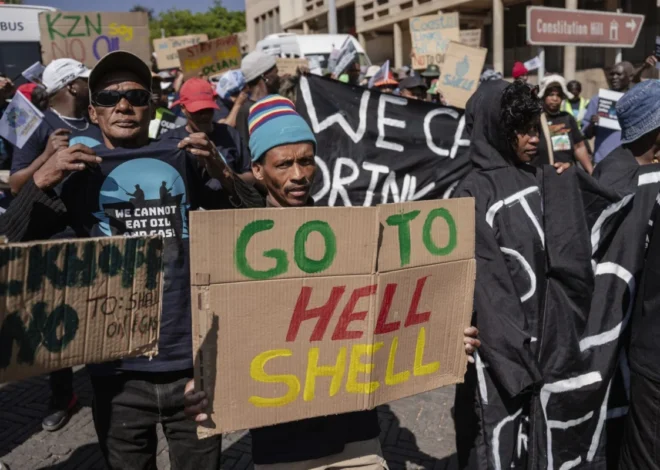
Constitutional Court of South Africa Bars Shell Oil Exploration in Landmark Victory for Environmental and Community Rights
The Battle for Saldanha Bay: South Africa’s Ambitious Ocean Economy Strategy Faces Legal and Environmental Reckoning