Britain Authorizes United States to Launch Strikes Against Iranian Missile Sites from UK Bases Amid Escalating Strait of Hormuz Conflict
The British government formally granted authorization on Friday for the United States military to utilize sovereign British airbases to conduct offensive operations against Iranian missile installations. These sites, located within Iranian territory, have been identified as the primary source of ongoing attacks against international shipping in the Strait of Hormuz, a critical maritime chokepoint for global energy supplies. The decision, announced via a Downing Street statement following a high-level ministerial meeting, represents a significant shift in the United Kingdom’s involvement in the burgeoning conflict in the Middle East and highlights the intensifying pressure on the "Special Relationship" between London and Washington.
According to the official communique, British ministers convened on Friday to evaluate the deteriorating security situation and the implications of Iran’s blockade of the Strait of Hormuz. The Cabinet confirmed that the existing defense agreements with the United States regarding the collective self-defense of the region now explicitly include "U.S. defensive operations to degrade the missile sites and capabilities being used to attack ships." This authorization specifically names RAF Fairford in Gloucestershire and the joint U.S.-U.K. facility at Diego Garcia in the Indian Ocean as the primary hubs for these operations.
A Strategic Pivot in British Foreign Policy
The authorization marks a stark reversal for Prime Minister Keir Starmer, who has spent much of the week attempting to distance the United Kingdom from direct kinetic involvement in the war. Earlier in the week, the Prime Minister insisted that Britain would not be "drawn into a war" and initially rebuffed a formal request from the White House for the use of British facilities. At the time, Starmer’s administration emphasized the need for rigorous legal scrutiny, stating that the government had to be "satisfied that any military action was legal" under international frameworks and the UN Charter.
However, the geopolitical landscape shifted rapidly over a 48-hour period. Iranian forces reportedly conducted a series of missile and drone strikes targeting British allies across the Middle East, including infrastructure in the Persian Gulf. These provocations, coupled with the continued disruption of commercial shipping, appear to have provided the legal and political impetus for the Starmer administration to modify its stance. By framing the authorization as an act of "collective self-defense," the British government seeks to align itself with international maritime law while providing the U.S. Air Force with the logistical reach necessary to strike hardened targets deep within Iran.
Chronology of the Escalation
The road to Friday’s authorization has been marked by rapid military build-ups and sharp diplomatic exchanges. The following timeline outlines the key events leading to the current crisis:
- Early March 2026: Iran intensifies its presence in the Strait of Hormuz, citing regional security concerns and Western interference. Incidents of "harassment" against commercial tankers begin to rise.
- March 12, 2026: A series of anti-ship cruise missiles are launched from the Iranian coast, striking two civilian vessels. The United States announces the deployment of additional carrier strike groups to the region.
- March 15, 2026: The Trump administration issues a formal request to the United Kingdom to utilize RAF Fairford and Diego Garcia for long-range bomber sorties.
- March 16, 2026: Prime Minister Keir Starmer publicly expresses hesitation, citing the need for a legal mandate and expressing a desire for a diplomatic resolution.
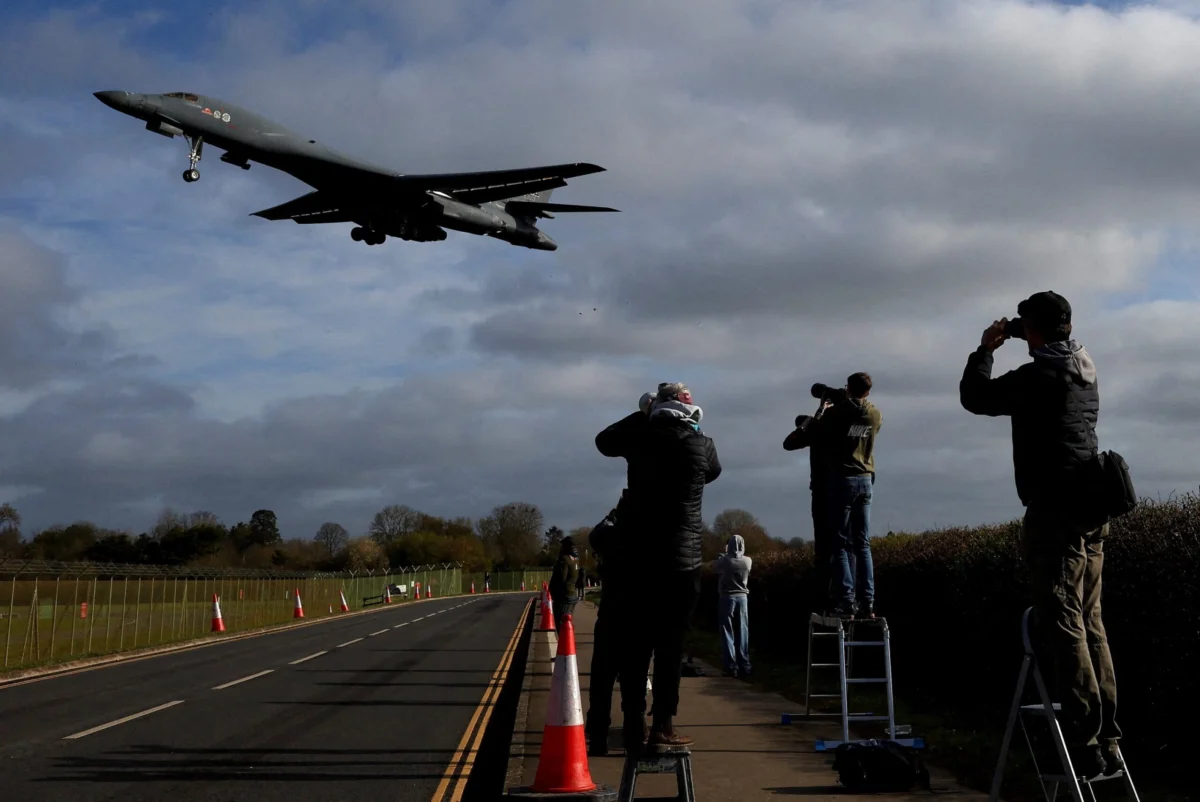
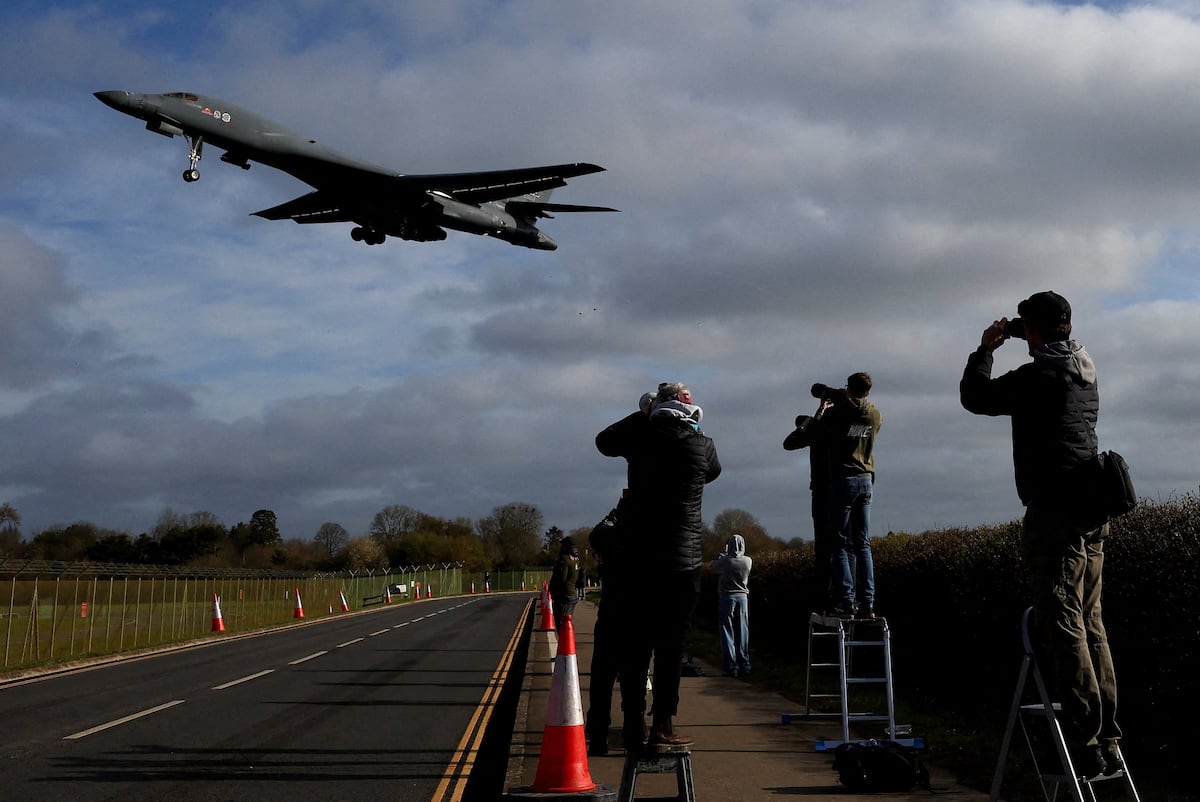
- March 17, 2026: U.S. Air Force B-1B Lancer bombers are observed arriving at RAF Fairford in Gloucestershire. While the Ministry of Defence initially characterized this as a "scheduled exercise," it signaled a readiness for rapid deployment.
- March 18, 2026: Reports emerge of Iranian strikes on regional allies, causing significant damage to energy infrastructure and military outposts.
- March 19, 2026: President Donald Trump delivers a public rebuke of the British government, questioning the strength of the U.K.-U.S. alliance.
- March 20, 2026: The British Cabinet meets and issues the authorization for the U.S. to use British bases for strikes intended to "degrade" Iranian missile capabilities.
Strategic Importance of RAF Fairford and Diego Garcia
The selection of RAF Fairford and Diego Garcia is not incidental; these bases are among the few locations globally capable of supporting the heavy bomber operations required for a sustained campaign against sophisticated integrated air defense systems (IADS) and fortified missile silos.
RAF Fairford serves as the U.S. Air Force’s only European "Forward Operating Location" for heavy bombers. Its long runway and specialized infrastructure allow for the deployment of B-1B Lancers, B-52 Stratofortresses, and B-2 Spirit stealth bombers. By operating from Fairford, U.S. forces can reach targets in the Middle East with significant payloads, supported by aerial refueling over the Mediterranean.
Diego Garcia, situated in the British Indian Ocean Territory, offers even greater strategic advantages. As a joint U.S.-U.K. base, it provides a secure, remote location from which the U.S. can launch long-range strikes without the political complications of using bases in the Middle East, which may be vulnerable to Iranian retaliation or domestic political unrest. Diego Garcia has historically been the staging ground for operations in Iraq and Afghanistan, and its role in the current conflict underscores its status as a cornerstone of Western power projection in the Eastern Hemisphere.
The Trump Administration’s Pressure and the "Rolls-Royce" Metaphor
The decision follows a period of intense and highly public friction between Prime Minister Starmer and President Donald Trump. Since the onset of the conflict, President Trump has utilized social media and press briefings to lambaste the British government for what he perceived as a lack of resolve.
On Monday, the President singled out the United Kingdom during a speech, stating that "some countries" had "greatly disappointed" him. He specifically lamented the decline of the bilateral relationship, noting that Britain had once been considered "the Rolls-Royce of allies" but was now failing to meet the exigencies of the moment. This rhetoric put significant pressure on the Labour government, which has been attempting to balance its domestic "pro-international law" platform with the pragmatic necessity of maintaining a functional relationship with its most important military partner.
Analysts suggest that Trump’s public shaming, combined with the reality of Iranian aggression, left Starmer with little room for maneuver. The fear of being sidelined in future security arrangements or facing economic repercussions from a Trump administration likely weighed heavily on the Cabinet’s deliberations.
Domestic Skepticism and Economic Data
While the government has moved toward a more hawkish stance, the British public remains deeply divided. According to recent data from YouGov, 59% of those surveyed expressed opposition to British involvement in U.S.-Israeli strikes against Iran. This skepticism is rooted in the memory of past conflicts in the Middle East and a widespread concern that military intervention will lead to a protracted regional war.
The economic stakes are equally high. The Strait of Hormuz is the world’s most important oil transit chokepoint. Data from the U.S. Energy Information Administration (EIA) indicates that approximately 21 million barrels of oil per day—representing roughly 21% of global petroleum liquids consumption—pass through the Strait. Any prolonged closure or high-intensity conflict in the waterway could lead to a massive spike in global energy prices, potentially destabilizing the fragile post-inflationary recovery in the U.K. and Europe.
Official Responses and Calls for De-escalation
In the wake of the authorization, the British government has attempted to strike a conciliatory tone, perhaps to appease domestic critics and regional neighbors. The Downing Street statement concluded with a call for "urgent de-escalation and a swift resolution to the war." This dual-track approach—authorizing military force while calling for peace—reflects the complex tightrope the Starmer administration is walking.
Foreign Secretary David Lammy is expected to hold calls with regional counterparts in the coming days to reassure them that the U.K.’s objective is limited to the restoration of maritime security and is not an endorsement of a broader regime-change operation. However, critics argue that once the bases are used for strikes, the U.K. will be inextricably linked to the outcome of the U.S. campaign.
The Iranian government has yet to issue a formal response to the British authorization, but state-aligned media in Tehran have previously warned that any nation providing "soil or airspace" for attacks on Iran would be considered a legitimate target for retaliation. This raises the threat level for British assets not only in the Middle East but potentially for the bases themselves.
Analysis: Implications for International Law and Regional Stability
The authorization of strikes from British bases carries profound implications for international law. By invoking "collective self-defense," the U.K. is asserting that the Iranian attacks on shipping and regional allies constitute an armed attack that justifies a military response under Article 51 of the UN Charter. However, the definition of "defensive operations" to "degrade" sites on sovereign Iranian soil is a significant escalation from mere escort missions for tankers.
From a regional stability perspective, the move risks a "tit-for-tat" cycle that could draw in other actors, such as Hezbollah in Lebanon or various militia groups in Iraq and Yemen. If the U.S. strikes are successful in degrading Iranian missile capabilities, it may force a reopening of the Strait. Conversely, if the strikes are perceived as a precursor to a larger invasion, Iran may feel compelled to utilize its remaining "breakout" capabilities, further destabilizing the global energy market.
For the United Kingdom, the decision reinforces its role as a key military actor on the world stage but also exposes its vulnerability to the policy shifts of the U.S. administration. As the B-1 bombers at RAF Fairford prepare for potential missions, the world remains on edge, watching to see if this authorization will lead to the "swift resolution" London hopes for or the wider conflagration the British public fears.

Related Posts
Pentagon Forges Landmark Seven-Year Agreements with Boeing and RTX to Accelerate Standard Missile-3 Production and Stabilize Defense Supply Chains
Boeing Unveils Ultra Low-Cost Seeker to Enhance Missile Inventory and Combat Cost Challenges in Modern Warfare