The Emerging Liberty Dime of 2026 Poised to Become a Collector’s Item Amidst Symbolic Debate
A coin slated for release in 2026, the Emerging Liberty Dime, is generating significant buzz within numismatic circles and sparking public discourse, primarily due to its commemorative nature and a notable redesign that omits the traditional olive branch, a long-standing symbol of peace in American iconography. This new ten-cent piece is part of the United States Semiquincentennial program, commemorating the nation’s 250th anniversary of independence. The redesign, which will grace the dime for the entirety of 2026 before reverting to the familiar depiction of Franklin D. Roosevelt in 2027, is already drawing the attention of collectors eager to acquire what many anticipate will be a historically significant piece.
The burgeoning interest in the 2026 Emerging Liberty Dime is multifaceted, driven by its role in a landmark national celebration and a departure from established design conventions. The Professional Coin Grading Service (PCGS), a leading authority in coin authentication and grading, has highlighted the dime’s significance within the Semiquincentennial program, an initiative designed to honor a quarter-millennium of American independence. The program encompasses a broader series of redesigned circulating coins, including denominations of 5, 25, and 50 cents, all intended to encapsulate the nation’s journey toward its founding ideals.
A Glimpse into the Design and its Symbolism
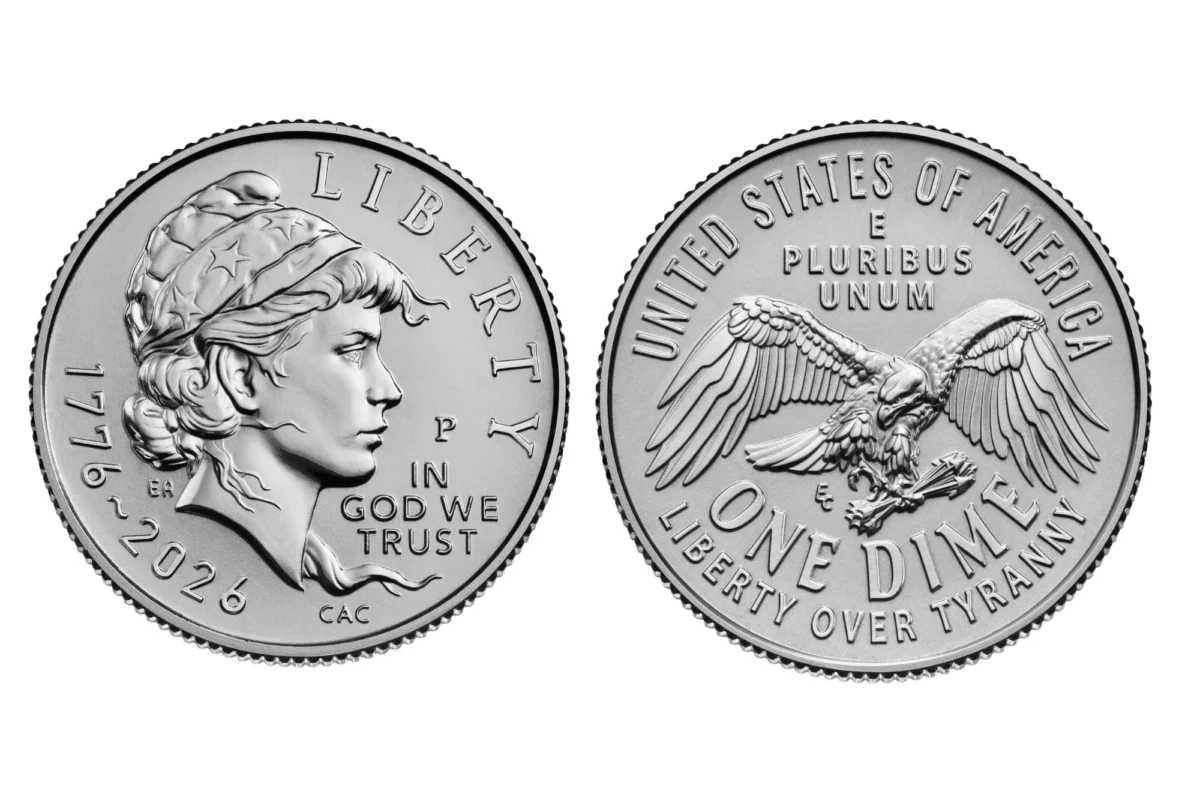
The obverse of the 2026 Emerging Liberty Dime features a depiction of Liberty, characterized by the U.S. Mint as "a determined Liberty as the winds of revolution whip through her hair." This imagery is intended to evoke a sense of forward momentum and historical gravitas. The reverse of the coin, however, is where much of the contemporary discussion is centered. It showcases an eagle clutching arrows in its left talon and a notably empty right talon. Accompanying this imagery is the inscription "LIBERTY OVER TYRANNY."
This particular design element has ignited debate. The absence of the olive branch, which has historically been paired with a bundle of arrows on the Great Seal of the United States and on various coinage, is a significant departure. The combination of the olive branch and arrows, since the Great Seal’s adoption in 1782, has served as a potent dual symbol: the arrows representing the capacity for defense and military strength, while the olive branch signifies a preference for peace and diplomacy. The omission of the olive branch from the 2026 dime has led to interpretations that question the intended message of the coin’s design.
Collector Enthusiasm and Market Indicators
The anticipation surrounding the Emerging Liberty Dime is palpable within online numismatic communities. On platforms like Reddit, discussions are already underway regarding the potential market value of the 2026 Emerging Liberty Dime, particularly for specimens that achieve high grades from certification services. This speculation is further fueled by the performance of other coins within the Semiquincentennial program. For instance, a recent sale on eBay saw a 2026 Semiquincentennial 50-cent coin, with a face value of $100, fetch approximately $900, demonstrating the strong demand for commemorative issues.
This trend suggests that the 2026 Emerging Liberty Dime, especially in pristine condition, could command a significant premium over its face value, making it a potentially lucrative acquisition for collectors. The U.S. Mint’s decision to issue these special designs for a limited duration—the dime’s redesign is exclusive to 2026—inherently creates scarcity, a key driver of collector value.
The Genesis of the Design: A Timeline of Decisions
The design for the Emerging Liberty Dime was developed in 2024 and underwent review by the Citizens Coinage Advisory Committee (CCAC). In October of that year, prior to the 2024 presidential election, the CCAC recommended a proposal to the Secretary of the Treasury. According to reporting by The Washington Post, this recommendation was a crucial step in the approval process. The final approval was granted by Secretary of the Treasury Scott Bessent in 2025, as confirmed by Kristie McNally, Deputy Director of the U.S. Mint, in an interview with The New York Times.
The Semiquincentennial Circulating Coin Program, which includes the redesigned dime, was officially unveiled in a press release by the U.S. Mint. McNally stated that the designs for the 5, 25, and 50-cent coins, as well as the dime, "represent the history of America’s journey toward a ‘more perfect union’ and celebrate the ideals of liberty that define America." This broader context underscores the intention behind the program to visually narrate the nation’s history and its foundational principles.
The Olive Branch Controversy: Divergent Interpretations
The decision to remove the olive branch from the dime’s reverse has drawn criticism from various quarters. Fortune magazine noted that the omission seemed "difficult to interpret as accidental," given the long-standing symbolic pairing of arrows and the olive branch in American visual language. The piece highlighted the historical precedent set by the Great Seal, where the eagle’s grasp of both elements has consistently symbolized the nation’s dual capacity for defense and its pursuit of peace.
Professor Emeritus of History Frank L. Holt of the University of Houston echoed these concerns, describing the design’s message as "ambiguous" and suggesting that it "condemns the whole design" by removing a symbol that has historically represented a crucial balance in national iconography. Holt, however, also cautioned against overly simplistic interpretations, noting that the coin’s design predates any specific contemporary military actions, such as the hypothetical U.S. military operation in Iran in 2026 mentioned in his comments to Fortune. He emphasized "the ease with which a poor design can be misinterpreted or misused" in politically charged environments.
Eric David Custer, the artist responsible for the chosen design for the 250th-anniversary coin, explained his creative process to Spotlight PA. Custer, who has been with the U.S. Mint since 2008, stated that his proposal was inspired by the Great Seal. He elaborated that the omission of the olive branch was intended to represent the colonies "before and during the American Revolution." Furthermore, he explained that the empty right talon was a deliberate choice to symbolize that "peace had not yet arrived, although it was anticipated." This explanation offers a perspective focused on the nascent stages of nationhood and the aspirational nature of peace rather than its established presence.
Broader Political Undertones in Coinage Decisions
The controversy surrounding the Emerging Liberty Dime’s design is not occurring in a vacuum. It is being viewed within the context of other recent decisions regarding U.S. coinage, particularly those made during the Trump administration. Fox News reported in December 2025 that Treasury Secretary Scott Bessent had rejected several proposed quarter designs from the Biden administration for the 250th-anniversary commemoration, deeming some illustrations to be potentially linked to concepts of "diversity, equity, and inclusion."
Further adding to the discourse, The Washington Post detailed that in the autumn of 2025, then-U.S. Treasurer Brandon Beach confirmed that the agency had designed $1 coins featuring the likeness of Donald Trump for the same celebration. This move sparked criticism from Democratic Senator Jeff Merkley of Oregon, who stated in a press release that Trump was "eliminating national symbols from the coin, including the olive branch as a symbol of peace," while simultaneously seeking to place his image on a future dollar coin.
Senator Merkley further argued that these symbolic decisions pointed towards an attempt to "erase the history" of the United States and "remove symbols of peace and align this important date with how authoritarians celebrate themselves around the world." This perspective frames the design choices not merely as aesthetic decisions but as politically charged statements reflecting broader ideological divides within the nation.
The 2026 Emerging Liberty Dime, therefore, stands as more than just a new piece of currency. It is a canvas upon which historical narratives, symbolic interpretations, and contemporary political debates are being projected. Its limited mintage and commemorative status ensure its place in the annals of numismatics, while the ongoing discussion surrounding its design promises to keep it at the center of public attention for some time to come. The coin’s ultimate legacy will likely be shaped not only by its scarcity and collector appeal but also by how its symbolic message is understood and debated in the years ahead.

Related Posts

The Electric Vehicle Battery Health Debate Emerges as Argentina’s EV Market Accelerates
President Donald Trump Confirms Secret Departure from Turkey Amidst Assassination Threat