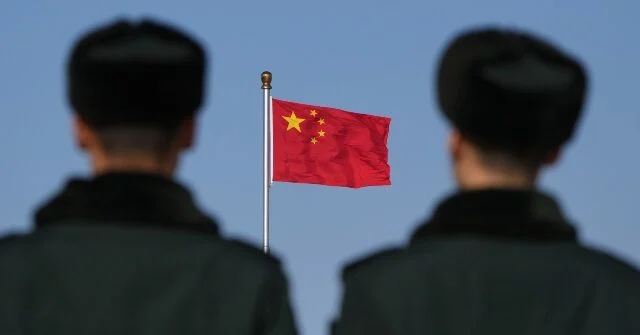
Breitbart News to Host Policy Event on China Threats Amidst Anticipated Trump-Xi Summit
Breitbart News is set to host a pivotal policy event on Thursday, March 26, focusing on the multifaceted current and emerging threats posed by the People’s Republic of China and the Chinese Communist Party (CCP). This significant gathering, bringing together influential voices from conservative policy circles, coincides with a notable diplomatic development: the White House’s announcement just the day prior, on Wednesday, March 25, that President Donald Trump is slated to travel to Beijing in May for a direct meeting with Chinese President Xi Jinping. This dual track of public policy discussion and high-stakes diplomacy underscores the intricate and often contradictory nature of contemporary U.S.-China relations.
The Breitbart News event will feature a robust panel of distinguished experts and former senior government officials, each bringing a unique perspective to the complex challenge of China. Among the confirmed speakers are Senator Jim Banks, a vocal critic of the CCP and advocate for a tougher U.S. stance; Senator Tom Cotton, known for his hawkish foreign policy views and deep engagement on national security matters; Chad Wolf, former Acting Secretary of the Department of Homeland Security, who has extensive experience addressing threats to American infrastructure and cybersecurity; and Jeff Gerrish, former Deputy United States Trade Representative, whose insights will be crucial for understanding the economic dimensions of the U.S.-China rivalry. The discussions are expected to delve into the comprehensive array of threats that China, under the leadership of Xi Jinping, presents to the health and wellness of the American people, spanning economic, technological, geopolitical, and public health domains.
Unpacking the Multifaceted Threat from China
The phrase "health and wellness of the American people" used by the event organizers is intentionally broad, encompassing a wide spectrum of concerns that extend far beyond traditional public health. It implicitly refers to vulnerabilities in critical supply chains, the integrity of American institutions, economic prosperity, and national security.
Economic and Supply Chain Vulnerabilities
One of the primary areas of concern revolves around China’s economic practices and the resulting vulnerabilities in global supply chains. For decades, American industries have increasingly relied on China for the production of essential goods, from pharmaceuticals and medical equipment to rare earth minerals and advanced electronics components. The COVID-19 pandemic starkly illuminated these dependencies, revealing how disruptions in Chinese manufacturing could cripple access to life-saving medications, personal protective equipment (PPE), and other vital supplies. Experts often point to the fact that China is a dominant supplier of active pharmaceutical ingredients (APIs) for a significant portion of generic drugs consumed in the United States, creating a critical single point of failure.
Beyond direct supply chain control, the CCP’s economic model, characterized by state-subsidized industries, intellectual property theft, forced technology transfer, and non-tariff barriers, poses a direct threat to American innovation and competitiveness. The U.S. Chamber of Commerce and various government reports have consistently highlighted the staggering costs of intellectual property theft, estimated to be hundreds of billions of dollars annually, eroding American companies’ market share and R&D investments. Former Deputy USTR Jeff Gerrish’s participation is particularly relevant here, given his direct involvement in trade negotiations that sought to address these systemic issues. Panelists are expected to advocate for policies aimed at reshoring critical manufacturing, diversifying supply chains, and strengthening enforcement mechanisms against unfair trade practices.
Technological Dominance and National Security Implications
The race for technological supremacy is another critical dimension of the U.S.-China competition. China’s ambitious "Made in China 2025" and "China Standards 2035" initiatives aim to dominate key emerging technologies such as artificial intelligence (AI), 5G telecommunications, quantum computing, biotechnology, and semiconductors. This pursuit is not merely for economic gain but is deeply intertwined with national security objectives. The integration of Chinese-made technology into global infrastructure, particularly 5G networks, has raised significant concerns among U.S. intelligence agencies regarding potential espionage, data security, and network integrity.
The panelists, particularly those with national security backgrounds like Senator Cotton and former Secretary Wolf, are likely to emphasize the imperative for the U.S. to maintain its technological edge and to implement robust export controls and investment screening mechanisms. Concerns also extend to cyber espionage and cyberattacks targeting American government agencies, critical infrastructure, and private companies. Reports from the Cybersecurity and Infrastructure Security Agency (CISA) and other bodies routinely detail sophisticated cyber campaigns attributed to state-sponsored Chinese actors, aimed at stealing sensitive data, trade secrets, and military intelligence.
Geopolitical and Military Assertiveness
The CCP’s increasing assertiveness on the global stage, particularly under Xi Jinping, presents significant geopolitical challenges. China’s military modernization, its expansionist claims in the South China Sea, growing pressure on Taiwan, and its Belt and Road Initiative (BRI) are viewed by many U.S. policymakers as attempts to reshape the international order to its authoritarian advantage. The U.S. Department of Defense’s annual report on China’s military power consistently highlights the rapid growth and sophistication of the People’s Liberation Army (PLA), including its naval, air, and missile capabilities.
Discussions at the Breitbart event will likely touch upon the strategic implications of these developments for regional stability in the Indo-Pacific and for global security. Senators Banks and Cotton, both active on defense committees, are expected to articulate strategies for enhancing U.S. military deterrence, strengthening alliances with partners like Japan, South Korea, Australia, and India, and countering China’s influence in international organizations.
Human Rights and Ideological Confrontation
Beyond economic and security concerns, the Breitbart event is expected to address the CCP’s egregious human rights record, which many see as an ideological challenge to democratic values. The repression of ethnic minorities in Xinjiang, the crackdown on democracy in Hong Kong, the suppression of dissent across mainland China, and religious persecution are frequently cited by U.S. officials and human rights organizations. These issues resonate deeply with a segment of the American political spectrum that views the U.S.-China relationship not just as a geopolitical competition but as a fundamental clash of values. Panelists may advocate for continued sanctions against CCP officials involved in human rights abuses and for policies that support dissidents and promote democratic principles globally.
A Diplomatic Twist: The Anticipated Trump-Xi Meeting
The White House announcement of President Trump’s planned visit to Beijing for a direct meeting with Xi Jinping in May adds a fascinating layer of complexity to the ongoing U.S.-China narrative. This development, conveyed by White House Press Secretary Karoline Leavitt on Wednesday, March 25, comes amidst a period of heightened rhetoric and strategic competition.
Context of the Announcement
President Trump’s past approach to China has been characterized by a blend of confrontational trade policies and occasional direct engagement with President Xi. His previous administration initiated a significant trade war, imposing tariffs on hundreds of billions of dollars worth of Chinese goods, while simultaneously pursuing a "Phase One" trade deal. The announcement of a new meeting suggests a potential shift in strategy or an attempt to de-escalate tensions through direct, high-level dialogue.
The timing is particularly intriguing, as it occurs concurrently with a significant conservative policy forum dedicated to outlining the threats posed by China. This juxtaposition highlights the internal debates within the U.S. political landscape regarding the most effective approach to managing the China challenge – whether through aggressive confrontation, strategic competition, or selective diplomatic engagement.
Potential Agenda and Implications
The agenda for a potential Trump-Xi meeting would undoubtedly be extensive and fraught with critical issues. Key topics could include:
- Trade Relations: Discussing ongoing trade imbalances, intellectual property concerns, market access, and potentially a "Phase Two" trade agreement or new frameworks for economic engagement.
- Geopolitical Flashpoints: Taiwan, the South China Sea, and North Korea are perennial topics in U.S.-China discussions. Any signals regarding de-escalation or adherence to international norms would be closely watched.
- Global Issues: Climate change, pandemic preparedness, and regional conflicts (such as the war in Ukraine) could also feature, although substantive breakthroughs on these fronts often prove challenging.
- Technology and Security: Discussions around critical technologies, cybersecurity, and strategic stability could be on the table, with both sides seeking to protect their national interests.
The implications of such a meeting are significant. For President Trump, it could be framed as an opportunity to demonstrate strong leadership on the international stage and to pursue a transactional foreign policy aimed at securing specific concessions from China. For China, it offers a chance to engage directly with a potential future U.S. leader and to potentially influence the trajectory of bilateral relations.
However, the meeting also carries risks. Critics might view it as legitimizing the CCP without securing meaningful commitments on human rights or fair trade, or as potentially undermining existing alliances. The outcome will be closely scrutinized for any shifts in U.S. policy towards China and for its impact on global stability.
Broader Chronology and Policy Landscape
The Breitbart event and the announced Trump-Xi meeting are situated within a broader historical context of evolving U.S.-China relations. For decades following Nixon’s opening to China, U.S. policy was largely characterized by engagement, based on the premise that economic integration would lead to political liberalization. This view began to shift significantly in the late 2000s and accelerated under the Trump administration, which formally designated China as a strategic competitor.
- 2018-2020: Trade War and Decoupling Efforts. The Trump administration imposed extensive tariffs on Chinese goods, initiated investigations into intellectual property theft, and began restrictions on Chinese technology companies like Huawei. This period saw the first concerted efforts towards "decoupling" or "de-risking" certain critical sectors from China.
- 2020: COVID-19 Pandemic. The global pandemic originated in Wuhan, China, and exacerbated tensions, particularly regarding transparency and supply chain vulnerabilities, reinforcing calls for greater economic independence from China.
- 2021-Present: Bipartisan Consensus on Competition. While specific tactics vary, both Democratic and Republican administrations and lawmakers have largely coalesced around the view that China poses a significant long-term challenge to U.S. interests and global order. Legislative actions, such as the CHIPS and Science Act, have aimed to bolster domestic manufacturing and technological competitiveness against China.
The Breitbart event on March 26 will serve as a platform for conservative thought leaders to articulate their vision for confronting China, likely emphasizing a robust, confrontational approach. This contrasts with the more nuanced, and potentially transactional, diplomacy anticipated in the May Trump-Xi meeting. This dynamic reflects the ongoing debate within U.S. foreign policy circles regarding the optimal strategy for managing the world’s most critical bilateral relationship.
Implications for U.S. Policy and International Relations
The confluence of a high-profile policy event dissecting China’s threats and the announcement of a direct presidential meeting with Xi Jinping signals a critical juncture in U.S.-China relations. The Breitbart event is poised to shape conservative discourse, potentially influencing future policy recommendations for a Republican administration. The panelists’ detailed arguments on economic, technological, and national security vulnerabilities will likely reinforce calls for greater self-reliance, stronger deterrence, and a more assertive stance against the CCP’s ambitions.
Conversely, the prospective Trump-Xi meeting, if it materializes, carries the potential for either a significant diplomatic reset or a reiteration of existing impasses. Its implications will extend beyond bilateral ties, affecting U.S. alliances in Asia and Europe, global trade dynamics, and international efforts to address shared challenges. Allies and adversaries alike will be closely observing the outcomes, searching for clues about the future direction of U.S. foreign policy towards its most formidable geopolitical rival. The dual approach of public confrontation and private diplomacy highlights the complex, multi-layered strategy the United States employs in its ongoing engagement with China.

Related Posts

Democratic Candidates Must Moderate to Win General Elections, Says Rep. Greg Stanton
Lisa Demuth Secures Republican Gubernatorial Nomination in Minnesota, Defeating Trump-Endorsed Mike Lindell