Breaking the Orbán deadlock
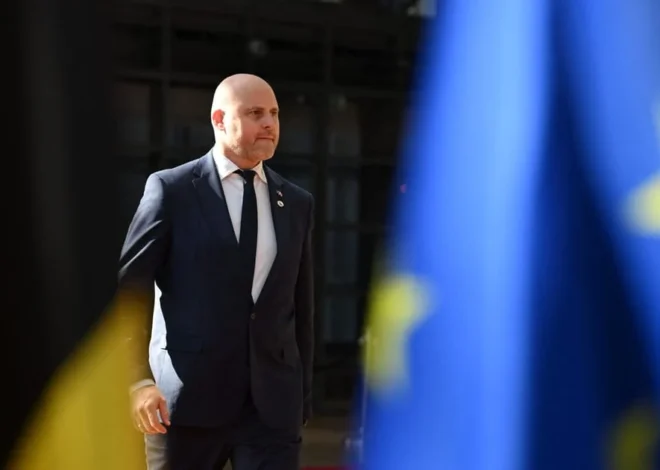
The European Union stands at a critical juncture as Brussels intensifies diplomatic efforts to resolve a high-stakes standoff with Hungarian Prime Minister Viktor Orbán. At the center of the dispute is a €50 billion support package for Ukraine—part of a larger €90 billion financial commitment—which remains frozen due to Hungarian opposition. As EU leaders prepare for a pivotal summit, the bloc is testing the limits of its consensus-based decision-making process, navigating the delicate intersection of energy security, geopolitical solidarity, and internal governance.
The Pipeline Pivot: Energy Security as a Negotiating Lever
The current impasse is deeply rooted in the vulnerability of Central European energy supplies. The Druzhba pipeline, a critical artery for Russian oil, has become a focal point of the geopolitical tension between Budapest and Kyiv. Prime Minister Orbán has explicitly linked his approval of the financial aid package to the operational stability of this pipeline.
The Druzhba, which translates to "Friendship," has been a source of contention since the onset of the full-scale invasion of Ukraine in 2022. While the EU has largely sought to decouple its economy from Russian fossil fuels, Hungary has secured repeated exemptions, citing its landlocked status and lack of alternative infrastructure. Recent disruptions in the flow of oil—which Ukraine has partially controlled through transit regulations—led to a sharp escalation in tensions.
However, recent signals from Kyiv suggest a potential breakthrough. Ukrainian officials have indicated a willingness to collaborate with Brussels to ensure the technical integrity and flow of the pipeline. For the European Commission, this cooperation is the "missing link" required to neutralize Orbán’s veto. If the transit issues are addressed to Budapest’s satisfaction, the political leverage underpinning Hungary’s obstructionism could evaporate, clearing the path for the long-awaited funding release.
Chronology of the Funding Standoff
The history of the current fiscal deadlock reflects the deteriorating relationship between the European Commission and the Hungarian government:
- June 2023: The European Commission proposes a mid-term revision of the EU’s multi-annual financial framework, including the €50 billion "Ukraine Facility" to support Kyiv’s state functions through 2027.
- December 2023: Despite earlier threats of a veto, EU leaders achieve a breakthrough to open accession negotiations with Ukraine, but the financial aid package remains stalled at the European Council level due to Hungary’s insistence on a formal review mechanism.
- January 2024: Negotiations intensify as Brussels explores "Plan B" options, including bilateral agreements among 26 member states to bypass the Hungarian veto if necessary.
- February 2024: Following intense lobbying and adjustments to the oversight mechanisms of the aid, Hungary signals a potential willingness to compromise, provided energy transit security is guaranteed.
- Present: Diplomatic efforts focus on finalizing technical assurances regarding the Druzhba pipeline ahead of the upcoming summit.
The Economic Horizon: The 28th Regime
While the Ukraine aid package dominates the headlines, the European Commission is concurrently rolling out a strategic initiative aimed at addressing the bloc’s long-standing "startup problem." The Commission is set to unveil the so-called "28th regime"—a regulatory framework designed to create a unified path for new companies to scale across all 27 member states without navigating 27 different legal systems.
Current data highlights the severity of the issue: while Europe produces a significant number of startups, the survival rate and the ability of these firms to reach "unicorn" status remain significantly lower than in the United States or China. The fragmentation of the Single Market, characterized by differing corporate laws, tax codes, and labor regulations, prevents the kind of seamless expansion that drives growth in integrated markets.
The "28th regime" aims to offer entrepreneurs an optional, EU-level legal entity. By opting into this framework, startups could scale across borders while adhering to a single set of rules. This is not merely an economic technicality; it is a profound political test. Critics within some member states fear the proposal encroaches on national sovereignty regarding corporate governance, while proponents argue that without such measures, the EU will continue to lose its most innovative companies to overseas markets.
Data and Financial Context
The urgency of the current political climate is underscored by the economic data. The €50 billion for Ukraine is intended to bridge the budget deficit caused by the ongoing conflict, covering essential public services such as civil servant salaries, pensions, and healthcare. Without this infusion of capital, international financial institutions have warned of a catastrophic liquidity crisis for the Ukrainian government.
Simultaneously, the European startup sector faces a "funding gap" compared to its global peers. According to recent reports from the European Investment Bank (EIB), European tech startups receive less than 30% of the venture capital investment available to their American counterparts. By streamlining the "28th regime," the Commission hopes to increase the cross-border flow of private equity, effectively pooling European capital to compete on a global scale.
Official Perspectives and Reactions
The Commission’s stance, led by figures like Executive Vice-President Valdis Dombrovskis, emphasizes that the Ukraine aid is a "moral and strategic imperative." In recent closed-door briefings, EU officials have underscored that the credibility of the bloc is on the line. "We cannot allow one member state to hold the security of the entire continent hostage," a senior diplomat stated on condition of anonymity.
Conversely, the Hungarian government maintains that its position is one of "principled pragmatism." Budapest argues that it is protecting the interests of its citizens by ensuring that energy flows are not used as political weapons. Orbán’s supporters within the European Parliament argue that the Commission’s push for centralization—whether in foreign policy or business regulation—often ignores the legitimate domestic concerns of smaller or landlocked nations.
The Broader Political Implications
The upcoming summit serves as a litmus test for the "EU Way" of governance. The bloc has historically prided itself on unanimity, yet the rise of nationalist-leaning governments has forced the EU to reconsider its decision-making mechanisms. If the stalemate is broken through compromise, it will reinforce the power of traditional diplomacy. If it requires a bypass of the veto, it could mark a significant shift toward a "multi-speed" Europe, where core decisions are made by a coalition of willing states.
Furthermore, the exhibition currently hosted at the European Parliament provides a poignant backdrop to these deliberations. By tracing the continent’s history through the lens of a notary—a profession defined by the meticulous preservation of documents—the EU is attempting to remind its citizens and leaders of the importance of procedural order and common rules. While the exhibition focuses on the past, it highlights a central irony: the very bureaucracy that the EU celebrates as its foundation is currently the source of its most intense friction.
Conclusion
As the summit approaches, the eyes of the international community are fixed on Brussels. The resolution of the Ukraine aid standoff will determine the immediate stability of Kyiv’s administration, while the introduction of the "28th regime" will signal whether the EU has the political will to modernize its economic infrastructure. Whether through the lens of high-stakes geopolitical maneuvering or the granular details of corporate law, the European Union remains trapped between its desire for deeper integration and the stubborn reality of national interests. The outcome of the coming days will likely define the bloc’s policy trajectory for the remainder of the year.