Beyond the Missile Tests: The Unfolding Human Rights Crisis in North Korea and the Path to International Accountability
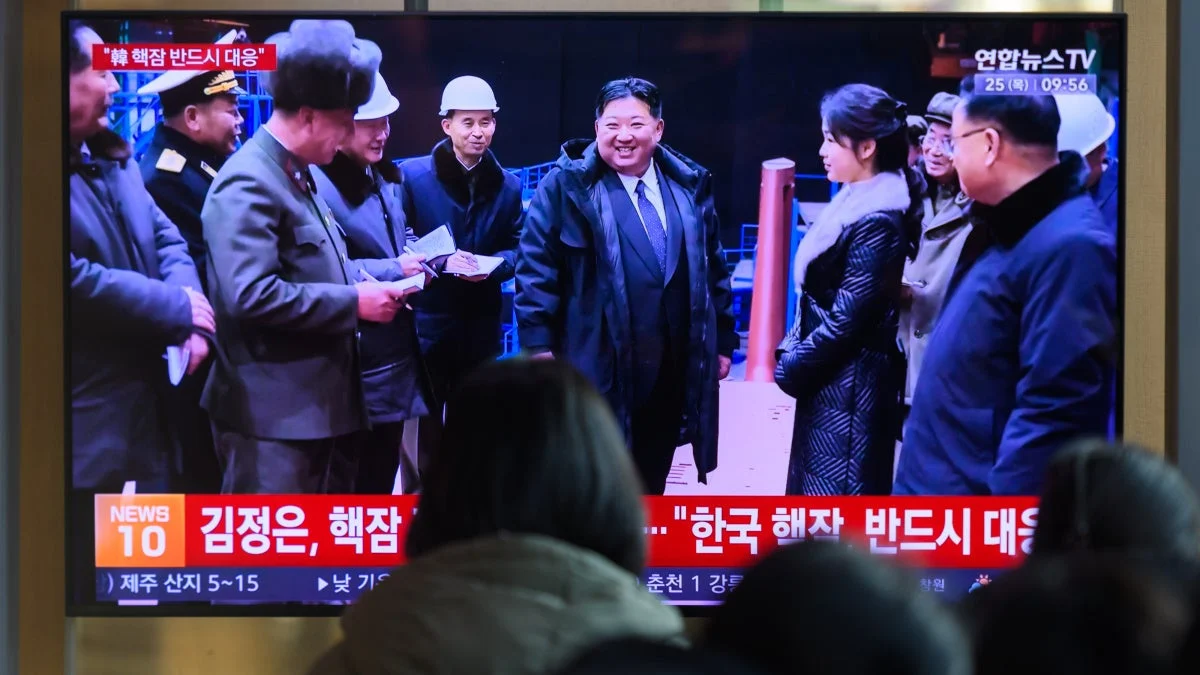
While the international community’s attention is frequently arrested by the spectacle of North Korea’s ballistic missile launches—most recently underscored by the firing of ten missiles toward the sea during joint military exercises between the United States and South Korea in March 2026—a far more insidious and long-standing crisis continues to unfold within the country’s borders. On March 13, 2026, Elizabeth Salmón, the United Nations Special Rapporteur on the situation of human rights in the Democratic People’s Republic of Korea (DPRK), delivered a sobering address to the UN Human Rights Council. Her testimony reinforced a grim reality: the human rights situation in North Korea has not only failed to improve over the last decade but has, in many critical respects, significantly degraded. Attributing her findings to a comprehensive assessment conducted by the UN High Commissioner for Human Rights in September 2025, Salmón warned that the focus on Pyongyang’s military provocations must not eclipse the systemic abuses suffered by its population.
The Special Rapporteur’s annual report to the Human Rights Council introduced a new framework of measurable indicators designed to track North Korea’s adherence—or lack thereof—to recommendations made during the Universal Periodic Review (UPR). The UPR is a unique United Nations process that involves a periodic review of the human rights records of all 193 UN Member States. Despite this international scrutiny, the DPRK has remained largely recalcitrant, particularly regarding the fundamental rights of movement, labor, and physical security. The report serves as a stark reminder that the North Korean state’s survival strategy is inextricably linked to the suppression of its people, creating a cycle of abuse that underpins its nuclear and conventional military programs.
The Erosion of Fundamental Freedoms and Border Militarization
One of the most alarming developments documented by the Special Rapporteur involves the near-total elimination of freedom of movement. Since the onset of the COVID-19 pandemic in 2020, the North Korean government has transformed its border with China from a porous crossing point into a lethal fortification. The report highlights the expansion of border fences, the construction of hundreds of new guard posts, and the intensification of domestic travel permit requirements. These physical barriers are reinforced by a standing "shoot-on-sight" order issued to border guards, targeting any unauthorized individual attempting to cross the frontier.
The impact of these measures is reflected in the plummeting numbers of North Koreans reaching safety. In 2025, only 223 North Koreans successfully reached South Korea, a staggering decline from the thousands who sought refuge annually in the early 2010s. For those who fail in their attempt to flee, the consequences are catastrophic. Individuals caught by North Korean authorities or forcibly repatriated by neighboring states face systematic torture, prolonged arbitrary imprisonment, and assignment to the country’s notorious forced labor camps. A poignant example cited in recent human rights dispatches involves a North Korean woman currently detained in China. Despite her efforts to reunite her family, she faces imminent repatriation, a move that international observers warn will lead to certain state-sanctioned abuse.
State-Directed Forced Labor and the 2025 Labour Management Act
The DPRK’s approach to the right to work has also seen a legislative shift that codifies human rights violations. During the most recent UPR cycle, Pyongyang rejected every recommendation related to the abolition of forced labor. Instead of moving toward international labor standards, the government enacted the 2025 Labour Management Act. This legislation effectively formalizes state-directed forced labor by giving the government absolute authority to assign citizens to specific workplaces. Under this system, individuals have no choice in their occupation and are often forced to work in hazardous conditions for little to no pay, with the state extracting the economic value of their labor to fund its administrative and military priorities.
This system of "economic mobilization" is not merely a domestic policy but a fundamental component of the state’s security apparatus. By controlling the labor force through the Labour Management Act, the regime ensures that a vast portion of the population remains under direct surveillance while providing the manpower necessary for massive infrastructure projects and the production of military hardware. The Special Rapporteur emphasized that these labor practices are a direct violation of international covenants to which the DPRK is a party, yet the regime continues to frame them as "socialist duties."
Chronology of International Oversight and the Decade of Degradation
The current crisis is the culmination of a decade-long trajectory of increasing isolation and internal repression. To understand the gravity of the 2026 report, it is necessary to look back at the milestones of international advocacy and North Korean response:
- 2014: The UN Commission of Inquiry (COI) on Human Rights in the DPRK publishes a landmark report concluding that "systematic, widespread, and gross violations of human rights" were being committed, many of which constituted crimes against humanity.
- 2017-2019: Despite a period of high-level diplomacy involving summits with the United States and South Korea, North Korea made no substantive concessions regarding its human rights record, focusing instead on sanctions relief and nuclear status.
- 2020: The DPRK implements some of the world’s most stringent border closures in response to COVID-19, cutting off the flow of information and humanitarian aid.
- 2023-2024: UN High Commissioner Volker Türk notes a "suffocating" increase in state control over information, with the introduction of laws such as the Reactionary Ideology and Culture Rejection Act, which criminalizes the consumption of foreign media.
- September 2025: A UN assessment confirms that the rights situation has "degraded" over the previous ten years, citing increased surveillance and the use of the death penalty for non-violent "ideological" crimes.
- March 2026: Special Rapporteur Elizabeth Salmón presents measurable indicators to the Human Rights Council, urging a shift in how the international community engages with Pyongyang.
The Nexus Between Security and Human Rights
A central theme of the 2026 UN findings is the inextricable link between North Korea’s human rights abuses and its threat to international security. UN High Commissioner Volker Türk and other international experts have argued that the DPRK’s nuclear weapons program is essentially fueled by the exploitation of its people. The arbitrary detention of citizens provides a captive workforce for the mining of minerals and the construction of military facilities. Furthermore, the severe limits on the freedom of information and movement prevent the emergence of any internal dissent that might challenge the government’s prioritization of weapons over welfare.
This "security-rights nexus" suggests that efforts to denuclearize the Korean Peninsula are unlikely to succeed if they continue to treat human rights as a secondary or separate issue. The Special Rapporteur argued that human rights should be "an opening for engagement" and must be placed at the center of any future diplomatic dialogue. By ignoring the human rights violations that underpin the regime’s military capabilities, the international community risks validating a state model that relies on domestic atrocity to project external power.
Official Responses and Calls for Accountability
The international response to Salmón’s report has been characterized by a renewed call for legal accountability. The UN High Commissioner has urged member states to pursue justice through several avenues, including the referral of the North Korean leadership to the International Criminal Court (ICC). In the absence of a referral by the UN Security Council—where such a move is frequently blocked by the veto power of China and Russia—the High Commissioner has advocated for "universal jurisdiction" prosecutions. This would involve the courts of third-party countries using the UN’s extensive repository of evidence to prosecute North Korean officials for crimes against humanity in fair and independent proceedings.
Governments in the West and East Asia have offered mixed reactions. While the South Korean administration has increasingly emphasized human rights as a pillar of its North Korea policy, recent funding cuts in the United States have hampered the work of nongovernmental organizations (NGOs). These organizations play a vital role in monitoring the situation on the ground and facilitating the flow of information into and out of the North. The Special Rapporteur and various civil rights groups have called on the international community to restore and increase financial support for these organizations to ensure that the "lost decade" of human rights does not turn into a permanent reality.
Broader Impact and Global Implications
The situation in North Korea serves as a litmus test for the international human rights system. If the global community remains unable to address documented crimes against humanity in a state as isolated as the DPRK, it sets a dangerous precedent for other authoritarian regimes. The "degradation" cited by Elizabeth Salmón suggests that the regime has learned to adapt to international sanctions by tightening its internal grip, effectively using its own population as a shield against external pressure.
Furthermore, the role of China remains a critical variable. The continued repatriation of North Koreans by Beijing, despite clear evidence that these individuals will face torture upon their return, highlights a significant gap in the enforcement of the 1951 Refugee Convention. As the Special Rapporteur’s mandate comes up for renewal at the Human Rights Council, the pressure is mounting on member states to move beyond rhetoric and implement the "measurable indicators" proposed in the 2026 report.
In conclusion, the missile tests of early 2026 are but the visible symptoms of a deeper, more pervasive pathology within the North Korean state. The findings of the UN Special Rapporteur and the High Commissioner for Human Rights make it clear: the path to a stable and denuclearized Korean Peninsula must pass through the restoration of fundamental human rights. Without a concerted international effort to hold the DPRK accountable for its treatment of its citizens, the cycle of military provocation and internal repression is destined to continue, leaving millions of North Koreans to endure a crisis that the world too often chooses to ignore.

Related Posts

Human Rights Watch Calls for Investigation into Death of Detainee Following Removal from Najaf Hospital by Iraqi Drug Police
Human Rights Watch Urges UN Security Council to Extend Lebanon Peacekeeping Mission Amid Escalating Conflict and Humanitarian Crisis