
A decade after Paris Agreement established the mechanism, its first set of credits has been approved – but concerns over legacy projects persist
In a landmark development for international climate finance, the United Nations supervisory body tasked with overseeing the global carbon market has officially approved the first issuance of carbon credits under the Article 6.4 mechanism. This move comes more than ten years after the Paris Agreement was signed in 2015, marking the operationalization of a centralized, UN-governed system designed to allow countries and private entities to trade emission reductions. While proponents hail the move as a vital step toward mobilizing billions of dollars for climate mitigation, the decision has reignited a fierce debate over "legacy projects"—older carbon-offsetting initiatives carried over from previous, less stringent regulatory frameworks.

The approval signifies that the technical and administrative infrastructure for the Article 6.4 mechanism is finally functional. These credits, often referred to as Article 6.4 Emission Reductions (A6.4ERs), are intended to represent verified, additional, and permanent removals or reductions of greenhouse gases. However, the inclusion of projects originally registered under the Kyoto Protocol’s Clean Development Mechanism (CDM) remains a point of significant contention among climate scientists, policy analysts, and environmental advocacy groups.
The Long Path to Operationalization: A Chronology
The journey to this first issuance has been defined by a decade of diplomatic gridlock, technical complexity, and evolving standards for environmental integrity.

2015: The Paris Mandate
During the COP21 summit, Article 6 was included in the Paris Agreement to provide a framework for voluntary cooperation between countries. Article 6.2 focused on bilateral or multilateral trades, while Article 6.4 was designed to create a global, UN-centralized market to replace the aging Kyoto-era systems.
2018–2019: The Rulebook Stalemate
Negotiations at COP24 in Katowice and COP25 in Madrid failed to finalize the "Paris Rulebook" for Article 6. The primary sticking points were "double counting"—where both the buyer and seller countries claim the same emission reduction—and the transition of "junk" credits from the CDM.

2021: The Glasgow Breakthrough
At COP26 in Glasgow, negotiators finally reached a compromise. They agreed on accounting rules to prevent double counting and set a limit on which legacy projects could transition into the new system. Only projects registered after 2013 were permitted to apply for transition, a move intended to filter out the oldest and least effective credits.
2023–2025: Methodology Refinement
The Article 6.4 Supervisory Body spent several years developing methodologies for carbon removals and emission reductions. The goal was to ensure that every credit represented a "ton-for-ton" benefit to the atmosphere, moving away from the inflated baselines that plagued earlier markets.

2026: First Credits Approved
In February 2026, the Supervisory Body announced the formal approval of the first batch of A6.4ERs. This milestone is intended to signal to global investors that the UN-backed market is open for business, providing a higher-tier alternative to the often-criticized voluntary carbon markets (VCM).
The Legacy Project Dilemma
The primary shadow over this milestone is the persistence of legacy projects. When the Glasgow agreement allowed certain CDM projects to transition, it was a political necessity to ensure the support of developing nations that had invested heavily in the Kyoto-era infrastructure. However, critics argue that these projects often fail the "additionality" test—the requirement that the carbon reduction would not have happened without the financial incentive of the credit.

Market analysts estimate that hundreds of millions of credits from legacy projects could potentially flood the Article 6.4 market. If these credits represent projects that were already economically viable or had already completed their carbon-reduction activities years ago, their inclusion could suppress prices and dilute the overall impact of the Paris Agreement’s goals.
"The approval of the first credits is a technical success but an environmental gamble," said a senior policy advisor at a leading European climate think tank. "If the market is dominated by transitioned CDM projects that lack high integrity, we risk repeating the mistakes of the past where carbon trading became a shell game rather than a tool for genuine decarbonization."

Supporting Data and Market Projections
The stakes for a functional Article 6.4 market are immense. According to data from the International Emissions Trading Association (IETA), a fully operational Article 6 framework could reduce the cost of implementing national climate plans (Nationally Determined Contributions, or NDCs) by more than $250 billion per year by 2030. These savings are generated by allowing countries to achieve their targets through more cost-effective projects located elsewhere.
Furthermore, the UN estimates that the Article 6.4 mechanism could facilitate the transfer of up to 2 gigatonnes of CO2 reductions annually by 2030. However, for this to occur, the price of A6.4ERs must remain high enough to incentivize new, high-tech removals like Direct Air Capture (DAC) and high-integrity nature-based solutions. Currently, legacy credits are expected to trade at a significant discount compared to "new-vintage" Article 6 credits, creating a two-tiered market that could confuse investors.

Official Responses and Geopolitical Tensions
The announcement has drawn a range of reactions from the international community. UN Climate Chief Simon Stiell, who has recently been vocal about the "delusional" nature of continued fossil fuel dependency, welcomed the progress but emphasized the need for vigilance. In recent statements, Stiell has urged leaders to ensure that carbon markets serve as a bridge to a renewable future rather than a loophole for continued emissions.
The geopolitical backdrop of 2026 adds further complexity. With the United States under an administration that has frequently challenged international scientific consensus and sought to shield the fossil fuel industry from legal accountability, the role of UN-governed mechanisms is under scrutiny. While the US private sector remains interested in carbon trading to meet corporate net-zero targets, the federal government’s fluctuating commitment to the Paris Agreement creates uncertainty for long-term market stability.

In contrast, countries like China and Brazil have moved to align their domestic interests with the new UN framework. China, having recently joined a global pledge to triple nuclear energy capacity, views Article 6.4 as a potential avenue to monetize its massive investments in low-carbon infrastructure. Brazil, preparing to host COP30 in the Amazon, is positioning itself as a primary supplier of high-integrity forest-based credits, provided the legacy issues do not tarnish the reputation of the broader market.
Broader Impact and Future Implications
The approval of these credits comes at a time of escalating global crises. Recent disruptions in the Persian Gulf have sent oil and gas prices soaring, leading some nations to reconsider their energy security strategies. While some have pushed for increased domestic fossil fuel production, the UN and various climate advocates argue that the volatility of the 2026 energy market proves that the only stable path forward is a rapid transition to renewables—a transition that carbon markets are intended to fund.

For the Article 6.4 mechanism to succeed where the CDM failed, it must address three critical areas in the coming years:
- Methodological Rigor: The Supervisory Body must continue to update its "baselines" to reflect the rapidly falling costs of renewable energy. A project that was "additional" in 2015 might be the standard industry practice in 2026.
- Transparency and Tracking: The use of blockchain and digital MRV (Monitoring, Reporting, and Verification) will be essential to ensure that every credit is tracked from issuance to retirement, preventing the double-claiming of benefits.
- Host Country Capacity: Many developing nations still lack the technical expertise to manage the "corresponding adjustments" required under the Paris Agreement. Without this capacity, they risk selling their "low-hanging fruit" credits to foreign buyers, making it harder and more expensive to meet their own national climate targets.
As the first A6.4ERs enter the global market, the next twelve months will be a litmus test for the credibility of the Paris Agreement’s financial mechanisms. If the market can successfully prioritize high-integrity, new-vintage projects over legacy credits, it could unlock the trillions of dollars in private capital needed to stay within the 1.5°C warming limit. If, however, the system becomes a repository for low-quality offsets, the decade-long wait for Article 6 may result in a missed opportunity at a time when the planet can least afford it.

The oversight committee is scheduled to meet again next month to discuss enforcement actions against countries that have failed to submit updated climate plans. This broader push for accountability suggests that while the tools for climate action—like the Article 6.4 market—are finally being sharpened, the pressure on governments to use them effectively has never been higher.

Related Posts
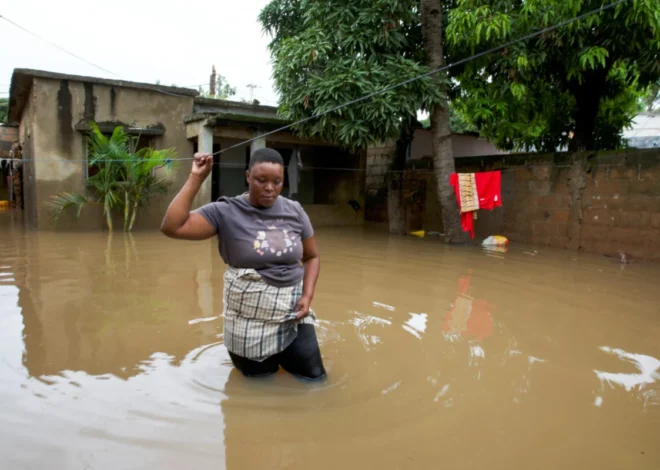
Climate Change and Rapid Urbanization Fuel Devastating West African Floods as Scientists Warn of Increasing Future Risks

UN Maritime Court Rejects Deep Sea Mining Firms Bid to Halt Investigation into Contractual Breaches