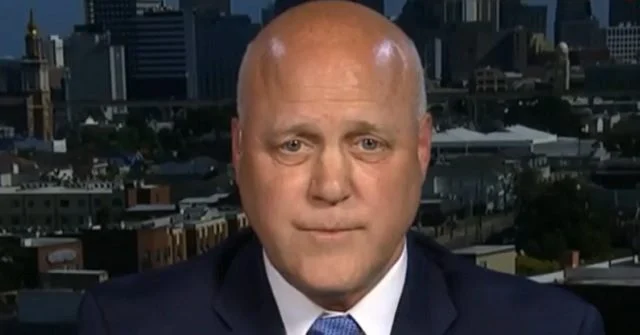
Mitch Landrieu: Trump Has ‘Become the Swamp’
The Genesis of "Drain the Swamp" and its Evolution
The phrase "drain the swamp" became a rallying cry for Donald Trump’s 2016 presidential campaign, resonating deeply with voters disillusioned by Washington’s entrenched political establishment, lobbying influence, and perceived self-serving interests. It promised a radical overhaul of federal government ethics, a reduction in special interest power, and a commitment to transparency and accountability. The concept implied an end to nepotism, cronyism, and the revolving door between government service and lucrative private sector lobbying. Trump’s supporters saw it as a pledge to clean up a system many viewed as rigged against ordinary citizens.
However, Landrieu’s recent remarks suggest a stark deviation from this initial promise. He contended that no president in recent memory has engaged in actions "near what Donald Trump has done or to the extent that he does," directly contrasting Trump’s conduct with his own anti-corruption rhetoric. This critique zeroes in on the perceived hypocrisy of a leader who campaigned on an anti-establishment platform yet, according to his detractors, exhibited behavior that deepened public cynicism regarding political ethics.
Allegations of Self-Dealing and the Emoluments Controversy
A significant pillar of Landrieu’s argument revolves around the "appearance of corruption" and Trump’s alleged "involvement in companies, financially that he’s regulating." This refers to the unprecedented situation where a sitting president maintained ownership of a vast global business empire, the Trump Organization, throughout his term. Critics, including ethics watchdogs and legal scholars, argued that this arrangement presented an inherent conflict of interest, violating the Emoluments Clauses of the U.S. Constitution.
The Domestic Emoluments Clause prevents a president from receiving any "present, Emolument, Office, or Title, of any kind whatever, from the United States, or any of them," beyond his fixed compensation. The Foreign Emoluments Clause prohibits officeholders from accepting gifts or benefits from foreign states without congressional consent. Throughout Trump’s presidency, numerous lawsuits were filed by states, members of Congress, and advocacy groups like Citizens for Responsibility and Ethics in Washington (CREW), alleging violations. These suits often cited instances where foreign dignitaries, lobbyists, or U.S. government agencies spent money at Trump-owned properties, such as the Trump International Hotel in Washington D.C., Mar-a-Lago in Florida, or Trump golf courses.
For example, government records and media investigations frequently highlighted increased bookings and events at Trump properties by various foreign governments, including Saudi Arabia, Kuwait, and the Philippines, as well as by Republican political committees and federal agencies. Critics argued that these expenditures could be interpreted as attempts to curry favor with the president, thereby creating an appearance of undue influence and potential quid pro quo arrangements. Despite calls for full divestment, Trump chose to place his assets in a revocable trust managed by his sons, maintaining that this structure adequately insulated him from conflicts of interest. However, this arrangement did not satisfy ethics experts, who noted his ability to withdraw funds at any time and his continued knowledge of the business operations.
The ethical implications extended beyond direct financial transactions. Decisions on foreign policy, trade agreements, and regulatory actions were often scrutinized for potential links to Trump Organization interests. For instance, the administration’s stance on certain real estate developments abroad or its engagement with countries where Trump had business dealings raised questions about whether national interest or personal profit was the primary driver. Landrieu’s reference to "ballrooms" implicitly targets these controversies, suggesting that the president’s focus was often diverted by the financial interests tied to his luxury properties and brand.
"Bombs, Ballrooms and Ballots": A Tripartite Critique
Landrieu’s succinct summary of Trump’s focus on "bombs, ballrooms and ballots" encapsulates a broad range of criticisms leveled against the administration.
-
"Bombs": Foreign Policy and Military Actions: This aspect of the critique likely refers to the Trump administration’s often-unpredictable and unilateral approach to foreign policy and military engagement. Examples include the targeted killing of Iranian General Qasem Soleimani in January 2020, the withdrawal from the Iran nuclear deal (JCPOA) in 2018, the shifting stance on NATO, and various drone strikes and military interventions in Syria and Afghanistan. Critics often pointed to a lack of coherent strategy, an increase in global instability, and a tendency to prioritize transactional relationships over traditional alliances. The sudden announcements of troop withdrawals or escalations often contributed to a sense of "chaos," as Landrieu described, leaving allies and adversaries alike uncertain about U.S. intentions. This perceived unpredictability, some argued, made the world a more dangerous place and diverted attention from pressing domestic issues.
-
"Ballrooms": Personal Gain and Ethical Lapses: As detailed above, "ballrooms" represents the nexus of Trump’s business interests and his presidency. Beyond the emoluments controversies, this category also includes numerous instances where high-ranking administration officials faced ethical questions. Several cabinet members, including Secretary of the Interior Ryan Zinke, EPA Administrator Scott Pruitt, and HUD Secretary Ben Carson, faced scrutiny or investigations over lavish spending, private jet travel, and alleged misuse of taxpayer funds. While not directly Trump’s actions, these incidents contributed to a perception that the administration fostered a culture where ethical boundaries were blurred, and public service was sometimes intertwined with personal enrichment or undue influence.
-
"Ballots": Election Integrity and Democratic Processes: The "ballots" critique refers primarily to Trump’s relentless questioning of election integrity, particularly after the 2020 presidential election. His repeated, unsubstantiated claims of widespread voter fraud, efforts to overturn election results, and pressure on state election officials—such as his phone call to Georgia Secretary of State Brad Raffensperger—are central to this point. Landrieu specifically mentions Trump’s belief that he "won’t get beat because there’s an election problem in Georgia," suggesting a fixation on past electoral grievances rather than forward-looking governance. This focus on "ballots" and the ensuing legal challenges, public rallies, and rhetoric were seen by many as undermining democratic institutions and diverting presidential attention from the nation’s most pressing challenges. The events of January 6, 2021, at the U.S. Capitol, directly following a rally where Trump addressed supporters about election fraud, serve as a stark illustration of the potential consequences of such a sustained focus.
Economic Disconnect and Voter Frustrations
Landrieu further argued that Trump’s preoccupation with these issues led to a significant "lost focus" on the day-to-day concerns of American families. He highlighted a disconnect between the president’s priorities and what "most Americans want to focus on around the country," specifically mentioning "food, gas prices, housing prices." This point underscores a common criticism that while Trump often touted economic growth and low unemployment rates during his term, he appeared less engaged with the rising cost of living that directly impacted household budgets.
Throughout his presidency, and particularly towards the end, inflation began to emerge as a concern, exacerbated by supply chain issues and government spending related to the COVID-19 pandemic. While the specific economic context of Landrieu’s interview isn’t fully detailed in the original excerpt, the sentiment reflects broader public frustrations. For many Americans, the cost of groceries, the price at the pump, and increasingly unaffordable housing markets are immediate and tangible worries. Landrieu’s anecdote about Trump not giving "a patootie about" (a colloquialism for "not caring about") these issues paints a picture of a leader out of touch with the economic realities faced by his constituents. This perceived indifference, Landrieu posits, is the true reason for any electoral vulnerability, rather than isolated "election problems."
Broader Implications for Governance and Public Trust
The cumulative effect of these alleged behaviors, according to Landrieu, is the erosion of public trust and the undermining of democratic norms. When a president is perceived to be prioritizing personal financial gain, engaging in chaotic foreign policy, or challenging the very foundations of electoral democracy, it can have long-lasting consequences for the nation’s governance.
The "level of perceived corruption" and the "appearance of corruption" are particularly damaging because they chip away at the fundamental belief that public servants are working for the common good. If the lines between public duty and private interest are blurred, citizens may grow cynical about the integrity of government decisions, leading to decreased civic engagement and increased political polarization. This is not merely an academic concern; as Landrieu suggests, it can have tangible economic effects, potentially "driving up costs for American people" by fostering an environment where special interests thrive, and efficient, transparent governance is compromised.
Furthermore, the focus on "chaos" and grievances, rather than addressing core economic challenges, can lead to a perception of governmental ineffectiveness. When a leader appears more concerned with past electoral disputes or personal vendettas than with inflation, healthcare costs, or infrastructure, it can alienate the very voters whose daily lives are directly impacted by these issues. This disconnect can be a powerful determinant in electoral outcomes, as Landrieu concludes, suggesting that political success ultimately hinges on a president’s ability to demonstrate empathy and deliver tangible results for the American people on their most pressing concerns.
In essence, Landrieu’s critique is a comprehensive indictment, portraying a presidency that, despite its initial promise to purify Washington, ultimately became entangled in the very "swamp" it pledged to drain, thereby losing touch with the economic realities and trust of the American public.

Related Posts
Democratic Candidates Must Moderate to Win General Elections, Says Rep. Greg Stanton
Lisa Demuth Secures Republican Gubernatorial Nomination in Minnesota, Defeating Trump-Endorsed Mike Lindell