
The Global Heat Crisis: A Summer of Records and the Urgent Quest for Resilience
The Northern Hemisphere has endured a summer of unprecedented and relentless heat, with vast swathes of the United States and Europe grappling with temperatures that have shattered historical records and profoundly impacted public health and infrastructure. Scientists have issued stark warnings, asserting that these extreme conditions are no longer anomalies but represent the "new normal" for communities ill-prepared for such sustained thermal assault. This escalating crisis underscores the immediate and long-term implications of human-induced climate change, demanding a radical rethinking of urban planning, public health strategies, and societal adaptation.
The Summer’s Staggering Toll: A Chronology of Extreme Heat
The summer of 2023 witnessed a series of devastating heatwaves that swept across continents, leaving a trail of fatalities and widespread disruption. In late June, France reported a tragic increase of more than 2,000 deaths directly attributable to a record-breaking heatwave that gripped the nation. The intensity and duration of this event overwhelmed public health services and highlighted the vulnerability of even developed nations to extreme temperatures. Simultaneously, England and Wales experienced a succession of heatwaves dating back to May, with scientific estimates suggesting that over 2,700 individuals may have succumbed to heat-related causes during this period. These figures represent a grim testament to the escalating risks posed by prolonged periods of elevated temperatures, particularly for vulnerable populations.
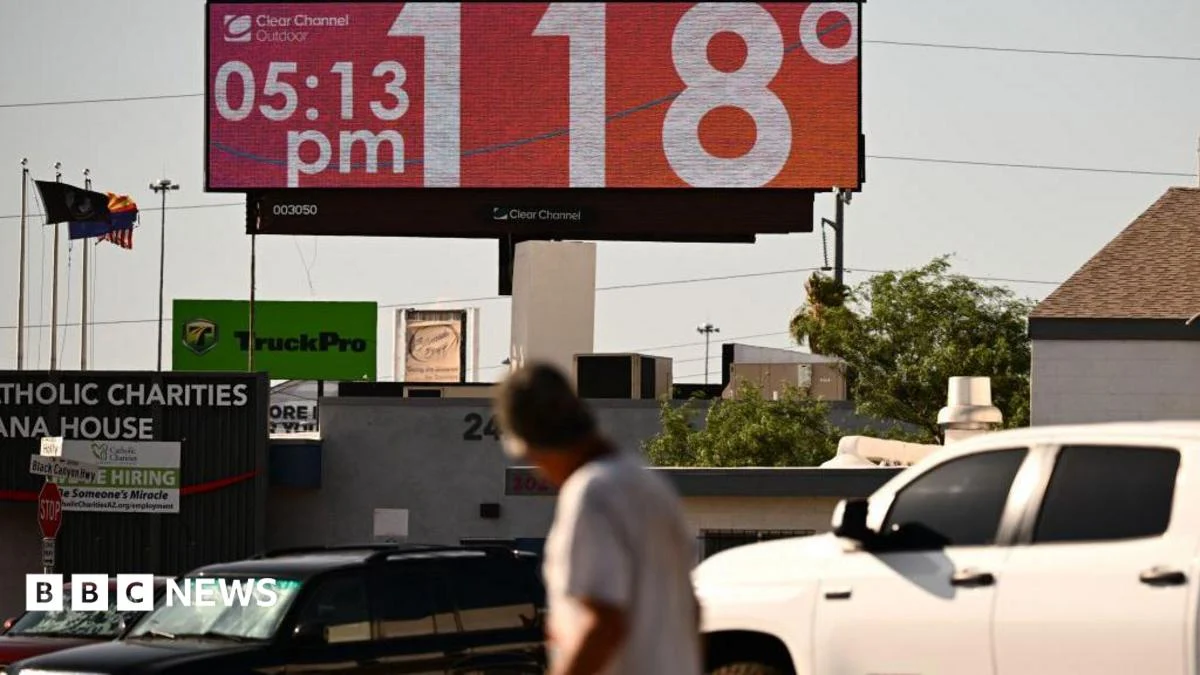
Across the Atlantic, the United States also bore the brunt of the extreme weather. The 4th of July holiday weekend alone saw at least 44 heat-related deaths reported, as festivities were overshadowed by dangerously high temperatures that stretched emergency services and tested the limits of public endurance. Cities like Phoenix, Arizona, and others across the Southwest and parts of the South, recorded consecutive days of temperatures exceeding 110°F (43°C), pushing infrastructure to its brink and creating hazardous living conditions. These localized events collectively contribute to a global narrative of intensifying heat, forcing a re-evaluation of societal preparedness.
Understanding the "New Normal": The Science Behind the Scorch
For many, the sheer intensity and persistence of these rising temperatures have come as a profound shock, forcing a rapid adjustment to a new reality where extreme weather events are increasingly frequent, more intense, and longer-lasting. This paradigm shift is not merely anecdotal; it is firmly rooted in scientific observation and climate modeling. "People don’t realise this is not the same heat that we were experiencing 10 years ago, it is actually worse, because in many cases nighttime temperatures are not cooling off," explained Jennifer Marlon, a Yale University researcher specializing in the impacts of extreme heat, in an interview with the BBC.
The critical distinction lies in the lack of nocturnal recovery. Human physiology relies heavily on cooler nighttime temperatures to recuperate from the thermal stress accumulated during the day. When ambient temperatures remain elevated through the night, the body’s ability to cool down is severely compromised, leading to cumulative heat stress that can exacerbate existing health conditions, strain cardiovascular systems, and ultimately prove fatal. This phenomenon, often referred to as "warm nights," is a hallmark of human-induced climate change, which has already warmed the world by more than 1.1°C since the pre-industrial era began. Scientific consensus, underpinned by countless studies, attributes the increased frequency, intensity, and duration of heatwaves directly to this global warming trend. Even with ambitious global efforts to drastically cut emissions, temperatures are projected to continue rising for some time, making adaptation an urgent necessity.
Phoenix’s Blueprint: A Proactive Approach to Heat Resilience
While many communities are only now confronting the gravity of this "new normal," one city in the US has been contending with extreme heat for decades: Phoenix, Arizona. Located in Maricopa County, one of the hottest regions in the United States, Phoenix finds itself at the forefront of the battle for heat safety. For years, city and county officials have been meticulously developing and implementing solutions to mitigate heat-related deaths, an effort that appears to be yielding significant results and could offer an invaluable blueprint for other vulnerable urban centers worldwide.
Maricopa County’s comprehensive strategy is multifaceted, focusing heavily on increasing access to cooling resources, particularly for its most vulnerable residents. A significant portion of heat deaths disproportionately affects low-income individuals and those experiencing homelessness, who often lack access to air conditioning or safe, cool environments. Recognizing this social equity dimension of the heat crisis, the county has invested heavily in expanding a network of cooling centers. These facilities offer consistent, open access to air-conditioned spaces, with many now operating for extended hours, some even 24 hours a day, providing crucial respite from the relentless heat. The goal is to get people off the streets and out of immediate danger, preventing heatstroke and other severe health complications.
Beyond public cooling centers, Maricopa County has also initiated targeted programs to address residential cooling needs. One such program offers eligible residents financial assistance for repairs or even full replacements of their air conditioning systems, directly tackling a primary barrier to indoor safety for economically disadvantaged households. This proactive investment in residential cooling infrastructure is critical, as functional air conditioning remains one of the most effective defenses against extreme heat.
The efficacy of these policy changes is evident in the county’s mortality data. After a concerning peak of 645 heat-related deaths recorded in 2023, Maricopa County saw a notable decline to 405 deaths in 2025 (note: there seems to be a slight inconsistency in the provided dates, assuming 2023 was the peak and 2025 represents a subsequent decline reflecting policy impact). Many experts attribute a significant portion of this reduction directly to these policy interventions and the expanded accessibility of cooling resources. "The world has a lot to learn from Maricopa County," Jennifer Marlon affirmed, underscoring the potential for Phoenix’s strategies to inform global best practices.
The Ongoing Challenge and the Need for Sustained Action
Despite the demonstrable successes, the battle against extreme heat in Maricopa County remains an ongoing and uphill struggle. The downward trend in heat-related fatalities is not guaranteed, and the county faces persistent challenges. As of July 11 of the current year, Maricopa County had already recorded 23 heat-related deaths, with a further 282 deaths still under investigation. Should these investigations confirm heat as a contributing factor, the total numbers for the current year could potentially outpace previous years, highlighting the relentless nature of the threat and the constant need for vigilance and adaptation in a warming climate. This stark reality serves as a powerful reminder that even with robust systems in place, the escalating intensity of heatwaves demands continuous innovation and resource allocation.
Systemic Solutions and Broader Implications
The lessons learned from Phoenix extend beyond immediate relief efforts. Experts emphasize the need for a more systemic approach to heat resilience, integrating it into urban governance and infrastructure planning. Ladd Keith, director of the Heat Resilience Initiative at the University of Arizona, advocates for other jurisdictions to follow Phoenix’s lead in appointing a dedicated "heat officer." This position would be crucial for overseeing heat initiatives, coordinating responses across various government agencies, and ensuring that heat safety is not an afterthought but a central tenet of public policy. "It’s incredibly important to make someone responsible for heat because the problem is, if it’s no one’s responsibility, then no one will address it," Keith told the BBC, highlighting the critical role of accountability.
With dedicated coordination and improved communication, facilities like cooling centers, currently common in heat-prone regions, could be effectively established and managed in other parts of the US and Europe not historically accustomed to such scorching heat. However, this transition requires widespread acknowledgment and understanding among policymakers and the public that extreme heat is not a temporary inconvenience but a severe, persistent threat.
The implications of intensifying heat extend far beyond public health. Experts stress that heat is not solely a health issue but profoundly impacts infrastructure and the economy. The extreme temperatures observed this summer have already led to buckling roads, straining transportation networks, and causing delays in air travel as runways reach critical temperatures and aircraft performance is affected. Jennifer Marlon warns that these disruptions will only become more frequent and severe, imposing significant economic costs through damaged infrastructure, reduced productivity, and increased energy demands for cooling. Furthermore, sectors like agriculture face significant challenges, with crop yields threatened and livestock susceptible to heat stress, impacting food security and livelihoods.
A Future Defined by Heat: The Imperative for Planning
Perhaps the most critical message from experts like Ladd Keith is the imperative for a fundamental shift in mindset regarding future planning. "We have to shift away from planning for the historic heat we’ve experienced and start to plan for the heat we’re going to experience in the next five to 10 years," he urges. The conventional wisdom of relying on historical climate data for future projections is no longer adequate. The planet is entering a new climatic regime where past records are consistently being broken, and the rate of warming shows no signs of abating in the short term.
"If people think it’s bad now, it’s going to be hotter, and it’s going to be hotter longer. The records are going to be broken, you can almost guarantee, year after year across the world," Keith concluded. This stark forecast serves as a powerful call to action for governments, communities, and individuals globally. The summer of 2023, with its record-shattering temperatures and tragic death tolls, must serve as a catalyst for accelerated climate action and robust adaptation strategies. From urban design incorporating green infrastructure and reflective surfaces to comprehensive public health campaigns and equitable access to cooling, the need to build resilient societies capable of thriving in a hotter world has never been more urgent. The global heat crisis is here, and our response will define the health and well-being of future generations.

Related Posts

Zambia on Edge: Opposition Leader Arrested Amid Allegations of Insurrection Plot and Election Tensions
Rescuers search for survivors of powerful Indonesia earthquake

