Hong Kong’s Self-Regulation System Under Scrutiny After Devastating Wang Fuk Court Fire
An administrative "honour system" that relied on Hong Kong’s private sector to self-regulate created critical oversight loopholes and allowed obvious fire hazards at the Wang Fuk Court housing estate to remain unchecked for an extended period, ultimately contributing to last year’s devastating inferno, legal counsel for an independent committee investigating the disaster stated. In the concluding session of 30 days of public hearings, Victor Dawes SC asserted that the contractor and consultant responsible for the estate’s HK$336 million renovation project bore the most significant blame. He argued they directly contributed to the fire by engaging in corner-cutting on materials, fabricating safety certificates, and circumventing essential safety requirements through deceptive practices.
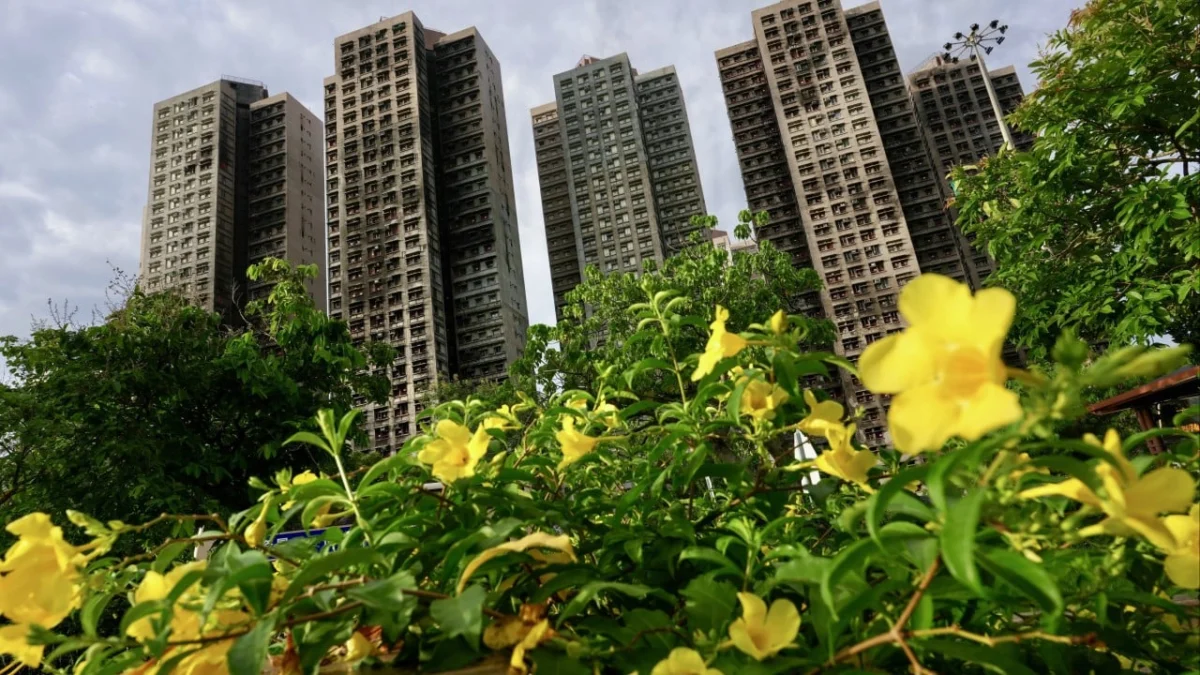
Dawes SC also highlighted that the government bore "a share of responsibility" for permitting corrupt entities to persistently exploit a regulatory framework that was fundamentally flawed. This framework was predicated on the assumption that registered professionals would consistently act with integrity and in good faith. "We’re not saying the government is the instigator of it all," Dawes clarified, "But it is very reasonable for residents to expect the system to be able to protect them. Unfortunately, that was not the case in reality." The fire, which raged for approximately 43 hours, ravaged seven of the eight residential towers at the subsidised estate in Tai Po, resulting in the tragic loss of 168 lives and displacing nearly 5,000 residents.
The Catastrophic Blaze: A Timeline of Tragedy
The inferno at Wang Fuk Court, a large public housing estate in Tai Po, began on the morning of November 15th, 2023. Initial reports indicated the fire started in a lower-level unit before rapidly spreading through the interconnected structures of the estate. The sheer scale and speed of the fire quickly overwhelmed local emergency services, leading to an unprecedented rescue and firefighting operation.
November 15th, 2023: The fire breaks out at Wang Fuk Court. Firefighters are dispatched immediately, but the blaze intensifies rapidly, fueled by the building materials and architectural design of the estate. Evacuation efforts are initiated, but many residents find themselves trapped.
November 15th – 17th, 2023: The fire continues to burn for nearly two full days. Rescue operations are hampered by the intensity of the flames and the structural instability of the affected towers. Casualty figures begin to climb, painting a grim picture of the unfolding tragedy.
November 17th, 2023: The fire is finally brought under control, leaving behind a scene of widespread devastation. Search and recovery operations commence, revealing the full extent of the human cost.
Following Weeks/Months: An independent committee is established to thoroughly investigate the causes and contributing factors of the fire. Public hearings are convened to gather evidence and testimony from various stakeholders, including residents, emergency services personnel, government officials, and representatives of the private sector involved in the estate’s recent renovations.
Flawed Renovation, Fatal Compromises: The Role of the Private Sector
The HK$336 million renovation project undertaken at Wang Fuk Court was intended to upgrade and modernise the aging estate. However, evidence presented during the inquiry suggests that this project became a conduit for negligence and fraudulent practices. The legal counsel for the investigation committee pointed to specific instances where the contractor and consultant allegedly prioritised cost-saving and expediency over safety protocols.
- Substandard Materials: Reports indicate that the contractors may have used fire-retardant materials that did not meet the required safety standards. This compromise would have significantly reduced the fire resistance of the building’s components, allowing flames to spread with alarming speed.
- Fabricated Certificates: The practice of fabricating safety certificates is a particularly damning allegation. These documents are crucial for verifying that construction work and materials comply with building regulations and fire safety codes. Their falsification suggests a deliberate attempt to deceive regulatory bodies and conceal the true extent of the safety compromises.
- Circumventing Safety Requirements: Beyond material substitution, there are suggestions that the project team actively found ways to bypass established safety procedures. This could include inadequate installation of fire-stopping measures, failure to properly seal penetrations, or neglecting critical fire-resistant barriers.
The financial incentives for such corner-cutting are often substantial in large-scale construction projects. Profit margins can be significantly increased by using cheaper materials and reducing labour hours, especially when oversight is lax. The investigation’s findings suggest that in this instance, the pursuit of profit directly led to a catastrophic failure in public safety.
The Government’s Abdication of Responsibility
While the primary culpability for the immediate cause of the fire rests with the contractor and consultant, the government’s role in creating and maintaining a regulatory environment susceptible to such abuses is also under intense scrutiny. The "honour system" described by Dawes SC refers to a system where regulatory compliance is largely expected to be self-enforced by industry professionals, with government oversight acting more as a reactive rather than proactive measure.
- Fragile Regulatory Framework: The investigation highlights that Hong Kong’s regulatory framework, particularly concerning building safety and renovations, may be too reliant on the integrity of private sector professionals. When this integrity is compromised, the system lacks sufficient safeguards to prevent disaster.
- Assumption of Good Faith: The assumption that registered professionals would always discharge their duties in good faith is a critical weakness. This assumption can lead to complacency in oversight mechanisms, allowing for potential malfeasance to go undetected for extended periods.
- Inadequate Enforcement: The effectiveness of regulatory bodies in monitoring and enforcing compliance standards is also being questioned. If inspections are infrequent, superficial, or if penalties for violations are insufficient, it can embolden those seeking to cut corners.
The government’s responsibility extends to ensuring that all sectors operating within its jurisdiction adhere to stringent safety standards, especially when public safety is at stake. The Wang Fuk Court fire serves as a stark reminder that regulatory frameworks must be robust, with proactive enforcement and significant deterrents against non-compliance.
Data and Statistics: The Scale of the Tragedy
The Wang Fuk Court fire stands as one of Hong Kong’s deadliest residential fires in recent history, underscoring the critical importance of fire safety regulations and their enforcement.
- Fatalities: 168 lives were lost in the inferno, a number that profoundly shocked the city and highlighted the severe consequences of regulatory failures.
- Displacement: Approximately 5,000 residents were forced to evacuate their homes, facing immediate housing crises and the long-term trauma of losing their residences and belongings.
- Building Impact: Seven out of eight residential towers were severely damaged or destroyed, rendering them uninhabitable and requiring extensive rebuilding or demolition.
- Economic Cost: Beyond the human toll, the economic cost of the disaster, including rescue efforts, temporary housing, and eventual reconstruction, is substantial, likely running into hundreds of millions of Hong Kong dollars.
These figures paint a grim picture of the scale of the tragedy and the urgent need for systemic reforms.
Broader Implications and the Path Forward
The findings of the Wang Fuk Court fire investigation have far-reaching implications for Hong Kong’s building safety regime and the broader relationship between the government and its private sector.
- Call for Reform: The independent committee’s recommendations are expected to include a comprehensive overhaul of the regulatory framework governing building safety and renovations. This may involve increased government oversight, more stringent penalties for non-compliance, and enhanced mechanisms for reporting and addressing safety concerns.
- Public Trust: The incident has undoubtedly eroded public trust in the existing systems designed to protect citizens. Rebuilding this trust will require transparency, accountability, and a demonstrated commitment to implementing meaningful changes.
- Professional Accountability: The investigation will likely lead to increased scrutiny of the conduct of professionals in the construction and property development sectors. There may be calls for stricter professional licensing, ongoing ethical training, and more robust disciplinary actions for those who fail to uphold their responsibilities.
- Resident Empowerment: The experiences of the Wang Fuk Court residents, who have voiced their expectations for a safer system, highlight the importance of empowering residents with channels to report concerns and ensuring their voices are heard in matters affecting their safety and living conditions.
The final session of the public hearings marked a significant milestone in the investigation, bringing to light the systemic failures that led to this preventable tragedy. The focus now shifts to translating these findings into concrete actions and reforms that will prevent a recurrence of such a devastating loss of life and property in Hong Kong. The residents of Wang Fuk Court, having endured unimaginable loss, are now looking to the authorities and the industry to learn profound lessons from their ordeal and to implement changes that will truly safeguard the lives of all citizens.