
Tragedy Strikes Eastern Uganda as School Bus Crash Claims 21 Lives, Including 20 Children, Sparking National Outcry Over Road Safety
A horrific road accident in eastern Uganda has claimed the lives of at least 20 schoolchildren and one adult, marking one of the nation’s deadliest road incidents involving minors in recent memory. The bus, transporting pupils on a study trip, crashed on Thursday evening in the Kapchorwa area, leaving dozens of others, including school staff, with injuries. The devastating event has cast a pall over the country, prompting urgent calls for enhanced road safety measures and stricter enforcement of transport regulations.
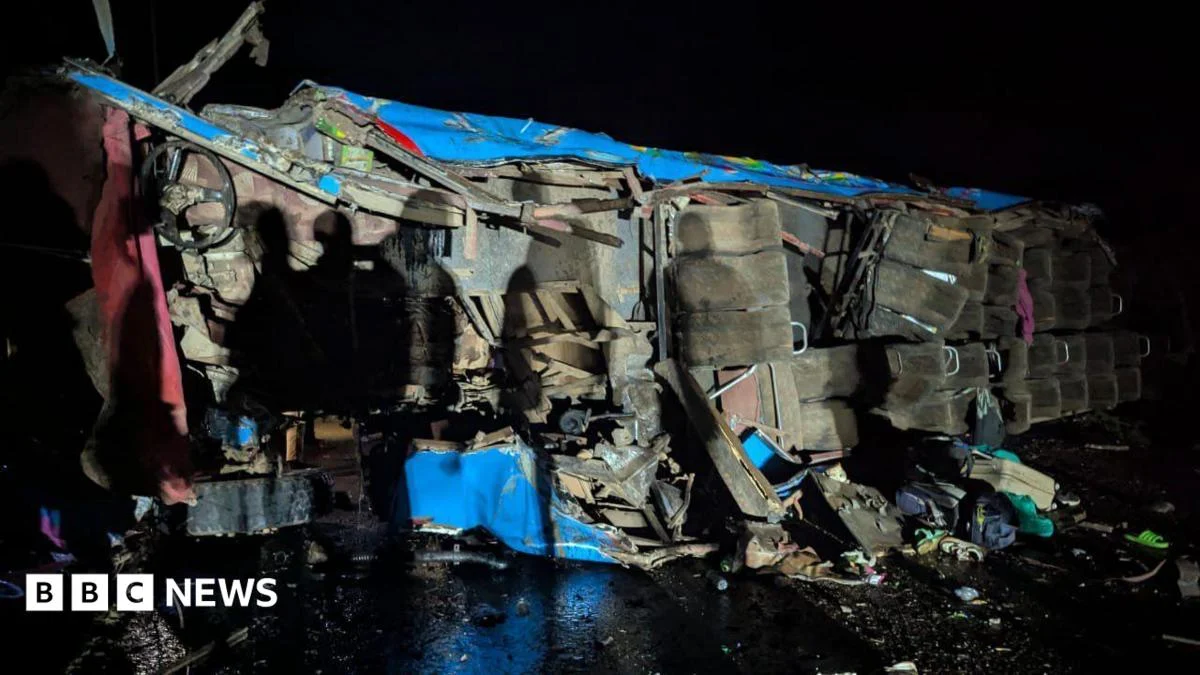
The ill-fated journey began for the pupils of King David Junior School in Ndejje, who were returning from an educational tour of the picturesque Sipi Falls, a popular tourist destination in eastern Uganda. The incident occurred around 20:00 local time (17:00 GMT) at Chekwatit village, nestled within the Kawowo area. Preliminary investigations by local authorities point to a mechanical fault as the primary cause, which led the driver to lose control of the vehicle on the notoriously treacherous Chekwatit Hill. Police reports confirm that the bus veered off the road, collided with a large roadside stone, and subsequently overturned, resulting in the catastrophic loss of life and severe injuries.
The Fateful Journey and Immediate Aftermath
The atmosphere on the bus, likely filled with the joyful chatter and shared memories of the day’s educational excursion, turned to unimaginable horror in a matter of seconds. The route back from Sipi Falls, while scenic, involves navigating challenging terrains, including winding roads and steep descents. Chekwatit Hill, specifically, has gained a grim reputation over the years as a hazardous stretch, witnessing numerous serious crashes due to its sharp bends, gradients, and sometimes poorly maintained surfaces. The late hour of the crash, occurring under the cover of darkness, likely compounded the severity of the incident and complicated initial rescue efforts.
Eyewitnesses, many of whom were local residents from Chekwatit village, described a chaotic scene immediately following the crash. Videos shared from the site depicted the bus severely mangled, its structure crumpled from the impact. In a remarkable display of community spirit, villagers rushed to the wreckage, desperately trying to pull out injured children and offer first aid. The swift response from the community was critical in the initial moments, providing immediate assistance before official emergency services could arrive at the relatively remote location. Injured individuals, some critically, were transported to nearby health facilities, including Kapchorwa Hospital, where medical teams worked through the night to attend to the trauma victims. The sheer number of casualties, particularly young children, presented a significant challenge to the local medical infrastructure.
Victims and the Grieving School Community
The profound loss is keenly felt by the families of the victims and the entire King David Junior School community. Among the deceased children were students spanning various primary school grades, each with aspirations and dreams cut short. The adult victim has been identified as Mr. Tadeo Ssekade, the founder and director of King David Junior School. His presence on the study trip underscored his dedication to the school and its pupils, making his death a double tragedy for the institution. Minister of Local Government, Balaam Ateenyi Barugahara, who visited the scene, confirmed Mr. Ssekade’s passing in a poignant post on X, stating, "Sadly, 20 children and 1 adult, who happens to be the founder and director, Mr Tadeo Ssekade, have gone to be with the Lord."
The school, located in Ndejje, a suburb of Kampala, now faces the daunting task of grappling with immense grief and supporting its surviving students and staff. Counselling services are expected to be vital for those who witnessed the tragedy or lost friends and colleagues. The incident serves as a stark reminder of the responsibilities associated with school transport and extracurricular activities, prompting introspection within educational institutions nationwide regarding safety protocols for such excursions.
Preliminary Investigations and Contributing Factors
Ugandan police have initiated a thorough investigation into the crash. While mechanical failure has been cited as a preliminary cause, the probe will delve deeper into several critical aspects. Investigators will meticulously examine the bus’s maintenance records, its age, and its overall roadworthiness. In Uganda, it is not uncommon for public and private transport vehicles, including those used for school purposes, to be older models that may not always receive regular or comprehensive maintenance, often due to economic constraints. This can lead to critical component failures, such as brake system malfunctions, steering issues, or tyre blowouts.
Beyond mechanical aspects, the investigation will also scrutinize the driver’s conduct. Questions will be raised about the driver’s experience, their driving hours leading up to the incident, and whether fatigue or any other form of impairment played a role. Speeding is a pervasive issue on Ugandan roads, often contributing to the severity of accidents, and investigators will assess if the bus was travelling within safe limits for the terrain. Furthermore, the design and condition of Chekwatit Hill itself will be evaluated. While often blamed on driver error, infrastructural deficiencies like inadequate guardrails, poor signage, and uneven road surfaces can exacerbate risks, particularly at night. The findings of this comprehensive investigation will be crucial in understanding the full spectrum of causes and informing future preventative measures.
Uganda’s Troubling Road Safety Record
This tragic incident is not an isolated occurrence but rather a grim highlight of Uganda’s persistent struggle with road safety. The East African nation consistently records thousands of road deaths each year, placing it among countries with high road accident fatalities globally. According to official figures from the Uganda Police Force, an average of 10 people die on Ugandan roads daily, translating to over 3,500 fatalities annually. The World Health Organization (WHO) data often paints an even more sobering picture, suggesting that reported figures may underestimate the true scale of the problem.
The leading causes of these accidents are multifaceted. Speeding remains a primary culprit, with drivers frequently exceeding limits on both highways and urban roads. The condition of vehicles is another significant factor; many buses and taxis operating in Uganda are poorly maintained, often lacking essential safety features or having worn-out parts. Driver error, including reckless overtaking, distracted driving, and driving under the influence, is also rampant. Furthermore, the quality of road infrastructure, while improving in some areas, still presents challenges in many rural and hilly regions, with narrow roads, sharp bends, and inadequate lighting contributing to hazards. The economic toll of road accidents in Uganda is substantial, estimated to cost the country millions of dollars annually in healthcare expenses, lost productivity, and property damage.
A History of Accidents on Chekwatit Hill and Renewed Concerns
The mention of Chekwatit Hill as the site of the crash immediately resonates with local communities and traffic authorities as a notorious blackspot. Residents of Kapchorwa and neighbouring districts have long expressed concerns about the safety of this particular stretch of road. Past incidents, some fatal, have been attributed to the challenging topography, including steep descents and sharp turns that require extreme caution, especially for heavy vehicles. The combination of these geographical features with driver negligence or vehicle defects often creates a deadly scenario. Local leaders and community groups have periodically appealed to the Uganda National Roads Authority (UNRA) to implement engineering solutions, such as improving road geometry, adding warning signs, or installing crash barriers, but progress has been slow or insufficient to prevent such large-scale tragedies.
The latest crash comes amidst renewed concern over the safety of school transport across Uganda. In recent weeks, several serious bus accidents involving schoolchildren have been reported, prompting public debate and anxiety among parents. These incidents range from minor collisions to more serious rollovers, highlighting a systemic vulnerability in the sector. Many schools rely on private operators or their own aging fleets, and the oversight of vehicle maintenance, driver qualifications, and adherence to safety standards can be inconsistent. There is a growing public demand for a comprehensive review of regulations governing school buses and educational excursions.
Government and Official Reactions
The tragic loss of life has elicited widespread grief and strong reactions from government officials. Beyond Minister Balaam Ateenyi Barugahara’s immediate presence at the scene and confirmation of the fatalities, higher authorities are expected to weigh in. The Ministry of Education and Sports is likely to issue directives to all schools regarding the strict adherence to transport safety guidelines for educational trips, potentially including mandatory vehicle inspections, driver background checks, and limitations on travel hours or routes.
President Yoweri Museveni, or the Prime Minister, is anticipated to extend national condolences to the bereaved families and the King David Junior School. Such high-level pronouncements typically accompany promises of thorough investigations and commitments to implement measures to prevent future occurrences. The Uganda Police Force will continue to provide updates on the investigation, emphasizing their dedication to uncovering the full truth and ensuring accountability. Healthcare authorities will also be providing updates on the condition of the injured, ensuring they receive the best possible medical care, and possibly offering psychological support services to survivors and affected families.
Renewed Calls for Action and Policy Implications
The Kapchorwa tragedy is set to intensify pressure on the Ugandan government to take decisive action on road safety. Civil society organizations and road safety advocates are expected to amplify their calls for stricter enforcement of existing traffic laws and the introduction of new, more robust regulations. Key areas of focus will include:
- Vehicle Roadworthiness: Implementing more stringent and frequent mandatory inspection regimes for all public service vehicles, especially those transporting children. This could involve spot checks and regular certification by independent bodies.
- Driver Training and Welfare: Enhancing driver training, licensing procedures, and enforcing regulations on driver working hours to combat fatigue. Public education campaigns targeting drivers on responsible driving practices will also be crucial.
- Infrastructure Improvement: Investing in upgrading hazardous road sections, installing adequate signage, lighting, and safety barriers, particularly on known blackspots like Chekwatit Hill.
- School Transport Guidelines: Developing and enforcing comprehensive national guidelines for school transport, covering aspects from vehicle age and type to supervision ratios on trips and emergency preparedness.
- Emergency Response: Improving the coordination and speed of emergency services’ response to accidents, particularly in remote areas, through better equipment, training, and communication infrastructure.
Supporting the Bereaved and Injured
In the immediate aftermath, efforts are being coordinated to support the families of the deceased and the injured. This includes facilitating the identification and repatriation of bodies, providing financial assistance for funeral arrangements, and covering medical expenses for those in hospitals. The school community will also require significant support, both emotional and logistical, as they navigate this period of profound loss. Psychosocial support and trauma counselling will be essential for surviving children, school staff, and the first responders who witnessed the horrific scene. Local government structures, in collaboration with NGOs and religious institutions, are expected to play a central role in organizing and delivering this critical support.
Looking Ahead: Preventing Future Tragedies
The Kapchorwa bus crash stands as a poignant and devastating reminder of the human cost of inadequate road safety. While the grief for the lost lives, especially the young ones, is immeasurable, this tragedy must serve as a catalyst for fundamental change. The imperative is clear: Uganda must move beyond reactive responses to proactive, sustained efforts to make its roads safer for everyone, particularly its most vulnerable passengers – children. This involves a multi-pronged approach encompassing policy reform, infrastructure development, rigorous enforcement, public education, and a collective commitment from all stakeholders to prioritize safety above all else. Only then can the nation hope to prevent such heart-wrenching incidents from scarring its future.

Related Posts
Zambia on Edge: Opposition Leader Arrested Amid Allegations of Insurrection Plot and Election Tensions
Rescuers search for survivors of powerful Indonesia earthquake

