A Humble Air Conditioner Installer Found at the Helm of a Currency Exchange That Facilitated Billions in Illicit Dollar Operations
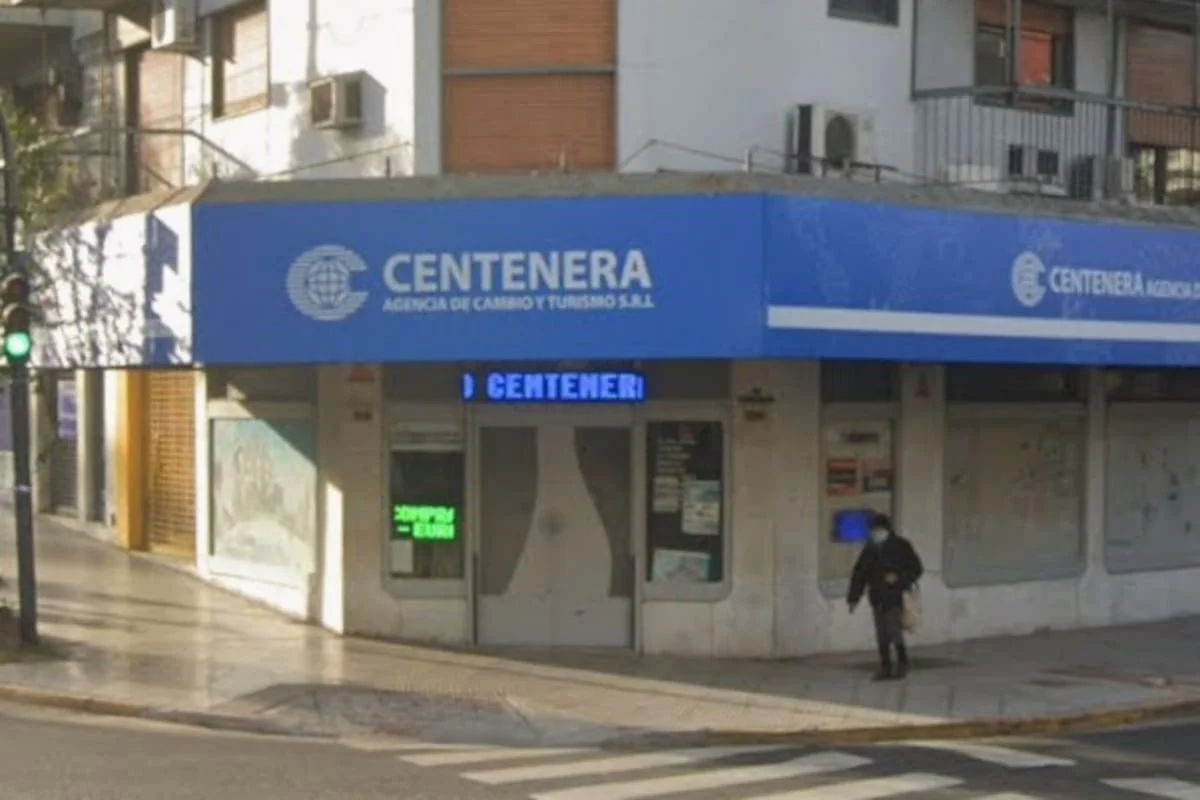
A 61-year-old man, identified as J.H., residing in a modest home in the Centenario neighborhood on the outskirts of Santa Fe, Argentina, presented himself to judicial authorities with a surprising declaration: he was merely a "changarín" (a day laborer) who earned his living installing air conditioners. He claimed no access to a mobile phone, email, or social media, painting a picture of a simple life far removed from the complexities of high finance. However, this unassuming facade masked a far more significant role. J.H. was the titular head of "Centenera," a currency exchange house that, during the period of currency controls known as the "cepo cambiario," facilitated sales of approximately ARS 9.2 billion in the parallel dollar market. This discovery places Centenera at the heart of a sprawling investigation into potential collusion between officials of the Central Bank of Argentina (BCRA) and a network of financiers, including prominent figures such as Elías Piccirillo, Francisco Hauque, Martín Migueles, and Ariel Vallejo, the owner of Sur Finanzas.
The scheme, colloquially termed the "rulo" financiero, involved a sophisticated maneuver designed to exploit the currency controls by acquiring dollars at artificially low official rates and then reselling them at significantly higher prices on the parallel market. "The operation was straightforward: pesos were injected into Centenera’s account, then transferred to another exchange house, and from there, dollars were purchased from the Central Bank," a source familiar with the intricate details of the operation revealed.
Centenera’s involvement was remarkably brief yet staggeringly lucrative. Within a single six-month period in 2023, the company processed exchange operations totaling ARS 9.2 billion in sales and ARS 11.1 billion in purchases, according to official reports from the Central Bank. By the latter half of that year, however, the exchange house effectively ceased its operations, a sudden disappearance that has raised further questions for investigators.
The Genesis of Centenera and the "Changarín’s" Ascent
J.H.’s presence in Centenera’s records began in November 2022, when he was appointed as its manager. Concurrently, a 21-year-old youth acquired a minority stake in the company’s shares, as documented in the financial statements submitted to the General Inspectorate of Justice, which were obtained by LA NACION. The official minutes of the assembly where these new appointments were ratified detail the capital contributions: "Mr. J.A.H. subscribes 4,750 shares for a total of ARS 4,750,000, and Mr. C.J.O. subscribes 250 shares for a total of ARS 250,000. In this act, the partners integrate one hundred percent (100%) of their respective subscriptions in cash, totaling ARS 5,000,000." This initial capital infusion of ARS 5 million marked the beginning of Centenera’s rapid ascent.
Following these shareholding changes, Centenera’s accounts at the Banco de Santa Fe (BST) began to see significant inflows of money, facilitating the massive exchange operations. Sources associated with Centenera have maintained that "Centenera’s operations are all legal and demonstrated in judicial proceedings."
The Interconnected Network: Gallo Cambios and the Flow of Funds
A significant portion of the funds processed by Centenera was channeled to Gallo Cambios, another entity under investigation by the Central Bank for the illicit sale of an estimated US$474 million. The investigative summary reveals a complex web of transactions, describing a "million-dollar hand-off" where "Gallo Cambios purchased U.S. dollars primarily from operators Mega Latina and Stema Cambios." Furthermore, the document highlights that 92.7% of the dollars sold by Gallo Cambios were disbursed in cash to other market operators, with Centenera being explicitly mentioned on this list.
The Central Bank has also pointed out that between 2022 and 2024, twelve currency exchange operators that transferred pesos to Gallo Cambios had their authorizations revoked. This period spans both the administration of Miguel Ángel Pesce and the current BCRA leadership, suggesting a systemic issue that persisted across different governmental periods.
Unraveling the "Rulo" and the Role of Audios
The mystery surrounding Centenera and its unassuming frontman is being actively investigated in a separate judicial proceeding initiated in 2024 within the Criminal and Correctional jurisdiction. Centenera is now among more than 30 companies, predominantly exchange houses and agencies, under scrutiny by prosecutor Franco Picardi and Judge Ariel Lijo in a case directly linked to the illicit dollar market. The investigation gained momentum in December of the previous year following the discovery of audio recordings on a USB drive provided by Carlos "El Lobo" Smith, a former police officer who reportedly worked for Elías Piccirillo.
These damning audio recordings allegedly capture Elías Piccirillo discussing the "rulo" operation, suggesting that "all of politics is involved" and hinting that Hauque might approach President Javier Milei to expose those implicated. In another recording, attributed to a BCRA official identified as Romina García, the phrase "people from up high are involved" is reportedly used in reference to the "rulo" scheme, further implicating high-ranking officials and suggesting a deeply entrenched network of corruption.

The content of these audio recordings, which have been challenged by several defendants before the Federal Chamber, triggered a series of raids in December on five Central Bank officials. Their mobile phones and computers were seized, yielding crucial new evidence for the investigators. A subsequent wave of raids occurred in March, as investigators sought documentation related to over 30 companies, including prominent names like Arg Exchange, Xinergia, Gallo Cambios, Mega Latina, Fenus, and the aforementioned Centenera.
A Wider Net: Centenera’s Presence in Multiple Investigations
Centenera’s name also surfaces in another judicial case overseen by Judge María Servini and prosecutor Carlos Stornelli, which also delves into the financial "rulo" operations. This investigation details that between January and August 2023, 17 currency exchange houses reportedly received a staggering ARS 141.596 billion from 2,765 individuals and 647 legal entities. The investigation suggests that at least a portion of these funds may have an illicit origin, with Centenera identified as one of these 17 exchange houses.
In the Picardi and Lijo case, which has been under strict secrecy for over a month, the investigation into the parallel dollar market has unearthed evidence of alleged bribery. As previously reported by LA NACION, these allegations suggest bribes ranging from 10% to 15% were paid to secure import permits during the final period of Alberto Fernández’s presidency and the tenure of Sergio Massa as Minister of Economy. This pertains to the Sistema de Importaciones de la República Argentina (SIRA), a mechanism that governed imports between October 2022 and December 2023.
Picardi has issued urgent requests for information from the Customs, the Secretariat of Commerce, and the BCRA. He has also petitioned for the lifting of fiscal, banking, and stock market secrecy for numerous individuals and legal entities implicated in these financial irregularities.
The Broader Implications and the Unanswered Questions
The revelation of a seemingly ordinary air conditioner installer being at the helm of a company involved in such massive financial illicit activities underscores the complex and often opaque nature of financial markets, particularly in contexts of currency controls and economic instability. The case highlights the potential for individuals with minimal apparent resources or connections to be leveraged as nominal figures in sophisticated schemes, shielding the true beneficiaries and architects of these operations.
The involvement of Central Bank officials, as suggested by the audio recordings and subsequent raids, points to a potential systemic failure or, worse, deliberate complicity within the nation’s highest financial regulatory body. The implications of such collusion are profound, undermining public trust in financial institutions and potentially destabilizing the national economy. The "rulo" maneuver, by artificially inflating demand and price for dollars on the parallel market, directly impacts the value of the Argentine peso, exacerbates inflation, and creates an uneven playing field for legitimate businesses and citizens.
The sheer volume of money processed by Centenera in such a short period – billions of pesos – suggests a highly organized and well-funded operation. The connection to other implicated firms like Gallo Cambios, Mega Latina, and Stema Cambios, and the flow of funds between them, paints a picture of an intricate network designed for maximum profit through exploitation of regulatory loopholes and alleged corruption.
The ongoing investigations by Judge Lijo and Prosecutor Picardi, as well as the separate inquiry by Judge Servini and Prosecutor Stornelli, are crucial in determining the full extent of the scheme, identifying all responsible parties, and recovering any illicitly obtained assets. The discovery of alleged bribery related to import permits adds another layer of complexity, suggesting that the same networks may have been involved in multiple forms of financial misconduct.
As the legal proceedings unfold, the focus will remain on the evidence presented, the testimony of witnesses and defendants, and the ultimate accountability of those found to have engaged in these illicit activities. The case of J.H., the "changarín" who fronted a multi-billion-peso currency exchange, serves as a stark reminder of the hidden complexities and potential for deception that can lie beneath the surface of even the most unassuming appearances in the world of finance. The investigation’s ultimate success will hinge on its ability to pierce through these layers of obfuscation and bring transparency and justice to a situation that has significant ramifications for Argentina’s economic stability and public trust. The swift deactivation of Centenera after its period of intense activity also suggests a calculated move to evade scrutiny, further fueling the urgency of the judicial probes. The authorities are now tasked with unraveling not just the financial transactions but the very intent and beneficiaries behind these operations that have potentially siphoned vast sums from the Argentine economy.

Related Posts

The Electric Vehicle Battery Health Debate Emerges as Argentina’s EV Market Accelerates
President Donald Trump Confirms Secret Departure from Turkey Amidst Assassination Threat