Jigawa boat accident death toll rises to six, 34 still missing
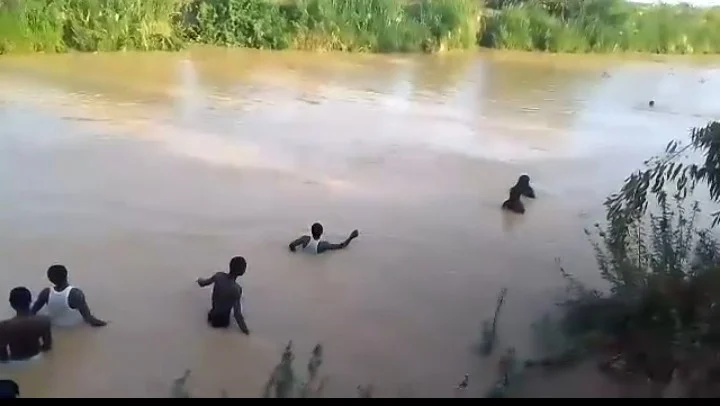
The tranquil waters of the Malamawar Yan Dutse community in Ringim Local Government Area of Jigawa State have become the site of a profound humanitarian tragedy, as rescue efforts intensify following a devastating boat mishap that has left dozens of families in mourning and a community in a state of paralysis. As of Monday afternoon, the Jigawa State Police Command has officially confirmed that the death toll from the Sunday afternoon incident has risen to six, with 34 passengers still unaccounted for. The tragedy, which occurred at approximately 4:30 p.m., has sent shockwaves through the region, highlighting the persistent dangers associated with water transportation in rural Nigeria.
The Chronology of the Disaster
The incident began on Sunday evening when a wooden boat, ferrying 40 passengers—predominantly farmers and agricultural laborers—attempted to cross the river to reach their destination. Reports indicate that the vessel, which was operating in a region where water transport remains a critical but poorly regulated lifeline, suddenly capsized mid-transit.
The immediate aftermath saw a frantic scramble for survival. Local residents and nearby farmers who witnessed the capsizing raised the alarm, prompting an immediate, albeit informal, rescue response. Local divers, often the first responders in such rural riverine incidents, mobilized before the evening Maghrib prayers on Sunday. According to Malam Jibril Sani, a diver involved in the ongoing recovery mission, the initial search was hindered by the onset of nightfall. "We started the search immediately after the incident occurred, before the Maghrib prayer on Sunday, and stopped when night fell before resuming the search this morning," Sani recounted.
By early Monday morning, the combined force of the Jigawa State Police Command, the Jigawa State Emergency Management Agency (SEMA), and seasoned local divers transitioned into a structured recovery operation. Despite their coordinated efforts, the recovery of bodies has been slow, hampered by the depth and current of the river, as well as the limited specialized equipment available to the search teams.
Official Responses and Rescue Operations
SP Shi’isu Adam, the Police Public Relations Officer for the Jigawa State Command, has served as the primary conduit for official information. In his briefing to the press, Adam emphasized that the state government is treating the situation with the utmost urgency. "The number of recovered bodies has increased to six," Adam stated, confirming that the joint task force is committed to continuing the search until every passenger is accounted for.
The involvement of SEMA suggests a scaling up of the response, as the agency brings resources for disaster management and coordination. However, the nature of the terrain and the scale of the search present significant logistical challenges. Divers like Yakubu Danfulani have expressed a grim determination to continue the work, stating that their teams are operating with the hope of finding survivors, though the passing of time significantly diminishes the probability of such an outcome. The rescue team remains on-site at the riverside, operating under the watchful eyes of grieving families and community members.
Contextualizing Water Transport Hazards in Nigeria
The tragedy in Ringim is not an isolated event but rather a symptom of a systemic crisis plaguing inland water transportation in Nigeria. Across the country, particularly in northern states like Jigawa, Kebbi, and Niger, river crossings are essential for farmers to access their fields and for traders to reach local markets. However, these crossings are frequently serviced by aging, unmaintained, and overloaded wooden boats that lack basic safety features.
Data from the National Inland Waterways Authority (NIWA) and various transport safety researchers indicates that boat mishaps in Nigeria are predominantly caused by a combination of human error, structural deficiencies, and environmental factors. Common contributing elements include:

- Overloading: Boats are frequently operated beyond their weight capacity to maximize profit or accommodate demand, significantly reducing stability.
- Lack of Life Jackets: It is common for passengers to travel without life jackets, meaning even minor incidents quickly escalate into fatalities.
- Inadequate Maintenance: Many vessels are constructed locally without adherence to standardized maritime safety codes, leading to hull failures.
- Poor Infrastructure: The absence of bridges and well-maintained ferries forces communities to rely on high-risk, informal water transport.
In Jigawa, the lack of road infrastructure that connects farming communities to major trade hubs forces many to rely on the river as the only viable route. This dependency creates a "captive market" where passengers have little choice but to risk their lives on vessels that do not meet safety standards.
The Emotional and Economic Toll
The mood in Malamawar Yan Dutse is one of profound grief and collective anxiety. For a community dependent on seasonal farming, the loss of 40 individuals—many of whom are breadwinners—will have long-term economic consequences. Musbahu Bashir, a local resident, captured the sentiment of the village: "We spent the whole of yesterday night sleepless, thinking of how these missing persons will be found."
Beyond the emotional trauma, the accident has effectively severed the community’s connection to essential services. With many residents now terrified of using water transport, the village faces a period of isolation. Access to markets, schools, and medical facilities has been disrupted. The fear currently gripping the community is palpable, as residents openly express their reluctance to board any watercraft in the near future.
Calls for Government Intervention
As the search continues, voices within the community have begun to call for more than just emergency response; they are demanding structural change. Malam Wawu, a resident affected by the disaster, issued a poignant appeal to both the Jigawa State and Federal Governments. He argued that the provision of life jackets, the deployment of safer, government-regulated ferries, and, most importantly, the construction of bridges and roads, are the only ways to prevent future tragedies.
"The government must look at our plight," Wawu stated. "We cannot continue to lose our brothers and sisters to the river simply because there is no road or bridge."
The incident has reignited the debate regarding the oversight of inland water transport. While NIWA is the regulatory body tasked with ensuring safety, their presence in remote rural areas remains limited. Analysts suggest that the lack of enforcement of safety regulations at the local level is a primary reason why boat mishaps remain a recurring feature of the rainy season in Nigeria.
Implications and Future Outlook
The Jigawa boat mishap serves as a sobering reminder of the gaps in Nigeria’s infrastructure development and safety regulation. For the authorities, the immediate priority remains the recovery of the remaining 34 victims. However, the long-term challenge involves addressing the underlying conditions that lead to such accidents.
If the state government fails to implement stricter safety protocols—such as mandatory life jacket usage and routine inspections of wooden boats—the risk of future fatalities will remain high. Furthermore, this incident places renewed pressure on the federal government to prioritize rural infrastructure projects that could replace dangerous river crossings with permanent, safe alternatives.
As the sun sets on the riverbank in Ringim, the families of the missing continue their vigil. The recovery of the six victims is a small mercy in a situation of immense scale, but the focus remains on the 34 souls whose status remains unknown. The coming days will likely see an intensification of the recovery efforts, followed by a period of mourning and, hopefully, a serious political conversation about how to ensure that the rivers of Jigawa cease to be conduits of tragedy for its people. The incident underscores the fragility of life in rural Nigeria and the urgent need for a more proactive approach to public safety and infrastructure development.

Related Posts
Kwara State Government intensifies campaign against teenage pregnancy and child marriage to bolster maternal health outcomes

Rudi Garcia to step down as Belgium coach after World Cup quarter-final run