Dutch startup’s rust-powered batteries could help crack Europe’s energy storage gap
As the European Union intensifies its efforts to achieve strategic autonomy in energy and technology, the emergence of iron-air battery systems is being hailed as a pivotal shift in the continent’s decarbonization roadmap. Ore Energy, a frontrunner in the long-duration energy storage (LDES) sector, has officially announced that its proprietary iron-air battery technology is ready to play a central role in stabilizing the European power grid. By utilizing two of the world’s most abundant materials—iron and oxygen—the company aims to provide a cost-effective, scalable alternative to lithium-ion batteries, which currently dominate the market but remain tethered to volatile and geopolitically sensitive supply chains.

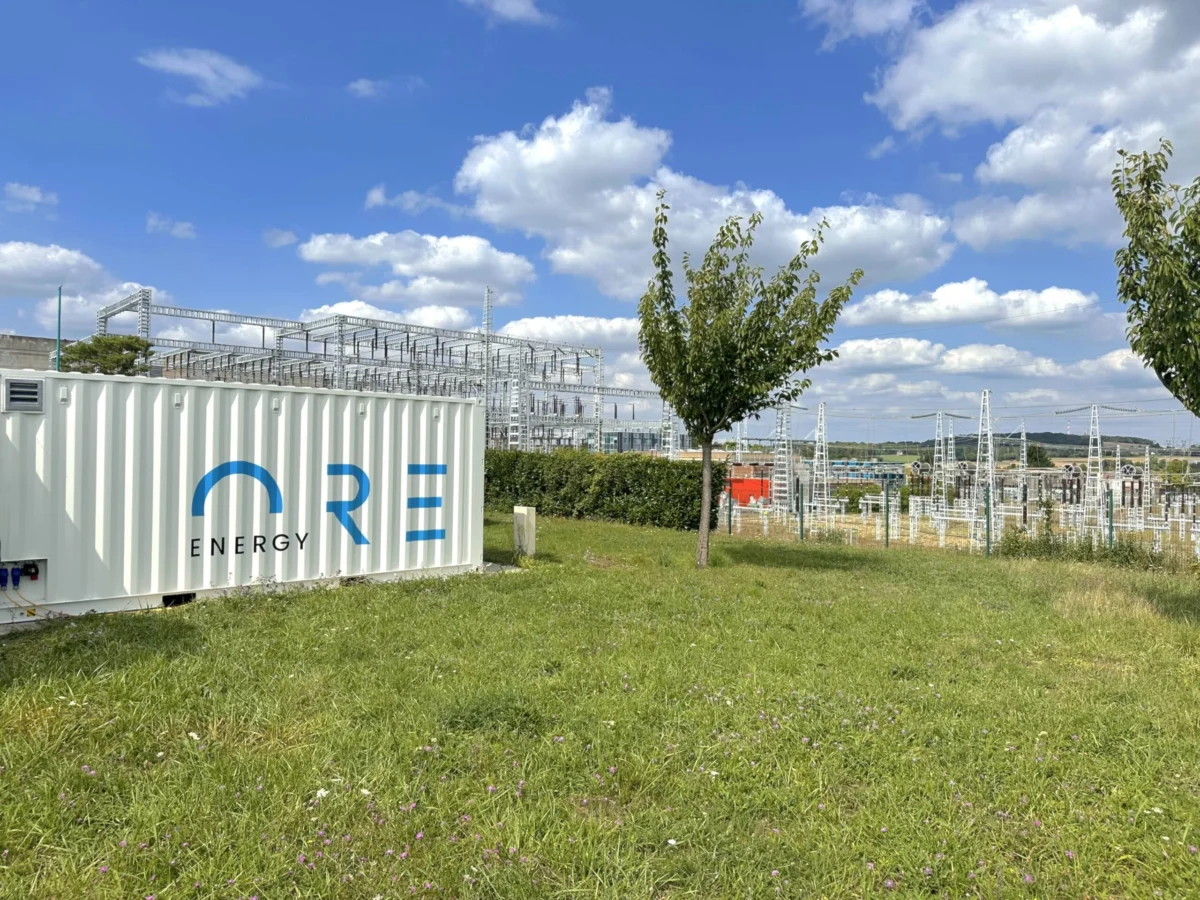
The announcement comes at a critical juncture for European energy policy. Following the recent pilot deployment of Ore Energy’s systems at the EDF Lab Renardières in Écuelles, France, the company has demonstrated the viability of storing energy for up to 100 hours or more. This capability is essential for managing the inherent intermittency of wind and solar power, particularly during periods of low generation known as "Dunkelflaute" (dark doldrums). Unlike traditional short-duration batteries that discharge over two to four hours, iron-air systems are designed to bridge multi-day gaps in renewable energy production, ensuring a steady supply of green electricity even when the weather is uncooperative.
The Chemistry of Resilience: How Iron-Air Technology Works
The fundamental principle behind Ore Energy’s technology is a process most commonly associated with decay: rusting. In an iron-air battery, the discharge cycle involves the oxidation of iron. When the battery is providing power to the grid, it breathes in oxygen from the surrounding air, which reacts with the iron anode to create iron oxide (rust). This chemical reaction releases electrons, which are then channeled into the electrical grid.

To recharge the battery, the process is reversed. An electrical current from a renewable source, such as a nearby wind farm or solar array, is applied to the system. This current pulls the oxygen out of the iron oxide, converting the rust back into metallic iron. Because the system relies on the reversible oxidation of iron, it can undergo thousands of cycles without the significant degradation typically seen in lithium-ion chemistries.
The use of iron provides a massive economic and environmental advantage. Iron is the most processed metal globally, with established recycling infrastructures and vast domestic reserves within Europe. In contrast, lithium-ion batteries require a complex cocktail of cobalt, nickel, and lithium—minerals that are often mined in ecologically sensitive areas and processed in facilities largely controlled by China. By pivoting to iron, Ore Energy argues that Europe can insulate its energy transition from the price spikes and supply bottlenecks that have characterized the critical minerals market over the last decade.

Breaking the Dependence on Critical Raw Materials
The geopolitical implications of Ore Energy’s technology cannot be overstated. According to the European Commission’s most recent report on strategic dependencies, the EU currently imports over 90% of its lithium and nearly 100% of its processed cobalt. This reliance has created a "green paradox," where the transition to clean energy creates new vulnerabilities to external shocks.
Ore Energy’s iron-air batteries require virtually no "critical" minerals as defined by the EU’s Critical Raw Materials Act. The primary components—iron, water, and air—are readily available on every continent. This allows for a completely localized supply chain. Manufacturing can take place near existing steel mills or industrial hubs, utilizing local labor and materials.

"We are not just building a battery; we are building a domestic energy insurance policy," a spokesperson for Ore Energy stated during the briefing at the EDF Lab. "By decoupling energy storage from the lithium supply chain, we are ensuring that Europe’s path to Net Zero is dictated by European policy and resources, rather than global commodity fluctuations."
Strategic Partnership with EDF and the Path to Scaling
The collaboration with EDF (Électricité de France) represents a major milestone in the commercialization of LDES technology. The EDF Lab Renardières is one of Europe’s premier testing grounds for grid-scale equipment, and the successful integration of Ore Energy’s containers into the lab’s microgrid provides a "proof of concept" for utility-scale deployment.

The pilot project consists of modular units, each roughly the size of a shipping container. These units can be stacked or arranged in large arrays to create "energy parks" capable of storing hundreds of megawatt-hours. Industry analysts suggest that for LDES to be commercially viable, it must reach a cost point of less than $20 per kilowatt-hour of capacity—a fraction of the $150 per kilowatt-hour cost typically associated with lithium-ion systems. Ore Energy claims its iron-air solution is on track to meet or even beat this target as production scales up toward 2030.
The timeline for broader deployment is aggressive. Following the French pilot, Ore Energy intends to launch a series of "Gigafactories" across the continent. These facilities will not require the specialized clean-room environments essential for lithium-ion production, further lowering capital expenditure and allowing for faster construction.

Economic and Geopolitical Context: The 2026 Energy Landscape
The urgency surrounding Ore Energy’s announcement is amplified by the current global situation. As of early 2026, the global energy market remains in a state of flux. Ongoing tensions and conflict in the Middle East—specifically referred to by the International Energy Agency (IEA) as a primary driver of market volatility—have led to a sharp reduction in global oil demand forecasts as nations accelerate their shift toward electrification.
However, electrification without storage is inherently unstable. In the United States, despite political shifts, the domestic push for "energy sovereignty" has led to massive investments in long-duration storage. Europe faces a similar pressure to maintain industrial competitiveness. High energy prices have historically disadvantaged European manufacturers; by providing cheap, long-term storage, iron-air batteries could lower the average cost of electricity, making the European "Green Deal" an engine for economic growth rather than a cost burden.

Furthermore, the implementation of the EU’s Carbon Border Adjustment Mechanism (CBAM) is forcing importers to account for the carbon footprint of their products. This makes the domestic production of batteries—using low-carbon European steel and renewable energy—even more attractive compared to importing batteries from regions with high-carbon grids.
Challenges and Technical Hurdles
Despite the optimism, iron-air technology is not without its challenges. The primary drawback compared to lithium-ion is "round-trip efficiency." While lithium-ion batteries return about 85% to 90% of the energy put into them, iron-air systems typically operate at an efficiency of 40% to 60%. This is due to the energy lost during the chemical conversion of iron to rust and back again.

Ore Energy acknowledges this limitation but argues that for long-duration storage, efficiency is secondary to cost. When the goal is to store "excess" renewable energy—power that would otherwise be curtailed or wasted during peak wind or sunny periods—a lower efficiency is an acceptable trade-off for a significantly lower capital cost.
Another challenge is the physical footprint. Iron-air batteries are heavier and bulkier than their lithium counterparts, meaning they are unsuitable for electric vehicles or consumer electronics. They are strictly a stationary storage solution, intended for large-scale grid applications where space is less of a premium than in a car chassis.

Implications for the Global Energy Transition
The success of Ore Energy could signal a broader trend in the energy sector: the diversification of storage technologies. For the past decade, the industry has looked for a "lithium killer"—a single technology to replace the incumbent. The reality emerging in 2026 is a "multi-tech" approach. Lithium-ion will likely remain the standard for high-power, short-duration needs (such as grid frequency regulation and transport), while iron-air and other flow batteries handle the "heavy lifting" of multi-day storage.
Governments are already adjusting their subsidy frameworks to reflect this. In Brazil, lawmakers are pushing for state-owned developers to focus on rare earths and minerals essential for the next generation of green tech, while in the United States, university leaders and policy experts are urging a focus on "beyond-lithium" solutions to ensure long-term grid stability.

Conclusion: A New Era of European Energy Security
Ore Energy’s move to harness the power of iron and air represents a fusion of old-world industrial strength and new-world technological innovation. By transforming a basic chemical reaction—rust—into a high-tech energy solution, the company is offering a tangible way for Europe to meet its climate goals without compromising its strategic independence.
As the pilot project at EDF Lab Renardières concludes its initial phase, the eyes of the energy world are on the next steps. If Ore Energy can successfully scale its manufacturing and maintain its low-cost promise, the "iron age" of energy storage may be just beginning. This shift would not only accelerate the phase-out of fossil fuel-peaker plants but also provide a blueprint for other regions looking to build a sustainable, self-reliant energy future. In a world where critical minerals have become the new oil, the most valuable resource for the future of the grid may turn out to be the very ground we walk on.

Related Posts
Constitutional Court of South Africa Bars Shell Oil Exploration in Landmark Victory for Environmental and Community Rights
The Battle for Saldanha Bay: South Africa’s Ambitious Ocean Economy Strategy Faces Legal and Environmental Reckoning