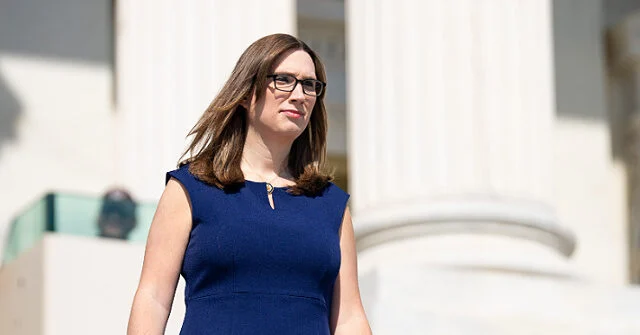
Dem Opposed Iowa ‘Back the Blue’ Law Before 3rd Race for Congress
Christina Bohannan, a University of Iowa law professor and a prominent figure in the state’s Democratic Party, is gearing up for another potential run for Congress, facing intense scrutiny over her past positions on law enforcement, social justice, and immigration. With Iowa’s Democratic primary months away, Bohannan, who chaired the University of Iowa Law School’s Diversity, Equity, and Inclusion (DEI) Committee in 2020, could be on track for a third consecutive electoral contest against Republican incumbent Representative Mariannette Miller-Meeks, having lost to her twice before. Her political record, marked by her opposition to Iowa’s "Back the Blue Act" and her defense of Black Lives Matter protesters and sanctuary city policies, is expected to be a central theme in the upcoming election cycle.
Background to Controversy: The Tumultuous Year of 2020
The backdrop to many of Bohannan’s most scrutinized stances is the tumultuous year of 2020, a period defined by nationwide protests and social unrest following the death of George Floyd. These events sparked a profound national dialogue on policing, racial justice, and civil liberties, reverberating deeply within communities across Iowa. In cities like Iowa City and Des Moines, protests, while largely peaceful, also saw instances of confrontation and injury to law enforcement officers. Reports from the time detailed incidents where officers in Iowa City suffered injuries after protesters allegedly shined lasers at them, while in Des Moines, officers were reportedly injured, with one allegedly placed in a chokehold. These incidents contributed to a polarized environment, prompting calls for both police accountability and enhanced protections for law enforcement.
Amidst this climate, Professor Bohannan, then serving as the chair of the University of Iowa Law School’s DEI Committee, actively urged students and staff to "support the movement." Her recommendations included donating to organizations such as the Minnesota Freedom Fund and the National Bail Out Fund. These groups, while advocating for criminal justice reform and the elimination of cash bail, have also been associated with the broader "defund the police" movement, drawing criticism from those who argue such initiatives undermine law enforcement and public safety. The Minnesota Freedom Fund, for instance, gained national attention for bailing out individuals accused of various crimes, sparking debates about the implications of such actions on community safety and the judicial process. Similarly, the National Bail Out Fund, focused on ending cash bail, has been a key player in the broader push for systemic criminal justice reform, advocating for alternatives to incarceration.
Beyond her involvement in social justice movements, Bohannan also acknowledged being "very active" in a group that championed the abolition of U.S. Immigration and Customs Enforcement (ICE) and the establishment of sanctuary cities. In 2019, she made donations to a group dedicated to bailing out undocumented immigrants, an organization whose stated aspirations included achieving a "world without police." These positions align with a progressive wing of the Democratic Party advocating for comprehensive immigration reform, reduced enforcement, and community-led public safety models, but they stand in stark contrast to more conservative and moderate viewpoints emphasizing border security and law enforcement authority. The debate over ICE’s role and the concept of sanctuary cities has been a persistent national flashpoint, with proponents arguing for humanitarian treatment and community trust, while opponents cite concerns about federal law enforcement impedance and public safety risks.
The "Back the Blue Act" and Bohannan’s Opposition
In response to the civil unrest and incidents involving law enforcement in 2020, Iowa lawmakers enacted the "Back the Blue Act" in 2021. This legislation represented a significant effort by the state to bolster police protections and increase penalties for protest-related offenses. Key provisions of the act included:
- Increased Penalties for Rioting and Protest-Related Crimes: The law significantly raised the stakes for individuals involved in unlawful assemblies or riots, with the intent of deterring violent or destructive behavior during protests.
- Protection for Law Enforcement Officers: It shielded officers from having their personal information publicly disclosed, a measure intended to prevent harassment and intimidation.
- Expanded Qualified Immunity Protections: The act broadened the legal protections for police officers, making it more difficult to sue them for actions taken in the line of duty, a contentious issue in the national debate over police accountability.
Professor Bohannan emerged as a vocal critic of the "Back the Blue Act." Publicly, and while wearing a COVID mask, she argued that the bill "unnecessarily pits law enforcement against groups like Black Lives Matter and other protestors just at the time when we need to be bringing all of these groups together." This statement underscored her belief that the legislation was divisive and counterproductive to fostering reconciliation between communities and law enforcement.
Her opposition extended to co-authoring an op-ed that labeled parts of the "Back the Blue Act" as "dangerous and disturbing," directly challenging several of its core provisions. She specifically objected to the measure making it a serious misdemeanor to obstruct public thoroughfares "with the intent to prevent or hinder its lawful use by others." Bohannan and her co-author argued that such a provision could stifle legitimate forms of protest and infringe upon First Amendment rights to free speech and assembly.
Furthermore, Bohannan criticized the bill’s provision that made it a serious misdemeanor for a driver not to stop for an unmarked law enforcement vehicle driven by a plain-clothes officer. She contended that this measure posed particular risks for vulnerable groups, writing, "Those in the BIPOC community, women and others driving at night, would have to pull over for anyone with red or red/blue flashing lights, no matter how unsafe it may be. The penalty for failing to do so could be up to a year in jail." This critique highlighted concerns about potential racial profiling, safety risks, and the disproportionate impact of such laws on marginalized communities.
Bohannan also took issue with provisions targeting sanctuary city policies, which seek to limit local cooperation with federal immigration enforcement, and mandates requiring local governments and police departments to enforce state law without discretion. She argued that forcing law enforcement to carry out such mandates was "a recipe for increased tensions and conflict," suggesting it could erode trust between immigrant communities and local police, making them less likely to report crimes or cooperate with investigations.
Finally, the op-ed challenged the law’s tougher penalties for riots and unlawful assembly, particularly the reclassification of rioting from an aggravated misdemeanor to a Class D felony, punishable by up to five years in prison. Bohannan and her co-author posited that this measure would "likely chill First Amendment speech and assembly, punish harmless activity, and escalate and immunize violence," concluding that "this bill will make us both less free and less safe." This analysis reflected a perspective that prioritized civil liberties and the right to protest, even if it meant challenging measures designed to enhance public order.
Broader Implications and Political Ramifications
The positions taken by Christina Bohannan on these contentious issues have drawn sharp criticism from Republican circles and are expected to be heavily scrutinized as the election cycle progresses. Republican National Committee spokesman Zach Kraft encapsulated this sentiment, stating, "Leave it to a DEI professor to say that backing the blue is racist. It is pretty easy to see why ‘Black Lives Matter’ Bohannan is a two-time loser, and she is well on her way to threepeating." This statement underscores the Republican strategy of linking Bohannan’s academic role and progressive stances to a perceived anti-police sentiment, framing her as out of step with mainstream Iowa voters, particularly in a swing district like Iowa’s 1st Congressional District.
The 1st Congressional District of Iowa, encompassing Cedar Rapids and other significant population centers, is considered a highly competitive battleground. It has swung between parties in recent election cycles, reflecting the state’s broader political shifts. In 2020, Mariannette Miller-Meeks won the district by a mere six votes, highlighting its razor-thin margins and the critical importance of every policy stance and voter demographic. Bohannan’s previous losses to Miller-Meeks in both 2020 and 2022 further amplify the challenge she faces, as candidates often struggle to overcome repeated defeats against the same incumbent. The 2022 race, while still competitive, saw Miller-Meeks widen her margin, suggesting a potential hardening of voter sentiment against Bohannan’s platform in the district.
Additional Scrutiny and Past Campaign Issues
Bohannan’s political record has faced scrutiny beyond her stances on law enforcement and immigration. In 2021, the Washington Free Beacon questioned her description of herself as a former environmental engineer. Public records indicated that her work at the Florida Department of Environmental Protection from 1991 to 1994 was listed under Florida license records as "Engineering Intern," rather than a fully licensed engineer. The report further stated that no evidence could be found of her working as an engineer at any other point in her career. Such discrepancies, even if minor, can become fodder for opponents seeking to challenge a candidate’s professional credibility and experience.
Moreover, earlier campaign websites and reports by Iowa Field Report highlighted other positions held by Bohannan that have drawn criticism:
- Voter ID Requirements: She described Iowa’s voter ID requirement as a "threat to democratic governance," aligning with arguments from civil rights groups that such laws disproportionately disenfranchise minority voters and create unnecessary barriers to ballot access. Critics of this view often cite the need for election integrity and prevention of fraud.
- Felon Voting Rights: Bohannan argued that prohibiting felons convicted of crimes including rape and murder from voting was also a "threat to democratic governance." This position aligns with advocates for felon re-enfranchisement, who argue that once individuals have served their time, they should have their full civic rights restored as part of rehabilitation. Opponents typically argue that certain serious crimes should permanently disqualify individuals from voting.
- Medicaid Funding for Gender Confirmation Surgery: She supported allowing Medicaid funding to pay for "gender confirmation surgery" for transgender individuals. This stance reflects a commitment to LGBTQ+ rights and access to healthcare, including gender-affirming care, which is a significant point of contention in healthcare policy debates.
- Critical Race Theory: Bohannan defended teaching critical race theory (CRT) in Iowa schools, calling it "important work." CRT, an academic framework examining how race and racism have shaped legal systems and societal structures, has become a highly politicized topic in education, with proponents advocating for its role in fostering a more complete understanding of American history, while opponents argue it is divisive and promotes a particular political ideology.
Adding another layer to her campaign’s profile, in 2022, Hillary Clinton’s political action committee, Onward Together, contributed $2,500 to Bohannan’s campaign. While a relatively modest sum, such an endorsement from a national Democratic figure can signal support from the party’s establishment and potentially aid in fundraising and national recognition, but it can also be used by opponents to link a candidate to broader national Democratic figures who may be unpopular in certain swing districts.
The Road Ahead: An Uphill Battle
As Christina Bohannan navigates the Democratic primary and potentially a third general election against Representative Miller-Meeks, her past positions and political record will undoubtedly be central to the campaign narrative. The debates surrounding DEI initiatives, criminal justice reform, immigration policies, and the balance between civil liberties and law enforcement authority are deeply resonant with voters in Iowa and across the nation. Bohannan’s consistent alignment with progressive stances on these issues presents both an opportunity to energize the Democratic base and a challenge in appealing to independent and moderate voters in a district known for its political volatility. The upcoming election will not only determine the political future of Christina Bohannan but will also serve as a barometer for the broader political climate in Iowa and the ongoing national conversations on these defining policy issues.

Related Posts
Democratic Candidates Must Moderate to Win General Elections, Says Rep. Greg Stanton
Lisa Demuth Secures Republican Gubernatorial Nomination in Minnesota, Defeating Trump-Endorsed Mike Lindell