Barbados charts a practical path for small islands to harness abundant renewables and strengthen energy security
The escalating conflict in the Middle East, which has transitioned into a full-scale regional crisis involving Iran, has sent shockwaves through global energy markets, forcing oil-dependent nations to accelerate their transition toward domestic energy sources. For Small Island Developing States (SIDS), which have historically been the most vulnerable to price volatility in the fossil fuel market, the current geopolitical instability represents both a catastrophic risk and a definitive turning point. At the center of this transition is Barbados, a nation that has moved beyond rhetoric to implement a comprehensive, practical framework for energy independence. By leveraging its abundant solar and wind resources, the Caribbean island is demonstrating how smaller nations can decouple their economies from the whims of global oil cartels and the disruptions of distant wars.

The Geopolitical Catalyst: Energy Markets in Turmoil
As of March 2026, the global energy landscape has been fundamentally altered by the conflict in the Middle East. With maritime routes in the Strait of Hormuz facing repeated disruptions and insurance premiums for tankers reaching record highs, Brent crude has experienced unprecedented volatility. This has had an immediate and punishing effect on Caribbean nations, many of which still rely on imported heavy fuel oil (HFO) for over 80% of their electricity generation.
In Barbados, where electricity prices are already among the highest in the world due to the logistical costs of fuel importation, the government has identified the current crisis as a matter of national security. The International Energy Agency (IEA) recently slashed its pre-war oil demand forecast by nearly a million barrels per day, noting that high prices and supply uncertainty are locking in permanent demand reductions. For Barbados, this reduction is not merely a byproduct of economic cooling but a result of a deliberate, policy-driven shift toward a "fossil-free" future.

Prime Minister Mia Mottley has consistently argued on the international stage that for SIDS, the climate crisis and the energy security crisis are two sides of the same coin. The "Bridgetown Initiative," now in its third iteration, remains the primary vehicle through which Barbados seeks to reform the global financial architecture to allow for the massive capital inflows required for this transition.
Chronology of the Barbadian Energy Transition
The path toward the current 2026 milestones began nearly a decade ago, following a series of strategic policy shifts:

- 2018: The election of Mia Mottley’s administration signaled a radical shift in climate policy, prioritizing resilience and debt restructuring as prerequisites for green investment.
- 2019: The Barbados National Energy Policy (BNEP) 2019–2030 was launched, setting an ambitious target of 100% renewable energy and carbon neutrality by 2030.
- 2021: Barbados became one of the first nations to include "natural disaster clauses" in its sovereign bonds, allowing the government to pause debt repayments in the event of a hurricane—a move that freed up fiscal space for energy infrastructure.
- 2022: The Bridgetown Initiative was unveiled at COP27, calling for a massive expansion of concessional lending from the World Bank and IMF for climate projects.
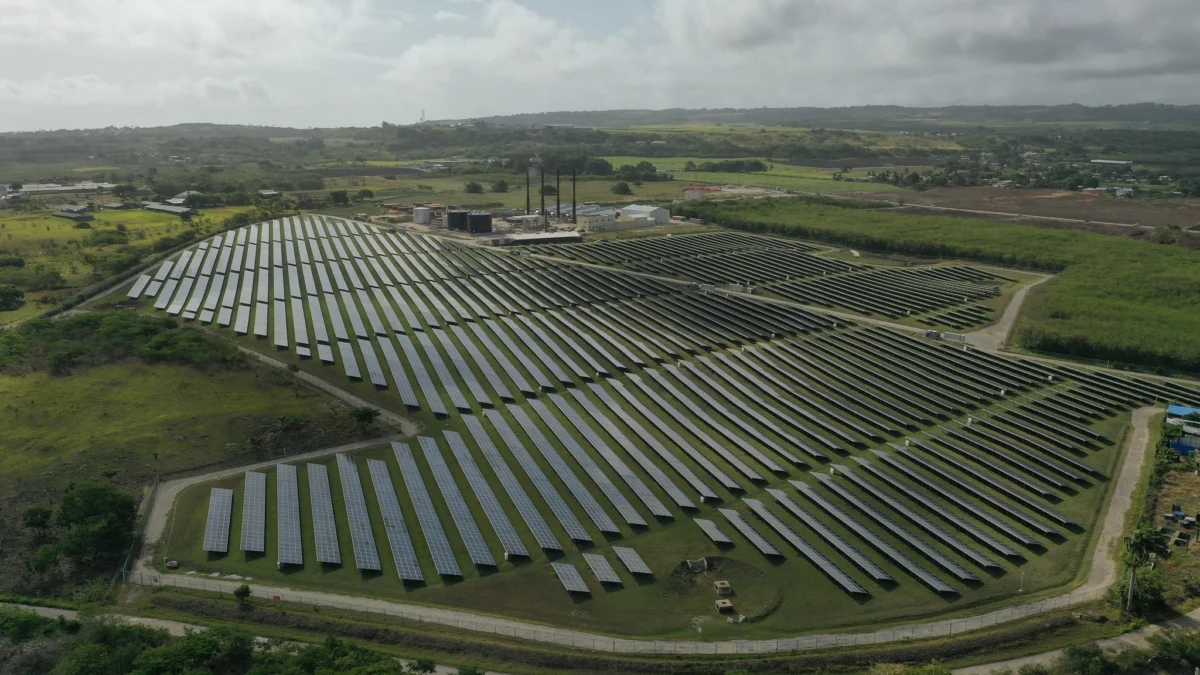
- 2024-2025: Large-scale solar farms, such as the Lamberts project, and the deployment of Battery Energy Storage Systems (BESS) began to stabilize the national grid, reducing the island’s reliance on the aging Spring Garden power plant.
- 2026: Amid the Middle East conflict, Barbados reached a milestone where over 35% of its peak demand is met by distributed and utility-scale solar, significantly cushioning the economy against the 2026 oil price spike.
Supporting Data: The Economics of Island Renewables
The economic rationale for the Barbadian model is supported by stark data. Prior to the 2026 crisis, Barbados spent approximately 7% to 10% of its GDP on fossil fuel imports. With the current escalation in the Middle East, that figure would have theoretically jumped to 15% without the renewable interventions currently in place.
Current data from the Barbados Ministry of Energy and Business indicates that the levelized cost of energy (LCOE) for solar PV on the island has dropped to approximately $0.06–$0.08 per kilowatt-hour (kWh). In contrast, the cost of generation using imported diesel and HFO, including carbon credits and shipping surcharges, has soared to over $0.28 per kWh in the first quarter of 2026.

Furthermore, the deployment of residential and commercial rooftop solar has seen a 400% increase since 2022, spurred by the "Feed-in-Tariff" (FiT) program. This decentralized approach has not only lowered costs for consumers but has increased the resilience of the grid against localized damage from extreme weather events. The government estimates that the transition has already saved the country over $150 million in foreign exchange reserves that would otherwise have been spent on fuel.
The Bridgetown Initiative and Financial Reform
A critical component of Barbados’ success has been its ability to navigate the "broken debt system" that plagues much of the Global South. As noted in recent UN-supported forums, many developing nations have zero fiscal breathing space to navigate climate disasters while simultaneously servicing high-interest debt.

Barbados has utilized the IMF’s Resilience and Sustainability Trust (RST) to secure long-term, low-interest financing specifically for its energy transition. However, this progress faces headwinds from the shifting political landscape in the United States. Recent reports suggest that U.S. pressure on the World Bank has put some climate-focused funding targets at risk, as certain factions in Washington push to expand support for fossil fuel infrastructure under the guise of "short-term energy security."
In response, Prime Minister Mottley has doubled down on the need for "climate justice," arguing that the Middle East conflict proves that fossil fuels are the most volatile and insecure energy source available. "Our transition is not a luxury; it is our shield," Mottley stated during a recent regional summit. "While others are held hostage by pipelines and tankers, we are looking to the sun and the wind that God gave us for free."

Technical Challenges and Grid Modernization
The transition is not without significant technical hurdles. Small, isolated island grids like that of Barbados face "inertia" issues when high percentages of variable renewable energy (VRE) are introduced. Unlike large continental grids, a small island grid can become unstable if a cloud suddenly covers a major solar farm or if wind speeds drop unexpectedly.
To combat this, the Barbados Light & Power Company (BLPC) has invested heavily in "Synchronous Condensers" and advanced BESS technology. These systems provide the necessary frequency response to keep the grid stable. Additionally, the government is exploring the potential for offshore wind and green hydrogen. The deep waters surrounding the island offer significant wind potential, though the capital costs remain high, necessitating the very international financial reforms Barbados is championing.

Broader Impact and Global Implications
The Barbadian model is being closely watched by other SIDS and coastal nations. In the Pacific, nations like Fiji and Vanuatu are looking to replicate the Bridgetown Initiative’s financial structures to fund their own adaptation and energy projects. The success of Barbados provides a blueprint for how a small nation can use its "moral authority" to influence global policy while simultaneously taking practical steps to shore up its domestic economy.
The timing is particularly relevant as Türkiye prepares to host the COP31 leaders’ summit in Antalya. With an Australian cattle farmer recently appointed as the COP31 Youth Champion, there is a growing focus on the intersection of agriculture, land use, and energy in the transition. Barbados has navigated these tensions by promoting "agrivoltaics"—the dual use of land for both solar panels and crop production—ensuring that energy security does not come at the expense of food security.

Analysis of Future Outlook
As the world moves toward the second half of the decade, the "Barbados Path" suggests that the era of centralized, fossil-fueled power is nearing its end for island geographies. The implications of this are profound:
- Economic Sovereignty: By reducing the outflow of foreign exchange for fuel, Barbados is strengthening its currency and its ability to invest in education and healthcare.
- Climate Leadership: Barbados’ ability to meet its Nationally Determined Contributions (NDCs) ahead of schedule provides it with significant leverage in international negotiations, particularly regarding the "Loss and Damage" fund.
- Market Decoupling: As the Middle East conflict continues to rattle global markets, Barbados is effectively decoupling its internal inflation rate from the global oil price, creating a more predictable environment for private investment.
While the "Iran war" and other geopolitical shocks continue to create uncertainty, the clarity of the Barbadian strategy offers a rare example of proactive governance. By treating the energy transition as a practical necessity rather than a theoretical goal, the island is charting a course toward a future where "security" is defined not by the ability to purchase oil, but by the ability to harvest the elements. For the rest of the world’s small islands, the message from Bridgetown is clear: the sun is rising on a new era of energy independence, and the tools to harness it are finally within reach.

Related Posts
Constitutional Court of South Africa Bars Shell Oil Exploration in Landmark Victory for Environmental and Community Rights
The Battle for Saldanha Bay: South Africa’s Ambitious Ocean Economy Strategy Faces Legal and Environmental Reckoning