Eric Swalwell’s Resignation and the Unaddressed Silence of Late-Night Hosts
The recent resignation of former Congressman Eric Swalwell (D-CA) from his House seat and the cessation of his bid for California Governor, following a series of sexual misconduct allegations, has drawn considerable attention to the broader landscape of political accountability and media scrutiny. Notably, prominent late-night television hosts Jimmy Kimmel and Stephen Colbert, who had previously offered significant platforms and support to Swalwell, have reportedly remained silent on the matter in their recent monologues and broadcasts. This silence, observers note, stands in stark contrast to their usual engagement with significant political events and controversies, particularly those involving figures from across the political spectrum.
The Precipitous Fall of Eric Swalwell
Eric Swalwell, who represented California’s 14th congressional district since 2013, had cultivated a profile as a rising star within the Democratic Party. Known for his frequent appearances on cable news and his vocal criticism of the previous presidential administration, Swalwell had actively pursued higher office, including a brief run for president in 2019 before setting his sights on the California governorship. His political ascent was often bolstered by significant media exposure, including numerous interviews and segments on late-night talk shows, where he frequently appeared to discuss national politics and promote his various campaigns.
However, Swalwell’s career took a dramatic turn in recent months as a growing number of women began to publicly accuse him of sexual harassment and, in some instances, sexual assault. These allegations, which reportedly spanned various points in his political career, rapidly escalated public and political pressure on the Congressman. The specifics of these claims, as reported by various news outlets, described patterns of inappropriate conduct that became increasingly difficult for Swalwell to dismiss. While the exact timeline of these allegations becoming widely known is complex, public reporting intensified significantly in the weeks leading up to his resignation.
The mounting pressure culminated on a Monday, when Swalwell formally announced his resignation from the House of Representatives. Concurrently, he declared the end of his campaign for California Governor, acknowledging the impossibility of continuing his political endeavors amidst the severe and numerous accusations. This dual withdrawal marked a significant and abrupt end to what had once been a promising political trajectory, highlighting the potent impact of such allegations on public figures, regardless of their political affiliation. The decision to resign was framed by Swalwell as a necessary step to address the personal challenges he faced and to remove himself from public office under the weight of the scandal, though he maintained his innocence regarding the most serious accusations.
Late-Night’s Prior Engagement and Current Silence
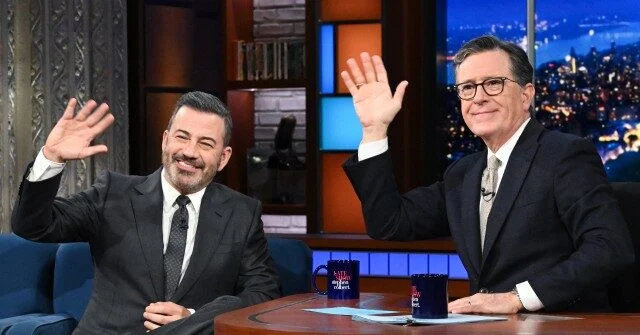
Before the emergence of these widespread allegations and his subsequent resignation, Eric Swalwell was a frequent and generally well-received guest on a number of late-night comedy programs. Among the most prominent platforms he utilized were ABC’s Jimmy Kimmel Live! and CBS’s The Late Show with Stephen Colbert. Both shows are widely recognized for their significant influence on public opinion and their often-critical commentary on political affairs.
Swalwell’s appearances on these programs typically served to boost his public image and political campaigns. For instance, during his bid for the California governorship, he was reportedly featured on both Kimmel and Colbert’s shows, where interviews often took a supportive or lighthearted tone. These segments provided him with valuable airtime to articulate his policy positions, engage with current events, and connect with a broad audience that might not otherwise follow political news closely. The hosts, known for their sharp wit and ability to blend humor with political commentary, frequently used their platforms to discuss and often lampoon political figures, but their interactions with Swalwell were largely seen as favorable and encouraging.
However, since Swalwell’s resignation in disgrace, a notable shift has been observed. Despite the significant political implications of a sitting Congressman resigning amidst sexual misconduct allegations – a story that would typically warrant attention from politically engaged late-night hosts – both Stephen Colbert and Jimmy Kimmel have reportedly maintained a striking silence. Analysis of their monologues and interview segments since the resignation reveals no mention of Swalwell’s departure, the allegations against him, or the broader context of his fall from grace.
This observed silence has prompted discussions among media observers and political commentators. For shows that often position themselves at the forefront of political discourse and regularly critique public figures for various missteps, the apparent omission of a major political scandal involving a previously supported Democrat has been highlighted as a potential inconsistency. Critics argue that this selective coverage, or lack thereof, could reinforce perceptions of partisan bias, where scrutiny is applied more rigorously to figures from one political ideology than another. The absence of commentary, in this view, becomes a form of implicit editorializing, shaping how audiences perceive the importance and severity of different political scandals.
Broader Patterns of Unaddressed Controversies
The silence surrounding Eric Swalwell’s resignation is not an isolated instance, according to some analyses. Observers have also noted a broader pattern of alleged non-engagement by these same late-night hosts concerning other recent controversies involving Democratic figures.
One such instance involves Senator Ruben Gallego (D-AZ). While being identified as one of Swalwell’s close personal friends, Senator Gallego himself has reportedly faced scrutiny regarding a "sexual incident" and allegations of campaign finance violations. Despite the gravity of these claims and the Senator’s connection to Swalwell, these issues have also reportedly gone unmentioned on The Late Show with Stephen Colbert and Jimmy Kimmel Live! The Senator’s alleged claim of having "no clue" about Swalwell’s purported predatory behavior, despite their close friendship, could itself be seen as a point of interest for comedic or critical commentary, yet it has reportedly been overlooked.
Furthermore, the same week saw the resignation of Representative Tony Gonzales (R-TX), who also stepped down from Congress over allegations of sexual improprieties, specifically admitting to an affair that led to scandal. This case, involving a Republican Congressman facing similar types of allegations, has also reportedly not been addressed by the aforementioned late-night programs. While the primary focus of the initial critique was on the silence regarding Swalwell, the inclusion of Gonzales’s resignation, also allegedly ignored, further fuels the argument that certain types of political scandals, regardless of party affiliation, may be selectively omitted from the late-night comedic narrative, or that the threshold for coverage varies.
These observations contribute to a larger debate about the role of late-night television in contemporary political discourse. Once primarily entertainment-focused, these shows have increasingly adopted a role as de facto political commentators, often shaping public perception through humor and satire. The perceived selective application of their critical lens, however, raises questions about journalistic ethics, consistency in commentary, and the potential impact on public trust in media institutions.
Swalwell’s Extensive Media Footprint and Prior Scrutiny
Beyond late-night television, Eric Swalwell maintained a significant presence across various news platforms, particularly those aligned with a left-leaning audience. The Media Research Center (MRC), a conservative media watchdog group, recently published data highlighting Swalwell’s extensive media appearances. According to their analysis, Swalwell was a remarkably frequent guest on cable news networks in the current year, appearing on MSNBC 26 times and CNN 24 times. This substantial exposure underscores his role as a prominent voice within Democratic politics and a regular fixture in national political discussions.
However, the MRC’s report also drew attention to a perceived lack of critical scrutiny during these numerous appearances. It was noted that neither CNN nor MSNBC reportedly pressed Swalwell on the "sexual scandal that was known long before these younger women accused him of unwanted advances." This observation suggests that even on news-focused platforms, there might have been a reluctance or oversight in addressing the emerging allegations against him, even as they began to circulate more widely. This apparent omission contrasts with the typical journalistic imperative to question public figures about serious allegations impacting their credibility and public office.
Adding another layer to Swalwell’s complex public narrative is a previously reported dalliance with a Chinese spy, known as "Fang Fang" or Christine Fang. This incident, which reportedly occurred years prior, involved intelligence concerns about foreign influence operations targeting U.S. politicians. While Swalwell was not accused of wrongdoing and reportedly cooperated with investigators, the incident itself raised questions about his judgment and security vulnerabilities. Despite the national security implications, this "Fang Fang" connection also reportedly received limited critical examination from some segments of the media at the time it became public, further illustrating a pattern of what some observers describe as a protective media environment for certain political figures. The recurrence of this issue in discussions surrounding Swalwell’s career trajectory underscores the long-standing nature of controversies that shadowed him, predating the more recent sexual misconduct allegations.
Late-Night’s Evolving Role in Political Commentary and Perceived Bias
The current media landscape has seen late-night comedy shows transform from primarily entertainment vehicles into significant platforms for political commentary and activism. Hosts like Jimmy Kimmel and Stephen Colbert have, over the past decade, increasingly dedicated substantial portions of their programs to dissecting political events, criticizing policies, and often lampooning political figures. This shift has been particularly pronounced during periods of heightened political polarization, with many shows adopting a clear stance against figures like former President Donald Trump.
Both Kimmel and Colbert have, for much of their late-night careers, engaged in what many perceive as a nightly campaign to critique Donald Trump and his administration. Their monologues frequently feature sharp political satire, often targeting the former president’s policies, rhetoric, and personal conduct. This consistent focus has resonated with a significant portion of their audience, who seek both humor and validation of their political viewpoints from these platforms.
However, this pronounced critical stance against one side of the political spectrum has led to accusations of partisan bias. Critics argue that while these hosts readily engage with and amplify controversies surrounding Republican figures, they tend to either ignore or downplay problems associated with Democrats. The observations surrounding Eric Swalwell, Ruben Gallego, and Tony Gonzales are cited as examples of this alleged disparity. During the presidential term of Joe Biden, for instance, both hosts have been observed to largely avoid sharp criticism of the administration, often making light remarks that, according to some, presented President Biden in an overly favorable light, particularly regarding questions about his cognitive fitness. This perceived leniency, contrasted with the rigorous scrutiny applied to others, contributes to the ongoing debate about the objectivity and fairness of late-night political commentary.
The implications of this perceived bias are significant. When influential media figures, operating under the guise of comedy, appear to apply different standards of scrutiny based on political affiliation, it can erode public trust in media institutions. Audiences, particularly those from differing political viewpoints, may view such platforms as propagandistic rather than informative or critically analytical. This selective engagement with political scandals can also impact the public’s understanding of accountability, suggesting that some individuals or parties are held to a higher standard than others.
Implications for Media Accountability and Public Discourse
The case of Eric Swalwell’s resignation and the subsequent silence from certain late-night media figures raises profound questions about media accountability and the state of public discourse in a polarized society. In an era where information dissemination is fractured across numerous platforms, and the lines between news, entertainment, and opinion are increasingly blurred, the role of influential personalities in shaping public perception becomes paramount.
One key implication is the reinforcement of echo chambers. When prominent media voices consistently criticize one political faction while overlooking similar issues within another, it can solidify existing biases among their audience, making it harder for individuals to engage with diverse perspectives or critically evaluate information. This can hinder healthy democratic debate, which relies on a well-informed populace capable of assessing facts across the political spectrum.
Furthermore, the selective application of scrutiny undermines the principle of universal accountability. If sexual misconduct allegations, for example, are deemed newsworthy and deserving of critique only when they involve figures from a particular political party, it sends a message that accountability is not uniformly applied. This can be deeply damaging to efforts to address systemic issues like sexual harassment and assault, as it politicizes serious ethical and legal concerns.
The silence also prompts a re-evaluation of the responsibilities of late-night hosts who engage in political commentary. While their primary function is entertainment, their substantial reach and influence imbue them with a de facto journalistic role. This unofficial status comes with an expectation, from many quarters, of a certain level of consistency, fairness, and a commitment to holding all public figures accountable, irrespective of their political leanings. The observed patterns of engagement, or lack thereof, challenge these expectations and fuel ongoing discussions about the ethical boundaries of comedic political commentary.
In conclusion, the resignation of Eric Swalwell, driven by a wave of sexual misconduct allegations, serves as a stark reminder of the challenges inherent in political life and public service. The subsequent observation of silence from influential late-night hosts regarding this significant event, particularly in contrast to their past support for Swalwell and their general approach to political commentary, has brought into sharp focus broader concerns about media bias, selective scrutiny, and the evolving responsibilities of various media platforms in shaping public understanding of political accountability. As the political landscape continues to evolve, the demand for consistent and even-handed media coverage, whether in traditional newsrooms or on late-night stages, remains a critical component of a healthy and informed public discourse.

Related Posts
Democratic Candidates Must Moderate to Win General Elections, Says Rep. Greg Stanton
Lisa Demuth Secures Republican Gubernatorial Nomination in Minnesota, Defeating Trump-Endorsed Mike Lindell