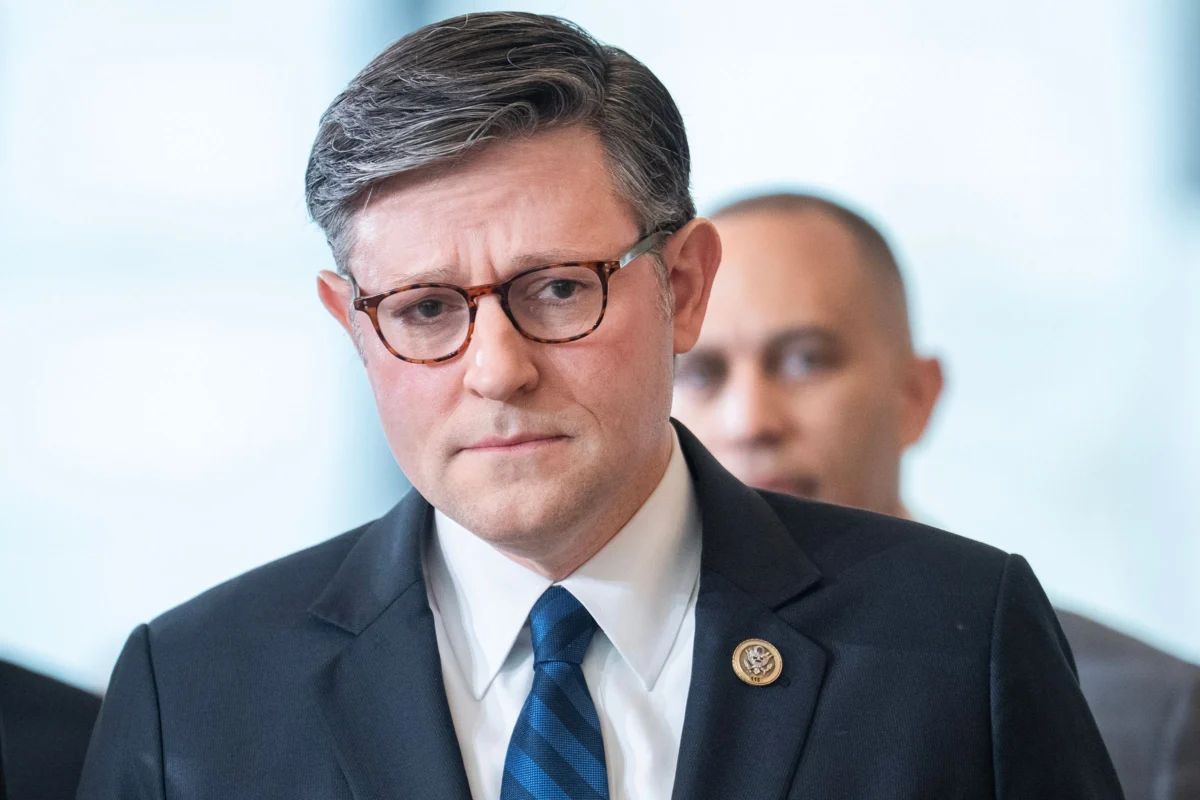
House Speaker Mike Johnson Faces Defeat as Bipartisan Coalition Blocks Section 702 Surveillance Reauthorization
In a high-stakes legislative confrontation that extended well past midnight on Friday, House Speaker Mike Johnson suffered a significant political setback as a bipartisan coalition of lawmakers blocked the reauthorization of Section 702 of the Foreign Intelligence Surveillance Act (FISA). The failed vote, which pitted a diverse group of civil-liberties-focused Republicans and progressive Democrats against the combined lobbying efforts of the White House and GOP leadership, has left the future of the federal government’s primary foreign surveillance tool in a state of deep uncertainty. Despite personal intervention from President Donald Trump, who spent the week meeting with skeptical members, a hard-line bloc of 20 Republicans successfully thwarted the leadership’s push for a clean extension of the controversial intelligence-gathering authority.
The legislative turmoil centered on the expiration of Section 702, a provision that allows the intelligence community to conduct warrantless surveillance on non-U.S. citizens located abroad. While the program is ostensibly designed to target foreign threats, the incidental collection of American citizens’ private communications—including emails, text messages, and phone records—has long been a flashpoint for constitutional concerns. Critics argue that the FBI and other agencies have systematically abused this access, routinely searching the database for information on U.S. citizens without obtaining a warrant, a practice that opponents maintain is a direct violation of the Fourth Amendment.
A Chronology of the Legislative Standoff
The pressure to finalize a deal intensified throughout the week leading up to the April 17 deadline. By Monday, the atmosphere in Washington had become increasingly combative. Former senior Biden administration officials briefed Democratic lawmakers in an attempt to shore up support for the extension, while President Trump hosted members of the House Freedom Caucus at the White House on Tuesday to address their specific grievances. Despite these efforts, the divide remained insurmountable.
As the clock ticked toward the Friday morning deadline, Speaker Johnson convened the House floor shortly after midnight. The initial vote, held around 1:00 a.m. ET, was intended to pass a leadership-backed amendment to extend the program for five years. However, a dozen Republicans broke ranks to join nearly every Democratic member, effectively killing the amendment.
The proposal had been criticized by privacy advocates as a "fake warrant requirement." It would have prohibited government officials from "intentionally" targeting Americans without a warrant—a standard that critics argued was already codified in existing statute—while offering a path for warrantless access if agents could show probable cause that a target was an agent of a foreign power. Opponents noted that the government already possesses the authority to conduct such surveillance under other legal frameworks, rendering the proposed amendment functionally toothless.
The final blow to the leadership’s strategy occurred after 2:00 a.m., when the 20-member GOP bloc, primarily composed of House Freedom Caucus members and the party’s libertarian wing, defeated the original version of the bill, which sought a more modest 18-month extension. This rare procedural defeat forced GOP leadership to retreat, ultimately settling for a stopgap 10-day extension to prevent an immediate lapse in authority.
The Scope of Surveillance and Documented Misuse
The resistance to Section 702 is rooted in a documented history of systemic misuse. According to declassified rulings from the Foreign Intelligence Surveillance Court (FISC) and various government transparency reports, the FBI has frequently utilized the 702 database to conduct warrantless queries on individuals who are not foreign intelligence targets. These instances include queries regarding a sitting U.S. senator, 19,000 donors to a congressional campaign, participants in Black Lives Matter protests, and individuals on both sides of the January 6, 2021, Capitol attack.
The lack of internal accountability has further complicated the reauthorization debate. In December 2025, federal courts issued a series of rebukes regarding the accuracy of Department of Justice filings, citing unprecedented errors that eroded the credibility of the agency. Furthermore, the decision by FBI Director Kash Patel to shutter the bureau’s Office of Internal Auditing—the very unit responsible for uncovering previous instances of improper data access—has fueled concerns among lawmakers that the current oversight regime is essentially in shambles. These concerns were compounded by executive orders that stripped civil service protections from FBI attorneys and supervisors responsible for approving sensitive data queries.
Legal Limbo and the Secret Ruling
While the expiration of the statutory authority poses a significant political challenge, the program’s operational survival is currently insulated by a classified FISC ruling issued on March 17. The court recertified the surveillance program through March 2027, meaning that even if Congress fails to pass a permanent reauthorization, the government technically retains the ability to continue its collection activities.
However, legal experts warn that operating solely on a court-ordered extension places the intelligence community on precarious legal ground. The same March FISC ruling reportedly identified severe compliance issues regarding the use of "filtering tools." These tools allowed intelligence analysts to pull the private messages of Americans while bypassing the oversight mechanisms mandated by law. The court has ordered the FBI and other agencies to either rebuild these tools to satisfy constitutional requirements or cease their use entirely. Reports suggest the administration is currently debating whether to comply with the court’s order or to challenge it through an appeal—a move that Senator Ron Wyden (D-Ore.) described as "highly aggressive and unusual."
In an urgent appeal to his colleagues, Senator Wyden urged the House to delay any reauthorization until the FISC opinion is fully declassified. "There are multiple issues related to Section 702 that the American people and many Members of Congress have been left in the dark about," Wyden stated. "These matters should be declassified and openly debated before Section 702 is reauthorized."
Broader Implications for National Security and Civil Liberties
The standoff represents a fundamental clash between two competing visions of national security: one that prioritizes the expansive capabilities of the intelligence community to detect foreign threats in an era of digital warfare, and another that demands strict adherence to the privacy rights of U.S. citizens.
The 10-day extension, which was approved by the Senate via voice vote on Friday morning, provides a brief window for the House to regroup, but the fundamental disagreements remain unaddressed. Proponents of the surveillance program, including Congressman Jim Himes (D-Conn.), maintain that the tool is indispensable for identifying imminent threats to the United States. Without the ability to swiftly query the vast troves of data collected under Section 702, they argue, the government risks losing visibility into the activities of adversarial nations and non-state actors.
Conversely, the bipartisan coalition of opponents—ranging from libertarian Republicans like Thomas Massie and Lauren Boebert to progressive members of the House—contends that the current system is fundamentally incompatible with the Fourth Amendment. They argue that the "incidental" collection of American data has become a feature, not a bug, of the system, and that without a mandatory warrant requirement for all queries involving U.S. persons, the program will continue to be a vehicle for mass, warrantless surveillance.
As the April 30 deadline approaches, the legislative path forward remains obscured. The Senate’s stopgap measure has effectively punted the crisis, but it has not resolved the underlying lack of trust between the legislative and executive branches. The coming weeks will likely see renewed pressure on the House to find a compromise that satisfies both the intelligence community’s requirements for operational agility and the growing congressional demand for meaningful, enforceable privacy protections. Whether Speaker Johnson can navigate this divide, or if the program faces a more permanent disruption, remains one of the most critical questions facing the current Congress.

Related Posts

The Las Vegas Cybersecurity Summit and the Escalating Threat of Autonomous Digital Exploitation

New York City Council members and privacy advocates launch legislative campaign to ban biometric facial recognition at public entertainment venues