
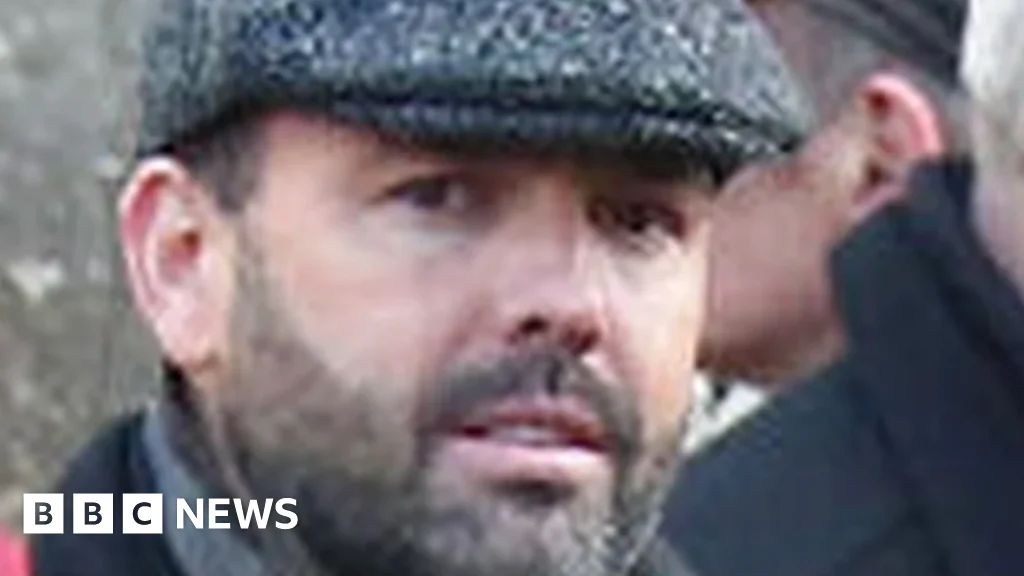
Irish fugitive and suspected crime boss Daniel Kinahan arrested in Dubai
Daniel Kinahan, a figure widely identified by international law enforcement agencies as a senior leader of a sprawling transnational criminal organisation, has been apprehended in Dubai. The arrest, confirmed by authorities on Wednesday, 15 April 2022, marks a significant breakthrough in the global fight against organised crime and follows years of intense scrutiny and collaborative efforts by multiple jurisdictions, including Ireland, the United States, and the United Kingdom. Kinahan, aged in his 40s, was taken into custody in the United Arab Emirates capital on the strength of a warrant issued by the Irish courts, according to reports from Irish national broadcaster RTÉ. This development comes on the heels of the US government imposing unprecedented sanctions on Kinahan and other key members of his family just days prior, effectively designating the Kinahan Organised Crime Group (KOCG) as a major international criminal entity.
The arrest in Dubai represents a monumental achievement for international law enforcement, particularly for An Garda Síochána (Irish police), who have pursued Kinahan and his associates for years in connection with a litany of serious organised crime offences. The operation underscores the growing effectiveness of cross-border cooperation in dismantling sophisticated criminal networks that often exploit international boundaries to evade justice.
The Operation in Dubai: A Swift and Coordinated Effort
Dubai police confirmed that Daniel Kinahan’s arrest was the culmination of intensive search and surveillance operations, executed with remarkable speed and precision. The fugitive was reportedly captured within 48 hours of an arrest warrant being issued by Dubai Public Prosecution. This swift action followed the receipt of a comprehensive judicial file from Irish authorities, detailing Kinahan’s alleged crimes and his central role within an international criminal organisation. The prompt issuance of the arrest warrant and subsequent capture highlights a concerted effort by UAE authorities to cooperate with international partners in combating serious transnational crime, moving away from its previous reputation as a potential haven for fugitives.
An Garda Síochána acknowledged the arrest of an Irish national in Dubai, emphasising that the matter remained under the jurisdiction of the UAE authorities at the time. However, they stressed the critical importance of international collaboration in tackling such complex cases. In an official statement, An Garda Síochána declared: "Today’s arrest is another extremely important demonstration of the need for international law enforcement co-operation in tackling transnational organised crime." This sentiment was echoed by Irish Department of Justice, Home Affairs and Migration Minister Jim O’Callaghan, who welcomed the arrest, stating it followed his direct request to the UAE for Kinahan’s extradition to face charges in Ireland. Minister O’Callaghan commended all involved for their "tireless work," signaling the culmination of years of dedicated investigative effort.
The legal framework for Kinahan’s potential extradition is underpinned by a bilateral agreement between Ireland and the United Arab Emirates, which facilitates the transfer of wanted individuals between the two nations. The activation of this agreement signifies a robust commitment from both sides to ensure that those accused of serious crimes are brought to justice, regardless of where they seek refuge. The extradition process, while potentially complex and lengthy, is now set in motion, promising a significant legal battle ahead.
The Rise of the Kinahan Organised Crime Group (KOCG)
To understand the magnitude of Daniel Kinahan’s arrest, one must delve into the history and operations of the Kinahan Organised Crime Group, often described as one of Europe’s most powerful and ruthless criminal enterprises. The KOCG originated in the late 1990s and early 2000s, primarily under the leadership of Daniel’s father, Christy Kinahan Sr., often dubbed "The Dapper Don." Initially based in Dublin, the group quickly expanded its operations, establishing a significant stronghold on Spain’s Costa del Sol, a region notorious for its attraction to international criminals.
The cartel’s primary illicit activities encompass large-scale international drug trafficking, moving vast quantities of cocaine, heroin, and cannabis across Europe, often from South America and Africa. Beyond narcotics, the KOCG is heavily involved in extensive money laundering operations, utilising a sophisticated network of shell companies, front businesses, and corrupt financial professionals to legitimise their illicit gains. They are also implicated in firearms trafficking, extortion, and various forms of violence, including murder, to maintain their dominance and enforce their will.
Under Daniel Kinahan’s alleged leadership, the KOCG is believed to have further solidified its international reach, extending its influence into the Middle East, Asia, and other parts of the world. Law enforcement agencies estimate the cartel’s wealth to be in the hundreds of millions, if not billions, derived from its vast criminal enterprise. Its hierarchical structure, combined with a willingness to employ extreme violence, has made it a formidable challenge for law enforcement agencies across multiple continents.
The Pivotal US Sanctions
A critical turning point in the international pursuit of Daniel Kinahan came in April 2022, when the US government imposed unprecedented sanctions on him and other key members of the Kinahan family. The US Treasury Department’s Office of Foreign Assets Control (OFAC) designated Daniel Kinahan, his father Christy Kinahan Sr., and his brother Christopher Kinahan Jr., along with four other associates and three businesses, as leaders of a transnational criminal organisation. This designation placed the KOCG on par with some of the world’s most notorious criminal syndicates, such as the Yakuza and the Camorra.
The sanctions carried severe implications: they effectively froze any assets held by the designated individuals and entities under US jurisdiction, prohibited US citizens and entities from engaging in any transactions with them, and restricted their access to the international financial system. Furthermore, the US State Department announced a reward of up to $5 million for information leading to the financial disruption of the Kinahan Organised Crime Group or the arrest and conviction of its key leaders. This substantial bounty underscored the US government’s commitment to dismantling the cartel and highlighted the perceived threat posed by the KOCG on a global scale. The timing of Daniel Kinahan’s arrest, shortly after these sanctions were announced, suggests that the increased international pressure played a significant role in his apprehension.
The Shadow of the Hutch-Kinahan Feud
No discussion of Daniel Kinahan’s criminal history is complete without acknowledging the brutal and protracted Hutch-Kinahan feud, a gangland war that has ravaged Dublin and beyond, claiming at least 18 lives since 2016. This violent rivalry escalated dramatically on February 5, 2016, with the infamous Regency Hotel shooting in Dublin.
On that fateful day, a weigh-in event for a boxing match was dramatically interrupted when a group of armed men, some disguised in Garda-style uniforms, stormed the hotel. The primary target of the attack was Daniel Kinahan, who was present at the event. While Kinahan managed to escape unharmed, his close associate, David Byrne, was shot dead. Two other individuals were also injured. This audacious daylight assassination, carried out in front of media and the public, sent shockwaves through Ireland and marked a severe escalation in the feud. It was widely understood to be retaliation for an earlier killing linked to the Kinahan cartel.
The Regency Hotel shooting transformed the Kinahan-Hutch conflict into a full-blown gangland war, characterised by a relentless cycle of retaliatory killings that spread fear throughout communities. The sheer brutality and public nature of these murders put immense pressure on An Garda Síochána to crack down on organised crime, leading to numerous arrests and convictions on both sides of the feud. Following the Regency incident, it is believed that Daniel Kinahan, who had previously spent considerable time in the Costa del Sol, relocated permanently to Dubai, seeking to distance himself from the immediate fallout and the heightened scrutiny in Europe.
The Controversial Boxing Connection: MTK Global
Adding another layer of complexity to Daniel Kinahan’s public profile was his controversial involvement in the world of professional boxing. Kinahan co-founded the boxing management company MGM in Marbella, Spain, in 2012, which later rebranded as MTK Global in 2017. Despite claims that he had stepped away from the company in 2017, numerous reports and public statements indicated his continued influence, often as an "advisor" to some of the sport’s biggest names.
MTK Global rapidly grew into a powerhouse in boxing management, representing over 100 fighters, including world champions like Tyson Fury and Carl Frampton. Kinahan’s perceived role in brokering major fights and deals brought him into contact with high-profile figures in the sport, leading to significant controversy and ethical questions within the boxing community. Promoters, broadcasters, and even governments began to express concerns about the association with a figure identified by law enforcement as a suspected crime boss.
The pressure mounted relentlessly, particularly after the US sanctions in April 2022. The US Treasury Department explicitly stated that Kinahan "attempts to facilitate large-scale global income generation for the KOCG through his role as an organizer of professional boxing events." This designation effectively rendered it impossible for MTK Global to continue operating, as doing business with the company would risk violating international sanctions. Consequently, just days after the US announcement, MTK Global ceased all operations, stating it was "unable to continue operating due to the ongoing reputational damage" caused by the Kinahan allegations. The demise of MTK Global underscored the far-reaching impact of the sanctions and the growing international consensus that Kinahan’s influence in any legitimate industry was untenable.
Broader Implications and the Path Forward
Daniel Kinahan’s arrest in Dubai carries profound implications, not just for the Kinahan Organised Crime Group but for the broader landscape of international law enforcement and the fight against transnational crime.
For the KOCG, the apprehension of one of its alleged principal leaders represents a significant blow. While criminal organisations often adapt to leadership changes, the loss of a figure as central and strategic as Daniel Kinahan is likely to cause considerable disruption, potentially leading to fragmentation, internal power struggles, or a weakening of its global operational capacity. It sends a clear message that no criminal leader, however powerful or internationally connected, is beyond the reach of justice.
For Dubai and the United Arab Emirates, this arrest is a crucial demonstration of their evolving commitment to combating money laundering and serious organised crime. Historically, Dubai has faced criticism for being a perceived safe haven for illicit wealth and individuals seeking to escape justice. However, recent years have seen increased efforts by UAE authorities to enhance their anti-financial crime frameworks and bolster international cooperation. Kinahan’s arrest, along with other high-profile captures of international fugitives, signals a robust shift in policy and a strengthened resolve to participate actively in global security efforts. This move will significantly enhance Dubai’s standing within the international financial community and among global law enforcement agencies.
For Ireland, the arrest marks a momentous step in its relentless campaign against domestic organised crime. An Garda Síochána has invested immense resources and faced considerable challenges in confronting the Kinahan cartel. This development offers a glimmer of hope for justice for the victims of the Hutch-Kinahan feud and for communities plagued by the cartel’s activities. The successful extradition of Kinahan to Ireland would represent a landmark achievement for the Irish justice system.
Internationally, the coordinated efforts leading to this arrest underscore the increasing effectiveness of multilateral collaboration between law enforcement agencies across continents. The cooperation between Ireland, the UK, the US, and the UAE serves as a powerful model for future operations targeting transnational criminal networks, highlighting the necessity of shared intelligence, harmonised legal frameworks, and mutual political will.
The extradition process itself will now become a focal point. While the bilateral agreement between Ireland and the UAE provides a legal pathway, extradition proceedings can often be protracted and complex, involving appeals and legal challenges. However, the political will expressed by both Irish and UAE authorities suggests a strong determination to see the process through.
In conclusion, the arrest of Daniel Kinahan in Dubai is more than just the capture of a single individual; it is a powerful testament to the unwavering resolve of international law enforcement to dismantle sophisticated criminal empires. It represents a significant victory in the ongoing battle against organised crime, promising a new chapter in accountability for those who seek to profit from illicit activities and sow violence across the globe.

Related Posts
Zambia on Edge: Opposition Leader Arrested Amid Allegations of Insurrection Plot and Election Tensions
Rescuers search for survivors of powerful Indonesia earthquake

