Hong Kong Seeks Private Sector Partnership for Ambitious National Innovation Centre in Yuen Long
Hong Kong authorities are charting an ambitious course for its first national manufacturing innovation centre outside mainland China, revealing plans to secure half of the HK$440 million (US$56.2 million) investment from the private sector. This significant public-private funding model is coupled with performance benchmarks that industry analysts deem challenging, reflecting a bold strategy to accelerate the city’s artificial intelligence (AI) development and bolster its high-tech manufacturing capabilities.
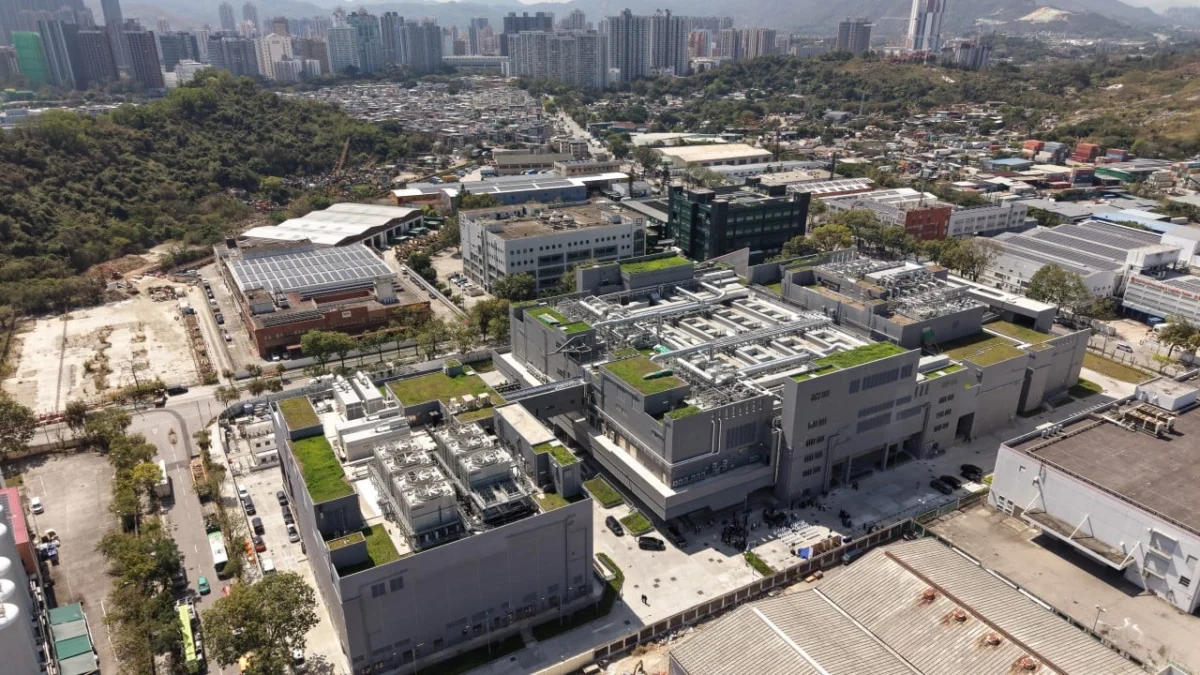
The ambitious financial target was formally announced following Financial Secretary Paul Chan Mo-po’s unveiling of the plan in his February budget address. This initiative earmarks substantial funds to establish a cutting-edge facility in Yuen Long, a move positioned as a cornerstone of Hong Kong’s broader strategy to become a global leader in AI and advanced manufacturing. The centre’s mandate is to foster innovation in semiconductors, particularly those critical for burgeoning sectors like electric vehicles (EVs) and aerospace equipment designed for extreme environments, including deep-sea exploration.
Setting Ambitious Financial Benchmarks for Self-Sufficiency and Profitability
The Innovation, Technology and Industry Bureau, in a paper submitted to lawmakers on Thursday, articulated a clear vision for the centre’s financial trajectory. "We expect the innovation centre to be self-sufficient three years into its operation and gradually become profitable in its fifth year," the bureau stated, underscoring a commitment to fiscal responsibility and a belief in the centre’s economic viability. This projection suggests a rapid path towards financial independence and a subsequent generation of revenue, a key indicator of the project’s success and its contribution to the local economy.
The funding model outlines a balanced approach: the Hong Kong government will directly subsidise the centre with approximately HK$220 million. The remaining HK$220 million, crucial for covering essential expenditures such as equipment procurement, commercialisation initiatives, and ongoing operational costs, will be actively sought from private sector partners. This dual-pronged approach aims to leverage both public commitment and private sector expertise and capital, fostering a collaborative ecosystem for innovation.
Strategic Location and Focus Areas: Semiconductors for the Future
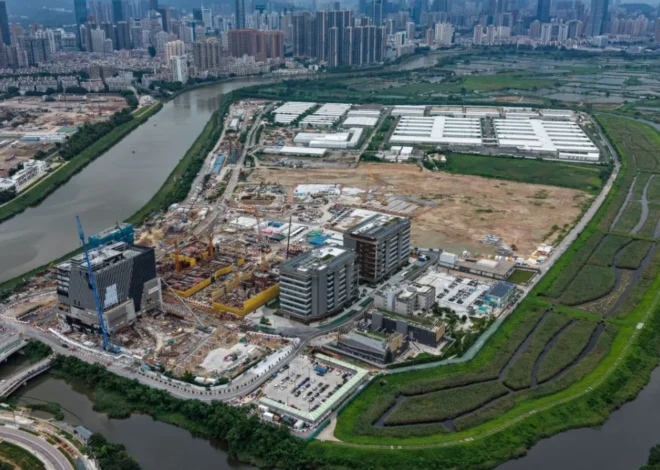
The Yuen Long InnoPark has been identified as the strategic location for this pivotal innovation hub. This choice of location is significant, placing the centre within an area designated for technological advancement and industrial development. An insider previously revealed to the South China Morning Post that the centre’s primary focus would be on semiconductor technology. This specialization is highly strategic, aligning with global trends and Hong Kong’s ambition to carve out a niche in the high-value semiconductor supply chain.
The emphasis on semiconductors for EVs and aerospace equipment highlights the centre’s forward-looking approach. The electric vehicle market is experiencing exponential growth, driving demand for advanced battery technologies and power management systems, all heavily reliant on sophisticated semiconductors. Similarly, the aerospace sector, with its stringent performance requirements and continuous drive for miniaturization and efficiency, presents a lucrative and technologically challenging domain for innovation. The inclusion of deep-sea exploration further signals a commitment to pushing the boundaries of material science and electronic components capable of withstanding extreme pressures and corrosive environments.
A Rigorous Path to National Designation
The journey to becoming a designated national innovation centre is also clearly defined. The centre is expected to operate for a minimum of one year, during which it will undergo a rigorous evaluation process. This period of operation and subsequent formal assessment are crucial for ensuring the centre meets the high standards and strategic objectives set by national authorities before officially receiving its designation. This phased approach allows for iterative development and ensures that the centre is robust and impactful from its inception.
Broader Context: Hong Kong’s Push for Technological Supremacy
The establishment of this national innovation centre is not an isolated event but a significant component of Hong Kong’s broader economic and technological strategy. In recent years, the Special Administrative Region (SAR) government has made concerted efforts to diversify its economy beyond its traditional strengths in finance and logistics, with a strong emphasis on innovation and technology. The "Hong Kong 2030+" blueprint, for instance, outlines a vision for the city to become a leading hub for innovation and technology in Asia.
The inclusion of AI development as a core objective aligns with global trends. According to Statista, the global AI market size was valued at USD 136.6 billion in 2022 and is projected to grow to USD 1,810 billion by 2030, at a compound annual growth rate (CAGR) of 37.3%. Hong Kong’s investment in AI research and development, particularly through specialized centres like the one planned in Yuen Long, positions it to capitalize on this burgeoning market.
Industry Reactions and Analyst Perspectives
While the government’s vision is clear, the ambitious financial targets have drawn attention from industry observers. The requirement for the centre to be self-sufficient within three years and profitable within five is a demanding timeline, especially for a nascent institution focused on cutting-edge research and development. Analysts suggest that achieving such rapid financial returns will necessitate not only technological breakthroughs but also effective commercialization strategies and strong market adoption of the centre’s innovations.
"The benchmarks set are certainly ambitious, reflecting a high level of confidence in the project’s potential," commented Dr. Emily Chan, a technology policy analyst. "However, the success will heavily depend on the ability of the centre to translate fundamental research into commercially viable products and services quickly. Securing significant private sector investment will also be a testament to the industry’s belief in Hong Kong’s innovation ecosystem and the specific focus areas of the centre."
The call for private sector funding highlights a growing trend towards public-private partnerships in driving technological advancement. Such collaborations can bring invaluable industry expertise, market insights, and access to global networks that are essential for the rapid scaling of innovative technologies. The government’s willingness to share the financial burden underscores its commitment to fostering a robust innovation ecosystem.
Implications for Hong Kong’s Technological Landscape
The establishment of the Yuen Long National Innovation Centre is poised to have several significant implications for Hong Kong:
- Enhanced Semiconductor Capabilities: A dedicated centre focused on semiconductors could elevate Hong Kong’s standing in the global chip industry, particularly in niche areas like specialized chips for EVs and aerospace. This could lead to the development of a local talent pool and foster the growth of related industries.
- AI Development Acceleration: By focusing on AI, the centre will contribute to Hong Kong’s goal of becoming a leader in this transformative field. This could spur innovation across various sectors, from healthcare and finance to smart city initiatives.
- Economic Diversification: The project represents a concrete step towards diversifying Hong Kong’s economy, reducing its reliance on traditional sectors and fostering new avenues for growth and employment in high-tech industries.
- Attraction of Talent and Investment: A successful innovation centre can attract top-tier researchers, engineers, and entrepreneurs, as well as significant domestic and international investment, further strengthening Hong Kong’s position as an innovation hub.
- Strengthened Ties with Mainland China: As the first national innovation centre outside mainland China, the facility will likely foster closer collaboration and knowledge exchange with research institutions and industries across the border, creating synergistic opportunities.
The path ahead for the Yuen Long National Innovation Centre is marked by both immense potential and significant challenges. The government’s strategic vision, coupled with its ambitious financial expectations and the crucial involvement of the private sector, sets the stage for what could be a transformative development in Hong Kong’s technological future. The coming years will be critical in determining whether these ambitious benchmarks are met and if Hong Kong can indeed solidify its position as a global leader in AI and advanced manufacturing.