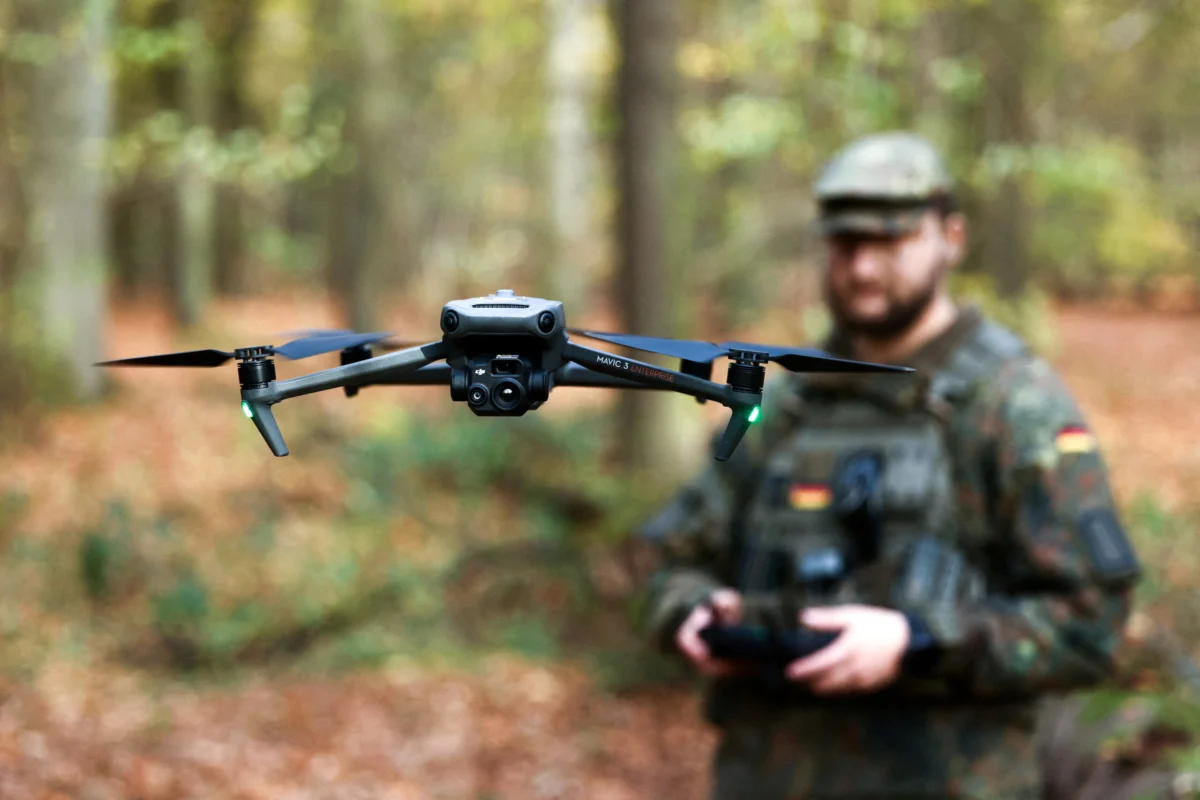
Germany Accelerates Integration of Artificial Intelligence in Military Operations to Shorten Battlefield Decision Cycles
The German Bundeswehr is undergoing a fundamental shift in its approach to modern warfare, prioritizing the integration of artificial intelligence (AI) to expedite battlefield decision-making processes. Lt. Gen. Christian Freuding, the German Army’s chief, recently revealed that the military is actively developing and seeking AI-driven tools capable of processing vast quantities of data at speeds that far exceed human cognitive capabilities. This strategic pivot is largely informed by the ongoing conflict in Ukraine, where the saturation of drones, electronic sensors, and real-time surveillance has created a data-rich environment that demands near-instantaneous analysis to maintain a competitive edge.
Lt. Gen. Freuding, who assumed his role as army chief in October 2025 following a high-profile tenure overseeing German arms transfers to Kyiv, emphasized that the traditional methods of military intelligence and command are no longer sufficient in an era of high-intensity, digitized conflict. According to Freuding, the volume of information currently generated on the modern battlefield is overwhelming traditional command structures. By leveraging AI, the German military aims to "break the adversary’s decision-making cycle," ensuring that German and allied forces can react to threats and capitalize on opportunities before the enemy can adjust their posture.
The Ukrainian Influence and the Evolution of Modern Combat
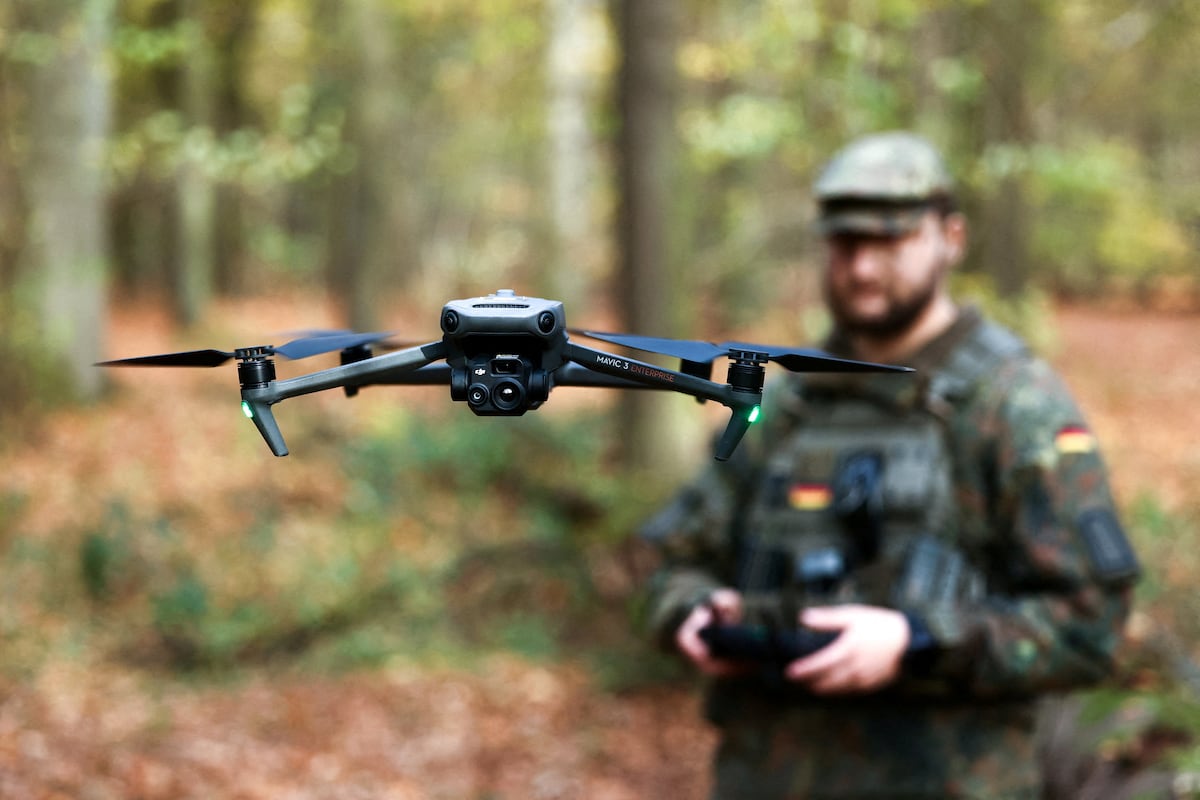
The drive toward AI integration is not merely a theoretical pursuit but a pragmatic response to the lessons learned from the front lines in Eastern Europe. Since the full-scale invasion of Ukraine began in early 2022, the nature of land warfare has been transformed by the "transparency" of the battlefield. With thousands of unmanned aerial vehicles (UAVs) providing constant surveillance and electronic warfare units intercepting communications, there is nowhere left to hide.
Lt. Gen. Freuding noted that Ukrainian forces have been pioneers in this regard, utilizing four years of intensive combat data to refine their tactical responses. "The Ukrainians exploit data which they have collected over years of war," Freuding stated during an interview in Berlin. "Based on this data, AI can deduce how the enemy has acted in similar situations in the past—and recommend countermeasures."
This historical data allows AI models to recognize patterns in Russian troop movements, artillery deployments, and logistics chains. For the Bundeswehr, the goal is to implement similar systems that can ingest data from German military exercises and merge it with the "live" data coming out of Ukraine. By training analytical tools on these datasets, the German army hopes to create a predictive capability that allows commanders to anticipate enemy actions rather than simply reacting to them.
Chronology of Germany’s Military Digital Transformation
The path toward a digitally-augmented Bundeswehr has been accelerated by several key milestones over the last four years:
- February 2022: Chancellor Olaf Scholz announces the "Zeitenwende" (Turning Point) speech, promising a 100-billion-euro special fund to modernize the German military. Initial focus is placed on heavy hardware, such as F-35 fighter jets and Leopard 2 tanks.
- 2023–2024: As the war in Ukraine enters a protracted phase of attrition, German observers note the critical role of software-defined warfare. The German Ministry of Defense begins shifting a larger portion of the special fund toward digitalization, secure communications, and "Battlefield Cloud" initiatives.
- October 2025: Lt. Gen. Christian Freuding is appointed Army Chief. His experience in logistics and arms supply to Ukraine provides him with a unique perspective on the necessity of rapid, data-driven decision-making.
- March 2026: The Bundeswehr officially declares the integration of AI for tactical decision support as a top procurement priority, signaling a move away from purely kinetic modernization toward cognitive superiority.
Addressing the Data Deluge: From Personnel to Algorithms
In conventional military structures, the process of "Intelligence Preparation of the Battlefield" (IPB) is a labor-intensive task. It involves hundreds of personnel analyzing satellite imagery, intercepting signals, and reviewing scout reports to form a coherent picture of the enemy’s intent. This process can take days or even weeks, which is an eternity in a modern conflict where a target might only be visible for minutes.
Lt. Gen. Freuding highlighted that tasks currently requiring vast human resources could be compressed into seconds or minutes through AI. By using computer vision to automatically identify tanks or artillery pieces in drone feeds and cross-referencing that with electronic intelligence, an AI system can provide a "recommended course of action" to a commander almost instantly.
"Conventional methods alone would never be enough to break the adversary’s decision-making cycle," Freuding explained. The objective is to achieve what military theorists call "OODA loop" (Observe, Orient, Decide, Act) superiority. If the Bundeswehr can complete this loop faster than its opponent, it can effectively paralyze the enemy’s ability to respond.
Strategic Procurement: The Case for American vs. European Systems
A significant point of debate within the German defense establishment is the source of this AI technology. While there is a strong political desire for "European strategic autonomy" and the development of domestic or EU-based defense software, the reality of the technological landscape presents a dilemma.
The United States has already fielded advanced AI tools like "Project Maven," developed in collaboration with Silicon Valley firms such as Palantir. Maven is designed to process massive amounts of imagery and video to identify points of interest and improve situational awareness. During recent operations and exercises, the U.S. Army has demonstrated the effectiveness of these tools in shortening the "sensor-to-shooter" link.
Lt. Gen. Freuding acknowledged the practical advantages of American solutions. "Personally, I think it’s important that we get something up and running quickly," he said. While he did not rule out a European-developed system in the long term, he emphasized that the urgency of the security situation in Europe might necessitate the adoption of existing, combat-proven technology from the U.S.
However, any adoption of foreign AI technology brings significant challenges regarding data sovereignty. Germany remains cautious about ensuring that its sensitive operational data remains under national control and that the AI’s logic aligns with German military doctrine and legal frameworks.
Ethical Frameworks and the Human-in-the-Loop Requirement
The prospect of AI in warfare inevitably raises ethical concerns regarding "killer robots" and autonomous weapon systems. To address these fears, the German military has been firm in its stance that AI will remain an advisory tool, not a decision-maker.
"The task of taking analytical and balanced decisions will always remain with the human, with the soldier," Freuding asserted. The Bundeswehr’s philosophy is built on the "Human-in-the-Loop" (HITL) principle. In this framework, the AI acts as a sophisticated filter and analyst, presenting the commander with options and risk assessments, but the final order to engage or maneuver must come from a human officer.
This ethical boundary is not only a matter of international law but also of tactical reliability. AI systems can be prone to "hallucinations" or can be deceived by adversarial spoofing. By keeping a human in the decision cycle, the military adds a layer of contextual judgment that current AI models cannot replicate, such as the political implications of a specific strike or the moral weight of collateral damage.
Supporting Data and Financial Commitment
The shift toward AI is reflected in Germany’s defense budget trends. Since 2024, the allocation for "Research, Development, and Artificial Intelligence" within the defense budget has seen a year-on-year increase of approximately 15%. Military analysts estimate that for Germany to fully digitize its land forces by the 2030 target, an additional 5 to 7 billion euros will need to be dedicated specifically to software and AI infrastructure.
Furthermore, the NATO "2% of GDP" spending target, which Germany has finally met as of 2025, provides the fiscal space necessary for these high-tech investments. Industry experts suggest that the market for AI in defense is expected to grow globally by 12% annually, with Germany positioned to be one of the largest European spenders in this sector.
Official Responses and Industry Reactions
The move has garnered support from various sectors, though some caution remains. A spokesperson for the German Defense Industry Association (BDI) stated, "The transition to AI-supported command is inevitable. Our domestic industry is ready to partner with the Bundeswehr to ensure that Germany remains at the forefront of defense technology."
On the political front, members of the Bundestag’s Defense Committee have expressed a mix of urgency and oversight. "We support the modernization of our forces, but we must ensure that the digital ‘Zeitenwende’ is accompanied by robust cybersecurity measures," said a senior member of the committee. "An AI-driven army is only as strong as the network it runs on. If that network is hacked, the AI becomes a liability."
International allies, particularly within NATO, have welcomed Germany’s commitment to AI. As NATO works toward a "Federated Interoperability" standard, ensuring that German AI systems can "talk" to American, British, and French systems is crucial for the collective defense of the alliance’s eastern flank.
Broader Impact and Future Implications
The integration of AI into the German Army marks a departure from the traditional focus on "iron and steel." It signals an understanding that in the 21st century, the most valuable asset on the battlefield is information—and the ability to process it.
The implications of this shift are profound. It will require a total overhaul of military training, with a new emphasis on digital literacy for officers and NCOs. It also changes the recruitment profile of the Bundeswehr, which must now compete with the private sector for data scientists, software engineers, and AI specialists.
As the German army moves toward a specific product selection, the eyes of the global defense community are on Berlin. The success or failure of this initiative will likely serve as a blueprint for other European nations looking to modernize their forces. In the words of Lt. Gen. Freuding, the goal is clear: to ensure that when the next conflict arises, the German soldier is backed by the fastest, most accurate information possible, ensuring that the "fog of war" is lifted by the power of artificial intelligence.

Related Posts
Pentagon Forges Landmark Seven-Year Agreements with Boeing and RTX to Accelerate Standard Missile-3 Production and Stabilize Defense Supply Chains
Boeing Unveils Ultra Low-Cost Seeker to Enhance Missile Inventory and Combat Cost Challenges in Modern Warfare