Human Rights Watch Warns UN Resolution on Western Sahara Risks Undermining Sahrawi Right to Self-Determination and International Law
The United Nations Security Council’s recent adoption of a resolution concerning the protracted dispute over Western Sahara has sparked significant concern regarding the future of international legal standards and the fundamental rights of the Sahrawi people. Human Rights Watch (HRW) issued a comprehensive critique today, stating that United Nations Security Council Resolution 2797 (UNSCR 2797) fails to guarantee a framework that upholds the right to self-determination. The international rights organization argued that the resolution, by appearing to favor a specific political outcome, risks bypassing the established legal requirements for resolving the status of the non-self-governing territory.
According to HRW, any sustainable settlement must not only address the political status of the territory but also ensure the right to reparations for the Sahrawi people. This includes compensation for harm suffered since Morocco assumed control of the majority of the territory in the mid-1970s, as well as the right of return for those displaced to refugee camps and their descendants. The organization emphasized that political expediency should not supersede the decolonization process or the legal mandates established by the UN Charter.
“Thirty-five years after the United Nations Security Council agreed on a referendum to resolve the situation in the Western Sahara, political expediency risks trumping the Sahrawi people’s right to self-determination,” said Hanan Salah, associate Middle East and North Africa director at Human Rights Watch. “To fulfill those rights, the Security Council and all countries should ensure the Sahrawi people’s right to freely determine their political status.”
The Evolution of the Dispute: A Historical Chronology
The conflict over Western Sahara is one of the world’s longest-running territorial disputes, rooted in the end of Spanish colonial rule. In 1975, as Spain prepared to withdraw from its colony, Morocco and Mauritania laid claim to the territory. This led to the "Green March," where hundreds of thousands of Moroccans crossed into the territory, and a subsequent armed conflict with the Popular Front for the Liberation of Saguia el-Hamra and Rio de Oro, commonly known as the Polisario Front.
While Mauritania eventually withdrew its claims in 1979, Morocco maintained and expanded its control over approximately 80 percent of the region, constructing a massive sand berm to separate its controlled areas from the Polisario-held "Free Zone." In 1991, the United Nations brokered a ceasefire and established the United Nations Mission for the Referendum in Western Sahara (MINURSO). The primary mandate of MINURSO was to organize a referendum that would allow the Sahrawi people to choose between independence and integration with Morocco.
However, the proposed referendum has remained in a state of perpetual stalemate for over three decades. Disagreements over voter eligibility—specifically whether Moroccan settlers and their descendants should be allowed to vote—stalled the process. Morocco eventually shifted its position, rejecting independence as a valid option and proposing "autonomy" under Moroccan sovereignty in 2007. The Polisario Front has consistently rejected any plan that does not include independence as a ballot option. In 2020, the long-standing ceasefire collapsed, leading to a resumption of low-intensity armed hostilities.
Legal Analysis of UNSCR 2797 and the Right to Self-Determination
Adopted on October 31, 2025, UNSCR 2797 was sponsored by the United States and aims to achieve a "just, lasting, and mutually acceptable resolution." While the resolution acknowledges the Sahrawi people’s right to self-determination, HRW points out a critical contradiction: the text specifically endorses Morocco’s 2007 autonomy proposal as the "most feasible outcome."
The 2007 Moroccan Initiative for Negotiating an Autonomy Statute proposes a degree of local governance but reserves ultimate jurisdiction over national security, foreign relations, and the judiciary to the Moroccan state. Critically, this plan does not offer a path to independence, which is one of the three internationally recognized methods for a non-self-governing territory to achieve self-determination.
Under international law, as clarified by the International Court of Justice (ICJ) in its 1975 Advisory Opinion, the right to self-determination must be an expression of the "free and genuine will of the people concerned." The ICJ and subsequent UN General Assembly resolutions (such as Resolution 1514) establish that self-determination can result in independence, free association with an independent state, or integration. By narrowing the scope of negotiations to "autonomy" alone, HRW argues the Security Council is preemptively deciding the outcome of a process that belongs solely to the Sahrawi people.
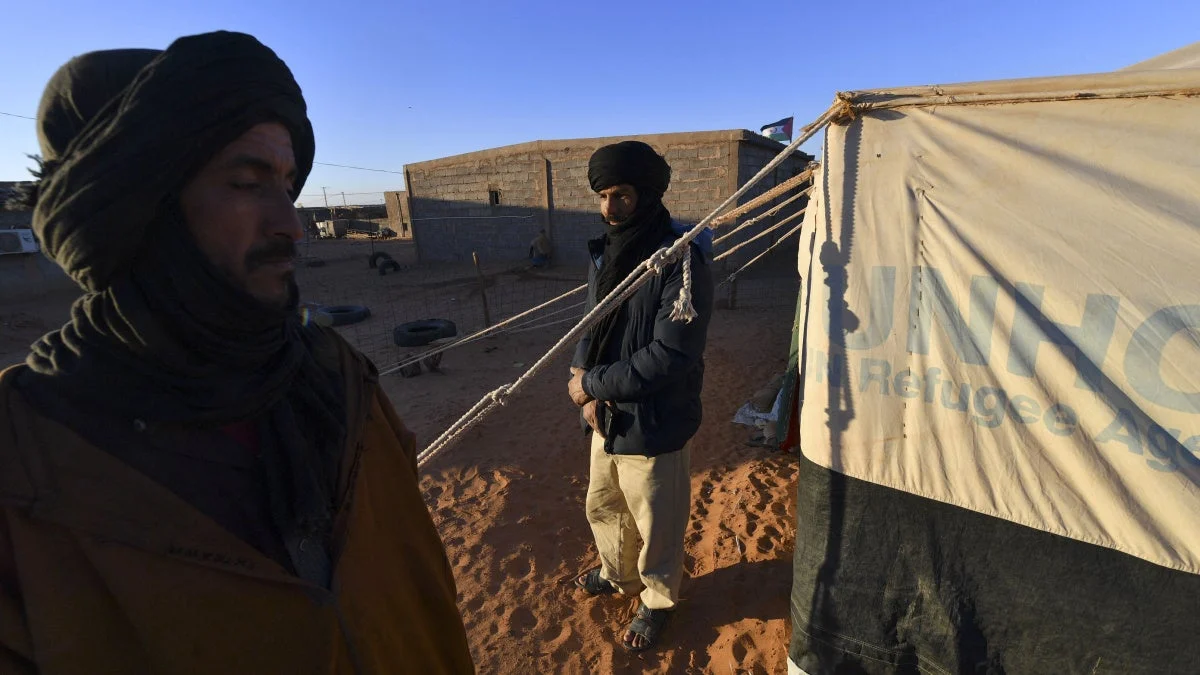
Furthermore, the resolution does not define who constitutes the "people of Western Sahara." This is a significant omission given the demographic shifts in the territory. Since 1975, a substantial number of Moroccans have settled in Western Sahara. International humanitarian law, specifically the Fourth Geneva Convention and the Rome Statute, prohibits an occupying power from transferring its civilian population into occupied territory. Such transfers are classified as war crimes. HRW asserts that the legal definition of the Sahrawi people must include the approximately 173,000 refugees currently living in camps near Tindouf, Algeria, and their descendants.
Human Rights and Reparations: The Missing Pillars
A central component of HRW’s critique is the absence of a framework for reparations and human rights monitoring. For decades, Sahrawi activists in the Moroccan-controlled parts of the territory have faced systemic repression. HRW research indicates that Moroccan authorities frequently obstruct organizations advocating for self-determination and enforce laws that criminalize any perceived affront to Morocco’s "territorial integrity."
Documented abuses include the beating of activists in custody, torture, arbitrary imprisonment, and severe restrictions on the freedom of movement and assembly. Trials of Sahrawi activists are often marred by due process violations, including the use of coerced confessions. HRW argues that any "mutually acceptable" solution is impossible if the Sahrawi people cannot express their political views without fear of state-sponsored violence.
Additionally, the right to reparations is a cornerstone of international justice. HRW maintains that the Sahrawi people are entitled to compensation for the loss of resources, property, and the decades of displacement they have endured. The organization notes that Morocco has benefited economically from the territory’s natural resources, including phosphate mines and rich fishing grounds, while the original inhabitants remain largely marginalized or displaced.
Global Diplomatic Shifts and Official Responses
The geopolitical landscape surrounding Western Sahara has shifted dramatically in recent years. In December 2020, the United States recognized Moroccan sovereignty over the territory in exchange for Morocco normalizing relations with Israel. This move broke with decades of U.S. policy and has influenced subsequent international positions.
In January 2026, the European Union updated its stance, aligning itself with UNSCR 2797 and endorsing the Moroccan autonomy proposal as the primary basis for negotiations. While some African nations like Senegal and Kenya have expressed support for the Moroccan plan, the African Union (AU) as a whole continues to recognize the Sahrawi Arab Democratic Republic (SADR) as a member state. A landmark 2022 ruling by the African Court on Human and Peoples’ Rights reaffirmed that the occupation of SADR territory by Morocco is a violation of the right to self-determination.
The Polisario Front has officially rejected the premise of UNSCR 2797, calling it a "betrayal" of the UN’s decolonization mandate. Algeria, which hosts the Sahrawi refugee camps and provides diplomatic support to the Polisario, issued an explanatory statement following the resolution’s adoption. The Algerian government stated that the resolution "fails to reflect the legitimate expectations and aspirations of the people of Western Sahara" and warned that it could further destabilize the North African region.
Staffan de Mistura, the UN Secretary-General’s Personal Envoy for Western Sahara, has attempted to maintain a neutral middle ground. While he acknowledged that UNSCR 2797 provides a framework, he emphasized that it "does not prescribe an outcome" and has called on Morocco to provide an "expanded and updated" version of its autonomy plan to address international concerns.
Implications for International Law and Regional Stability
The implications of the Security Council’s current trajectory extend beyond the borders of Western Sahara. By potentially allowing a territorial claim based on occupation to supersede a decolonization process, the UN risks setting a precedent that undermines the rules-based international order.
Western Sahara remains the only territory in Africa still listed by the UN as non-self-governing due to an incomplete decolonization process. If the right to self-determination is diluted in this instance, it may weaken the legal standing of other populations seeking to exercise similar rights globally.
Furthermore, the lack of a clear, inclusive, and legally sound path toward a resolution increases the risk of escalating conflict. The collapse of the 1991 ceasefire in 2020 demonstrated that the status quo is fragile. Without a process that guarantees the "free and genuine will" of the Sahrawi people—including the option of independence and the guarantee of reparations—any "political solution" may prove to be neither just nor lasting.
Human Rights Watch concluded its report by urging the Security Council to return to a framework rooted in international law. The organization called for the inclusion of a human rights monitoring component within MINURSO’s mandate—making it the only modern UN peacekeeping mission without one—and insisted that the Sahrawi people must be the final arbiters of their own political destiny. As Hanan Salah noted, "After 50 years of occupation, the Security Council should articulate how it plans to fulfill the full range of human rights for the Sahrawi people, including self-determination."

Related Posts
Human Rights Watch Calls for Investigation into Death of Detainee Following Removal from Najaf Hospital by Iraqi Drug Police
Human Rights Watch Urges UN Security Council to Extend Lebanon Peacekeeping Mission Amid Escalating Conflict and Humanitarian Crisis