Pope Leo Says Aerial Military Strikes Should Be Banned
Pope Leo sharply criticised aerial bombardments on Monday, saying they are indiscriminate and should be banned, in his latest anti-war comments as the US-Israeli war on Iran enters its fourth week. The Pontiff, addressing executives and staff from Italy’s ITA Airways, delivered a powerful condemnation of airpower in warfare, asserting that the catastrophic lessons of the 20th century should have rendered such tactics obsolete. His remarks underscore a deepening concern from the Holy See regarding the escalating conflict and its devastating impact on civilian populations, echoing his recent call for a ceasefire and labeling the war a "scandal to the whole human family."
The Pope, the first American to hold the papacy, did not explicitly name the ongoing US-Israeli war on Iran, which has gripped the Middle East and sent shockwaves across the globe for nearly a month. However, the timing and the emphatic nature of his pronouncement left little doubt about its immediate relevance to the expanding conflict. "No one should have to fear that threats of death and destruction might come from the sky," Pope Leo declared, his voice resonating with moral urgency. He further elaborated on his conviction, stating, "After the tragic experiences of the 20th century, aerial bombings should have been banned forever. Yet they still exist… this is not progress; it is regression!" This statement harks back to the devastating air campaigns of World War II and subsequent conflicts, which redefined the scope of civilian suffering in modern warfare.
The Intensifying US-Israeli War on Iran
The fourth week of the US-Israeli war on Iran marks a critical juncture in a conflict that began with a series of escalating provocations and retaliatory strikes. The genesis of this hypothetical conflict lies in decades of geopolitical tension, proxy conflicts, and a profound distrust between the involved parties. Long-standing disputes over Iran’s nuclear program, its regional influence through various non-state actors, and Israel’s security concerns, often amplified by US support, created a volatile environment.
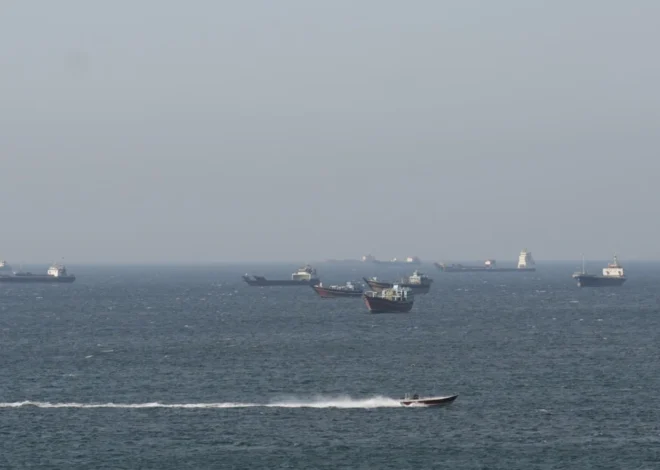
The initial phase of the war, approximately three weeks prior to Pope Leo’s statement, is understood to have commenced with targeted cyberattacks and naval skirmishes, quickly escalating into conventional military engagement. Reports suggest that a significant trigger was a series of drone and missile attacks attributed to Iranian-backed militias against US interests and Israeli targets in the region, followed by decisive retaliatory actions from the US and Israel. These retaliations heavily relied on airpower, striking command centers, missile sites, and logistical infrastructure deep within Iranian territory and in areas controlled by its proxies. The use of advanced aerial assets, including stealth fighters, drones, and long-range bombers, has been a defining characteristic of the conflict’s early stages, aimed at crippling Iran’s military capabilities and deterrence posture.
As the conflict progressed into its second and third weeks, the intensity of aerial bombardments reportedly increased. While both the US and Israel maintained that their strikes were precise and aimed at military targets, reports from independent observers and humanitarian organizations began to highlight the growing toll on civilian lives and infrastructure. Cities, once bustling centers, became targets of strategic importance, leading to widespread displacement and a burgeoning humanitarian crisis. It is against this backdrop of escalating aerial violence and its human cost that Pope Leo’s latest, and perhaps most direct, anti-war message has been delivered.
Historical Context of Aerial Warfare and International Law
Pope Leo’s call for a ban on aerial bombardments is rooted in a comprehensive understanding of the history of warfare and the evolution of international humanitarian law (IHL). The 20th century indeed witnessed the proliferation and increasing destructiveness of airpower, from the carpet bombings of World War II in cities like Dresden, Hamburg, and Tokyo, to the strategic bombing campaigns in Vietnam and the Gulf Wars. These campaigns, while often justified by military necessity, invariably resulted in immense civilian casualties and the destruction of non-military infrastructure, blurring the lines between combatants and non-combatants.
The development of IHL, particularly the Geneva Conventions of 1949 and their Additional Protocols of 1977, sought to mitigate the horrors of war by establishing clear principles:
- Distinction: Combatants must distinguish between civilian populations and combatants and between civilian objects and military objectives. Attacks must be directed only against military objectives.
- Proportionality: Attacks must not be launched if the expected civilian harm would be excessive in relation to the anticipated military advantage.
- Precaution: All feasible precautions must be taken to avoid, and in any event to minimize, incidental loss of civilian life, injury to civilians, and damage to civilian objects.
While modern precision-guided munitions (PGMs) are theoretically designed to reduce collateral damage, the reality of warfare, especially in densely populated urban areas, often falls short of these ideals. Intelligence failures, targeting errors, the presence of military assets within civilian infrastructure, and the sheer scale of some aerial campaigns can still lead to significant civilian harm. Pope Leo’s critique, therefore, likely transcends the technical capabilities of modern weaponry, focusing instead on the inherent risk of indiscriminateness when death and destruction rain down from the sky, regardless of intent. His sentiment echoes the concerns of numerous international legal scholars and human rights advocates who argue that the very nature of aerial bombardment, even with advanced technology, carries an elevated risk of violating the principles of distinction and proportionality.
The Vatican’s Moral Authority and Diplomatic Influence
The Holy See, with its unique status as a sovereign entity and a global religious leader, wields significant moral authority on the international stage. The Pope, as the spiritual leader of over 1.3 billion Catholics worldwide, often uses his platform to advocate for peace, human dignity, and justice, irrespective of geopolitical alliances. Pope Leo’s consistent anti-war stance aligns with a long tradition of papal diplomacy that seeks to be a voice for the voiceless and a champion of humanitarian principles.
As the first American Pope, Leo brings a distinct perspective to the papacy. His nationality, originating from one of the primary belligerents in the current conflict, could lend particular weight to his pronouncements, potentially making them more difficult for the US government to dismiss. His appeals are not merely political statements but carry a profound moral and ethical dimension, often resonating with diverse religious and secular communities globally. The Vatican’s diplomatic network, spanning over 180 countries, allows its messages to reach far and wide, influencing public opinion and, at times, government policies.

Throughout history, popes have played crucial roles in mediating conflicts and condemning violence. Pope John Paul II famously spoke out against the Iraq War in 2003, and Pope Francis has consistently called for an end to conflicts in Ukraine, the Holy Land, and numerous other regions, emphasizing dialogue over armed confrontation. Pope Leo’s current condemnation of aerial bombardments fits squarely within this legacy, reinforcing the Holy See’s unwavering commitment to peace and its strong advocacy for the protection of civilian lives in times of conflict. His use of strong language – "regression" and "scandal to the whole human family" – signals a deep moral distress over the current state of international affairs and the perceived failure of humanity to learn from its past mistakes.
Inferred Reactions and Official Responses
Pope Leo’s powerful statement is expected to elicit a range of reactions from various international actors, even if not explicitly stated at the time of reporting.
Humanitarian Organizations and the United Nations: Groups such as the International Committee of the Red Cross (ICRC), Amnesty International, Human Rights Watch, and various UN agencies (UNICEF, OCHA) are highly likely to welcome and support the Pope’s condemnation. These organizations consistently highlight the devastating impact of aerial bombardments on civilians, infrastructure, and humanitarian aid efforts. They would likely issue statements reiterating calls for adherence to international humanitarian law, protection of civilians, and unimpeded humanitarian access. The UN Secretary-General would likely use the Pope’s statement to reinforce the UN’s ongoing appeals for de-escalation, a ceasefire, and a diplomatic resolution to the conflict.
The Belligerent Nations (US, Israel, Iran):
- United States and Israel: Officials from the US and Israeli governments would likely acknowledge the Pope’s concerns regarding civilian casualties but would simultaneously defend their military operations as necessary and compliant with international law. They would emphasize that their strikes are precise, aimed at legitimate military targets, and conducted with precautions to minimize civilian harm. They might express regret for any unintended civilian deaths but reiterate their commitment to national security and the need to neutralize threats. There could be an implicit argument that a blanket ban on aerial strikes would severely hamper their ability to conduct effective defensive or offensive operations against adversaries who often embed themselves within civilian areas.
- Iran: The Iranian government and its allied media would likely seize upon the Pope’s statement as validation of their narrative, portraying themselves as victims of aggression and highlighting the international condemnation of their adversaries’ tactics. They would likely amplify the Pope’s words to garner international sympathy and pressure the US and Israel. This could also be used to galvanize domestic support by framing the conflict as an unjust war waged against their people.
Other International Powers: Major powers like China, Russia, and European Union member states might issue nuanced statements. While generally supporting humanitarian principles and de-escalation, their specific responses would be shaped by their own geopolitical interests and relationships with the warring parties. Some might echo the call for civilian protection, while others might remain more guarded, emphasizing the complexities of the conflict.
Broader Impact and Implications
Pope Leo’s pronouncement carries significant implications for the ongoing conflict and the future discourse on warfare.
Increased Diplomatic Pressure: The Pope’s moral stance adds considerable weight to international calls for a ceasefire and a diplomatic resolution. It could galvanize further diplomatic efforts by third-party nations and international bodies to mediate an end to hostilities. The ethical dimension introduced by the Pope may compel nations to re-evaluate the moral calculus of their military strategies.
Shaping Public Opinion: Among the global Catholic population and broader religious communities, the Pope’s words will undoubtedly resonate deeply, potentially mobilizing public opinion against the continuation of the war, particularly its aerial component. This public pressure could, in turn, influence political leaders to pursue less aggressive military options and prioritize peace.
Humanitarian Crisis Amplification: By specifically condemning aerial bombardments, Pope Leo draws crucial attention to the humanitarian catastrophe unfolding on the ground. This focus could lead to increased calls for humanitarian aid, protection corridors, and access for relief organizations to reach affected populations, whose suffering is often exacerbated by air strikes that damage infrastructure, impede movement, and create fear.
Challenges to a Ban on Aerial Warfare: While morally compelling, a universal ban on aerial bombardments faces immense practical and geopolitical challenges. Major military powers, including the US, Russia, China, and various European nations, rely heavily on air superiority as a core component of their defense doctrines. Such a ban would require a fundamental shift in military strategy and international law, which would be difficult to achieve given the current global security landscape. However, the Pope’s statement serves as a powerful ethical challenge, pushing the international community to continually re-examine the methods of warfare and strive for greater protection of non-combatants. It reignites the debate on "just war" theory in the context of modern military capabilities.
Long-Term Regional Stability: The current US-Israeli war on Iran, marked by intense aerial campaigns, risks destabilizing the already fragile Middle East for decades to come. The Pope’s intervention, by focusing on the methods of war, implicitly calls for a more humane approach to conflict resolution that considers the long-term consequences of destructive tactics. A protracted conflict, especially one involving extensive aerial destruction, will leave a legacy of resentment, radicalization, and a monumental reconstruction challenge, further complicating efforts for lasting peace and stability in the region. The moral voice of the Holy See aims to prevent such a catastrophic future, urging a return to fundamental human decency and the pursuit of peace through dialogue.

Related Posts
Qatar Emir and US President Deliberate Iran De-escalation, Maritime Security, and Global Supply Chain Resilience Amidst Mounting Regional Tensions
Turkey Voices Alarm Over Growing Israel-Greece-Cyprus Military Alliance, Citing Regional Instability Concerns