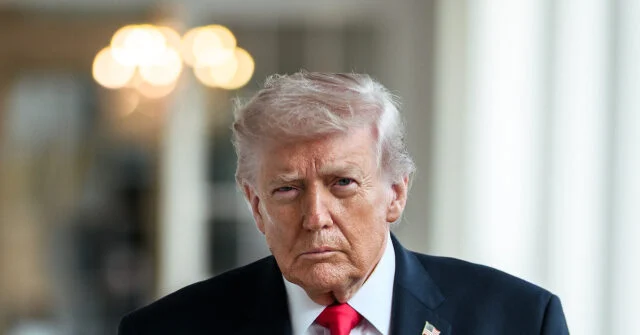
President Trump Announces Five-Day Pause in Iran Strikes Citing Productive Talks Amid Escalating Regional Tensions
President Donald Trump announced a significant five-day pause in planned military strikes targeting Iran’s power generation and energy infrastructure on Monday morning, leveraging social media to express his hopes for a rapid and peaceful resolution to ongoing hostilities. The surprising declaration follows what Trump described as "very good and productive conversations" between the United States and Iran over the preceding 48 hours, aimed at achieving a "complete and total resolution of hostilities" in the Middle East, a region gripped by heightened tensions attributed in part to an ongoing campaign referred to as "Operation Epic Fury."
The President’s Unexpected Declaration
In a series of all-capital-letters posts on Truth Social, President Trump conveyed the immediate diplomatic breakthrough and its operational consequences. "I AM PLEASED TO REPORT THAT THE UNITED STATES OF AMERICA, AND THE COUNTRY OF IRAN, HAVE HAD, OVER THE LAST TWO DAYS, VERY GOOD AND PRODUCTIVE CONVERSATIONS REGARDING A COMPLETE AND TOTAL RESOLUTION OF OUR HOSTILITIES IN THE MIDDLE EAST," Trump wrote. He elaborated, stating that "BASED ON THE TENOR AND TONE OF THESE IN DEPTH, DETAILED, AND CONSTRUCTIVE CONVERSATIONS, WHICH WILL CONTINUE THROUGHOUT THE WEEK, I HAVE INSTRUCTED THE DEPARTMENT OF WAR TO POSTPONE ANY AND ALL MILITARY STRIKES AGAINST IRANIAN POWER PLANTS AND ENERGY INFRASTRUCTURE FOR A FIVE DAY PERIOD, SUBJECT TO THE SUCCESS OF THE ONGOING MEETINGS AND DISCUSSIONS. THANK YOU FOR YOUR ATTENTION TO THIS MATTER! PRESIDENT DONALD J. TRUMP."
This announcement marks a dramatic shift in rhetoric and policy, coming just two days after the President issued a stern ultimatum to Tehran. The move suggests an active, albeit covert, diplomatic channel has been engaged at a critical juncture, pulling back from the brink of a potentially devastating military escalation. The explicit mention of the "Department of War" in his statement, rather than the more commonly used "Department of Defense," further underscored the gravity of the situation and the directness of his directive.
A Week of High Stakes: The Preceding Ultimatum
The immediate backdrop to this diplomatic overture was a severe warning issued by President Trump on Saturday night. He had given Iran a stringent 48-hour deadline to reopen the strategically vital Strait of Hormuz. Failure to comply, Trump had threatened, would result in the U.S. moving to "obliterate" Iranian power plants, "starting with the biggest one first." This ultimatum, widely reported, had sent shockwaves across global markets and intensified fears of a full-blown military confrontation in the Persian Gulf.
The Strait of Hormuz, a narrow waterway between the Persian Gulf and the Gulf of Oman, is one of the world’s most critical chokepoints for oil shipments, with roughly 20% of the world’s petroleum and a significant portion of its liquefied natural gas passing through it daily. Any disruption to traffic in the strait has immediate and profound implications for global energy prices and economic stability. Iran has, on several occasions, threatened to close the strait in response to international pressure or sanctions, viewing it as a powerful leverage point in its standoff with Western powers. The implicit threat of closure, or actual blockades, has historically been a flashpoint for military posturing and intervention in the region.
Operation Epic Fury: Contextualizing the Conflict
The President’s statement referenced "Operation Epic Fury" as a driving force behind the recent hostilities. While specific details of "Operation Epic Fury" remain largely undisclosed to the public, the nomenclature suggests a broad, perhaps multi-faceted, military or strategic campaign. Such an operation would likely encompass intelligence gathering, cyber warfare capabilities, maritime patrols, and potentially targeted strikes or deterrence measures aimed at Iranian assets or proxies in the region. The reference to it in the context of resolving hostilities implies that the operation itself has been a significant contributor to the heightened state of conflict, or at least a key instrument in the U.S. strategy to exert pressure on Iran.
Historically, U.S. military operations in the Middle East have often been given evocative names, such as Operation Desert Storm or Operation Iraqi Freedom, each designed to convey a specific objective or posture. "Epic Fury" suggests a campaign characterized by intense pressure or a decisive response to perceived threats, aligning with the aggressive stance adopted by the Trump administration towards Iran. Its mention underscores that the recent diplomatic talks are not occurring in a vacuum but against a backdrop of active strategic maneuvers.
The Geopolitical Chessboard: US-Iran Relations in Perspective
The recent escalation and subsequent de-escalation attempt are deeply rooted in decades of complex and often antagonistic relations between the United States and Iran. Following the 1979 Iranian Revolution and the subsequent hostage crisis, diplomatic ties were severed, giving way to a period characterized by mistrust, proxy conflicts, and economic sanctions.
A brief period of détente emerged with the 2015 Joint Comprehensive Plan of Action (JCPOA), or Iran nuclear deal, which saw Iran agree to curb its nuclear program in exchange for sanctions relief. However, the Trump administration withdrew from the JCPOA in 2018, reimposing and expanding sanctions, which severely crippled Iran’s economy, particularly its vital oil sector. This withdrawal marked a return to a "maximum pressure" campaign, designed to force Iran to negotiate a new, more comprehensive agreement addressing not only its nuclear program but also its ballistic missile development and its support for regional proxy groups.
The past few years have seen numerous flashpoints: attacks on oil tankers in the Gulf, drone incidents, cyberattacks, and targeted assassinations of high-ranking military officials. Each incident ratcheted up tensions, leading to a precarious balance where miscalculation could easily spiral into a wider regional conflict. The United States has consistently accused Iran of destabilizing the Middle East through its regional influence, while Iran views U.S. military presence and sanctions as acts of aggression and economic warfare. This deeply entrenched animosity provides the critical context for understanding the fragility and significance of any reported diplomatic breakthrough.
The Strategic Importance of Iranian Energy Infrastructure
The threatened targets—Iranian power plants and energy infrastructure—are not arbitrary. Iran’s energy sector is the backbone of its economy, providing both domestic power and the primary source of export revenue. Targeting these facilities would have devastating consequences for the Iranian populace, disrupting daily life, industry, and essential services. From a military perspective, crippling energy infrastructure could also hinder Iran’s logistical capabilities and weaken its capacity to sustain prolonged conflict.
Iran’s electricity generation relies heavily on thermal power plants fueled by natural gas and, to a lesser extent, oil. Its oil and gas fields, refineries, and export terminals are also critical components of its energy infrastructure. A coordinated strike against these assets would not only cause immense economic damage but also likely trigger a humanitarian crisis, potentially galvanizing international condemnation and further complicating any future diplomatic efforts. The explicit threat to these targets underscored the severity of the U.S. ultimatum and the immense destructive potential that was momentarily put on hold.
Diplomatic Channels and Intermediaries
The abrupt shift from ultimatum to reported talks suggests the rapid activation of back channels. While President Trump’s statement did not specify the format or location of these "conversations," the involvement of intermediaries is highly probable. Prior to Trump’s announcement, Iranian Foreign Minister Abbas Araghchi acknowledged speaking by phone with his Turkish counterpart, Hakan Fidan. Turkey has historically positioned itself as a neutral broker in the region, maintaining diplomatic ties with both Tehran and Washington, and has previously played a mediating role in negotiations between the two adversaries.
The role of such intermediaries is crucial when direct, high-level communication is either politically unfeasible or deemed too sensitive. They can facilitate message exchange, clarify intentions, and help de-escalate tensions without requiring either party to make overt concessions that could be perceived as weakness. Other nations, such as Oman or Switzerland (which often represents U.S. interests in Iran), have also served as conduits in the past. The success of the ongoing talks will heavily depend on the effectiveness of these diplomatic channels and the willingness of both sides to genuinely seek common ground.
Regional Repercussions and Alerts
The announcement of a pause in strikes came as regional allies remained on high alert. The Associated Press reported that the United Arab Emirates (UAE) confirmed its air defenses were attempting to intercept new incoming Iranian fire on Monday afternoon, even as Trump’s diplomatic efforts were unveiled. This incident underscores the precarious security situation in the Gulf and the challenge of de-escalation when multiple actors are involved in a complex web of conflict.
The UAE, along with other Gulf Cooperation Council (GCC) states like Saudi Arabia, views Iran’s regional ambitions and its ballistic missile program as direct threats to their national security. These countries have often found themselves caught in the crossfire of US-Iran tensions, experiencing drone and missile attacks, as well as disruptions to shipping. Any signs of de-escalation between Washington and Tehran are typically met with cautious optimism by Gulf states, tempered by concerns that their own security interests might be overlooked in a broader agreement. The continued Iranian fire reported by the UAE suggests that while top-level talks might be underway, the broader regional conflict involving proxies and tactical engagements remains active, presenting a significant hurdle to any comprehensive peace efforts.
International Calls for De-escalation
The international community has consistently expressed deep concern over the escalating tensions in the Middle East, urging all parties to exercise restraint and pursue diplomatic solutions. The United Nations Secretary-General, along with leaders from the European Union, China, and Russia, have repeatedly called for de-escalation, highlighting the catastrophic potential of a full-scale regional conflict. Such a conflict would not only destabilize global energy markets but also risk a humanitarian crisis of immense proportions and potentially draw in other global powers.
The prospect of direct military confrontation between the U.S. and Iran has been a consistent worry for international observers, given the intertwined nature of global security and economic systems. Therefore, any move towards dialogue and a reduction of military threats, even a temporary one, is likely to be welcomed by the international community as a positive, albeit fragile, step. However, skepticism remains high, given the long history of mistrust and the deep-seated grievances on both sides.
Analysis: A Fragile Detente or a Path to Resolution?
President Trump’s decision to postpone strikes, contingent on the success of "ongoing meetings and discussions," introduces a period of profound uncertainty and cautious hope. The five-day window serves as a critical test of whether the reported "very good and productive conversations" can translate into tangible diplomatic progress.
Analysts are divided on the implications. Some view it as a calculated tactical pause, allowing Trump to demonstrate both his willingness to use force and his openness to diplomacy, thereby strengthening his negotiating position. Others see it as a genuine attempt to avoid a costly and unpredictable military conflict, potentially driven by internal or external pressures. The language of "complete and total resolution of our hostilities" is ambitious, suggesting a far-reaching agreement beyond merely de-escalating the immediate crisis. Such a resolution would likely need to address Iran’s nuclear program, its ballistic missile capabilities, its regional proxy networks, and the future of U.S. sanctions.
The immediate challenge for negotiators will be to build sufficient trust to extend the pause beyond five days and to establish a framework for substantive, direct negotiations. The complexity of the issues, the deep ideological divides, and the presence of hardline elements in both Washington and Tehran mean that success is far from guaranteed. Furthermore, any incidents during this five-day period, such as continued regional skirmishes or perceived provocations, could quickly derail the nascent diplomatic efforts and reignite the threat of military action.
Looking Ahead
The next five days will be crucial. The world will be watching closely to see if the reported talks can build momentum or if they will collapse under the weight of decades of animosity and unresolved issues. The situation remains exceptionally fluid, with the potential for either a significant diplomatic breakthrough or a rapid return to the brink of war. President Trump’s gamble on diplomacy represents a high-stakes moment for the Middle East and global stability, underscoring the delicate balance between coercive diplomacy and the pursuit of peace. The "more to come" sign-off from the original report remains acutely relevant as the international community awaits further developments in this unfolding geopolitical drama.

Related Posts
Democratic Candidates Must Moderate to Win General Elections, Says Rep. Greg Stanton
Lisa Demuth Secures Republican Gubernatorial Nomination in Minnesota, Defeating Trump-Endorsed Mike Lindell