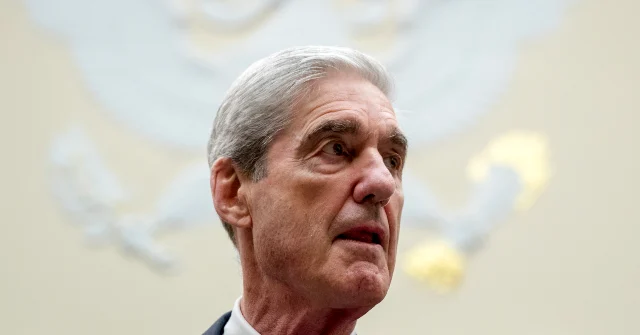
Robert Mueller, Architect of Modern FBI and Special Counsel for Russia Probe, Dies at 81
Former Federal Bureau of Investigation (FBI) Director Robert S. Mueller III, a towering figure in American law enforcement and national security who also served as the Special Counsel overseeing the investigation into Russian interference in the 2016 presidential election, has died at the age of 81. Multiple reports, including the Associated Press, confirmed his passing on Friday evening, citing a statement issued by his family. The family’s statement conveyed that Mueller had "passed away" on Friday, though the immediate cause of death was not publicly disclosed. However, his family had previously revealed that Mueller had been diagnosed with Parkinson’s disease in the summer of 2021, a condition that led to his retirement from legal practice at the end of that year and from teaching at his law school alma mater in late 2022.
Mueller’s career spanned decades of dedicated public service, marked by an unwavering commitment to integrity and the rule of law. His tenure as FBI Director, beginning just one week before the devastating September 11, 2001, terrorist attacks, thrust him onto the front lines of national security during one of the most tumultuous periods in modern American history. He served an extended term of 12 years under two presidents of different political parties, a testament to his bipartisan respect and the critical nature of his leadership during a period of profound transformation for the Bureau.
A Distinguished Life of Service and Sacrifice
Born in New York City in 1944, Robert Swan Mueller III’s path to public service was paved with academic excellence and military valor. He earned his bachelor’s degree from Princeton University in 1966, followed by a master’s degree in international relations from New York University in 1967. Driven by a profound sense of duty during the Vietnam War, he then joined the U.S. Marine Corps, where he served as an officer for three years. His combat experience in Vietnam was distinguished; he led a rifle platoon in the 3rd Marine Division, earning the Bronze Star with Combat "V" for heroism, two Navy Commendation Medals, and the Purple Heart after being wounded in action. This period of his life instilled in him a disciplined approach and a deep understanding of sacrifice that would characterize his subsequent career.
After his military service, Mueller pursued a law degree from the University of Virginia School of Law, graduating in 1973. His legal career began in private practice in San Francisco before he transitioned to federal prosecution. He joined the U.S. Attorney’s Office for the Northern District of California in 1976, quickly establishing a reputation for meticulousness and fairness. In 1982, he moved to Boston to serve as an Assistant U.S. Attorney, eventually rising to become the Acting U.S. Attorney. His dedication to public service led him back to the Department of Justice in Washington, D.C., where he held several senior positions, including Assistant Attorney General for the Criminal Division, overseeing major investigations into organized crime, financial fraud, and drug trafficking. Before his appointment as FBI Director, Mueller also served as the U.S. Attorney for the District of Columbia, further solidifying his credentials as a seasoned legal professional.
Leading the FBI Through a Crucible of Crisis
President George W. Bush nominated Mueller to lead the FBI in July 2001, and he was confirmed by the Senate in August. His swearing-in on September 4, 2001, preceded the 9/11 attacks by mere days, an event that would fundamentally redefine the FBI’s mission and his directorship. Prior to 9/11, the FBI’s primary focus had been on traditional law enforcement, including combating domestic crime, white-collar fraud, and espionage. The catastrophic terrorist attacks on the World Trade Center and the Pentagon, however, necessitated an immediate and dramatic overhaul of the Bureau’s priorities, shifting its paramount focus from prosecuting crimes after they occurred to preventing acts of terrorism before they could be carried out.
Mueller spearheaded this monumental transformation, often described as an "overhaul of the bureau’s mission to meet the law enforcement needs of the 21st century." He restructured the FBI, increasing its intelligence-gathering capabilities, enhancing collaboration with other intelligence agencies, and investing heavily in technology and analytical tools. This involved a significant reallocation of resources, with thousands of agents and analysts redirected from traditional criminal investigations to counter-terrorism efforts. He faced immense pressure to prevent future attacks, a standard he acknowledged was "almost impossibly difficult," emphasizing that "preventing 99 out of 100 terrorist plots wasn’t good enough."
Under his leadership, the FBI established the National Security Branch, integrated intelligence analysts more deeply into field operations, and modernized its data systems. He navigated complex issues surrounding civil liberties in the context of heightened national security, often facing scrutiny from Congress and civil rights organizations. Despite these challenges, Mueller earned a reputation for his steadfast leadership, integrity, and ability to command respect across the political spectrum. His tenure, initially set for ten years, was extended by President Barack Obama for an additional two years in 2011, a rare move that underscored the critical importance of his continuity and experience during ongoing national security threats. When he finally stepped down in 2013, he left behind an FBI profoundly reshaped and better equipped to confront the evolving threats of the modern era.
The Special Counsel Investigation: A Defining Chapter
Years after his retirement from the FBI, Mueller was once again called upon to serve his country during a period of intense political polarization. In May 2017, following the firing of FBI Director James Comey, the Department of Justice appointed Mueller as Special Counsel to investigate "any links and/or coordination between the Russian government and individuals associated with the campaign of President Donald Trump," as well as "any matters that arose or may arise directly from the investigation." This appointment came amidst a contentious political climate, with allegations of Russian interference in the 2016 presidential election dominating national headlines and raising profound questions about the integrity of democratic processes.
The investigation, which spanned nearly two years, was meticulous and far-reaching. Mueller assembled a team of experienced prosecutors and investigators, conducting hundreds of interviews, issuing thousands of subpoenas, and reviewing millions of documents. His mandate was broad, encompassing not only potential collusion but also possible obstruction of justice by President Trump. The investigation resulted in charges against 34 individuals and three Russian companies, including Russian intelligence officers for hacking and disseminating stolen emails, and several Trump campaign officials who pleaded guilty to various offenses.
The Special Counsel’s final report, submitted to Attorney General William Barr in March 2019, was over 400 pages long and detailed the findings of the exhaustive inquiry. Regarding Russian interference, the report concluded that Russia engaged in a "sweeping and systematic" campaign to influence the 2016 election in favor of Trump, using social media disinformation campaigns and hacking operations. However, on the question of conspiracy or coordination between the Trump campaign and the Russian government, the report stated, "the investigation did not establish that members of the Trump Campaign conspired or coordinated with the Russian government in its election interference activities."
On the issue of obstruction of justice, the report outlined ten specific instances where President Trump took actions that could be construed as attempts to impede the investigation. While the report stopped short of concluding that Trump committed a crime, it also explicitly stated that it "does not exonerate him." Mueller explained his team’s inability to make a definitive judgment on obstruction, citing Justice Department policy that a sitting president cannot be indicted. He indicated that it was ultimately up to Congress to decide whether the president’s actions constituted impeachable offenses.
The release of the Mueller Report ignited a firestorm of political debate, with supporters of President Trump claiming it vindicated him and critics arguing that it laid bare a pattern of presidential misconduct. Mueller himself testified before Congress in July 2019, reiterating the findings of his report and emphasizing the seriousness of Russian interference, stating, "They are doing it as we sit here. And they expect to do it during the next election."
Later Years and Public Health Disclosure
Following the conclusion of the Special Counsel investigation and his congressional testimony, Mueller largely receded from public life. His family later disclosed that he had been diagnosed with Parkinson’s disease in the summer of 2021. Parkinson’s disease is a progressive disorder that affects the nervous system and the parts of the body controlled by the nerves, often leading to tremors, stiffness, and difficulty with balance and coordination. This diagnosis prompted his retirement from the practice of law at the end of 2021. He continued to teach at his law school alma mater during the fall semesters of both 2021 and 2022 before fully retiring from professional duties at the end of 2022. The family’s statement regarding his health provided context for his gradual withdrawal from public engagement.
Reactions Across the Political Spectrum
News of Robert Mueller’s death evoked a range of reactions, underscoring his complex legacy in a deeply divided political landscape. President Donald Trump, a central figure in Mueller’s Special Counsel investigation, responded to the news with a post on Truth Social. "Robert Mueller just died," Trump wrote. "Good, I’m glad he’s dead. He can no longer hurt innocent people!" This statement reflected Trump’s long-standing animosity towards the investigation, which he frequently labeled a "witch hunt" and a "hoax."
In contrast, other prominent figures, particularly those who worked with Mueller or held him in high regard for his decades of public service, offered more somber reflections. While official statements from many figures are still forthcoming, it is anticipated that current and former presidents, FBI directors, and members of Congress from both parties will acknowledge his significant contributions. President George W. Bush, who nominated Mueller to lead the FBI, is expected to commend his leadership during the post-9/11 era. Similarly, former President Barack Obama, who extended Mueller’s FBI term, will likely praise his dedication and integrity.
Current FBI Director Christopher Wray is expected to issue a statement recognizing Mueller’s transformative impact on the Bureau and his enduring legacy as a principled leader. Leaders in the legal community, including former colleagues and legal scholars, are also anticipated to offer tributes, highlighting his distinguished career as a prosecutor, attorney, and special counsel, universally praising his commitment to the rule of law. These differing reactions underscore the polarizing nature of the Special Counsel investigation, even as many acknowledge Mueller’s pre-investigation reputation as a non-partisan public servant of unimpeachable character.
A Legacy of Integrity and Unwavering Service
Robert Mueller’s passing marks the end of an era for a figure who embodied the ideals of public service, integrity, and duty. His career was defined by moments of national crisis, from the battlefields of Vietnam to the aftermath of 9/11, and the unprecedented political investigation into foreign interference in American democracy. Throughout these challenging periods, Mueller consistently demonstrated a calm demeanor, meticulous attention to detail, and an unwavering commitment to facts and the law.
His legacy is multifaceted. As FBI Director, he reshaped the nation’s premier law enforcement agency, adapting it to confront the existential threat of global terrorism while striving to uphold civil liberties. His leadership during this critical period is widely credited with strengthening the FBI’s intelligence capabilities and improving inter-agency cooperation. As Special Counsel, he conducted an investigation of immense national significance, navigating intense political pressure with a steadfast adherence to process and principle. While the findings of his report continue to be debated, the thoroughness and independence of his inquiry cemented his reputation as a "straight shooter" committed to uncovering the truth.
Robert Mueller’s life stands as a testament to a generation of public servants who prioritized country over partisan politics, dedicating their lives to upholding justice and protecting national security. His contributions have left an indelible mark on American law enforcement and national security policy, ensuring his place as a pivotal figure in the nation’s history. He will be remembered for his quiet resolve, his profound sense of duty, and his unwavering commitment to the principles he served throughout his long and distinguished career.

Related Posts
Democratic Candidates Must Moderate to Win General Elections, Says Rep. Greg Stanton
Lisa Demuth Secures Republican Gubernatorial Nomination in Minnesota, Defeating Trump-Endorsed Mike Lindell