French-Finnish Strategic Defense Partnership: The MK1 Multipurpose Vehicle and the Future of European Armored Mobility
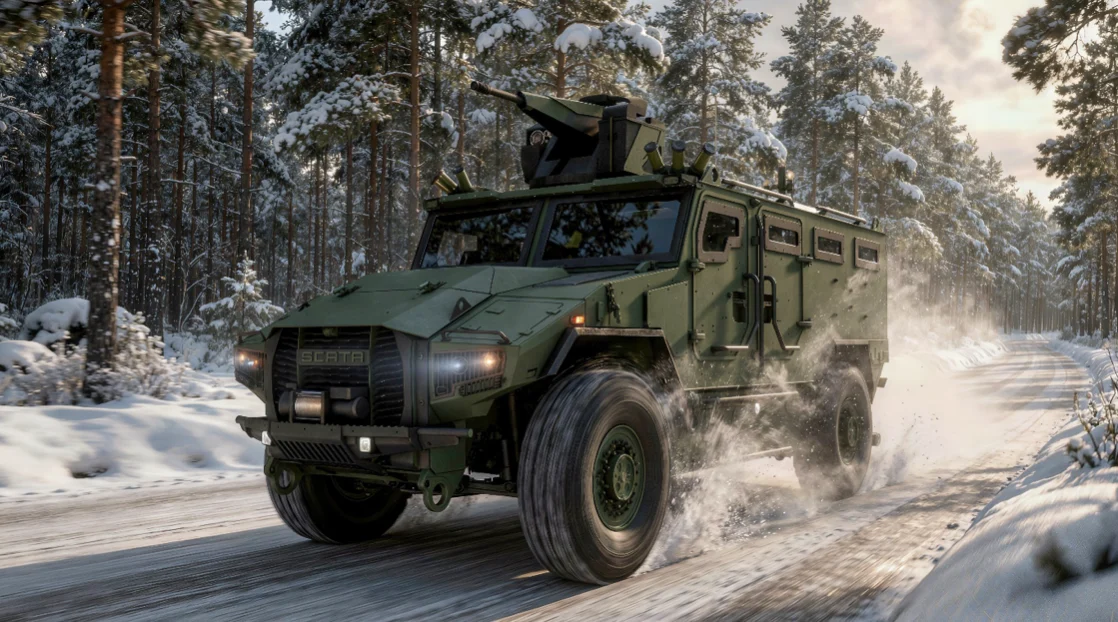
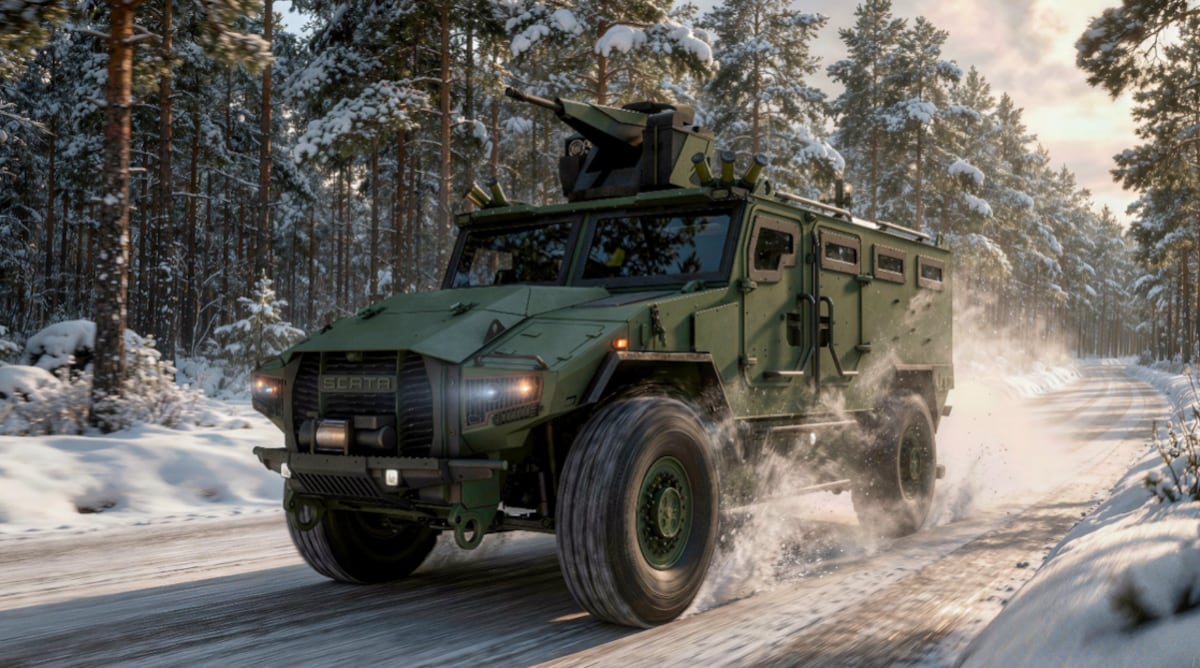
The landscape of European armored warfare is undergoing a rapid transformation, driven by the harrowing lessons emerging from the conflict in Ukraine and the shifting geopolitical realities of the Nordic region. At the forefront of this evolution is a new strategic partnership between the French mobility specialist Texelis Defense and the Finnish defense manufacturer Scata. Together, these two firms have unveiled the MK1, an 18-ton multipurpose armored vehicle designed to bridge a critical gap in the current market while providing state-of-the-art protection against the modern battlefield’s most persistent threats: first-person-view (FPV) drones and loitering munitions. Developed in less than a year, the MK1 represents a pivot toward rapid, modular defense manufacturing that prioritizes agility, specialized protection, and multi-mission versatility.
Addressing the Strategic Weight Gap in Armored Platforms
The genesis of the MK1 project lies in a detailed analysis of the European armored vehicle market, specifically within the Finnish industrial ecosystem. For decades, the Finnish defense sector has been dominated by two major players: Sisu and Patria. Sisu is well-known for its lighter platforms, typically ranging between 10 and 15 tons, while Patria’s globally recognized 6×6 and 8×8 vehicles generally sit in the heavier 24-ton-and-above category.
Viktor Ekman, the CEO of Scata, identified a "missing middle" in this inventory. During the development phase, Scata and Texelis realized that modern mechanized infantry and reconnaissance units required a platform that offered more protection and payload capacity than a light tactical vehicle, but with greater transportability and lower lifecycle costs than a heavy infantry fighting vehicle (IFV). The 18-ton MK1 was engineered specifically to inhabit this intermediate segment. By positioning the MK1 at this weight class, Scata aims to complement, rather than compete directly with, the existing offerings from Sisu and Patria, effectively widening the portfolio of Finnish-made military hardware available to both domestic and international customers.
Technical Specifications and Modular Mission Profiles
The MK1 is built upon a philosophy of modularity, allowing a single chassis to be adapted for a wide variety of roles with minimal structural changes. While the base model is designed as a troop carrier capable of transporting up to 10 fully equipped soldiers, the platform’s architecture supports several specialized variants.
Reconnaissance and Command
Equipped with advanced sensor suites and long-range optics, the MK1 can serve as a stealthy reconnaissance node. Its 18-ton frame allows for the integration of mast-mounted surveillance systems without compromising the vehicle’s stability or center of gravity.
Short-Range Air Defense (SHORAD)
As aerial threats become more diverse, the need for mobile, short-range air defense has intensified. The MK1 can be outfitted with various missile or gun-based SHORAD systems, providing protection for moving convoys or forward operating bases against low-flying aircraft and helicopters.
Counter-UAS (C-UAS) Operations
Perhaps the most significant variant of the MK1 is its counter-drone configuration. Scata is currently evaluating several weaponry options for this role. Unlike traditional systems that rely solely on electronic jamming or heavy autocannons, the MK1 is being designed to deploy "interceptor drones." These small, agile UAS units could be launched from the vehicle’s roof or from internal tubes to physically intercept and neutralize incoming enemy drones. This "drone-versus-drone" capability is seen as a necessary evolution in modern warfare, where electronic warfare (EW) may not always be effective against autonomous or frequency-hopping threats.
The Ukraine Influence: Hardening Against Top-Down Threats
The development of the MK1 has been heavily influenced by the tactical realities of the war in Ukraine. One of the most prominent observations from the conflict is the vulnerability of traditional armored vehicles to "top-attack" munitions. FPV drones, carrying improvised explosive devices or anti-tank warheads, have proven capable of disabling multi-million-dollar tanks and armored personnel carriers by striking the thinner armor on the roof.
In response, engineers at Scata and Texelis have prioritized the "hardening" of the MK1’s top side. While many forces in Ukraine have resorted to field-expedient "cope cages"—metal mesh screens designed to trigger the detonation of shaped charges before they hit the hull—the MK1 incorporates structural reinforcement and integrated armor solutions from the factory. This proactive design approach ensures that the vehicle maintains a lower profile and better aerodynamic performance than vehicles with bulky, improvised external cages, while providing a higher level of baseline survivability for the crew and passengers.
Industrial Chronology and Rapid Development
The timeline of the MK1 project is a testament to the efficiency of modern cross-border defense cooperation. In an industry where vehicle development programs often span a decade or more, the MK1 moved from concept to a functional prototype in less than 12 months.
- Mid-2023: Scata and Texelis initiate formal discussions regarding a joint venture to address the 18-ton market gap.
- Late 2023: Engineering teams finalize the chassis design, leveraging Texelis’s extensive experience in high-performance mobility systems and drivetrains.
- Early 2024: Prototype construction begins in Finland, emphasizing local manufacturing to ensure security of supply and support the Finnish industrial base.
- March 2024: Scata CEO Viktor Ekman publicly confirms the project and its strategic goals, highlighting the vehicle’s role as an "add-on" to the Finnish defense market.
- June 2024: The MK1 is scheduled for its international debut at the Eurosatory arms fair in Paris, one of the world’s largest defense and security exhibitions.
Geopolitical Context: The Nordic Shift and NATO Integration
The timing of the MK1’s introduction is critical. With Finland’s recent accession to NATO and Sweden’s subsequent membership, the Nordic defense landscape is undergoing its most significant reorganization since the end of the Second World War. Both nations are currently in the process of modernizing their land forces to ensure full interoperability with NATO standards while addressing the specific challenges of the "High North"—including sub-arctic temperatures, boggy terrain, and dense forests.
The MK1 is being marketed with these specific environmental and geopolitical factors in mind. Its 18-ton weight is optimized for the soft ground found in Finnish marshes and forests, where heavier 30-ton vehicles might struggle with mobility. Furthermore, the partnership between a French firm (Texelis) and a Finnish firm (Scata) exemplifies the type of European industrial integration that NATO and the European Union are actively encouraging to reduce dependence on non-European defense contractors.
Scata has confirmed that it is already in preliminary discussions with the defense procurement agencies of both Finland and Sweden. These nations are looking for platforms that can be produced quickly and in large numbers to replenish stocks depleted by donations to Ukraine and to expand the size of their standing armies.
Supporting Data and Technical Heritage
While Scata provides the local manufacturing and regional expertise, Texelis Defense brings a formidable technical pedigree to the MK1. Texelis is a key player in the French Army’s SCORPION program, providing the chassis and mobility solutions for the Serval (VBMR-L), a 4×4 multi-role armored vehicle.
The MK1 benefits from this heritage, likely utilizing high-mobility driveline components that have already been rigorously tested in varied environments. By using proven sub-systems, the partnership has been able to reduce the technical risks associated with new vehicle development, ensuring that the MK1 is "mission-ready" far sooner than a completely clean-sheet design would be.
The vehicle’s capacity to hold 10 soldiers is also a strategic choice. This allows for a full infantry squad plus a driver and commander, or a specialized team (such as a drone pilot unit or an anti-tank team) with significant equipment. This capacity-to-weight ratio is one of the highest in its class, making the MK1 an efficient "battlefield taxi" that does not sacrifice protection for speed.
Official Responses and Market Implications
The reaction within the Finnish defense community has been one of cautious optimism. By framing the MK1 as an "add-on" rather than a competitor to Patria or Sisu, Scata has managed to avoid the political friction that often accompanies new entrants in a consolidated market. Industry analysts suggest that this collaborative approach could lead to future "hybrid" procurements, where a nation might buy Patria vehicles for its heavy mechanized brigades and MK1 vehicles for its light infantry or border security regiments.
The broader implications for the European defense market are significant. The MK1 represents a shift toward "attrition-aware" design—creating vehicles that are sophisticated enough to survive the modern battlefield but affordable and simple enough to be produced at scale. As the war in Ukraine continues to demonstrate the high rate of equipment loss in high-intensity conflict, the ability to rapidly manufacture and field 18-ton multipurpose platforms like the MK1 could become a cornerstone of European defense strategy.
Conclusion: A New Benchmark for Rapid Defense Innovation
As the MK1 prepares for its global unveiling at Eurosatory in Paris, it stands as a symbol of the new era of European defense: agile, collaborative, and deeply informed by real-world combat data. By filling a vital niche in the armored vehicle market and addressing the lethal threat of drone warfare, Texelis and Scata have positioned the MK1 as a strong contender for the next generation of Nordic and European land force procurement. Whether it is patrolling the forests of Lapland or providing a mobile shield against loitering munitions, the MK1 is designed to ensure that the "missing middle" of the armored market is no longer a vulnerability, but a strategic asset.

Related Posts
Pentagon Forges Landmark Seven-Year Agreements with Boeing and RTX to Accelerate Standard Missile-3 Production and Stabilize Defense Supply Chains
Boeing Unveils Ultra Low-Cost Seeker to Enhance Missile Inventory and Combat Cost Challenges in Modern Warfare