
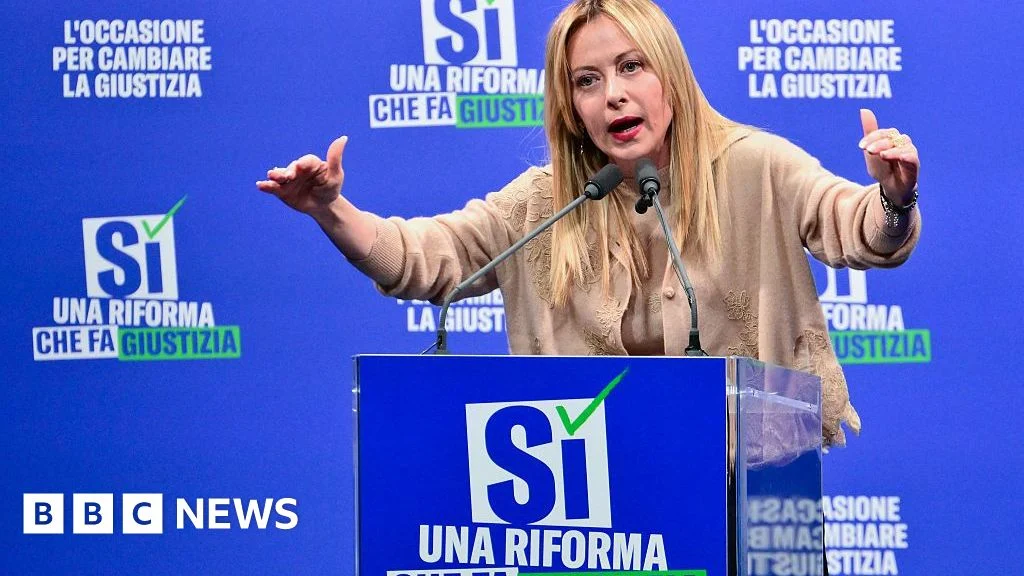
Italy is voting on whether to change its constitution. What does this mean for Meloni?
Italy is poised at a critical juncture as citizens cast their ballots in a nationwide referendum to decide the fate of proposed constitutional amendments. These reforms, championed by Prime Minister Giorgia Meloni and her right-wing government, aim to overhaul the nation’s judicial system, a move that has ignited fervent debate across the political spectrum and placed Meloni’s burgeoning political capital on the line. The two-day voting period represents not merely a decision on judicial structure, but a significant test of the Prime Minister’s mandate and the stability she has frequently touted since taking office three and a half years ago.
The Proposed Judicial Reforms: A Deep Dive
At the heart of the referendum are changes designed to fundamentally alter the relationship between judges and prosecutors. The core proposals include:
- Separation of Careers: The most significant change involves splitting the career paths of judges (magistrates who preside over trials) and public prosecutors (magistrates who investigate and bring charges). Currently, both begin their careers under a unified system and can, at various points, switch roles. Proponents of the reform argue this creates an unhealthy collegiality and potential conflicts of interest, fostering a perception of a single, monolithic "magistracy." The reform seeks to establish distinct professional trajectories from the outset, aiming for clearer lines of accountability and specialization.
- Creation of Distinct Governing Bodies: Concurrently, the reforms propose establishing separate, independent high councils to govern judges and prosecutors, replacing the single High Council of the Judiciary (Consiglio Superiore della Magistratura, CSM). The current CSM is responsible for the hiring, transfers, promotions, and disciplinary actions of all magistrates. Creating two separate bodies would, according to supporters, enhance independence and prevent undue influence of one branch over the other.
- New Disciplinary Court: The package also includes the establishment of a new disciplinary court dedicated solely to handling misconduct cases for both judges and prosecutors. This aims to streamline and professionalize the disciplinary process, which has historically been a point of contention and perceived inefficiency.
Prime Minister Meloni and her allies contend that these reforms are essential to create a more "meritocratic, responsible, and efficient" judicial system. They argue that the current system, often plagued by lengthy trials and perceived internal political factions (known as correnti), undermines public trust and hinders the nation’s economic development. By separating roles and establishing clearer governance structures, the government believes it can inject greater accountability and speed into a system widely acknowledged to be overburdened.
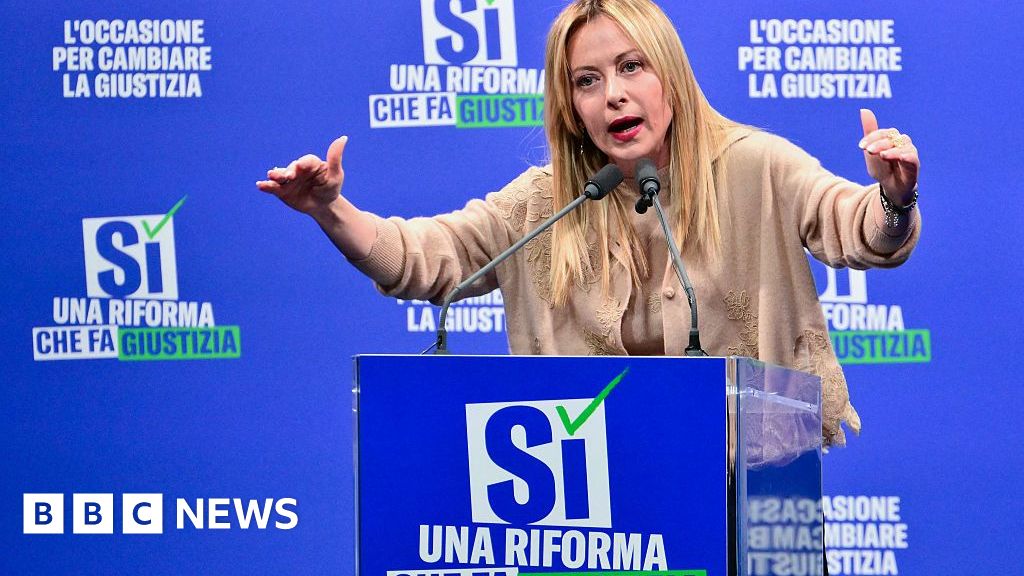
Meloni’s Campaign and Outreach Efforts
Recognizing the technical nature of the reforms and the potential for voter apathy, Prime Minister Meloni has adopted an unusually broad outreach strategy. In the days leading up to the vote, she notably appeared on the popular "Pulp" podcast, hosted by rapper Fedez and personal trainer-turned-podcaster Mr. Marra. Ditching her characteristic formal attire for a more casual woolly jumper, Meloni engaged in an hour-long discussion, aiming to demystify the constitutional changes and rally support among younger, often disengaged, voters.
Her message was clear: the reforms are about improving justice for all Italians, not a political maneuver. She asserted that the opposition’s attempts to frame the referendum as a vote on her leadership were a deflection, born from their inability to critique the substance of the reform itself. Meloni emphatically stated that a "no" vote would not lead to her resignation, but merely perpetuate a "justice system that doesn’t work." This direct appeal sought to decouple the technical aspects of the referendum from her personal popularity, though the two have become inextricably linked in the public discourse.
The Opposition’s Stance: Threats to Democracy?
The "no" campaign, however, views the proposed reforms through a fundamentally different lens. A broad coalition of opposition parties, constitutional scholars, and trade unions has vehemently campaigned against the changes, styling them as a dangerous threat to the delicate balance of powers enshrined in Italy’s post-fascist constitution. Their central concern revolves around the potential for the executive branch to gain undue influence over the judiciary, thereby eroding its independence.

Andrea Malpassi, from the powerful CGIL trade union, articulated this fear at a large demonstration in Rome’s Piazza del Popolo, where thousands gathered under banners reading "Leave the Constitution in Peace." He argued that the 1948 Constitution, forged in the aftermath of fascist dictatorship, deliberately established a robust system of checks and balances to prevent the concentration of power. Any "tinkering" by a right-wing government, particularly one whose leader has historically expressed admiration for figures like Mussolini (albeit in her youth), is viewed with deep suspicion. Malpassi pointed to "a lot of inquiries into what ministers of this government did" in recent years, expressing concern that the reforms could make such scrutiny impossible in the future.
The "no" campaign also highlights the historical context of similar reform proposals. The idea of separating the careers of judges and prosecutors has long been a flagship policy of Silvio Berlusconi’s Forza Italia party, a key partner in Meloni’s coalition. Berlusconi, Italy’s longest-serving post-war prime minister, was famously entangled in numerous legal battles and consistently railed against the judiciary, often portraying it as a politically motivated "communist" bloc intent on undermining his power. For the opposition, the current reforms represent a continuation of this long-standing antagonism towards judicial independence, rather than a genuine effort to improve efficiency.
Furthermore, critics argue that the proposed reforms fail to address the root causes of Italy’s judicial inefficiencies. While the system is indeed known for its chronic overload and some of the longest trial durations in the European Union (civil cases, for instance, can average over 700 days, significantly higher than the EU average), the reforms primarily focus on the structure and governance of magistrates, not on fundamental issues like understaffing, outdated procedures, or insufficient resources. Many legal experts contend that these deeper systemic problems require comprehensive administrative and financial overhauls, not constitutional re-engineering that could compromise judicial autonomy.
Historical Context of Constitutional Reform in Italy
Italy’s Constitution, ratified in 1948, is a foundational document steeped in the principles of anti-fascism and parliamentary democracy. Designed to prevent the resurgence of authoritarianism, it meticulously established a system of checks and balances, with a strong parliament, a ceremonial president, and an independent judiciary. Altering this constitution is, therefore, a matter of profound national significance.

The nation has a fraught history with constitutional referendums. Most notably, in 2016, then-Prime Minister Matteo Renzi staked his political future on a referendum to reduce the powers of the Senate and streamline the legislative process. Despite a vigorous campaign, the "no" vote prevailed, leading to Renzi’s resignation. This precedent looms large over the current vote, reminding observers of the inherent risks when a leader personalizes a constitutional ballot. While Meloni has explicitly stated she will not resign, a defeat would undoubtedly echo Renzi’s experience, albeit with potentially different immediate consequences.
The current reform package has a complex legislative journey. It was initially introduced by the government, underwent rigorous debate and modifications in both chambers of parliament, and ultimately required a popular referendum because it did not achieve the two-thirds majority in parliament necessary for direct enactment. This mandatory referendum clause underscores the profound importance attached to constitutional changes in Italy.
The Judiciary’s Challenges: Perception vs. Reality
There is broad consensus that the Italian justice system faces significant challenges. Reports from the European Commission for the Efficiency of Justice (CEPEJ) consistently highlight Italy’s struggles with case backlog and lengthy proceedings, particularly in civil and administrative justice. This inefficiency is a source of frustration for citizens and businesses alike, often cited as a deterrent to foreign investment.
Proponents of the reform, like constitutional law professor Alessandro Sterpa of Tuscia University, argue that the "close ties between judges and prosecutors" and the influence of political correnti within the judiciary contribute to this inefficiency and a lack of accountability. Sterpa, who does not typically align with Meloni’s politics, sees the proposed separation as a necessary step to address perceived cronyism and improve the system’s overall functioning, asserting that it would not increase government control. He challenges the traditional left-wing narrative that only they can defend the constitution, arguing that some reforms can be "useful for the country."

However, critics argue that attributing delays solely to the organizational structure of the magistracy oversimplifies a multifaceted problem. Factors such as insufficient funding, a shortage of personnel (judges, prosecutors, and administrative staff), complex procedural rules, and an overwhelming caseload are often cited as more direct causes of the system’s slowness. Without addressing these underlying issues, many fear that structural reforms alone will do little to improve efficiency and could instead create new bureaucratic hurdles or, worse, undermine the judiciary’s capacity to act independently against powerful political and economic interests.
Political Stakes for Giorgia Meloni
For Prime Minister Giorgia Meloni, this referendum is far more than a technical vote on judicial reform; it is a crucial political barometer. Having successfully led a stable right-wing coalition for over three years – a remarkable achievement in Italy’s often-volatile political landscape – Meloni prides herself on bringing governmental stability. A victory in the referendum would not only validate her government’s reform agenda but also significantly strengthen her mandate, potentially paving the way for even more ambitious constitutional changes, such as her stated ambition to move Italy towards a semi-presidential system. This would involve directly electing the head of government and significantly enhancing the powers of the prime minister, a move that would fundamentally alter Italy’s parliamentary republic.
Conversely, a defeat would mark her first significant political setback. While Meloni has vowed not to resign, a "no" vote would inevitably weaken her politically, potentially emboldening opposition forces and creating internal tensions within her coalition. Roberto D’Alimonte, a political scientist at Luiss University, noted that Meloni "wants to win. If she loses, there will be an impact and she understands that." He described the race as "touch and go," emphasizing the need for her to mobilize her voters.
The timing of the referendum also adds to its political complexity. With general elections scheduled for 2027, this vote serves as an early test of public sentiment. It also comes amidst a backdrop of global uncertainty, including geopolitical tensions and persistent inflationary pressures, which have fueled public frustration. Opposition parties have capitalized on this broader discontent, urging voters to use the referendum as an opportunity to voice their dissatisfaction with the government’s overall performance, transforming a technical vote into a de facto plebiscite on Meloni’s rule.

Broader Implications for Italy
The outcome of this referendum carries profound implications for Italy’s institutional framework and democratic health. A "yes" vote, while potentially seen as a step towards a more efficient judiciary by its proponents, would represent a significant shift in the post-war constitutional order. It would signal public approval for constitutional changes initiated by a hard-right government, potentially setting a precedent for further reforms that could alter the balance of power.
A "no" vote, on the other hand, would affirm the existing constitutional framework and demonstrate public reluctance to tamper with the foundational principles established after World War II. It would represent a victory for those who prioritize judicial independence and the checks and balances designed to prevent executive overreach. Such an outcome could force Meloni’s government to reassess its reform agenda and potentially adopt a more cautious approach to constitutional amendments.
Ultimately, the referendum is a testament to the ongoing debate within Italy about its identity, its institutions, and its future direction. It forces Italians to weigh the perceived benefits of judicial efficiency against concerns about democratic safeguards and the legacy of their post-fascist constitution. The result will undoubtedly shape the remainder of Giorgia Meloni’s term and influence the trajectory of Italian politics for years to come.

Related Posts

Zambia on Edge: Opposition Leader Arrested Amid Allegations of Insurrection Plot and Election Tensions

Rescuers search for survivors of powerful Indonesia earthquake

