USNORTHCOM Defeats Drone Threat Over Strategic Domestic Installation During Operation Epic Fury
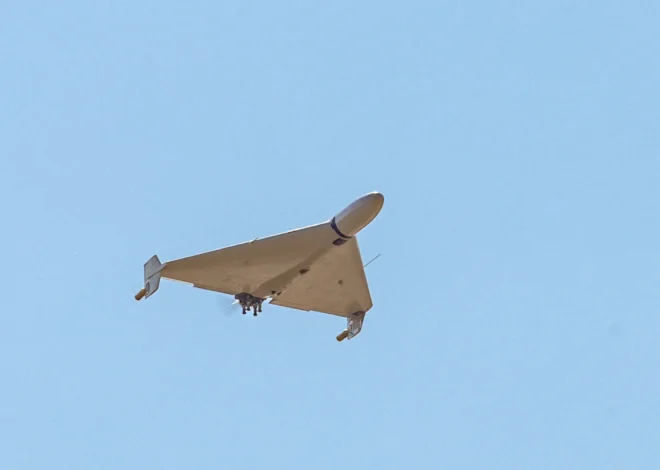
In a significant revelation highlighting the growing vulnerability of domestic military infrastructure, General Gregory Guillot, commander of North American Aerospace Defense Command (NORAD) and U.S. Northern Command (USNORTHCOM), informed the Senate Armed Services Committee that U.S. forces successfully neutralized a drone threat over a strategic installation during the opening stages of a major offensive against Iran. The incident occurred in the early hours of Operation Epic Fury, a joint U.S.-Israeli military campaign, marking a rare instance where overseas hostilities appeared to coincide with tangible, albeit shadowy, threats to the American homeland.
General Guillot’s written testimony, delivered on Thursday, detailed how a specialized counter-unmanned aircraft system (c-UAS) unit, known as a Fly-Away Kit (FAK) team, detected and defeated a small unmanned aircraft system (sUAS) operating in restricted airspace. While the specific location of the "strategic installation" was not disclosed due to security protocols, the timing of the incursion suggests a high-stakes environment where domestic defense systems are being tested in real-time alongside foreign engagements.
The Deployment of the Fly-Away Kit (FAK)
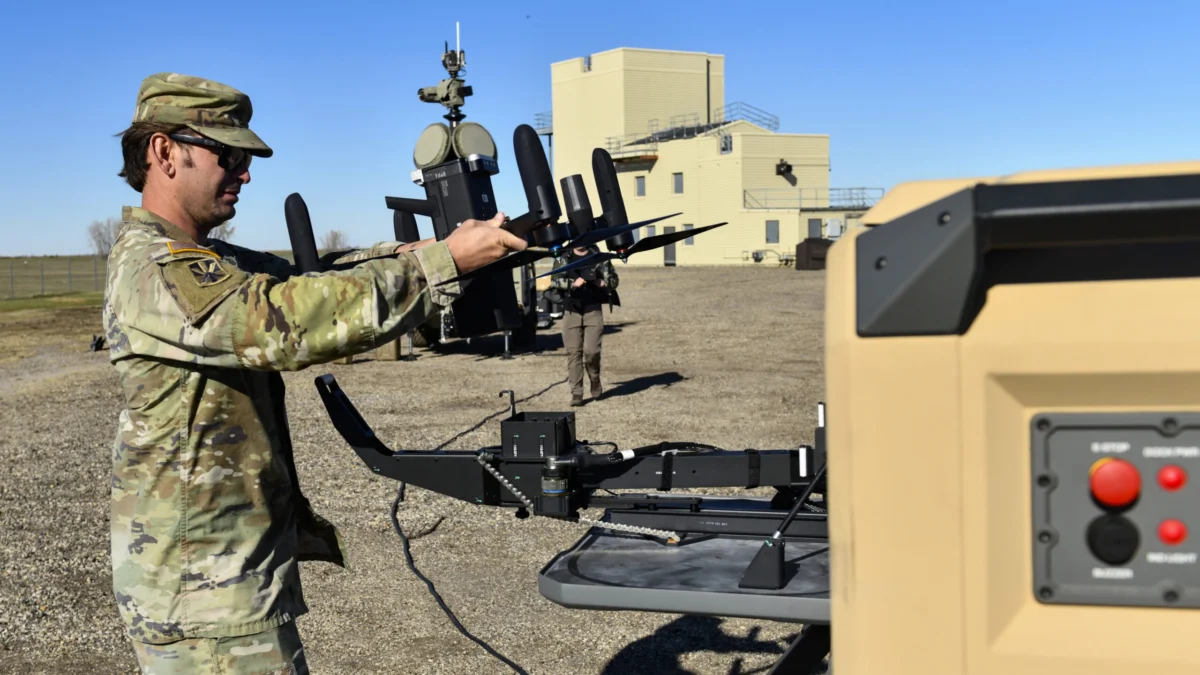
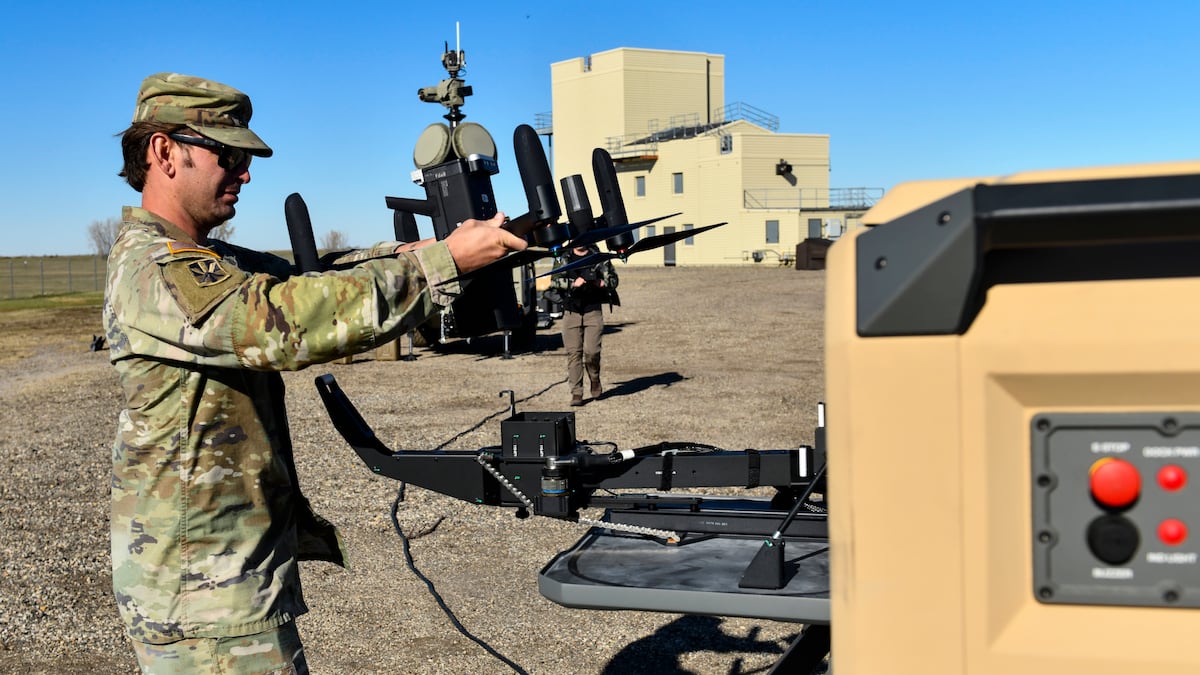
The successful neutralization of the drone was attributed to the newly operational Fly-Away Kit, a rapid-response counter-drone system produced by defense technology firm Anduril. The FAK was specifically engineered to address a critical gap in domestic defense: the ability to identify and mitigate drone incursions at military sites within the United States.
The FAK is not merely a piece of hardware but a comprehensive mobile defense ecosystem. It is operated by a highly trained team of 11 soldiers who were certified for rapid response in November 2025. This unit was established to provide a "plug-and-play" defense capability that can be airlifted or transported to any sensitive site—ranging from nuclear silos to aircraft carrier ports—on short notice.
The architecture of the FAK integrates several cutting-edge technologies:
- Wisp: An artificial intelligence-driven infrared system providing 360-degree motion sensing, capable of spotting heat signatures of even the smallest drones against complex backgrounds.
- Heimdal: A mobile sensor trailer that utilizes high-definition thermal optics and radar to track multiple targets simultaneously across several kilometers.
- Pulsar: An AI-enhanced electromagnetic warfare platform designed to jam control signals or GPS links between a drone and its operator.
- Anvil: The system’s kinetic component, a self-guided "interceptor" drone. Unlike traditional missiles, the Anvil is designed to physically ram into an intruding drone, knocking it out of the sky without the need for explosives, which minimizes the risk of collateral damage on the ground.
Chronology of the Incident and Operation Epic Fury
The drone incursion took place last month, precisely as the United States and Israel launched Operation Epic Fury. This offensive was characterized by high-intensity strikes against Iranian military infrastructure and proxy networks following months of escalating regional tensions.
The timeline provided by USNORTHCOM suggests that the domestic drone threat was detected within hours of the first strikes in the Middle East. This synchronization has led to intense scrutiny by intelligence officials regarding whether the sUAS was part of a coordinated "homefront" harassment campaign by foreign actors or a coincidental breach by a private enthusiast.
According to General Guillot, the FAK team was already in a heightened state of readiness. Upon detection by the Heimdal radar and Wisp infrared sensors, the team identified the sUAS as a non-authorized, potentially hostile platform. Following established rules of engagement for domestic airspace, the team deployed the Anvil interceptor, which successfully neutralized the target.
The Defense Department’s lead counter-drone task force, Joint Interagency Task Force 401 (JIATF-401), confirmed they are monitoring the aftermath of the incident. A spokesperson for JIATF-401 stated that they are working closely with law enforcement and interagency partners to investigate the origin of the drone and the intent of its operator.
Rising Domestic Drone Incursions: Data and Statistics
During the Senate hearing, Senator Eric Schmitt (R-Mo.) questioned General Guillot on the frequency of such incursions. The General’s response painted a sobering picture of a rapidly evolving threat landscape. He revealed that the U.S. has experienced a significant spike in unauthorized drone flights over military installations over the past twelve months.
“Some of that might be due to the fact that we have more detection capability now than we did in the past,” Guillot noted. However, the data indicates that the threat is outpacing traditional security measures. Guillot provided a critical metric for the committee: a year ago, nearly every detected drone incursion went undefeated due to legal restrictions and technological gaps. Today, USNORTHCOM is able to defeat approximately 25% of the drones it detects.
While a 25% defeat rate represents a fourfold improvement, it also highlights a 75% gap where drones either escape or are not engaged. Guillot emphasized that USNORTHCOM is working to close this gap by acquiring more Fly-Away Kits, with additional units expected to be delivered in late spring.
Strategic Coordination and Infrastructure Protection
The protection of "strategic installations" is a multi-command effort. General Guillot testified that he maintains constant communication with U.S. Strategic Command (STRATCOM), which oversees the nation’s nuclear triad. The concern is that sUAS could be used for surveillance of nuclear missile silos, submarine pens, or strategic bomber bases, providing adversaries with intelligence on operational readiness or security vulnerabilities.
The threat posed by sUAS is multifaceted. Beyond simple surveillance, there is the potential for "swarming" attacks, where dozens of low-cost drones overwhelm a base’s defenses, or the use of drones to drop small explosive payloads or electronic jamming equipment.
To combat this, the Department of Defense (DoD) has entered into a tighter partnership with the Federal Aviation Administration (FAA). This interagency cooperation is essential because military installations often exist in or near civilian airspace, where the use of kinetic or electronic warfare measures must be carefully deconflicted with commercial aviation and local communications.
Legal Ramifications and the Zero-Tolerance Policy
In light of the incident during Operation Epic Fury, the DoD and the FAA have reiterated a "zero-tolerance" policy regarding unauthorized drone flights in restricted airspace. This policy is intended to serve as a deterrent to both foreign intelligence services and domestic hobbyists who may not realize the gravity of flying near a military site.
The penalties for violating these restricted zones are severe:
- Civil Penalties: Fines exceeding $100,000 per violation.
- Criminal Charges: Potential prosecution under federal statutes related to national defense and airspace violations.
- Imprisonment: Significant jail time for operators found to be acting with malicious intent or on behalf of a foreign power.
The JIATF-401 spokesperson emphasized that the safety of service members and their families living on bases is the top priority. "We work with our law enforcement and interagency partners to monitor and investigate illicit drone use around military installations and other defense-critical infrastructure," the spokesperson added.
Analysis of Implications
The successful engagement by the Fly-Away Kit marks a turning point in domestic defense strategy. For years, the U.S. military has focused on drone threats in combat zones like Iraq, Syria, and Ukraine. The incident during Operation Epic Fury confirms that the "home game" is now just as relevant as the "away game."
The 25% defeat rate mentioned by General Guillot suggests that while the U.S. is gaining the tools to fight back, the sheer volume of drone traffic—both benign and malicious—makes total air superiority over domestic bases a difficult goal. The reliance on AI-driven systems like those from Anduril indicates that the speed of drone warfare requires automated detection and response, as human operators may not have the reaction time necessary to stop a fast-moving sUAS.
Furthermore, the timing of the incursion suggests a shift in how global conflicts are perceived. If an offensive in the Middle East can trigger or coincide with a security breach at a strategic site in the American heartland, the traditional boundaries of the "front line" have effectively vanished.
As USNORTHCOM prepares to receive more FAK units this spring, the focus will likely shift toward more aggressive detection and a higher volume of kinetic interceptions. The Senate Armed Services Committee’s interest in these developments signals that further funding and legislative support for counter-drone technologies will remain a top priority for the foreseeable future.
The incident over the unnamed strategic installation serves as a stark reminder: in the age of unmanned systems, the distance between a foreign conflict and a domestic threat is shorter than ever before. The deployment of the Fly-Away Kit was a tactical success, but the broader challenge of securing the skies over the United States is only beginning.

Related Posts
Pentagon Forges Landmark Seven-Year Agreements with Boeing and RTX to Accelerate Standard Missile-3 Production and Stabilize Defense Supply Chains
Boeing Unveils Ultra Low-Cost Seeker to Enhance Missile Inventory and Combat Cost Challenges in Modern Warfare