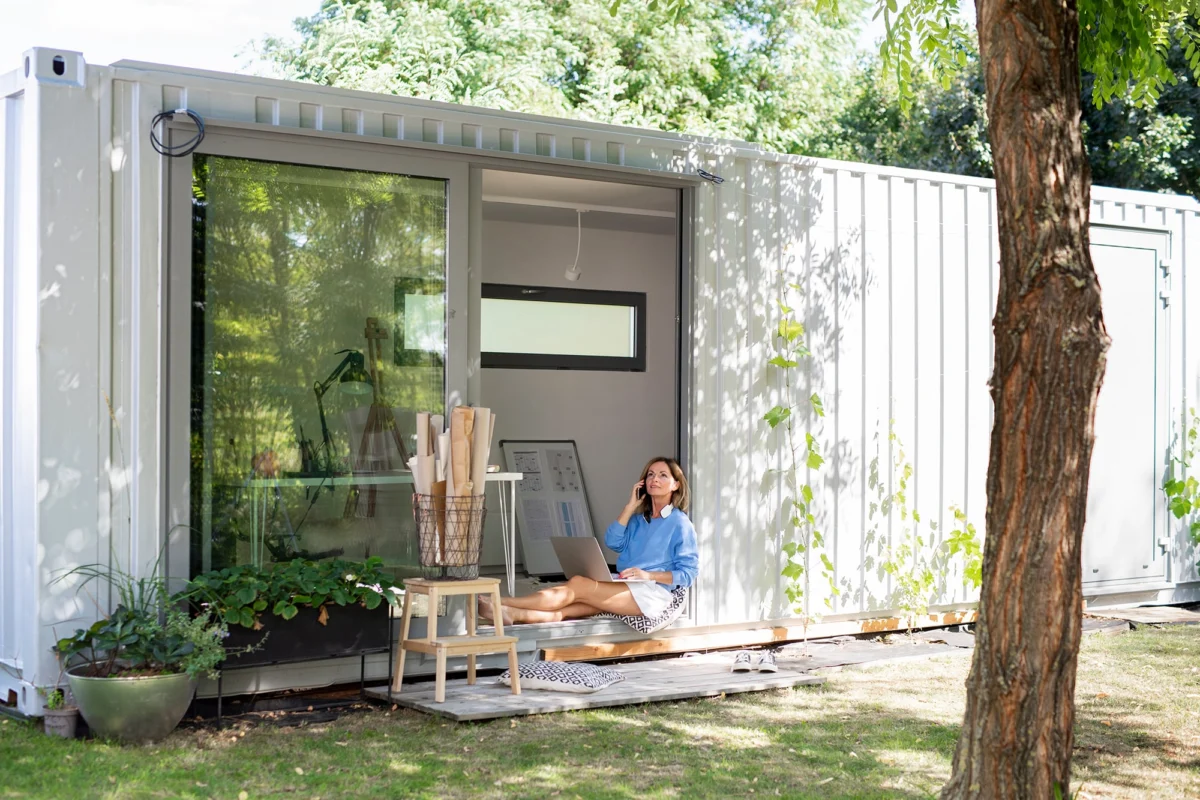
The Rise of Container Homes: Sustainable Housing Meets Innovation in Argentina
In an era increasingly defined by the urgent need for environmental stewardship and the quest for sustainable living solutions, innovative architectural approaches are emerging that artfully blend recycling with practical housing. Among these forward-thinking concepts are "container homes," residences constructed from the sturdy frames of decommissioned or repurposed maritime shipping containers. These structures offer an ecologically conscious alternative for housing, with some options even becoming accessible through online marketplaces like Mercado Libre.
The fundamental principle behind container homes is the ingenious reutilization of steel containers that have completed their primary duty of transporting goods across oceans. Instead of succumbing to obsolescence, these robust metallic shells are being transformed into functional living spaces, providing a novel purpose as homes for individuals and families. This trend aligns with a growing global awareness of circular economy principles, seeking to minimize waste and maximize resource efficiency in all sectors, including construction.
However, the transition from a cargo vessel’s hold to a dwelling is not without its technical considerations and expert opinions. Specialists within the construction industry often highlight that the original design of a shipping container is optimized for durability during transit, not for the nuanced requirements of human habitation. Lucas Salvatore, president of Idero, a prominent firm in the sector, cautions that "it is a metal shell that reflects the sun, where water can enter, accumulating heat, and which is not structurally approved or verified by calculation standards. Therefore, using it as a home is not a good destination." This perspective underscores the critical need for proper engineering and modification to ensure a container home is safe, comfortable, and compliant with living standards.
Despite these reservations, a segment of the industry is actively working to overcome these challenges and ensure container homes meet rigorous building codes. Dice Containers, an Argentine company specializing in container home construction, acknowledges that many such projects may not adhere to urban planning regulations. Nevertheless, they emphasize that responsible manufacturers are committed to respecting these codes. Engineer José A. Vives, owner of Dice Containers, elaborates, "If the container is used as it comes from the port, long and narrow, the minimum interior dimensions are not respected. In our case, we comply with all Argentine municipal regulations, therefore, they are container homes suitable for municipal authorization." This commitment to compliance is crucial for the widespread acceptance and legitimacy of container housing as a viable and safe residential option.
The accessibility of these innovative homes is also being enhanced by their presence on online platforms. Currently, listings on Mercado Libre in Argentina showcase a range of container homes with prices varying significantly based on size and features. Smaller units, such as a 13-square-meter dwelling, can be found for as low as ARS 14,500,000. Larger configurations, extending up to 30 square meters, are priced around ARS 35,000,000. In dollar terms, listings for 15-square-meter homes with a bathroom and kitchen start at approximately US$10,500, while 30-square-meter units can range up to US$25,000. These price points position container homes as a potentially more affordable alternative to traditional housing, especially for first-time buyers or those seeking minimalist living solutions.
Beyond these smaller, more readily available units, Dice Containers offers more expansive options. A standard 90-square-meter container home, featuring five rooms and two bathrooms, is priced at US$65,381. This larger model typically includes features such as interior thermal insulation with fiberglass, embedded electrical installations, and water connections, addressing many of the comfort and utility concerns associated with basic container structures. For those seeking more modest but still comfortable living spaces, a 60-square-meter home with four rooms and one bathroom is available for US$44,463. Even smaller, more compact designs, such as a 30-square-meter unit with two rooms and a bathroom, are priced at US$26,740, and a single-room, 15-square-meter option is offered at US$18,369. These varied offerings cater to a diverse range of needs and budgets, further broadening the appeal of container housing.
A significant advantage of acquiring a container home is the potential for financing. Many manufacturers, including Dice Containers, indicate that these homes are eligible for purchase with financing, such as through credits offered by institutions like the Banco Hipotecario. This financial accessibility can be a crucial factor for many individuals looking to enter the housing market. Furthermore, manufacturers often provide comprehensive services, including the transportation and installation of the container module onto the buyer’s designated land, simplifying the logistical complexities of building a new home.
The Environmental Imperative: A Driving Force for Innovation
The global construction industry is a significant contributor to carbon emissions and resource depletion. Traditional building methods often involve the extraction of raw materials, substantial energy consumption during manufacturing and transport, and considerable waste generation. In this context, the concept of repurposing materials like shipping containers presents a compelling environmental proposition.
Shipping containers, once retired from their maritime duties, represent a vast stock of readily available, structurally sound steel. Globally, millions of containers are in circulation, and a significant number reach the end of their economically viable lifespan for shipping. Instead of being scrapped, which itself requires energy and resources, their transformation into homes diverts them from the waste stream. This process embodies the principles of the circular economy, extending the life cycle of manufactured goods and reducing the demand for virgin materials.
The production of new building materials, such as concrete, steel, and timber, carries a substantial environmental footprint. Concrete production, for instance, is a major source of CO2 emissions. The extraction and processing of steel are energy-intensive. While the modification and insulation of shipping containers do require energy and materials, the embodied energy of the container itself is already invested, making the overall environmental impact potentially lower than constructing a conventional home from scratch.
Addressing the Challenges: From Metal Box to Comfortable Dwelling
The primary challenge in transforming a shipping container into a habitable dwelling lies in overcoming its inherent limitations as a structural element designed for cargo.
Thermal Regulation: Shipping containers are essentially large metal boxes. Metal is an excellent conductor of heat, meaning that in hot climates, they can become incredibly hot, and in cold climates, they can lose heat rapidly. Effective thermal insulation is therefore paramount. This typically involves adding layers of insulation to the interior walls, floors, and ceilings. Materials like fiberglass, mineral wool, or spray foam are commonly used. Proper sealing to prevent air leaks is also critical for maintaining a stable indoor temperature and improving energy efficiency.
Water Ingress and Condensation: The seams and joints of shipping containers, while designed to be robust, can be points of potential water ingress if not properly sealed during modification. Furthermore, changes in temperature can lead to condensation on the interior metal surfaces, which can foster mold growth and compromise the structural integrity over time. Careful attention to waterproofing and vapor barriers is essential during the conversion process.
Structural Integrity and Modifications: While shipping containers are strong, they are designed to bear loads from above and on their corners. Cutting large openings for windows and doors can compromise the structural integrity if not done with proper reinforcement. Engineers and experienced builders must assess the structural load-bearing points and add necessary bracing and framing to ensure the modified container remains safe and stable.
Interior Space and Layout: Standard shipping containers are typically 8 feet (2.44 meters) wide, which can feel cramped for some living spaces. Architects and designers often employ strategies to maximize the perceived space, such as using light colors, clever furniture placement, and open-plan layouts. Combining multiple containers can also create larger, more complex living arrangements, offering greater flexibility in design.
Regulatory Compliance: As highlighted by Dice Containers, ensuring that container homes meet local building codes and zoning regulations is a significant hurdle. Many municipalities have specific requirements regarding structural safety, insulation standards, fire resistance, and habitable space dimensions. Manufacturers who invest in ensuring their container homes comply with these regulations are crucial for their broader acceptance.
The Growing Market and Future Prospects
The market for container homes is experiencing a global upswing, driven by several factors:
- Affordability: In many regions, container homes offer a more budget-friendly entry point into homeownership compared to traditional construction.
- Sustainability: Increasing environmental awareness and a desire for eco-friendly lifestyles are strong motivators for choosing repurposed materials.
- Speed of Construction: The modular nature of containers allows for faster assembly and construction times once the design and modifications are complete.
- Portability and Flexibility: In some applications, container homes can be relocated, offering a degree of flexibility not found in permanent structures.
- Aesthetic Appeal: With creative design and finishing, container homes can achieve a modern, industrial, or even rustic aesthetic that appeals to a growing number of people.
In Argentina, the emergence of companies like Dice Containers and the availability of these homes on platforms like Mercado Libre indicate a burgeoning interest and a developing market. The fact that some of these homes are designed to be eligible for municipal authorization suggests a positive trajectory towards greater integration into the formal housing sector.
The broader implications of this trend extend beyond individual housing solutions. If container homes can be scaled up and become a significant part of the housing stock, they could contribute to:
- Reduced Construction Waste: By diverting a large volume of material from landfills.
- Lower Embodied Carbon: In the housing sector, contributing to climate change mitigation goals.
- Increased Housing Affordability: Providing more accessible housing options in urban and rural areas.
- Innovation in Design: Pushing the boundaries of modular and sustainable architecture.
However, challenges remain. Public perception, regulatory hurdles, and the need for robust quality control across all manufacturers are critical factors for sustained growth. As the technology and expertise in converting containers into homes continue to advance, and as more successful and compliant projects emerge, the container home is likely to become an increasingly prominent and accepted part of the global housing landscape. The story of container homes in Argentina is a microcosm of this larger global movement, demonstrating how ingenuity and a commitment to sustainability can redefine the very notion of home.

Related Posts

The Electric Vehicle Battery Health Debate Emerges as Argentina’s EV Market Accelerates

President Donald Trump Confirms Secret Departure from Turkey Amidst Assassination Threat