Senator John Fetterman Breaks with Democrats on Border Policy, Signals Support for Mullin’s Homeland Security Nomination
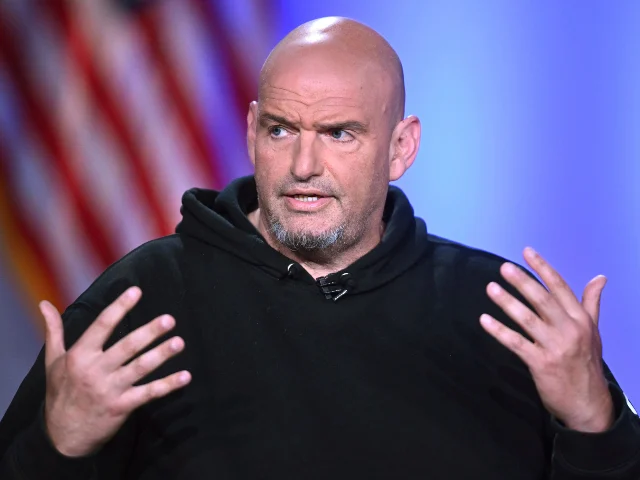
In a significant divergence from the prevailing stance of his Democratic colleagues, Pennsylvania Senator John Fetterman declared on Wednesday that Americans have grown deeply dissatisfied with the Biden administration’s approach to border security, characterized by what he termed "loose borders." The freshman senator further indicated a potential willingness to confirm Senator Markwayne Mullin (R-OK) to a critical homeland security post, citing Mullin’s professionalism and his own concerns about the unsustainable nature of current migration levels. Fetterman’s remarks, delivered during a confirmation hearing, underscore a growing bipartisan unease with the state of U.S. border management and highlight an evolving political landscape within the Democratic Party on immigration issues.
Context of the Homeland Security Nomination and Senator Mullin
The comments from Senator Fetterman came amidst a Senate hearing concerning a prospective nominee for a key role within the Department of Homeland Security (DHS). While the specific post was not explicitly detailed in the original context, such nominations are subject to rigorous scrutiny, particularly given the ongoing challenges at the U.S. southern border. Senator Markwayne Mullin, a Republican from Oklahoma, has served in both the House of Representatives and the Senate, building a reputation as a conservative voice. His potential appointment to a homeland security position would place him at the forefront of national efforts to manage border security, immigration enforcement, and counter-terrorism, among other critical functions. Fetterman’s public acknowledgement of Mullin’s "consistent kindness and professionalism" suggests a willingness to evaluate the nominee on merit and temperament, rather than strictly along party lines, a rare move in today’s polarized political environment. The statement "I’m going to remain with an open mind throughout all this [hearing]" further solidified this non-partisan approach.
Fetterman’s Critique of Biden Administration Border Policies
Senator Fetterman minced no words in expressing his alarm over the scale of border encounters during the Biden presidency. "Americans don’t like chaos," Fetterman asserted, directly linking public sentiment to the administration’s border policies. He specifically highlighted the staggering figures of monthly encounters: "America definitely didn’t like the kinds of chaos during the Biden administration at the border. As a Democrat, I was alarmed that there were up to 300,000 encounters at our border once a month… That’s not sustainable, and that’s not manageable, and it’s making it impossible for us to assimilate [migrants]." This figure, while representing peak months, illustrates the magnitude of the challenge that has strained resources, overwhelmed border communities, and fueled intense political debate. The senator’s use of "chaos" suggests a perception of uncontrolled entry rather than managed processes, a critique often voiced by Republicans and increasingly by centrist Democrats.
Statistical Overview of Border Encounters and Enforcement
Fetterman’s reference to "up to 300,000 encounters at our border once a month" reflects periods of unprecedented migratory flows. For instance, U.S. Customs and Border Protection (CBP) data shows that December 2023 recorded over 302,000 migrant encounters along the U.S.-Mexico border, an all-time high for a single month. This surge followed a consistent upward trend since the early days of the Biden administration, often eclipsing previous records set during the Trump years. While border encounters naturally fluctuate due to seasonal patterns, geopolitical events, and policy changes, the sustained high numbers have presented significant operational and humanitarian challenges. In contrast, the Trump administration, particularly towards its later years, saw lower encounter numbers, partly due to stricter enforcement policies like the "Remain in Mexico" policy and the use of Title 42 public health orders, which allowed for rapid expulsions. The sheer volume of arrivals has led to overcrowded processing facilities, extensive backlogs in asylum claims, and a visible strain on federal, state, and local resources across the border regions and beyond.
Rationale Behind Senator Fetterman’s Stance
Explaining his departure from traditional Democratic party lines on immigration, Fetterman emphasized national security and the practicalities of assimilation. "I refuse to punish and make our nation less secure," he stated, framing his position as a pragmatic necessity for the well-being of the country. He articulated a core belief that an uncontrolled border undermines the very promise of the American Dream for those seeking it legitimately. "If you care about immigration, as I deeply do, you can’t possibly provide the American Dream for people when [a population] the size of Pittsburgh [is] showing up at our border once a month. That needs to be brought under control." This analogy powerfully conveys the scale of the challenge to his constituents in Pennsylvania, equating monthly arrivals to the entire population of a major American city.
Fetterman also drew a sharp distinction between humanitarian concerns and criminal elements. He reiterated a fundamental principle that he believes should transcend partisan divides: "I signed up as a Democrat [for] rounding up all of the criminals and deporting them. I can’t imagine why we can’t all agree with that as well, too." This statement reflects a traditional law-and-order aspect of immigration enforcement that has often been de-emphasized by some progressive wings of the Democratic Party, but which resonates strongly with a broad spectrum of American voters.
Legislative Actions and Public Sentiment: The Laken Riley Case
The senator’s remarks also touched upon tragic instances that have galvanized public opinion and spurred legislative action. Fetterman explicitly mentioned grieving for "Renee Good, and… Alex Pretti," but most notably for "Laken Riley and her family." Laken Riley, a 22-year-old nursing student, was murdered in Georgia in February 2024, allegedly by an undocumented immigrant who had previously been arrested and released. Her death became a potent symbol in the national debate over border security and the consequences of perceived lax enforcement.
Fetterman proudly stated, "I was proud to be the sponsor of the Laken Riley bill, because we have to address that." He was referring to the "Laken Riley Act," a bill passed by the House of Representatives that would require federal authorities to detain non-citizens charged with theft or burglary. While not directly sponsoring the House bill, Fetterman’s vocal support for the legislation and its underlying principle demonstrates his commitment to addressing the perceived failures in immigration enforcement that allow individuals accused of crimes to remain in the country. He underscored his core policy tenets: "Two things [should] be true here. We [should] have a secure border, and we [should] round up and deport every single criminal in our nation. I can’t imagine why that’s… controversial for anybody." This direct challenge to potential critics highlights his belief that these are common-sense measures necessary for public safety and national sovereignty.
Comparison to Prior Administrations and Enforcement Philosophies
Fetterman’s assertion that border management "happened [under Donald Trump]" provides a direct comparison to the previous administration. During Trump’s presidency, policies such as the construction of a border wall, increased deportations, and the "Remain in Mexico" policy (Migrant Protection Protocols) were implemented with the explicit goal of deterring illegal immigration. While these policies faced significant criticism from human rights groups and Democrats, they did correlate with periods of reduced border encounters compared to the peaks seen under Biden. Fetterman’s acknowledgment of this suggests a pragmatic recognition of past successes in controlling border flows, regardless of the political party in power. His statement reflects a desire for effective control, irrespective of the political optics that often surround immigration policy.
Political Reactions and Implications
Senator Fetterman’s pronouncements are likely to elicit a complex array of reactions across the political spectrum.
- Republicans: Many Republicans, particularly border security hawks, are likely to welcome Fetterman’s statements as a validation of their long-held critiques of the Biden administration’s policies. They may praise him for his "common sense" approach and willingness to break with his party, potentially viewing him as a potential bipartisan ally on immigration reform. His support for Mullin, if it materializes, would be a significant win for Republicans in a confirmation process.
- Centrist and Moderate Democrats: Some moderate Democrats, particularly those facing tough re-election campaigns in swing states or districts, might quietly appreciate Fetterman’s candor. His willingness to articulate concerns about border chaos could provide political cover for others who privately share similar views but are hesitant to publicly challenge the party’s progressive wing.
- Progressive Democrats and Immigration Advocates: Fetterman’s statements are likely to draw criticism from the progressive wing of the Democratic Party and immigrant advocacy groups. They may view his comments as a betrayal of Democratic values, arguing that a focus on enforcement and deportation overlooks the humanitarian aspects of migration and the root causes driving people to the border. They might also challenge his characterization of "chaos" and argue against a return to Trump-era policies.
- The White House: The Biden administration is unlikely to directly criticize Fetterman but may subtly reaffirm its commitment to a "fair, orderly, and humane" immigration system, emphasizing efforts to address root causes of migration while also enhancing border security. They might point to ongoing negotiations for bipartisan border legislation as evidence of their efforts.
- Public Opinion: Fetterman’s stance could resonate with a significant portion of the American public, including many independents and even some Democrats, who express concern about the situation at the border. Polls consistently show that border security is a top concern for voters, and Fetterman’s directness may be seen as refreshing by those tired of perceived political rhetoric.
Broader Impact on Immigration Debate and Fetterman’s Evolving Identity
Senator Fetterman’s willingness to challenge his party on a contentious issue like immigration further solidifies his image as a political maverick. Since arriving in the Senate, he has frequently taken positions that deviate from the progressive mainstream of the Democratic Party, particularly on issues of Israel, crime, and now, immigration. This independent streak could position him as a unique voice in the Senate, capable of bridging divides or, conversely, alienating factions within his own party.
His comments also have broader implications for the national immigration debate. By a prominent Democrat acknowledging the severity of the border situation and advocating for stricter enforcement and deportation of criminals, it could potentially shift the Overton window, making it more acceptable for other Democrats to articulate similar concerns. This could pave the way for more bipartisan discussions on comprehensive immigration reform, though significant ideological hurdles remain. The emphasis on deporting criminals, in particular, is a point of potential consensus that Fetterman is actively pushing to highlight. His frustration with the lack of bipartisan agreement on what he perceives as fundamental security measures — "I don’t understand why you would shut the entire agency down just because you want those kinds of reforms on ICE that have absolutely no impact on ICE," he stated, referring to disputes over the Immigrant and Customs Enforcement agency — underscores a desire for practical solutions over partisan gridlock.
Ultimately, Fetterman’s statements signal a potential recalibration within the Democratic Party on immigration policy, driven by public dissatisfaction and the undeniable realities at the border. His support for a Republican nominee like Senator Mullin, coupled with his strong rhetoric on enforcement, marks a notable moment in the ongoing national conversation about how the United States manages its borders and its identity as a nation of immigrants. The long-term impact of his stance on both his political career and the future of U.S. immigration policy remains to be seen, but it undoubtedly adds a compelling new dimension to a deeply complex issue.

Related Posts
Democratic Candidates Must Moderate to Win General Elections, Says Rep. Greg Stanton
Lisa Demuth Secures Republican Gubernatorial Nomination in Minnesota, Defeating Trump-Endorsed Mike Lindell