Venice Transforms into a Global Art Hub as the 61st Venice Biennale Opens
Venice, Italy – The floating city of Venice undergoes a profound metamorphosis during the months of the Venice Biennale, transforming its famed piazzas into vibrant gathering places for art enthusiasts from across the globe. The canals, usually animated by the melodic calls of gondoliers, pulsate with an even greater energy, a testament to the influx of international visitors drawn by one of the world’s most prestigious art events. Since its inception in 1895, the Venice Biennale has cemented its status as a premier international exhibition, alternating annually between art and architecture, and serving as a critical barometer for emerging global trends.
This year marks the 61st edition of the Venice Biennale, a significant milestone for the quinquennial event. Titled "In Minor Keys," the exhibition is curated by Koyo Kouoh, a respected figure in the international art world. The Biennale officially opens its doors to the public on May 9th and will continue to captivate visitors until November 22nd. Given the consistent and overwhelming attendance of previous editions – with the 2024 edition attracting approximately 699,304 visitors and the 2022 iteration reaching a record of over 800,000 attendees – this year’s event is anticipated to draw hundreds of thousands of art patrons, collectors, critics, and artists, further solidifying Venice’s position as a global cultural capital.
The Biennale’s enduring prestige stems from its unparalleled ability to anticipate and define contemporary art trends. It serves as a crucial platform for dialogue and exchange, showcasing the diverse artistic expressions of over 75 participating nations. These national contributions are presented through distinct pavilions, strategically located within the historic Giardini della Biennale and the expansive Arsenale complex, two iconic venues that imbue the exhibition with a unique historical and architectural resonance.
A Deep Dive into "In Minor Keys" and its Curatorial Vision
Curator Koyo Kouoh’s selection of the theme "In Minor Keys" suggests a deliberate exploration of nuanced, perhaps overlooked, or introspective artistic perspectives. While the official Biennale catalog and accompanying press releases are expected to provide a more detailed exegesis of Kouoh’s thematic framework, the title itself hints at a departure from overt grandiosity, potentially focusing on the subtleties, complexities, and quieter narratives that often underpin powerful artistic statements. Kouoh, known for her expansive curatorial practice and her commitment to foregrounding diverse voices, is poised to offer a perspective that resonates with the contemporary global landscape, characterized by its intricate social and political undercurrents. Her previous work, including her tenure as Artistic Director of RAW Material Company in Dakar, Senegal, has consistently demonstrated a keen eye for artists who engage with pressing issues through innovative and thought-provoking means. The selection of "In Minor Keys" could therefore signal a focus on works that address themes of marginalization, resilience, memory, and the subjective experience of navigating a complex world, offering a counterpoint to dominant narratives.
Historical Context and Evolution of the Venice Biennale
The Venice Biennale’s origins trace back to 1895, conceived as a celebration of Italian national art and a means to foster artistic innovation. However, it quickly evolved into an international platform, attracting artists and pavilions from across Europe and beyond. Over its more than a century of existence, the Biennale has mirrored the seismic shifts in the art world and global society. It has been a stage for the rise of avant-garde movements, a forum for political discourse, and a crucible for emerging artistic technologies and mediums.
The alternating focus on art and architecture, with the International Art Exhibition held in odd-numbered years and the International Architecture Exhibition in even-numbered years, allows for a concentrated examination of each discipline. This structure ensures that each Biennale offers a distinct yet complementary experience, contributing to the overall richness and depth of Venice’s cultural calendar. The Biennale’s historical trajectory is marked by key moments, including its expansion into the Arsenale in the mid-20th century, the establishment of numerous national pavilions, and the increasing emphasis on thematic exhibitions curated by renowned international figures. Each edition represents a new chapter in this ongoing narrative, reflecting the evolving concerns and aspirations of the global artistic community.
Beyond the Pavilions: Unveiling Venice’s Intimate Charms
While the Biennale officially occupies the Giardini and the Arsenale, its influence permeates the entire city, transforming it into a dynamic canvas for artistic expression and a magnet for global travelers. For those planning a visit during this extraordinary period, it is crucial to recognize that Venice offers a wealth of experiences extending far beyond the official exhibition venues. The city’s true essence lies in its hidden corners, its intimate spaces, and its lived history, elements that contribute to its unique and enduring allure.
The Peggy Guggenheim Collection: A Modern Art Sanctuary
Nestled on the Grand Canal at the Palazzo Venier dei Leoni, the Peggy Guggenheim Collection stands as one of Italy’s most significant museums dedicated to modern art. Once the opulent residence of Peggy Guggenheim, an influential American art collector and a pivotal patron of the 20th century, the palazzo was transformed into a vibrant hub for artistic luminaries such as Jackson Pollock, Max Ernst, and Alexander Calder. This intimate setting provides an unparalleled context for appreciating the collection, which offers a remarkable journey through the major avant-garde movements of the 20th century, including Cubism, Surrealism, and Abstract Expressionism.
The museum’s layout, designed for intimate viewing, allows visitors to engage with the art in a luminous and personal way. The sculpture garden, a tranquil oasis overlooking the Grand Canal, further enhances the contemplative experience, inviting visitors to pause and absorb the beauty of both the art and its surroundings. A particularly compelling aspect of the Guggenheim Collection is the way in which the artworks interact with each other, a testament to Guggenheim’s discerning eye and her deep personal connections with the artists. Her travels were often motivated by a desire to be at the heart of artistic creation, fostering close relationships with many of the artists whose work she championed.
Among the collection’s most iconic pieces are Jackson Pollock’s "Alchemy" (c. 1947), René Magritte’s "L’Empire des lumières" (c. 1953–54), and Pablo Picasso’s "La Baignade" (c. 1937). These masterpieces, displayed within the very walls where they were once admired by their creators, offer a profound connection to the genesis of modern art. The museum’s commitment to preserving and presenting this legacy ensures its continued relevance as a cornerstone of Venice’s cultural landscape.
The Borges Labyrinth: A Poetic Tribute on San Giorgio Maggiore
Across the lagoon, on the serene island of San Giorgio Maggiore, lies one of Venice’s most poetic and less-trafficked treasures: the Borges Labyrinth. Much like the intricate narratives of its namesake, the celebrated Argentine writer Jorge Luis Borges, this garden labyrinth encapsulates encrypted symbols and philosophical depths.
Designed in 1979 by Randoll Coate, a British diplomat and renowned labyrinth architect, the garden was conceived from a dream and serves as a poignant homage to Borges. Officially inaugurated on June 14, 2011, marking the 25th anniversary of Borges’s passing, the labyrinth is a collaborative initiative between the Fondazione Giorgio Cini and the International Jorge Luis Borges Foundation. It is situated within the historic grounds of the Monastery of San Giorgio Maggiore, a site that has undergone extensive restoration by the Fondazione Giorgio Cini since 1950.
Today, the monastic buildings have been revitalized to house one of Italy’s most significant cultural centers. These facilities are home to specialized art history libraries, research institutes, and versatile spaces dedicated to exhibitions, concerts, and conferences. The Borges Labyrinth, therefore, is not merely a garden feature but an integral part of a larger intellectual and cultural ecosystem, inviting visitors to engage with themes of literature, philosophy, and spatial exploration. The experience of navigating the labyrinth offers a unique opportunity for introspection, mirroring the intellectual journeys that characterized Borges’s own literary output.
Punta della Dogana: Contemporary Art with Breathtaking Vistas
Punta della Dogana, a striking triangular spit of land that separates the Grand Canal from the Giudecca Canal and opens onto the Basin of San Marco, is home to a dynamic contemporary art space. This historically significant location, also featuring the iconic Basilica di Santa Maria della Salute, now houses the exhibition space for the Pinault Collection. Characterized by a youthful and energetic ambiance, Punta della Dogana is activated through a vibrant program of events. Visitors are advised to consult the venue’s schedule to potentially experience its lively programming, which can include exclusive parties and immersive art installations.
Beyond its artistic offerings, Punta della Dogana provides some of the most spectacular panoramic views of Venice. It is an ideal vantage point for witnessing the sunset away from the usual tourist throngs, offering a unique perspective of the Doge’s Palace and St. Mark’s Square. As the city is bathed in rosy hues and the water reflects the magnificent architecture, the scene transforms into a living painting, a moment of serene beauty that encapsulates the magic of Venice. The juxtaposition of contemporary art within such a historically charged and visually stunning setting creates a powerful dialogue between past and present, art and environment.
Chiesa dei Gesuiti: A Baroque Masterpiece
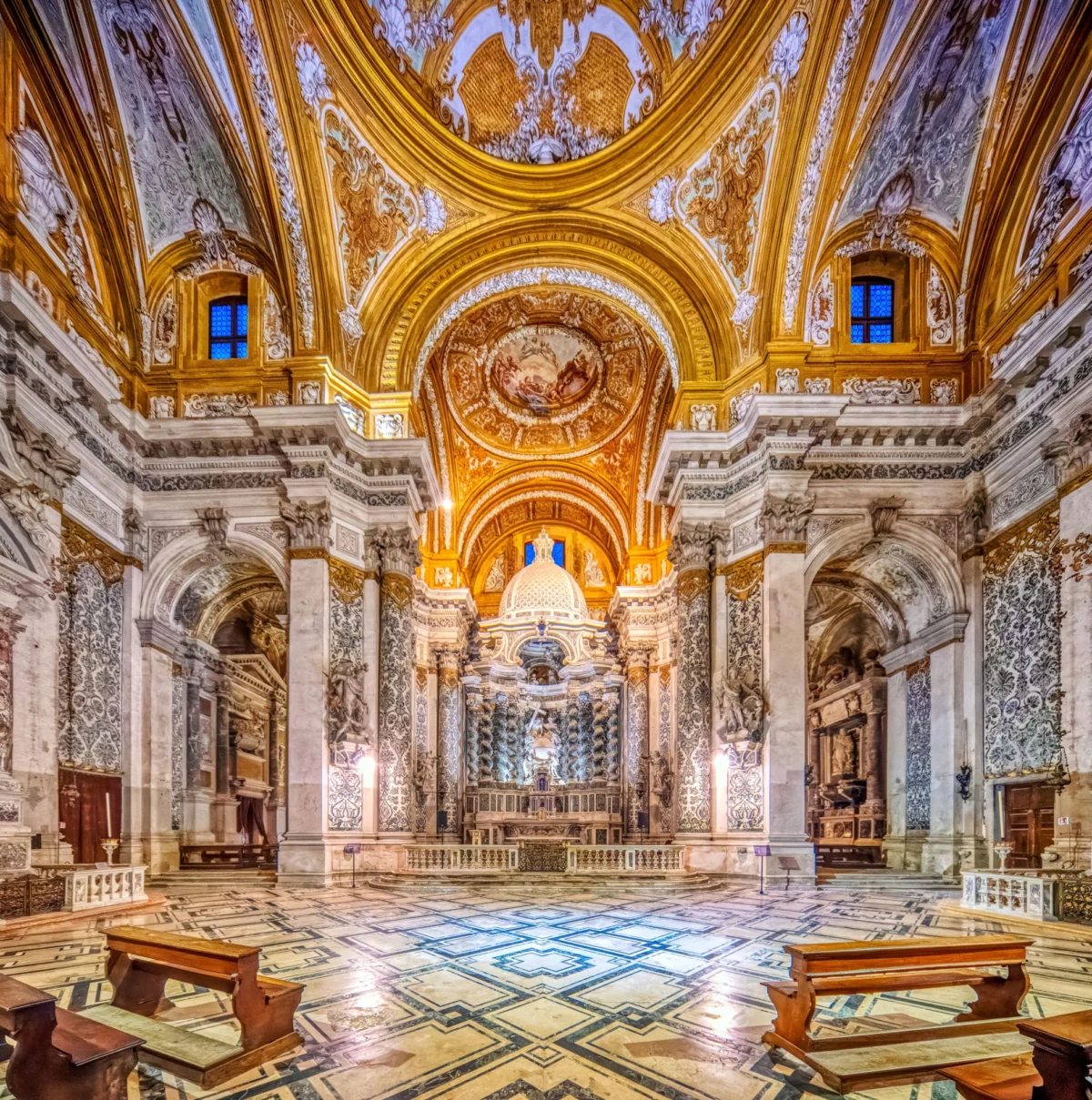
Situated in a quieter district near Fondamenta Nuove, the Chiesa dei Gesuiti (Church of the Gesù) stands as a sublime example of Venetian Baroque architecture. The original church on this site, built in 1148 by the Cruciferi order, was later sold to the Jesuit order. Following several fires, the Jesuits decided in 1715 to demolish the existing structure and erect a grander temple.
The present church was constructed in the early 18th century, largely through the patronage of the Manin family, and was consecrated in 1728. Domenico Rossi, the architect, oversaw the project, orchestrating a collaboration of artists and artisans. The church is renowned for its opulent interior decoration, adorned with rich marbles, intricate sculptures, and masterful paintings, enveloping visitors in a theatrical and profoundly spiritual experience.
For art aficionados, the Chiesa dei Gesuiti houses significant works by Venetian masters, including Titian’s "The Martyrdom of Saint Lawrence" (c. 1548) and Tintoretto’s "Assumption of the Virgin" (c. 1555). These seminal pieces, displayed within the grandeur of the Baroque architecture, offer a compelling testament to the artistic achievements of the period and the enduring religious devotion that has shaped Venice for centuries. The church’s magnificent facade, clad in Istrian stone, and its lavish interior, particularly the striking green marble pavement, contribute to its status as a jewel of Venetian Baroque art.
Fornace Orsoni: Preserving the Art of Mosaic Craftsmanship
Venice is inextricably linked to a unique artisanal tradition: the production of materials for mosaics. From the mosaics adorning St. Mark’s Basilica in Venice to those found in Gaudí’s Sagrada Familia in Barcelona and even the Golden Buddha in Singha Buri, Thailand, countless monuments owe their splendor to this ancestral savoir-faire.
Founded in 1888 by Angelo Orsoni, Fornace Orsoni has diligently preserved the secrets of this craft for over a century, passing them down through generations. Within its furnaces, enamels, gold leaf, and an infinite spectrum of colors are meticulously created by hand, employing a process that can be described as almost alchemical, adhering to the traditional methods of master glassmakers.
These chromatic treasures are housed in the celebrated "Biblioteca del Colore" (Library of Color), a living library containing thousands of hues cataloged like books. This extraordinary collection serves as a tangible testament to the profound dialogue between art, material, and the passage of time. The Orsoni family’s dedication to maintaining this ancient craft ensures that the vibrant legacy of Venetian mosaic artistry continues to flourish, contributing to the beauty and preservation of cultural heritage sites worldwide. The meticulous process involves smelting raw materials at high temperatures, followed by the laborious task of shaping and cooling the molten glass into tesserae, each imbued with unique character and color.
The Enduring Grandeur of Venice: Beyond the Monumental
Venice reveals its profound beauty not only in its iconic landmarks but also in its more intimate expressions. It manifests within the hidden gardens of its palazzi, in workshops where color is born from fire, in churches that safeguard centuries of devotion and artistry, and at the water’s edge where the setting sun seems to halt time. Experiencing Venice in this manner allows for a deeper understanding of its true grandeur, which lies not solely in its monumental scale but in the delicate interplay of history, art, and the rhythm of daily life. The city’s resilience, its ability to adapt and thrive despite its unique environmental challenges, adds another layer to its profound allure. The Biennale, while a temporary spectacle, amplifies this intrinsic spirit, drawing the world’s attention to a city that has consistently redefined beauty and cultural significance throughout history.
By Alexandra van Peborgh

Related Posts

Argentina’s Captain Lionel Messi to Forego National Team Celebrations for Club Commitments

Chaos Erupts at Obelisco: Celebrations for World Cup Final Descend into Violent Clashes with Police