Human Rights Watch Warns of Critical Shortfalls in FIFA World Cup 2026 Host City Protections for Players and Fans
Human Rights Watch has issued a stark warning to the Fédération Internationale de Football Association (FIFA) and its designated host city committees, asserting that significant gaps remain in the protection of players, fans, and workers as the 2026 FIFA Men’s World Cup approaches. With the tournament approximately two months away, the international human rights organization revealed that nearly all host city committees have failed to implement or even present the mandatory action plans required to mitigate risks to vulnerable populations. According to the report, the current trajectory suggests a tournament that could be marred by exclusion, fear, and systemic rights violations, particularly concerning immigrants, the LGBT community, and members of the media.
Despite the 2026 World Cup being the first in history to include explicit human rights bidding requirements, the implementation phase has been characterized by delays and a lack of transparency. Of the 16 host cities across the United States, Canada, and Mexico, only four—Atlanta, Dallas, Houston, and Vancouver—have published the required Human Rights Action Plans. The remaining 12 cities, including major hubs like New York/New Jersey, Los Angeles, Mexico City, and Miami, have failed to release their strategies for public or stakeholder review, despite the expiration of an extended deadline on August 29, 2025.
A Legacy of Unmet Mandates and Extended Deadlines
The path toward the 2026 World Cup was intended to signal a new era for FIFA, following years of international criticism regarding labor abuses and human rights violations during previous tournaments. The 2026 event was established with a comprehensive Human Rights Framework, designed to ensure that host cities developed tailored action plans in consultation with local governments, non-governmental organizations, and community groups. This framework was meant to address the specific needs of migrant workers, refugees, asylum seekers, and marginalized social groups.
The chronology of these commitments reveals a pattern of administrative procrastination. The host cities were originally announced four years ago, and the mandatory Human Rights Framework was officially published in June 2024. Host committees were initially given a deadline of March 2025 to submit their localized plans. When it became clear that the majority of cities would not meet this requirement, the deadline was pushed back to late August 2025. Despite this five-month extension, the vast majority of committees have remained silent, leaving human rights advocates and local stakeholders in the dark regarding safety protocols and legal protections.
Jennifer Li, the coordinator of Dignity2026 and director of the Center for Community Health Innovation at Georgetown Law, characterized the situation as "reckless." Li noted that the failure to publish these plans reflects a lack of investment and experience by both the host committees and FIFA. The sentiment among local community groups is that the World Cup is an event happening "to them" rather than "with them," highlighting a disconnect between the high-level promises made by FIFA and the reality on the ground.
Immigration Enforcement and the "ICE Truce" Proposal
One of the most pressing concerns identified by Human Rights Watch involves the escalation of immigration enforcement in the United States. Data analyzed from the Deportation Data Project indicates that between January 20, 2025, and March 10, 2026, U.S. Immigration and Customs Enforcement (ICE) conducted at least 167,000 arrests in and around the 11 U.S. cities scheduled to host matches. This period coincides with what advocates describe as an abusive campaign of enforcement that has resulted in widespread human rights violations.
The risks are not merely theoretical. During the FIFA Club World Cup final in 2025, an incident occurred where ICE detained a fan who had initially been arrested for a minor civil offense. This event has heightened fears that the 2026 World Cup could serve as a venue for aggressive immigration sweeps, targeting both international visitors and local residents.
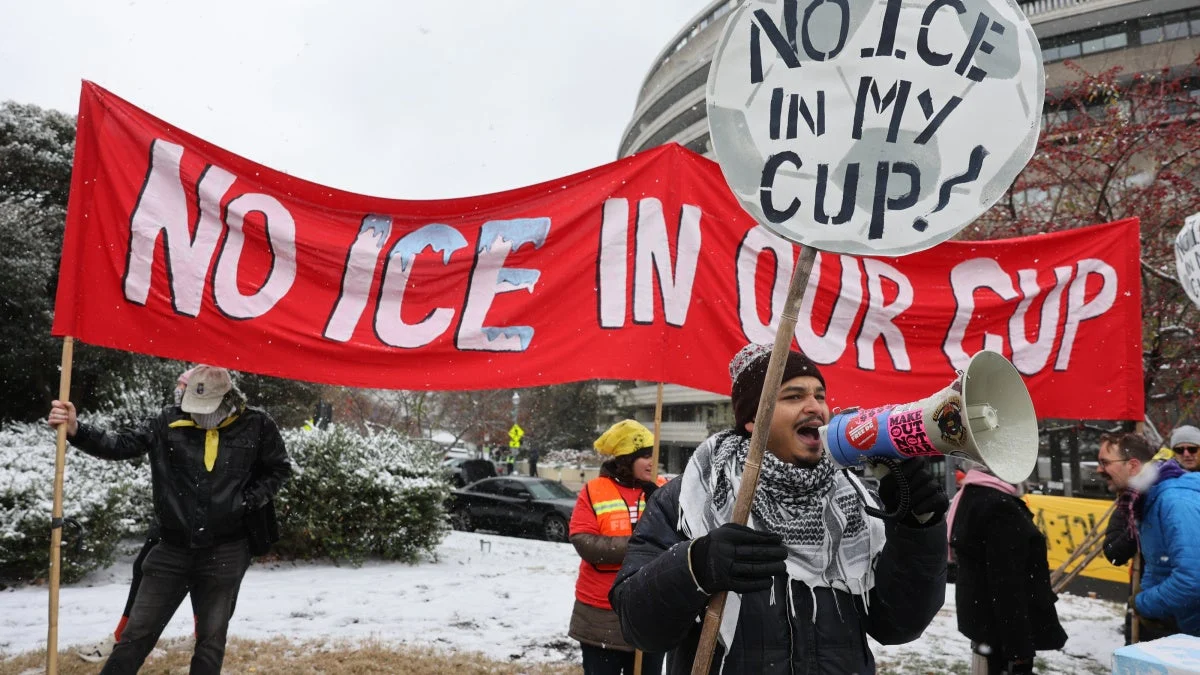
In response, Human Rights Watch has called for an "ICE Truce" during the duration of the games to ensure that fans and workers can participate without fear of detention or deportation. The organization wrote to FIFA President Gianni Infantino on January 13, 2026, seeking clarification on the steps the governing body would take to address ICE activities at World Cup events. As of the current reporting, FIFA has not provided a written response.
The risk is particularly acute in cities like Houston and Dallas, where local law enforcement agencies have signed 287(g) agreements. These agreements effectively deputize local police to enforce federal immigration laws. Since January 2025, ICE has recorded 22,388 arrests in Dallas and 26,483 in Houston. While both cities have published action plans that mention the creation of "Worker Support Hubs" to address grievances, these documents fail to explicitly address the specific legal risks faced by undocumented fans and workers.
Discrimination and the Struggle for LGBTQ+ Visibility
The tournament’s timing and social climate present additional challenges for the LGBTQ+ community. The first half of the World Cup is scheduled to take place in June, which coincides with Pride Month. While this provides an opportunity for global visibility, it also increases the potential for targeted harassment and discrimination in regions with histories of homophobia.
Human Rights Watch pointed out that FIFA’s recent actions have been contradictory. In 2025, the organization canceled planned anti-bias and anti-discrimination messaging at U.S. Club World Cup venues without providing an explanation. This retreat from public advocacy has raised questions about FIFA’s willingness to stand by its own human rights statutes.
The published action plans offer a mixed bag of commitments. The Atlanta plan includes promises for community events developed in partnership with local LGBTQ+ organizations. Conversely, the plans released by Dallas and Houston contain no specific references to LGBT people or the protections afforded to them. Advocates argue that without explicit protections, the tournament risks fostering an environment of exclusion, particularly in jurisdictions where local legislation may be hostile to gender and sexual minorities.
Threats to Media Freedom and Freedom of Expression
The safety of journalists and the right to freedom of expression are also under scrutiny. Human Rights Watch has documented instances of excessive force used by U.S. law enforcement against protesters and observers. In Los Angeles—a host city that has yet to release its human rights plan—officers were documented using tear gas, pepper balls, and flash-bang grenades against journalists and observers during protests against immigration raids in June 2025.
Despite these documented risks, the published plans from Houston and Dallas contain no mention of protections for the media. On April 6, 2026, Human Rights Watch wrote to FIFA requesting specific details on how the organization intends to protect journalists covering the tournament. The lack of a formal response or a detailed public strategy has led to concerns that the media may face physical danger or censorship while attempting to report on the social and political dimensions of the event.
Implications for the Future of Global Sporting Events
The ongoing friction between FIFA’s human rights mandates and the host cities’ lack of compliance carries significant implications for the future of international sports. If the world’s largest sporting event proceeds without these fundamental protections, it may set a dangerous precedent for future tournaments, suggesting that human rights requirements are merely "window dressing" rather than enforceable standards.
Minky Worden, director of global initiatives at Human Rights Watch, criticized FIFA for its silence following the awarding of the "FIFA Peace Prize" to Donald Trump in December. Worden argued that while FIFA expects host cities to deliver action plans, the organization itself has failed to take public action to uphold the full spectrum of human rights it claims to support.
The host city committee in Miami has come under specific fire. As the city where FIFA maintains its North American operations, the committee’s failure to release a plan for stakeholder input has been described by Yareliz Mendez-Zamora of the American Friends Service Committee Florida as a "clear own goal." The irony of the governing body’s own base of operations failing to meet its standards has not been lost on critics.
Conclusion and Necessary Actions
With only weeks remaining before the opening ceremonies, the window for meaningful intervention is closing. Human Rights Watch and other stakeholder groups are urging FIFA to take immediate and concrete steps. These include:
- Mandatory Publication: FIFA must compel all remaining host cities to publish their Human Rights Action Plans immediately to allow for public scrutiny and community feedback.
- Enforcement Mechanisms: FIFA should clarify that a city’s failure to adhere to human rights standards will negatively impact its eligibility to host future FIFA-sanctioned events.
- Immigration Protections: FIFA must engage in high-level negotiations with the U.S. government to secure guarantees that immigration enforcement will not target tournament participants or attendees.
- Transparent Reporting: The governing body must establish a transparent and accessible grievance mechanism for players, fans, and workers to report rights violations in real-time during the tournament.
The 2026 World Cup represents a pivotal moment for FIFA. It is an opportunity to prove that the "Human Rights Framework" is a functional tool for social progress rather than a bureaucratic formality. However, without immediate action from both FIFA and the host city committees, the tournament risks being remembered more for its failures in human dignity than for its achievements on the pitch.

Related Posts
Human Rights Watch Calls for Investigation into Death of Detainee Following Removal from Najaf Hospital by Iraqi Drug Police
Human Rights Watch Urges UN Security Council to Extend Lebanon Peacekeeping Mission Amid Escalating Conflict and Humanitarian Crisis