US President Donald Trump and his allies want to weaken the IMO’s Net-Zero Framework, but Pacific island countries say they have compromised enough
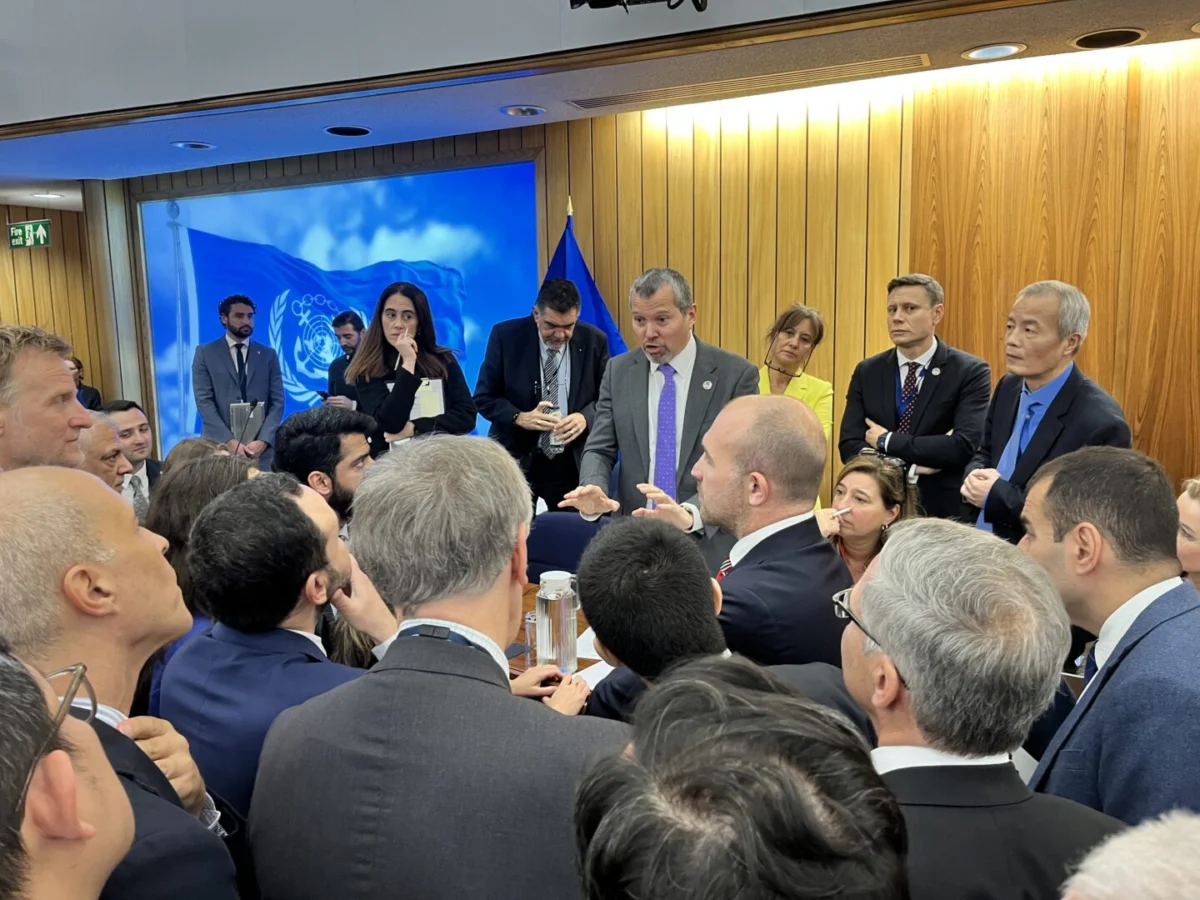
The International Maritime Organization (IMO) has become the latest arena for a high-stakes geopolitical confrontation as the administration of US President Donald Trump moves to dismantle or significantly dilute the global shipping industry’s decarbonization roadmap. At the center of this dispute is the IMO’s Net-Zero Framework, a landmark agreement intended to steer the maritime sector toward carbon neutrality by mid-century. While the US delegation and its allies argue that the current mandates impose an untenable economic burden on global trade and American industry, a coalition of Pacific island nations has issued a stern rebuff, declaring that their willingness to compromise has reached its absolute limit.

This diplomatic friction comes at a critical juncture for the maritime industry, which is responsible for approximately 3% of global greenhouse gas emissions—a figure that would rank it as the world’s sixth-largest emitter if it were a country. The conflict in London reflects a broader shift in American foreign policy under the second Trump term, characterized by a withdrawal from international climate commitments and a renewed focus on "energy dominance" and deregulation. For the Pacific island states, however, the technicalities of shipping regulations are secondary to the existential threat posed by rising sea levels, which they argue are accelerated by any delay in maritime decarbonization.
The Genesis of the IMO Net-Zero Framework
The current framework under fire was largely solidified during the 2023 Marine Environment Protection Committee (MEPC) sessions. It established a "Revised Greenhouse Gas Strategy" that committed the global shipping fleet to reaching net-zero emissions "by or around, i.e., close to 2050." The strategy also included "indicative checkpoints" of reducing total annual GHG emissions from international shipping by at least 20%, striving for 30%, by 2030, and at least 70%, striving for 80%, by 2040, compared to 2008 levels.

To achieve these targets, the IMO has been debating two primary "mid-term measures": a technical element, consisting of a global fuel standard that mandates a gradual reduction in the carbon intensity of marine fuels, and an economic element, likely taking the form of a maritime carbon levy or a cap-and-trade system.
The Pacific island nations, led by the Marshall Islands, Solomon Islands, and Vanuatu, were instrumental in pushing for these targets. Initially, these nations advocated for a 2040 net-zero deadline and a carbon price of at least $150 per tonne of CO2 equivalent. Their acceptance of the 2050 timeline was, in their view, a massive concession intended to maintain global consensus.

The Trump Administration’s Revisionist Agenda
Since returning to office, President Trump has signaled a radical departure from the previous administration’s support for the IMO’s green transition. Allies of the administration, including influential trade groups and conservative think tanks, have characterized the proposed carbon levy as a "global tax on American commerce." The US delegation has recently proposed a significant "re-evaluation" of the 2030 and 2040 checkpoints, arguing that the technology for zero-emission shipping—such as green ammonia, hydrogen, and large-scale battery storage—is not yet commercially viable at the scale required.
The American position emphasizes that aggressive decarbonization mandates will lead to a spike in freight rates, contributing to global inflation and disadvantaging US exporters. "The priority of this administration is the economic security of the American worker and the competitiveness of our ports," a senior US official stated in a briefing leading up to the February 2026 meetings. "We will not be bound by theoretical frameworks that punish traditional energy sectors and increase the cost of every imported good."

This shift has found support among a handful of other nations concerned about the costs of the transition, creating a bloc that seeks to pivot the IMO’s focus back toward "efficiency gains" rather than a total transition away from fossil fuels.
The Pacific Standpoint: "Survival is Not Negotiable"
For the Pacific island nations, the US-led effort to weaken the framework is viewed as a betrayal of the 2023 consensus. These nations, often referred to as the "6-Island" group within the IMO, argue that they are already paying the highest price for climate change through coastal erosion, saltwater intrusion into freshwater lenses, and increasingly frequent extreme weather events.

"We have already compromised our safety by agreeing to a 2050 target when the science demanded 2040," said a spokesperson for the Marshall Islands delegation. "To move the goalposts again is to sign a death warrant for our islands. The Net-Zero Framework is the floor, not the ceiling. We cannot and will not entertain any proposal that slows down the transition to zero-emission fuels."
The Pacific nations are also adamant that the proposed carbon levy is essential for a "just and equitable transition." They propose that a significant portion of the revenue generated from such a levy—estimated to be between $40 billion and $60 billion annually—be directed toward climate adaptation in vulnerable countries and the development of green bunkering infrastructure in the Global South. Without this funding, they argue, the shipping industry will remain a contributor to global inequality.

Chronology of the Maritime Climate Conflict
The road to the current stalemate has been marked by several key milestones:
- April 2018: The IMO adopts its first initial GHG strategy, aiming for a 50% reduction in emissions by 2050.
- July 2023: MEPC 80 adopts the Revised GHG Strategy, setting the goal of net-zero by 2050 with 2030 and 2040 checkpoints.
- January 2025: Following the US presidential inauguration, the State Department begins a review of all international environmental treaties and regulatory frameworks.
- September 2025: The US formally introduces a paper at the IMO questioning the feasibility of the 2030 "indicative checkpoints," citing supply chain disruptions and the slow rollout of alternative fuel infrastructure.
- February 2026: High-level negotiations in London see the US and its allies clash directly with the Pacific islands and the European Union over the legal bindingness of the 2040 targets.
Supporting Data and Economic Context
The technical challenges of the transition are substantial. Currently, over 95% of the global fleet runs on heavy fuel oil or marine gas oil. While the order book for dual-fuel vessels (capable of running on LNG, methanol, or ammonia) is growing, it still represents a fraction of the 100,000+ commercial vessels currently in operation.

According to a 2025 report from the International Energy Agency (IEA), achieving the IMO’s 2030 checkpoint would require the maritime sector to use at least 5% to 10% near-zero emission fuels. However, as of early 2026, the production of "green" versions of these fuels remains expensive—often two to three times the price of conventional fuels.
The US delegation has used these figures to argue for a "technology-neutral" approach that includes carbon capture on ships and continued use of transitional fuels like LNG. Conversely, the Pacific islands and the EU point to the "Maersk effect"—where major carriers have successfully launched green methanol-powered ships—as proof that the industry can lead if the regulatory signals are strong enough.

Official Responses and Global Reactions
The European Union has largely sided with the Pacific island nations, though with a more moderate tone. The EU has already integrated shipping into its Emissions Trading System (ETS), and officials in Brussels have warned that if the IMO framework is weakened, the EU will simply expand its own regional regulations to cover all voyages arriving at or departing from European ports. This raises the specter of a fragmented regulatory landscape, which the shipping industry desperately wants to avoid.
China, meanwhile, has maintained a nuanced position. As a global leader in both shipbuilding and nuclear energy (recently pledging to triple its nuclear capacity), China sees an opportunity to export green ship technology. However, it remains wary of a high carbon levy that could impact its massive export economy.

Environmental NGOs have been vocal in their criticism of the US position. "The Trump administration is attempting to take a sledgehammer to years of delicate diplomacy," said a representative from the Clean Shipping Coalition. "This isn’t just about ships; it’s about whether the international community can still function as a venue for solving global crises."
Broader Implications and Future Outlook
The outcome of the current IMO sessions will have profound implications for the global energy transition. If the US succeeds in weakening the Net-Zero Framework, it could lead to:

- Regulatory Fragmentation: As seen with the EU’s ETS, other regions like China or California may implement their own maritime carbon prices, creating a "patchwork" of rules that increases administrative costs for shipping lines.
- Investment Uncertainty: Shipowners and fuel producers require long-term regulatory certainty to invest the trillions of dollars needed for new vessels and bunkering infrastructure. A rollback of targets could freeze these investments, locking in fossil fuel dependency for another generation of ships.
- A Crisis of Multilateralism: If the IMO cannot hold its members to the 2023 agreement, it may undermine the authority of the UN-affiliated body, leading more nations to pursue bilateral or regional "green shipping corridors" instead of global solutions.
As the negotiations continue, the Pacific island nations have made it clear that they are no longer in the business of making concessions. For them, the IMO framework is not a set of aspirational goals to be traded away for political expediency, but a survival strategy. The world now watches to see if the weight of the US presidency can shift the course of global maritime law, or if the moral and existential clarity of the smallest nations on Earth will hold the line.

Related Posts
Constitutional Court of South Africa Bars Shell Oil Exploration in Landmark Victory for Environmental and Community Rights

The Battle for Saldanha Bay: South Africa’s Ambitious Ocean Economy Strategy Faces Legal and Environmental Reckoning