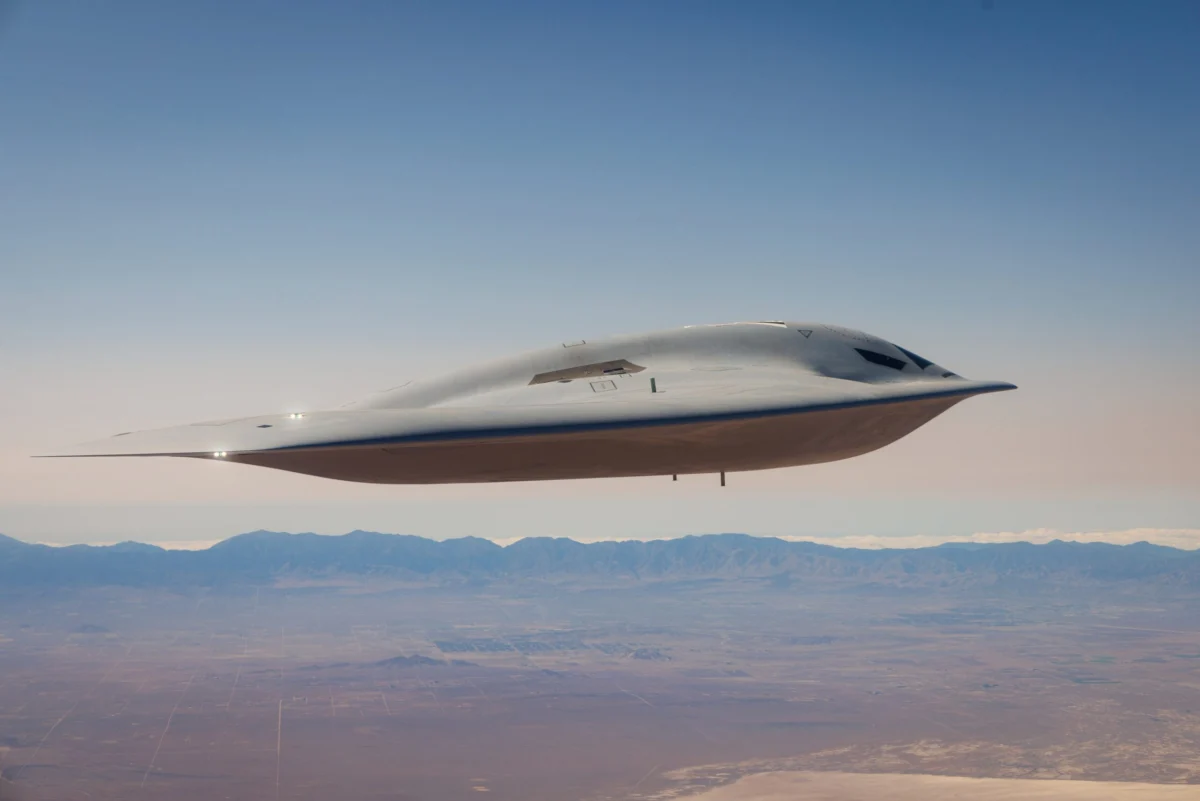
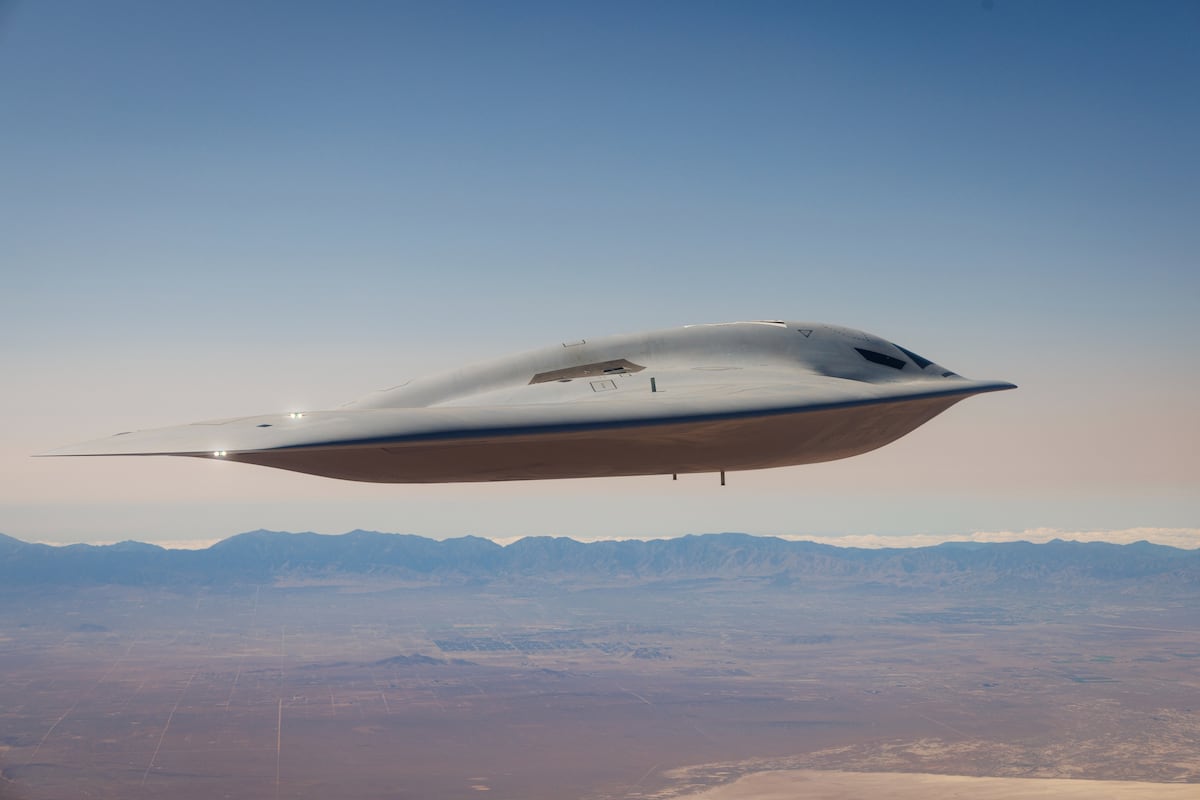
US Air Force B-21 Raider Conducts Critical Close Proximity Flight Testing with KC-135 Tanker in Mojave Desert
The U.S. Air Force has confirmed that a B-21 Raider flight test aircraft conducted a "close-proximity flight" with a KC-135 Stratotanker on Tuesday as part of the bomber’s ongoing and intensive test campaign. This milestone, observed by aviation enthusiasts and confirmed by military officials, took place over the Mojave Desert near Edwards Air Force Base, California. The mission, which lasted approximately 5.5 hours according to flight tracking data and ground-based spotter reports, represents a vital precursor step toward validating the aerial refueling capabilities essential for the B-21’s intended role as a long-range, penetrating strike platform capable of reaching targets anywhere across the globe.
While the Air Force’s official statement stopped short of confirming a physical fuel transfer or a "wet" hookup, the event marks a significant progression in the Raider’s flight envelope expansion. Publicly available imagery captured by photographers near the base showed the sleek, stealthy silhouette of the flying-wing bomber positioned directly behind the KC-135 in a standard pre-contact formation. In the world of flight testing, such "dry" proximity trials are used to evaluate the aerodynamic interactions between two aircraft, specifically how the tanker’s wake turbulence affects the receiver aircraft’s stability and how the receiver’s flight control systems respond in a high-stakes, close-quarters environment.
The Significance of Close-Proximity Testing
The B-21 Raider is designed to be the backbone of the United States’ future strategic bomber fleet. Central to its mission is the ability to operate at extreme ranges, often bypassing forward-deployed bases that might be vulnerable to enemy long-range precision fires. To achieve this, aerial refueling is not merely a convenience but a mission-critical requirement.
The recent test event near Edwards Air Force Base serves several technical purposes. First, it allows test pilots and engineers to assess the B-21’s handling qualities while flying in the "low-pressure" zone created by a larger aircraft like the KC-135. For a stealth aircraft with a unique flying-wing design, maintaining stability during these maneuvers is complex. The B-21 relies heavily on advanced fly-by-wire software to maintain its flight profile; ensuring this software can compensate for the turbulent air trailing a tanker is a prerequisite for safe refueling operations.
"We can confirm that a B-21 Raider completed a test event involving a close-proximity flight with a KC-135 Stratotanker," an Air Force spokesperson stated. "This flight is part of the ongoing, rigorous test campaign to validate the B-21’s capabilities and operational readiness. To maintain enhanced security measures, we will not provide further details on specific test points. The B-21 program remains on track to deliver a survivable, long-range, penetrating strike capability to the U.S. Air Force."
A Chronology of the B-21 Raider’s Development
The B-21 Raider program, managed by the Air Force Rapid Capabilities Office, has been noted for its adherence to schedule and budget, a rarity in modern high-tech defense procurement. The program’s progress has been steady since its inception under the Long Range Strike Bomber (LRS-B) initiative.
- October 2015: The Department of Defense awarded the contract for the LRS-B to Northrop Grumman, beating out a joint bid from Boeing and Lockheed Martin.
- December 2022: The B-21 was officially unveiled to the public at Northrop Grumman’s Plant 42 in Palmdale, California. This was the first public reveal of a new U.S. bomber in over 30 years.
- November 2023: The first B-21 test aircraft, known as "Cerberus," took to the skies for its maiden flight, transitioning from Palmdale to Edwards Air Force Base to begin formal flight testing.
- January 2024: The Department of Defense authorized the start of Low-Rate Initial Production (LRIP), signaling confidence in the aircraft’s design and initial test results.
- September 2025: A second B-21 Raider was delivered to Edwards Air Force Base. This second airframe is dedicated to expanding the test fleet’s capacity, focusing on mission systems, sensor integration, and weapon carriage trials.
- Late 2025 (Present): The commencement of aerial refueling proximity testing marks the transition from basic airworthiness to operational capability validation.
The arrival of the second aircraft in September 2025 was a pivotal moment for the 412th Test Wing at Edwards. Having two aircraft available allows the Air Force to conduct parallel testing tracks, reducing the risk of delays if one aircraft requires maintenance or specific modifications.
Technical Specifications and the Digital Bomber Concept
The B-21 is frequently referred to as the world’s first "sixth-generation" aircraft. While much of its technical data remains classified, several key aspects of its design philosophy are well-known. It is built using "digital twin" technology, where every component is modeled in a virtual environment before being physically manufactured. This approach has allowed engineers to identify and correct potential flaws in the design phase, significantly speeding up the flight test program.
The aircraft features an open systems architecture, which is intended to make future upgrades simpler and more cost-effective. Unlike previous generations of aircraft that required extensive hardware overhauls for new capabilities, the B-21 can be updated with new software or modular hardware components to counter emerging threats. This is particularly important as the U.S. looks toward a future dominated by advanced integrated air defense systems (IADS) and electronic warfare.
In terms of stealth, the B-21 represents a generational leap over the B-2 Spirit. It utilizes new radar-absorbent materials and a refined flying-wing shape that is optimized for "all-aspect" stealth. This means the aircraft is designed to be difficult to detect not just from the front, but from the sides and rear as well, allowing it to penetrate deep into contested airspace.
The Role of the KC-135 and Future Tanker Integration
The use of the KC-135 Stratotanker in this test is noteworthy. Despite the introduction of the newer KC-46A Pegasus, the KC-135 remains the workhorse of the Air Force’s refueling fleet. Validating that the B-21 can safely refuel from the KC-135 ensures that the bomber can be supported by the widest possible range of existing infrastructure.
Future testing is expected to include the KC-46A, which features a remote vision system for boom operators. Ensuring the B-21’s stealth coatings and unique geometry do not interfere with the tanker’s sensors or the boom operator’s visual cues is a critical part of the integration process.
Aerial refueling is the "force multiplier" that enables the U.S. military’s global reach. For the B-21, which is expected to fly missions lasting dozens of hours starting from the continental United States (CONUS), the ability to take on fuel mid-air is the difference between a regional deterrent and a global strike platform. In a Pacific theater scenario, where distances between landmasses are vast, the B-21’s endurance will be tested to its limits.
Strategic Context and Global Deterrence
The B-21 Raider is a central pillar of the U.S. nuclear triad’s modernization. As the B-1B Lancer and B-2 Spirit move toward eventual retirement, the Air Force plans to acquire a minimum of 100 Raiders. These aircraft will be tasked with both conventional and nuclear missions, providing a visible and flexible deterrent against peer competitors.
Analysts suggest that the B-21 is specifically designed to counter the "Anti-Access/Area Denial" (A2/AD) strategies employed by adversaries. By combining long range, high payload, and advanced stealth, the B-21 can strike high-value targets—such as mobile missile launchers, command and control nodes, and air defense batteries—while remaining largely invisible to enemy sensors.
The successful progression of flight tests, including this proximity flight, sends a clear signal to international observers. It demonstrates that the program is maturing and that the Air Force is moving closer to operationalizing a capability that currently has no direct equivalent in the world.
Economic and Industrial Impact
The B-21 program is also a massive industrial undertaking, involving a nationwide supply chain. Northrop Grumman serves as the prime contractor, but thousands of suppliers across 40 states contribute to the aircraft’s production. This distributed manufacturing model is intended to ensure the program’s resilience and garner broad political support.
The Air Force has maintained a projected average procurement unit cost of approximately $692 million (in 2022 dollars) per aircraft. By keeping the design focused on "affordable stealth" and utilizing proven manufacturing techniques, the Department of Defense aims to avoid the astronomical cost overruns that plagued previous stealth programs.
Future Milestones: Ellsworth and Beyond
The next few years will be critical for the Raider. Following the conclusion of flight testing at Edwards, the first operational aircraft are slated to arrive at Ellsworth Air Force Base in South Dakota in 2027. Ellsworth was selected as the first Main Operating Base and formal training unit for the B-21 due to its existing infrastructure and strategic location.
Whiteman Air Force Base in Missouri and Dyess Air Force Base in Texas are also designated as future homes for the Raider fleet. As these bases prepare for the new arrival, they will undergo significant construction to build specialized hangars and maintenance facilities designed to protect the aircraft’s sensitive stealth skin.
The Air Force expects to reach Initial Operational Capability (IOC) by the late 2020s. Until then, the test fleet at Edwards—currently consisting of the two flying aircraft and several others in various stages of production—will continue to push the boundaries of the B-21’s performance.
The "close-proximity" flight with the KC-135 may seem like a small step in a decades-long program, but in the context of strategic warfare, it is a giant leap. It confirms that the B-21 is moving out of the "experimental" phase and toward becoming a functional tool of national power. As the test campaign continues, the aviation world will be watching closely for the first confirmed "wet" refueling, an event that will officially unlock the B-21’s ability to strike any target, anywhere, at any time.

Related Posts
Pentagon Forges Landmark Seven-Year Agreements with Boeing and RTX to Accelerate Standard Missile-3 Production and Stabilize Defense Supply Chains
Boeing Unveils Ultra Low-Cost Seeker to Enhance Missile Inventory and Combat Cost Challenges in Modern Warfare