Trump Says He Doesn’t Want Wars: ‘Want Wars Less’ Than Most
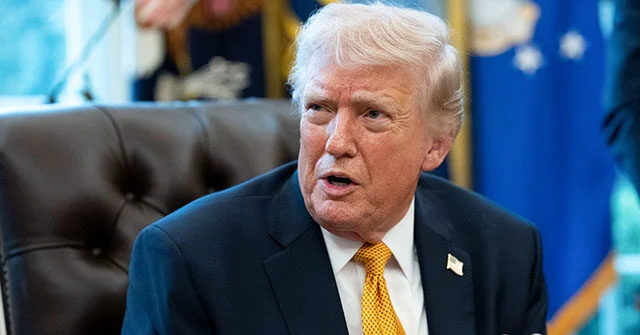
President Donald Trump has reiterated his strong disinclination for military conflict, stating unequivocally that he desires "wars less than almost anybody." However, this assertion was coupled with a sharp condemnation of Iran’s leadership, whom he characterized as "violent vicious people." The President’s remarks come amidst a period of heightened geopolitical tension in the Middle East, marked by recent military engagements involving the United States, Israel, and Iran. Concurrently, Vice President JD Vance addressed questions regarding the administration’s posture, emphasizing unity on the critical issue of preventing Iran from acquiring nuclear weapons, a stance he affirmed has been consistent since 2015.
The President’s statements were delivered during a public appearance where he signed an Executive Order focused on combating fraud. When questioned about the ongoing situation with Iran, President Trump elaborated on his long-held views regarding the nation’s leadership and the profound threat he perceives from their potential acquisition of nuclear capabilities. This complex messaging—advocating for peace while simultaneously issuing strong warnings—underscores the intricate diplomatic and security challenges facing the administration.
The President’s Stance on Conflict and Iranian Leadership
President Trump’s declaration, "I don’t want wars. I want wars less than almost anybody, peace through strength," encapsulates a foreign policy philosophy he has frequently articulated. This doctrine suggests that a robust military and decisive posture are the best deterrents against conflict, aiming to achieve peace through a position of formidable strength rather than direct engagement. Yet, his rhetoric quickly pivoted to an intense criticism of Iran’s governing figures.
He stated, "I’ve watched Iran for a long time, I’ve called them out 20 years ago when I was a civilian that liked watching the world. And, they’re violent vicious people – the leadership, violent vicious people." This long-standing perception, according to the President, informs his administration’s approach to Tehran. He further escalated his accusations by claiming that Iran’s leadership had "killed 32,000 protesters over the last three weeks," a significant and grave allegation that, if independently verified, would represent a severe human rights crisis. Such claims, often made in the context of political unrest within Iran, highlight the administration’s narrative of a repressive regime.
The most critical aspect of President Trump’s warning centered on Iran’s potential to develop nuclear weapons. He asserted, "If you believe that Iran should have a nuclear weapon, there’s something wrong with you. Because they would use it within… the only question is, within one hour after they get it or one day. They will use it, and they will blow up the entire Middle East, not just Israel. They’ll start with Israel." This dire prediction underscores a core tenet of the administration’s foreign policy: an absolute opposition to Iranian nuclear armament, viewing it as an existential threat to regional stability and American interests.
Vice President Vance Navigates Queries on Military Engagement
During the same event, Vice President JD Vance faced direct questioning from a reporter who asked if he was "completely on board with the current war in Iran." Vance’s response was carefully calibrated, reflecting the administration’s desire for a unified front while navigating sensitive terminology regarding military actions. He characterized the reporter’s inquiry as an attempt to "drive a wedge between members of the administration," thereby sidestepping a direct affirmation of a "current war" and instead refocusing on policy consensus.
Vance clarified his position by stating his agreement with President Trump’s "consistently" held views, dating back to 2015, regarding Iran’s nuclear ambitions. "I agree with things Trump has said consistently – going back to 2015 – about how Iran should not have a nuclear weapon," Vance affirmed. This statement not only highlights the continuity of the administration’s policy but also serves to underscore the perceived long-term threat posed by Iran’s nuclear program, transcending immediate military engagements.
The Vice President concluded by expressing his unwavering confidence in President Trump’s leadership: "I trust Trump to get the job done, to do a good job for the American people, and to make sure the mistakes of the past aren’t repeated." This endorsement reinforces the idea of a cohesive executive branch working towards a shared strategic objective in the region. The "mistakes of the past" implicitly refer to previous diplomatic approaches or agreements, such as the Joint Comprehensive Plan of Action (JCPOA), which the Trump administration exited in 2018, deeming it insufficient to prevent Iran from developing nuclear weapons and curtailing its malign regional activities.
Escalating Tensions: A Chronology of Recent Military Actions
The dialogue from President Trump and Vice President Vance occurs against a backdrop of intensifying military activity and rhetoric in the Middle East. The long-standing animosity between the United States and Iran, exacerbated by Tehran’s nuclear program and its support for various proxy groups across the region, has seen periods of both overt conflict and covert operations. The current escalation marks a particularly volatile phase.
Just prior to these statements, the United States and Israel had launched joint strikes against Iran. President Trump publicly announced these operations, stating their explicit purpose was to destroy "Iran’s stockpiles of missiles." This coordinated military action signifies a direct challenge to Iran’s military capabilities, particularly its extensive ballistic missile program, which is viewed by the US and its allies as a significant threat to regional security. Such strikes are often justified as pre-emptive or defensive measures aimed at degrading an adversary’s ability to project power or threaten vital interests.
In a swift and direct response, Iran launched retaliatory strikes against several neighboring countries in the Middle East. These targets reportedly included Bahrain, the United Arab Emirates (UAE), Qatar, Kuwait, and Jordan. Specific reports indicated strikes on a U.S. Navy base in Bahrain and residential buildings in the targeted nations. This pattern of tit-for-tat military actions underscores the volatile nature of the current conflict, where each strike carries the risk of further escalation and broader regional destabilization. The targeting of U.S. allied nations and military assets signals Iran’s willingness to directly challenge American influence and interests in the Persian Gulf.
The Nuclear Question: A Persistent Concern
The specter of Iran acquiring nuclear weapons has been a central point of contention in international relations for decades. President Trump’s stark warning that Iran would use a nuclear weapon "within one hour… or one day" if it possessed one, commencing with an attack on Israel before engulfing the entire Middle East, reflects the gravest fears of many policymakers in Washington and Jerusalem. This concern is rooted in Iran’s revolutionary ideology, its past nuclear activities, and its perceived aggressive regional posture.
The international community, through bodies like the International Atomic Energy Agency (IAEA), has long sought to monitor and restrict Iran’s nuclear program. The 2015 JCPOA, an agreement between Iran and the P5+1 (China, France, Germany, Russia, the United Kingdom, and the United States), aimed to prevent Iran from developing nuclear weapons in exchange for sanctions relief. However, the Trump administration’s withdrawal from the deal in 2018 and the subsequent re-imposition of stringent sanctions were based on the belief that the agreement was insufficient and did not address Iran’s ballistic missile program or its regional proxy activities.
Vice President Vance’s reference to President Trump’s consistent stance on preventing Iranian nuclear weapons since 2015 highlights the continuity of this policy objective, predating even the formal withdrawal from the JCPOA. This suggests a deeply ingrained conviction within the administration that Iran’s nuclear ambitions pose an unacceptable risk, necessitating a firm and uncompromising approach, including military options if deemed necessary to achieve non-proliferation.
Regional Stability and International Reactions
The recent military exchanges have sent ripples of concern throughout the Middle East and the broader international community. Countries like Bahrain, the UAE, Qatar, Kuwait, and Jordan, which have hosted U.S. military bases and are vital American allies, find themselves on the front lines of this escalating conflict. Their likely reactions would include expressions of grave concern, calls for de-escalation, and a reinforcement of their security alliances with the United States. The strikes on their territories represent a direct challenge to their sovereignty and stability.
Internationally, there would be widespread calls for restraint from global powers and organizations. The United Nations Secretary-General, along with leaders from the European Union and other major nations, would likely issue statements urging all parties to de-escalate tensions, adhere to international law, and pursue diplomatic solutions. The potential for miscalculation in such a volatile environment is high, and a full-scale regional conflict could have devastating humanitarian and economic consequences, impacting global energy markets and creating a new wave of refugee crises.
The alleged killing of 32,000 protesters in Iran, if substantiated, would draw sharp condemnation from human rights organizations and democratic governments worldwide. Such an event would further isolate the Iranian regime and intensify international pressure for accountability, potentially leading to additional sanctions or diplomatic actions. This human rights dimension adds another layer of complexity to the already fraught geopolitical landscape.
Political Implications and the Path Forward
Domestically, the administration faces the challenge of maintaining public and political support for its foreign policy objectives while navigating the inherent risks of military engagement. Vice President Vance’s swift defense against perceived attempts to "drive a wedge" within the administration underscores the importance of projecting unity and resolve during periods of crisis. The "peace through strength" doctrine, while appealing to a segment of the electorate, must contend with public apprehension regarding the costs and consequences of military conflict.
The path forward remains fraught with uncertainty. Diplomatic avenues, while currently overshadowed by military actions, are typically explored in parallel to de-escalate tensions. However, the deep distrust between Washington and Tehran, coupled with the administration’s firm stance against Iran’s nuclear program and regional activities, makes a swift resolution unlikely. The ongoing challenge will be to manage the current escalation, protect U.S. interests and allies, and prevent a wider, more devastating conflict in a region already accustomed to turmoil. The declarations from President Trump and Vice President Vance serve as a clear articulation of the administration’s strategic framework, emphasizing both a desire for peace and an uncompromising stance against what it perceives as a grave and immediate threat from Iran’s leadership and its nuclear ambitions.

Related Posts
Democratic Candidates Must Moderate to Win General Elections, Says Rep. Greg Stanton
Lisa Demuth Secures Republican Gubernatorial Nomination in Minnesota, Defeating Trump-Endorsed Mike Lindell