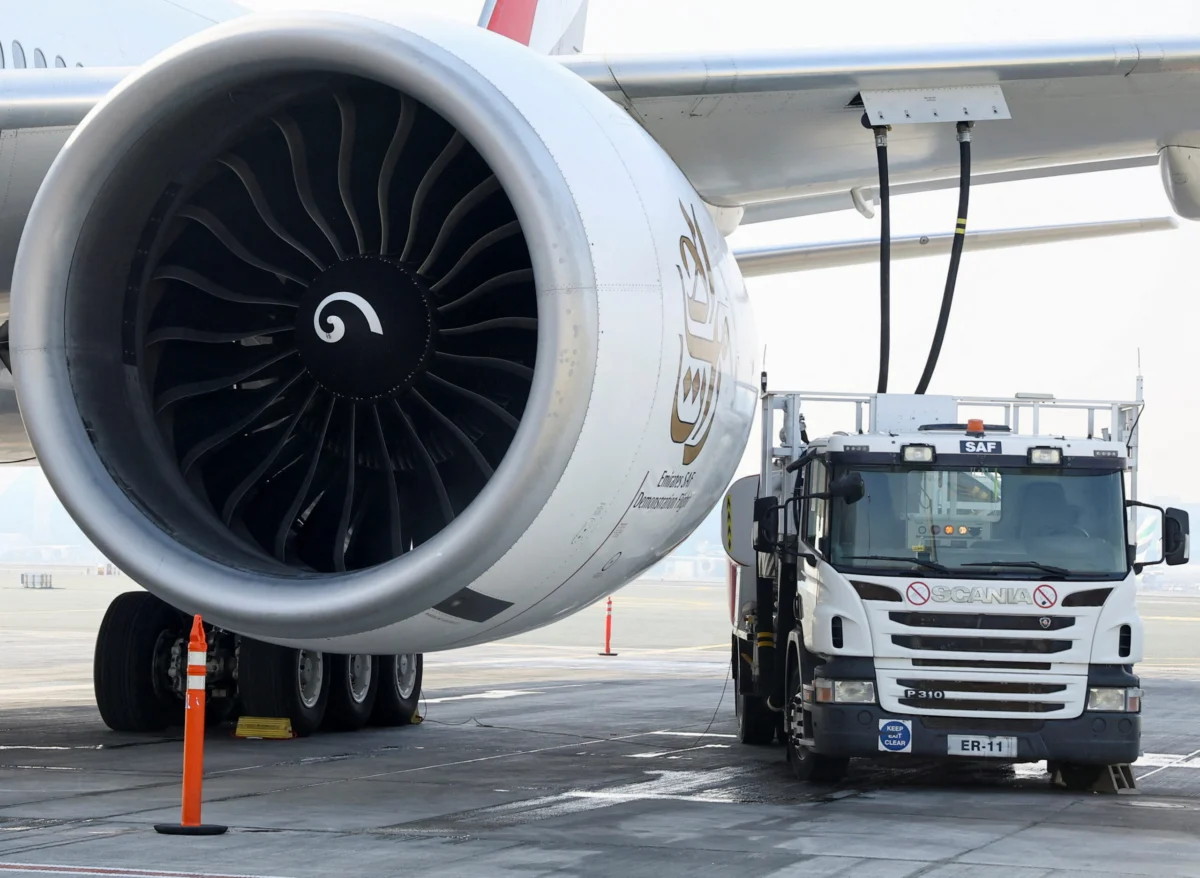
Transport officials in Brussels and the UK seek to reassure the sustainable aviation fuel industry that blending mandates at airports are here to stay
Speaking at the annual Sustainable Aviation Fuel (SAF) Investor conference in London this week, high-level representatives from the European Commission and the United Kingdom’s Department for Transport issued a unified message to investors, airlines, and fuel producers: the transition to low-carbon flight is non-negotiable. The reassurance comes at a critical juncture for the aviation sector, as the industry grapples with the initial implementation phases of landmark decarbonization policies against a backdrop of global energy volatility and shifting political climates.

The central theme of the conference revolved around the long-term stability of blending mandates—legislative requirements that compel fuel suppliers to ensure a specific and increasing percentage of the jet fuel they provide is derived from sustainable sources rather than fossil-based kerosene. Officials emphasized that these mandates are not merely aspirational targets but are legally binding frameworks designed to provide the "policy certainty" necessary to unlock billions of dollars in private capital required for new refinery infrastructure.
A Decisive Shift in Regulatory Policy
The aviation industry accounts for approximately 2% to 3% of global carbon dioxide emissions, but its share is projected to rise as other sectors decarbonize more rapidly. Unlike ground transport, which can lean heavily on electrification, long-haul aviation remains reliant on liquid fuels due to the energy density required for flight. This has placed SAF—produced from feedstocks such as used cooking oil, agricultural waste, or synthetic hydrocarbons—at the heart of the net-zero strategy for both the European Union and the United Kingdom.

In Brussels, the ReFuelEU Aviation initiative, a core component of the "Fit for 55" package, has moved from the legislative chamber to the tarmac. Starting in 2025, fuel suppliers at EU airports are required to ensure that at least 2% of the fuel they distribute is SAF. This mandate is scheduled to escalate to 6% by 2030, 20% by 2035, and eventually 70% by 2050. European officials at the London conference reiterated that the "level playing field" clause within ReFuelEU is designed to prevent "tankering"—a practice where airlines carry excess fuel from outside the bloc to avoid higher costs—thereby protecting the integrity of the internal market.
Simultaneously, the UK government has moved forward with its own SAF mandate, which targets a 10% blend by 2030. British transport officials highlighted the importance of the recently introduced Revenue Certainty Mechanism (RCM). This policy is intended to guarantee a minimum price for SAF produced in the UK, mitigating the risk for investors who fear that a sudden drop in fossil fuel prices could make SAF production economically unviable.

Chronology of the SAF Policy Evolution
The journey toward mandatory blending has been a multi-year process characterized by intense negotiation between environmental advocates, aerospace manufacturers, and traditional oil majors.
- 2021: The European Commission proposes ReFuelEU Aviation as part of its climate roadmap. The UK launches its "Jet Zero" consultation.
- 2022: Volatility in global energy markets, spurred by geopolitical tensions, underscores the need for energy independence and fuels interest in domestic SAF production.
- 2023: The EU reaches a final political agreement on ReFuelEU, including a specific sub-mandate for synthetic "e-kerosene" derived from green hydrogen and captured CO2.
- 2024: The UK formally legislates its SAF mandate, including the 10% target for 2030.
- 2025: The first mandatory 2% blending threshold takes effect across the European Union.
- February 2026: Officials meet in London to reassure the industry that these mandates will remain intact despite emerging economic headwinds and the ongoing global energy crisis.
Economic Data and the Investment Gap
The scale of the challenge is reflected in the current production data. As of early 2026, SAF accounts for less than 0.5% of total global jet fuel consumption. To meet the 2030 mandates in Europe and the UK, production must scale by more than twenty-fold in less than five years.

Market analysts at the conference pointed out that SAF currently trades at a significant premium, often costing three to five times more than conventional Jet A-1 fuel. Bridging this price gap is the primary concern for airlines, who fear that passing these costs onto passengers could dampen demand for air travel. However, transport officials argued that the cost of inaction—measured in carbon taxes and environmental degradation—far outweighs the short-term premium of sustainable fuels.
Investment requirements are equally staggering. To reach the EU’s 2050 targets, it is estimated that over €250 billion must be invested in SAF production facilities. Reassuring investors that the mandates will not be "watered down" by future governments is seen as the single most important factor in lowering the cost of capital for these projects.

Geopolitical Pressures and the Fossil Fuel "Delusion"
The London conference took place against a backdrop of renewed anxiety in the global energy sector. Recent disruptions in the Middle East have sent oil and gas prices soaring, leading some political factions to call for a pause in green transitions to prioritize immediate energy security.
However, the UN Climate Chief, Simon Stiell, recently warned that returning to a heavy reliance on fossil fuels in response to such crises is "completely delusional." This sentiment was echoed by transport officials in London, who argued that SAF production is, in itself, a strategy for energy security. By diversifying the feedstocks used for aviation fuel and producing them domestically, countries can reduce their vulnerability to the price shocks associated with imported crude oil.

The EU’s push for synthetic fuels is particularly relevant here. By mandating a 1.2% sub-target for e-kerosene by 2030, Brussels is betting on the long-term scalability of hydrogen-based fuels, which do not compete with food crops for land use—a common criticism of first-generation biofuels.
Industry Reactions and Operational Challenges
While the reassurance from officials was welcomed, industry leaders raised several operational hurdles. Representatives from major European airlines, including the Lufthansa Group and IAG (the parent company of British Airways), emphasized the need for "Book and Claim" systems. Such systems allow SAF to be injected into the fuel grid at a refinery location, while the airline that paid for the fuel "claims" the carbon reduction, regardless of whether that specific molecule ended up in their aircraft. This reduces the carbon footprint associated with transporting SAF across long distances to every individual airport.

Fuel producers, such as Neste and SkyNRG, called for more streamlined permitting processes for new refineries. They noted that while the mandates provide a "demand pull," the "supply push" is often hindered by bureaucratic delays in land use and environmental impact assessments.
Environmental NGOs, while supportive of the mandates, cautioned that the industry must not rely solely on SAF. They argued that "demand management"—including a shift toward high-speed rail for short-haul journeys—must complement the transition to cleaner fuels if the sector is to meet the goals of the Paris Agreement.

Broader Implications and Future Outlook
The commitment to SAF mandates has implications that extend far beyond the aviation sector. The demand for green hydrogen to produce synthetic kerosene will likely act as a catalyst for the broader hydrogen economy, incentivizing the build-out of renewable energy capacity. China and Brazil’s recent pledge to triple global nuclear energy capacity was also discussed as a potential source of the massive amounts of low-carbon electricity needed to power the electrolysis process for e-fuel production.
Furthermore, the "SAF race" is becoming a matter of industrial competitiveness. The United States, through the Inflation Reduction Act (IRA), provides significant tax credits for SAF production, leading to fears in Europe that capital might flee to the U.S. if the EU and UK do not offer a similarly attractive environment. The mandates are the European answer to this challenge, creating a guaranteed, captive market that the U.S. currently lacks at a federal level.

As the industry looks toward the late 2020s, the focus will shift from legislative debate to physical delivery. The "hard truth" presented by transport officials in London is that the era of cheap, carbon-intensive flight is ending. By doubling down on blending mandates, Brussels and London are signaling that the future of flight will be defined by its ability to sever its ties with the oil well.
The success of this strategy will be monitored closely at upcoming international forums, including COP30 in Brazil, where the aviation sector’s progress will be a litmus test for the global commitment to the fossil fuel transition. For now, the message to the investors gathered in London was clear: the flight path to 2050 is set, and there is no turning back.

Related Posts
Constitutional Court of South Africa Bars Shell Oil Exploration in Landmark Victory for Environmental and Community Rights

The Battle for Saldanha Bay: South Africa’s Ambitious Ocean Economy Strategy Faces Legal and Environmental Reckoning