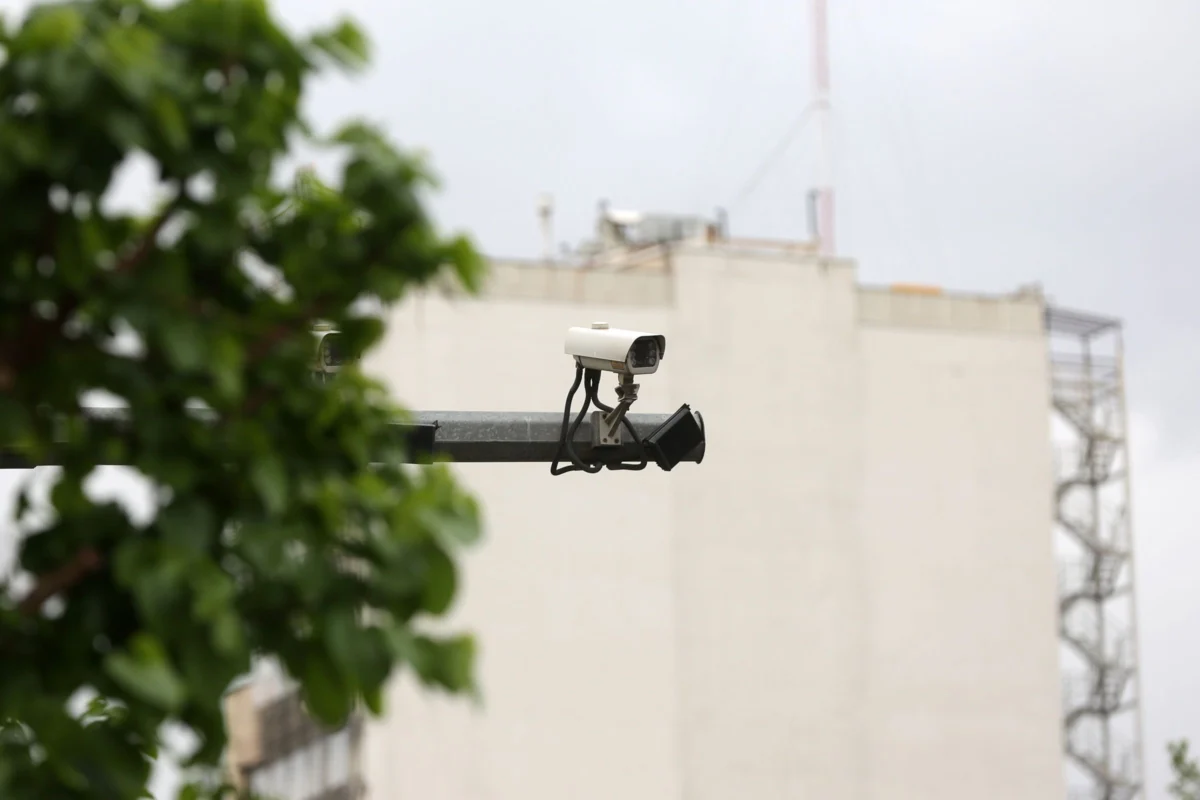
The New Digital Battlefield: How Hacked Consumer Security Cameras Have Become Essential Tools of Modern Warfare
For decades, the standard toolkit for military intelligence and reconnaissance was defined by high-altitude spy satellites, sophisticated long-endurance drones, and covert human operatives on the ground. However, the proliferation of the Internet of Things (IoT) has fundamentally altered the landscape of modern conflict. In an era where millions of insecure, internet-connected consumer devices are deployed globally, military forces have discovered an unconventional, low-cost, and highly effective surveillance asset: the civilian security camera. By exploiting well-known, unpatched vulnerabilities in household and municipal IP cameras, state actors and intelligence agencies are now turning the infrastructure of civilian life into a grid of persistent, real-time military intelligence.
The Rise of the Civilian Surveillance Network
The emergence of this tactic was brought into sharp focus this week following a comprehensive report from the Tel Aviv-based cybersecurity firm Check Point. The research details hundreds of systematic hacking attempts targeting consumer-grade security cameras across the Middle East. Notably, the timing of these intrusions appears tightly synchronized with significant escalations in regional hostilities, including Iranian missile and drone strikes directed at Israel, Qatar, and Cyprus.
Check Point’s findings implicate state-linked actors—specifically groups previously associated with Iranian intelligence, such as the hacking collective known as Handala—in these efforts. The objective appears twofold: to secure granular ground-level intelligence for the planning of kinetic strikes and to provide immediate, visual “bomb damage assessment” following attacks. This represents a paradigm shift where the mundane hardware of home security—often left unprotected by default passwords or outdated firmware—is repurposed into a front-line military asset.
A Chronology of Escalating Cyber-Espionage
The weaponization of civilian cameras is not a theoretical threat but an established component of modern military strategy. The timeline of this evolution illustrates a rapid adoption by global powers:
- June 2023: Early warning signs emerge during a 12-day conflict between Israel and Iran. Israel’s National Cybersecurity Directorate identified that Iranian actors had compromised a street-level camera located directly opposite the Weizmann Institute of Science, utilizing the footage to refine targeting for a subsequent missile strike.
- January 2024: Ukrainian intelligence officials report that Russian forces systematically hacked dual-use security cameras in Kyiv. These devices provided Russian military planners with live feeds of Ukrainian infrastructure and air defense movements, forcing the Security Service of Ukraine (SSU) to initiate a massive operation to disable over 10,000 public-facing cameras.
- December 2025: Ukrainian hacktivist groups, reportedly operating with the tacit approval of their government, successfully hijack Russian surveillance infrastructure to monitor troop movements across the Kerch Bridge and to record the visual aftermath of a Ukrainian underwater drone strike against a Russian submarine in Sevastopol.
- February–March 2026: As tensions between the US, Israel, and Iran reach a boiling point, Check Point records a surge in hacking attempts targeting Hikvision and Dahua cameras across Bahrain, Kuwait, Lebanon, Qatar, and the UAE. These efforts were timed to coincide with the deployment of joint US-Israeli air strikes.
- March 2026: Reports from the Financial Times reveal the extent of counter-intelligence operations in Tehran. Israeli intelligence, in coordination with the CIA, successfully gained access to virtually the entire traffic camera network in the Iranian capital. This digital penetration allowed for the mapping of “patterns of life” regarding security details protecting Ayatollah Ali Khamenei, directly facilitating the precision strike that claimed his life.
The Vulnerability Gap: Why Cameras Remain Open Targets
The technical ease with which these networks are compromised is perhaps the most concerning aspect for global cybersecurity experts. According to Sergey Shykevich, who leads threat intelligence research at Check Point, the vulnerabilities exploited in these campaigns are neither sophisticated nor novel.
“None of the five vulnerabilities are complicated,” Shykevich notes. “They have been patched in previous software updates for years, some dating back to 2017.” The persistence of these security holes lies in the "set-and-forget" nature of IoT hardware. Most consumers and small businesses never update their camera firmware, and many are unaware that their devices are even connected to the public internet.
Major manufacturers like Hikvision and Dahua have faced intense scrutiny, leading to effective bans in the United States due to long-standing security concerns regarding data leakage and potential backdoors. Despite these bans, the global footprint of these devices remains massive, creating a permanent, ready-made surveillance infrastructure for any state actor with the technical capability to scan for vulnerable network appliances.
Strategic Advantages of Hacked Reconnaissance
The tactical appeal of hacking civilian cameras is clear: cost-efficiency and perspective. Military-grade satellites provide high-resolution imagery, but they are expensive, subject to orbital mechanics, and often limited by weather conditions. High-altitude drones, while effective, are vulnerable to radar detection and anti-aircraft fire.
In contrast, a hacked street camera is virtually invisible to the victim. It provides a ground-level, human-scale perspective that orbital assets cannot replicate. As Peter W. Singer, a strategist at the New America Foundation and author of Ghost Fleet, explains: “The adversary has already done the work for you. They’ve placed the cameras all around the city.” By co-opting existing infrastructure, a military force gains a pervasive “presence” in enemy territory for almost zero capital expenditure.
The Crisis of Accountability and Future Implications
The integration of consumer devices into the “kill chain” of modern warfare presents a significant legal and ethical dilemma. Beau Woods, a former advisor to the US Cybersecurity and Infrastructure Security Agency (CISA), emphasizes that the current model of device security creates a misalignment of incentives.
“The manufacturer of the device and the owner of the device are not the victim of the strike,” Woods explains. “The victim of the strike is the person whose infrastructure was used to kill them. The victim is not in a position to control the tool being used by the adversary.”
This lack of clear accountability ensures that the practice will likely proliferate. As state actors continue to view the digital sphere as an extension of the physical battlefield, every internet-connected device—from a smart thermostat to a doorbell camera—becomes a potential node in an intelligence-gathering network.
Conclusion: A New Standard Operating Procedure
The events of the last several years confirm that the “hacked camera” is no longer a fringe element of cyber-warfare; it is now a core component of the standard operating procedure for state militaries. The ability to monitor a target in real-time, assess the damage of a strike, and observe the movement of personnel without ever placing a “boot on the ground” provides an asymmetric advantage that is too significant for military leaders to ignore.
As governments scramble to secure critical infrastructure, the challenge remains that the “front lines” of this conflict are located in the private homes and public streets of everyday citizens. Until there is a fundamental shift in how IoT devices are secured, managed, and regulated, the civilian grid will remain an active, and increasingly lethal, participant in the wars of the 21st century. The digital footprint of a modern city has become a map for the next generation of warfare, and for the residents living within those cities, the cameras they installed for security may well be the very tools that compromise their safety.

Related Posts

The Las Vegas Cybersecurity Summit and the Escalating Threat of Autonomous Digital Exploitation

New York City Council members and privacy advocates launch legislative campaign to ban biometric facial recognition at public entertainment venues