
South Africa Grapples with Deepening Water Crisis as Infrastructure Collapses and ‘Water Mafias’ Emerge
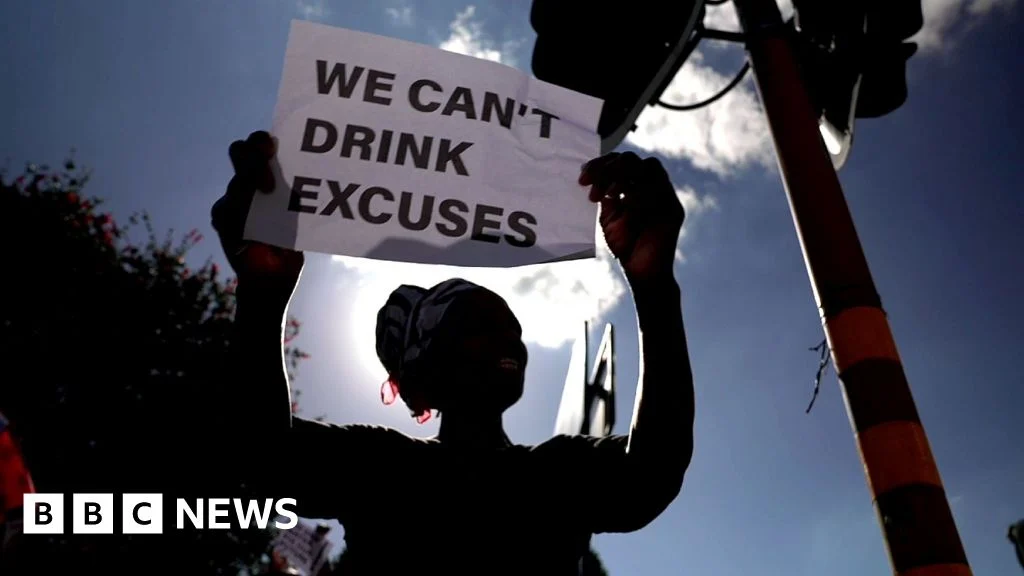
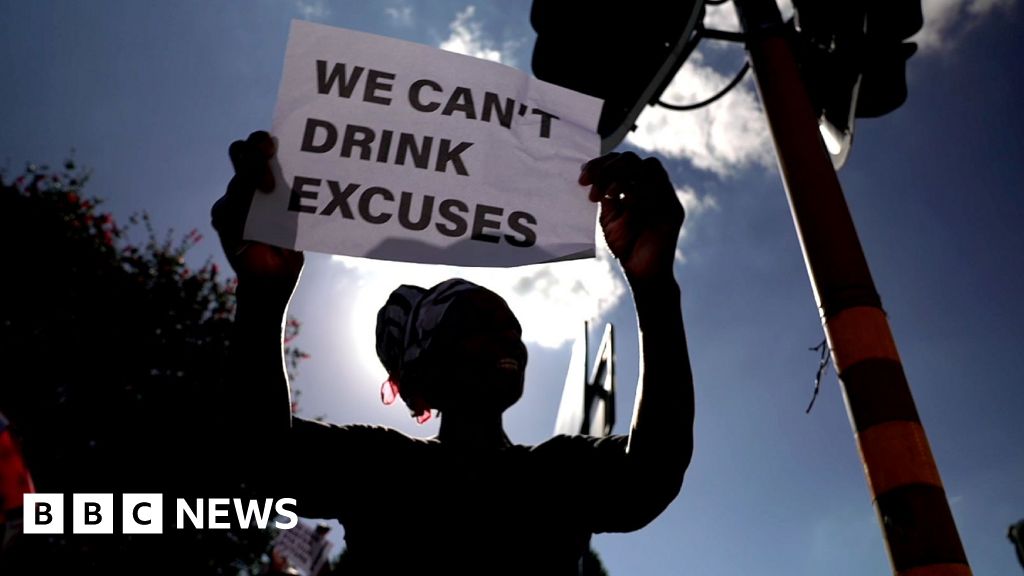
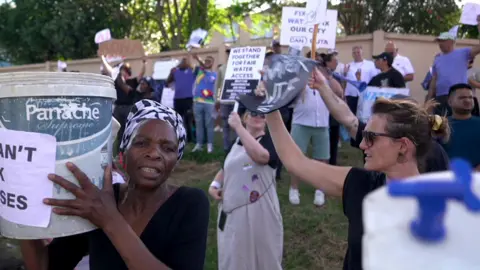
The affluent Johannesburg suburb of Greenside recently became the unlikely epicentre of a burgeoning national crisis, as a diverse assembly of residents, exasperated by prolonged water outages, took to the streets. Waving placards and rhythmically banging empty plastic bottles, their unified chant of "We want water, we want water!" echoed the growing frustration across South Africa’s economic heartland. This demonstration highlights a severe deterioration in public services, with some northern Johannesburg areas enduring over a month without a reliable mains water supply, a situation residents describe as an "actual disgrace."
A City Parched: From Intermittent Shortages to Prolonged Dryness
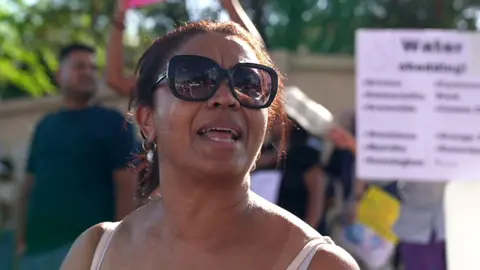
For years, the residents of Johannesburg, a city synonymous with economic dynamism and sprawling urban development, have faced intermittent water shortages. However, the current crisis marks a significant escalation, transitioning from periodic inconvenience to an existential threat for households and businesses alike. Colin Regesky, a resident of Green Hill, articulated the dire reality: "Our pipes have been bone dry with no water coming through at all. It’s not very healthy because everyone can get sick with no running water. And also according to the constitution it’s our right to have water." His sentiment was echoed by Jenny Gillies, a four-decade resident of Melville, who lamented, "We are reduced to begging and protesting for water." The sight of residents in leafy suburbs, previously insulated from the gravest infrastructure failures, now reduced to such measures, underscores the pervasive nature of the problem.
This water crisis follows closely on the heels of South Africa’s crippling electricity shortages, or "load shedding," which plagued the nation from 2022 to early 2024. Blackouts, often lasting up to eight hours daily, severely disrupted daily life and business operations, with experts attributing the failures to chronic underinvestment in the country’s ageing power stations. While load shedding has eased somewhat, the water crisis has emerged as a more immediate and pressing concern for many, given the indispensable nature of clean water for health and hygiene.
Hammanskraal’s Decade-Long Ordeal: A Precedent for Crisis
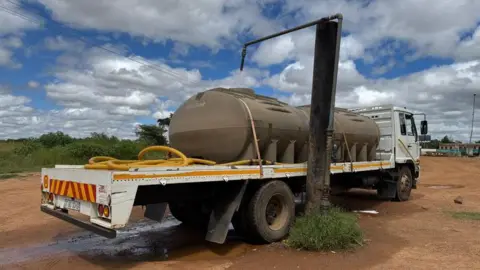
The challenges facing Johannesburg are not isolated. Over 100km (60 miles) north, the township of Hammanskraal has been grappling with unreliable access to clean water for over a decade. Pastor Tshepo Mahlaule, 35, demonstrates a dry tap in his backyard, a symbol of the pervasive hardship. "This is what is happening in Hammanskraal, there’s no water. People are striving for water. For two months there’s no water. Our kids need to wash every day, their uniforms need to be washed and we have no water." The protracted struggle in Hammanskraal offers a stark premonition of what could become the norm across other parts of the country if current trends continue. The municipality’s reliance on water tankers to deliver drinking water, originally intended as a temporary measure, has become a permanent fixture in the lives of these communities, highlighting the systemic failure of the conventional water supply network.
The Shadow of the ‘Water Mafias’
Compounding the crisis is the alarming emergence of "water mafias," criminal syndicates accused of monopolising the water tanker industry. While the local opposition Democratic Alliance has raised these accusations, specific evidence presented to the BBC was not provided. However, Dr. Ferrial Adam, executive director of Watercan, a non-profit dedicated to safeguarding South Africa’s water resources, sheds light on their operations.
"Water mafias are people that get tenders to do work for the municipality," Dr. Adam explains. "Then either they don’t have the expertise, or once they get hold of a tender to provide an alternative supply of water, they don’t want the tender to end, so they damage and vandalise infrastructure so that they can continue working." She adds another layer to their illicit activities: "And then you also have the ones that are charging people for water where they shouldn’t be."
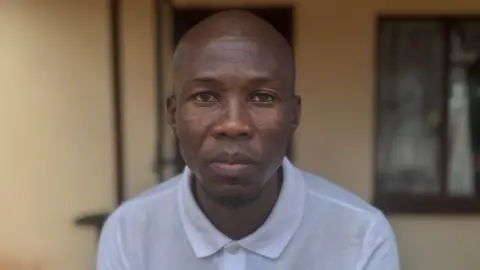
This exploitative practice was corroborated by 62-year-old Eric Sebotsane, a Hammanskraal resident. "There are criminals everywhere. Some of the truck drivers sell the water. When you say you want water they say you must buy. Because everything here is money, when you don’t have money you can’t do anything." This illicit trade in a fundamental human right places an unbearable burden on the poorest communities, who are often the most reliant on these tanker deliveries.
The phenomenon of water mafias reportedly originated in other South African provinces, particularly KwaZulu-Natal and the Eastern Cape. In these regions, large rural populations often lack basic infrastructure, and severe climate change impacts, such as intense floods, have further devastated existing water networks. These conditions created fertile ground for criminal elements to step in, providing water through tankers and subsequently entrenching their control. Dr. Adam notes the inaction of authorities in stemming this problem, leading to widespread fear among residents. "It creates fear because this is now your supply of water… They are afraid to come out and say the kind of things that are happening, because then they won’t get water. They feel as if the mafia won’t go to their streets anymore." This climate of intimidation further exacerbates the vulnerability of communities already struggling with basic survival.
Underlying Causes: Decades of Underinvestment and Systemic Decay
The root cause of South Africa’s escalating water crisis, much like its electricity woes, lies in chronic underinvestment and neglect of critical infrastructure. Experts widely agree that decades of insufficient maintenance, coupled with rapid urbanisation and population growth, have pushed the country’s water systems to breaking point. Many pipelines and treatment plants are antiquated, some dating back to the apartheid era, operating far beyond their intended lifespan.
Estimates suggest that South Africa loses an alarming amount of its potable water, with figures often cited between 30% to 50% due to leaks in dilapidated infrastructure, illegal connections, and poor metering – collectively known as non-revenue water. This wastage represents not only a monumental financial loss but also a significant squandering of a finite and precious resource in a water-stressed nation. The cumulative effect of these failures has led to diminished water quality, frequent pipe bursts, and, ultimately, prolonged outages.
The intertwined nature of the electricity and water crises is also critical. Water treatment plants and pumping stations are heavily reliant on a stable electricity supply. When load shedding occurs, these facilities cannot operate optimally, leading to disruptions in water purification and distribution. Reservoirs cannot be refilled, and pressure drops, resulting in dry taps even in areas not directly experiencing pipe failures. This cascading effect illustrates the fragility of interconnected public services in South Africa.
Government Response and Proposed Solutions
In response to the growing national outcry, President Cyril Ramaphosa addressed the issue in his February State of the Nation Address, announcing the establishment of a National Water Crisis Committee. This body is intended to ensure a coordinated governmental response to the multifaceted challenges. Further, in a parliamentary address last week, President Ramaphosa acknowledged the necessity of a "multifaceted approach" to resolve the crisis. Crucially, he announced that municipal managers failing to meet their obligations under the National Water Act would personally face criminal charges. This stern warning signals a recognition of the accountability gap at local government level, which has often been criticised for inefficiency and corruption.
However, the path to a sustainable solution remains contentious. Cilliers Brink, a Democratic Alliance politician and former mayor of Tshwane (2023-2024), suggested that local governments could purchase their own water tankers. He argued this might mitigate abuse by removing the "outside incentive" for contractors, saving money in the process. While acknowledging the potential for internal abuse, he believes it would be a step towards greater control.
Dr. Ferrial Adam, however, views municipal ownership of tankers as an unsustainable and short-sighted solution. "It’s not viable. In the city of Johannesburg, they might have to do that. But whether it can be done all across the country, I don’t know," she stated. For smaller towns, she advocates for "better solutions than water tanks, like using borehole water." Dr. Adam firmly believes that water tanks should only be a very short-term emergency measure during outages or droughts, not "the norm," as they have tragically become for many communities. The long-term, she insists, must involve comprehensive infrastructure repair and investment.
Broader Impact and Implications
The water crisis carries profound socio-economic and public health implications for South Africa. Beyond the immediate inconvenience, the lack of clean, reliable water poses significant health risks. Communities, particularly in densely populated townships like Hammanskraal, become vulnerable to waterborne diseases such as cholera, as sanitation systems fail and people resort to unsafe water sources. Indeed, Hammanskraal experienced a cholera outbreak in 2023 that claimed lives, underscoring the lethal consequences of neglected water infrastructure.
Economically, the impact is severe. Businesses, especially those in manufacturing, hospitality, and agriculture, face increased operational costs, disruptions, and potential closures. The inability to guarantee basic services deters foreign investment and stifles local economic growth. The daily struggle for water also diverts time and resources from productive activities, disproportionately affecting women and children who often bear the burden of water collection. Car washers in Hammanskraal, for instance, must walk 2km, repeatedly pushing heavy water containers in wheelbarrows for every vehicle they clean, showcasing how the crisis compounds the difficulties faced by the country’s poorest.
Politically, the crisis fuels public discontent and erodes trust in government institutions. With national elections approaching, service delivery failures, particularly water and electricity, are front and centre of public debate. The widespread protests are a clear indicator of growing civil unrest, challenging the ruling party’s legitimacy and capacity to govern effectively. The constitutional right to water, enshrined in South Africa’s post-apartheid framework, is being violated on a mass scale, prompting calls for urgent and decisive action.
The Road Ahead
The challenges are immense, requiring a coordinated, multi-stakeholder approach. Addressing the crisis will necessitate substantial financial investment in upgrading and maintaining existing infrastructure, exploring new water sources, improving water demand management, and tackling corruption within the water sector. Critically, the government must enhance the capacity and accountability of municipalities, ensuring that funds are allocated effectively and projects are implemented with transparency and technical expertise.
While President Ramaphosa’s recent statements and proposed committee offer a glimmer of hope, for residents like those in Johannesburg and Hammanskraal, the urgency of the situation cannot be overstated. An end to the water crisis is not merely a matter of convenience; it is a fundamental requirement for public health, economic stability, and social justice in South Africa. The time for promises and committees is quickly being superseded by an urgent demand for tangible, lasting change.

Related Posts
Zambia on Edge: Opposition Leader Arrested Amid Allegations of Insurrection Plot and Election Tensions
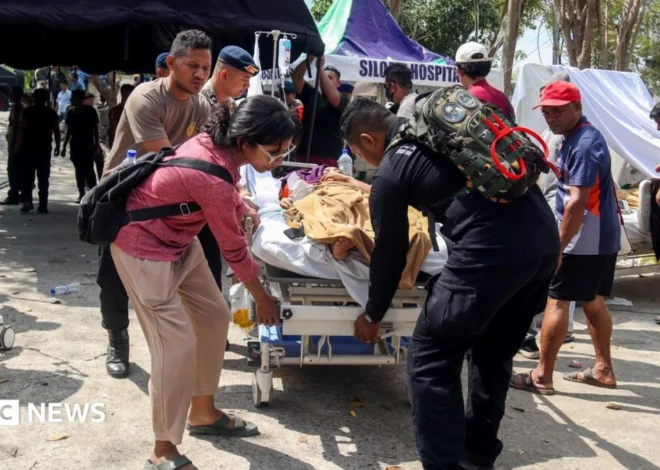
Rescuers search for survivors of powerful Indonesia earthquake

