Saudi Arabia and Regional Powers Condemn Israeli Military Strikes on Syrian Territory as Tensions Mount in a Fragile Post-Assad Middle East
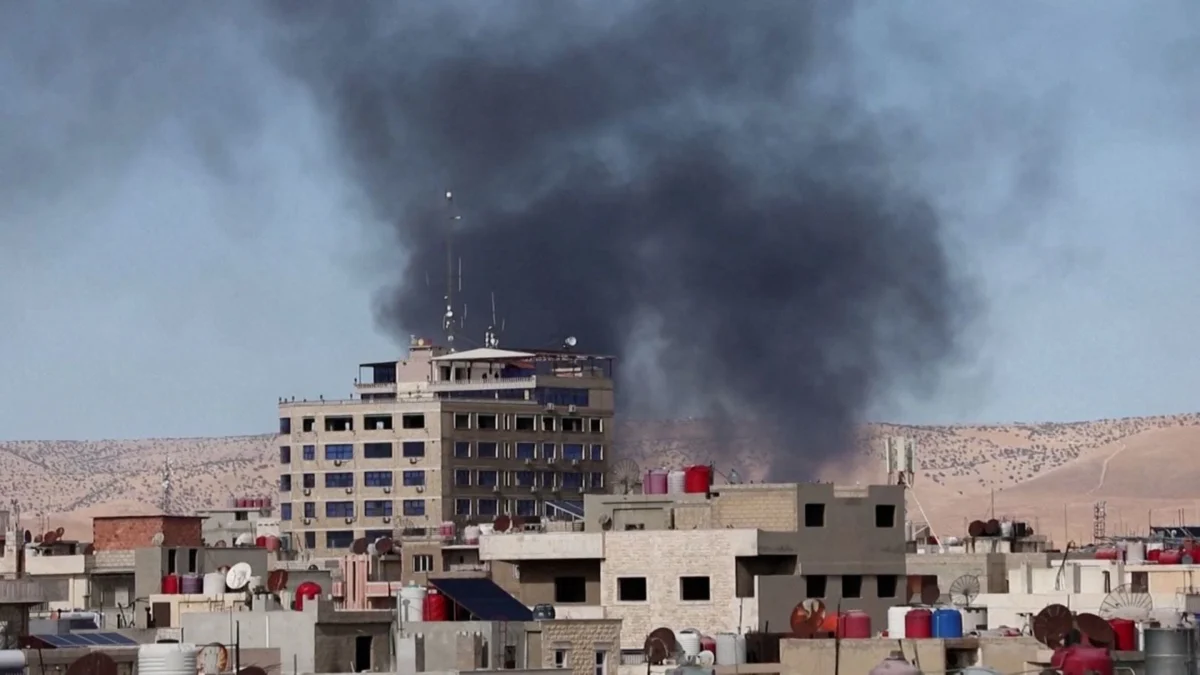
The Middle East is grappling with a fresh wave of geopolitical instability following a series of Israeli military strikes on Syrian army camps, an act that has triggered widespread condemnation from regional powers, including Saudi Arabia, Turkey, Egypt, Jordan, Qatar, and Kuwait. The strikes, which Israel claims were conducted to protect the Druze minority population in the Sweida province, have been characterized by the international community as a flagrant violation of Syrian sovereignty and a dangerous escalation in a region already reeling from broader military conflicts involving Iran, the United States, and Israel.
The Saudi Arabian foreign ministry issued a stern statement on Saturday, labeling the military action as a "blatant act of aggression." Riyadh emphasized that such incursions violate international law and undermine the delicate territorial integrity of Syria, a nation still navigating the complex aftermath of the regime change that saw the overthrow of Bashar al-Assad in December 2024. This sentiment was echoed by a chorus of Arab nations, all of whom are calling for the United Nations Security Council to intervene and enforce international norms to prevent further encroachment into Syrian territory.
Chronology of Recent Escalations
To understand the severity of the current situation, it is necessary to examine the timeline of events that have led to this latest confrontation. Following the collapse of the Assad administration in late 2024, the security architecture of the Levant underwent a radical transformation. With the central authority in Damascus effectively dissolved and replaced by a transitional government led by President Ahmed al-Sharaa, the vacuum left in its wake has been filled by competing local militias, opportunistic external actors, and residual government forces.
In the months following the transition, Israel moved its forces into the United Nations-patrolled demilitarized zone on the Golan Heights—territory it annexed decades ago. This maneuver, coupled with the instability in the southern Syrian provinces, has led to hundreds of targeted air strikes and sporadic ground incursions.
The most recent cycle of violence began late last week when, according to the Syrian Observatory for Human Rights (SOHR), intense clashes broke out in Sweida between local factions and remnants of the former government’s military forces. These skirmishes resulted in the deaths of at least four Druze fighters. Citing a mandate to protect the Druze community, the Israeli Defense Forces (IDF) launched a series of precision strikes on Syrian military installations, claiming they were necessary to deter further aggression against the minority group. The Syrian government, however, has dismissed these claims, describing them as "flimsy pretexts and fabricated excuses" designed to justify the expansion of Israeli influence into southern Syria.
The Regional Context: A Fragile Equilibrium
The strikes occurred against the backdrop of a wider regional conflagration. The geopolitical landscape was fundamentally altered on February 28, when a direct confrontation between the United States, Israel, and Iran ignited a series of conflicts that have touched nearly every border in the region. While Syria had largely managed to remain isolated from the primary theater of that conflict, the recent strikes suggest that this period of relative insulation is rapidly coming to an end.
The involvement of multiple regional powers—each with distinct strategic objectives—complicates the potential for a diplomatic resolution. Turkey, for instance, has publicly warned that the Israeli actions represent a "dangerous escalation." Ankara’s concerns are rooted in its own security interests along the Syrian border and a broader desire to prevent the regional war from spiraling into a total collapse of the state structure in Syria.
Official Responses and Diplomatic Friction
The international reaction has been swift and largely critical. Egypt’s Ministry of Foreign Affairs issued a formal appeal to the UN Security Council, urging the body to assume its legal responsibilities and take immediate, decisive action to halt the ongoing violations of Syrian sovereignty. Similar calls were echoed by Jordan, Qatar, and Kuwait, all of which emphasized that regional stability depends on the strict adherence to the principles of sovereignty and non-interference.
President Ahmed al-Sharaa, in his capacity as the head of the current Syrian administration, has attempted to project a policy of neutrality. In a public statement on Friday, he affirmed that his government is working tirelessly to distance Syria from regional conflicts, noting that Damascus seeks to maintain positive, peaceful relations with all neighboring states. However, the Syrian foreign ministry’s official denouncement of the strikes as an "outrageous assault on territorial integrity" underscores the difficulty the new leadership faces in asserting authority while foreign powers operate with impunity within their borders.
Strategic Implications and Humanitarian Impact
The persistent nature of these strikes carries significant implications for both the humanitarian and security landscape of Syria. The Sweida province, home to a significant portion of the Druze population, has become a focal point of regional maneuvering. The Israeli government has consistently maintained that its intervention is a humanitarian necessity, asserting that it "will not allow harm to come to Druze in Syria and will continue to act for their protection."
However, analysts point out that this "protective" posture serves a dual purpose. By asserting a right to intervene in southern Syria, Israel is effectively establishing a buffer zone that limits the influence of Iranian-aligned factions that previously operated under the auspices of the Assad government. This strategy, while defensive from an Israeli security perspective, creates a long-term risk of entrenching the conflict.
The humanitarian impact is equally concerning. Constant shelling in residential neighborhoods of Sweida city has forced thousands of civilians to flee their homes, exacerbating an already severe refugee crisis. The destruction of infrastructure, including camps and military facilities that serve as hubs for local security, leaves the civilian population increasingly vulnerable to lawlessness and the activities of non-state armed groups.
Analysis of the Geopolitical Vacuum
The fundamental issue remains the absence of a robust, internationally recognized security framework in post-Assad Syria. The UN-patrolled demilitarized zone, which was intended to maintain the peace, has effectively been bypassed by the realities on the ground. As regional powers continue to prioritize their own security interests over the collective stability of the Levant, the likelihood of unintended escalation increases.
From a military standpoint, the frequency of these strikes indicates a shift from episodic intervention to a more permanent, operational presence by foreign forces in Syrian territory. This trend poses a severe challenge to the transitional government in Damascus, which currently lacks the military capacity to repel such incursions. The situation is further complicated by the fact that many of the local militias fighting in Sweida possess shifting loyalties, making it difficult for the central government to guarantee the safety of its citizens without appearing to align with one foreign power against another.
Future Outlook
Looking ahead, the role of the international community will be decisive. Without a clear commitment from the UN Security Council to facilitate a de-escalation framework, it is likely that the strikes will continue, potentially inviting further retaliation from local actors or their foreign sponsors. The diplomatic condemnation from Saudi Arabia and other Arab states acts as a moral and political barrier, but it lacks the enforcement mechanism required to change the strategic calculations of the belligerents.
The crisis in Sweida is, in many ways, a microcosm of the broader struggle for the future of the Middle East. It represents the collision between the remnants of old state power, the ambitions of regional powers, and the urgent need for a new regional security architecture that respects the sovereignty of nations while addressing the genuine security concerns of vulnerable populations. Until such an architecture is established, the cycle of violence, rhetoric, and diplomatic maneuvering is expected to persist, leaving the people of Syria caught in a precarious state of uncertainty.